1960s Maps of Urbana, Ohio
Explore 6 historic maps of Urbana from the 1960s. These maps offer a rare glimpse into what life looked like during the 1960s — showing old roads, neighborhoods, homes, and landmarks that have changed or disappeared over time.
Whether you're researching your family's past, planning a metal detecting trip, or studying how Urbana's landscape evolved across the 1960s, these high-resolution maps are a powerful tool for exploring the history of this region.
- Focus on a specific era: All maps on this page are from the 1960s, giving you a focused view of this time period.
- See what’s changed: Compare century-old streets, trails, and buildings to today's modern landscape using overlays and satellite layers.
- Research with precision: Use these maps for genealogy, historical research, land use analysis, or educational projects.
- View, download, or print: Maps are fully viewable online in high resolution, and can be downloaded or printed for your own records.
Start exploring Urbana's history through authentic maps from the 1960s. This is your window into the past.
Urbana, OH maps
(6)- 1961 Map of Kingscreek, 1962 Print
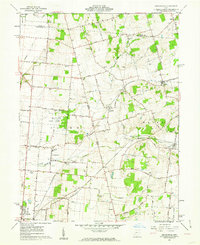 1961 Kingscreek1962 Print · USGSChampaign and Logan counties are documented here in the early sixties, showing a rural landscape of family farms and rail-stop villages. Trace local genealogy and industry through Ohio Caverns, the Township High Sch, and the Erie Lackawanna rail corridor.3 unique versions available
 - 1961 Map of Urbana West, 1962 Print
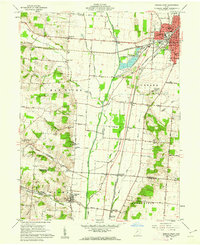 1961 Urbana West1962 Print · USGSUrbana and the Mad River valley are captured in the early sixties as a bustling hub of rail transport and rural industry. Genealogists can trace family sites at Nettle Creek Cem and Cook Cem or locate the old Urbana Jr College.4 unique versions available
 - 1961 Map of Northville, 1962 Print
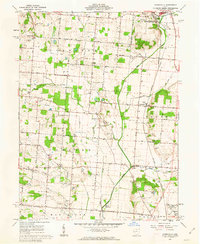 1961 Northville1962 Print · USGSChampaign County in the early 1960s is a landscape of established family farms and thriving rural hamlets like Northville and Millerstown. Researchers can trace ancestral sites through numerous family cemeteries including Scott and Pullins Cem and Idle and Stevens Cem.2 unique versions available
 - 1961 Map of Urbana East, 1962 Print
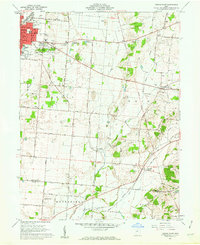 1961 Urbana East1962 Print · USGSThe eastern edges of Urbana and the surrounding Champaign County farmlands are captured in the early sixties as the regional rail network still connected small rural hubs. Researchers can trace ancestral sites at Oakdale Cemetery, identify the location of Lawn View Sch, or find the small hamlet of Mutual.4 unique versions available
 - 1962 Map of Marion
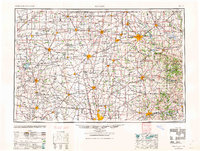 1962 Marion1962 Print · USGSCentral Ohio during the post-war era showcases a dense network of railroad towns and emerging interstate highways. Genealogists can trace family roots in smaller settlements like Houcktown and Marseilles or locate landmarks near Indian Lake.
 - 1966 Map of Marion, 1968 Print
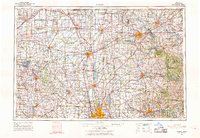 1966 Marion1968 Print · USGSCentral Ohio in the mid-sixties is captured during a period of rapid highway expansion and industrial connectivity. Genealogists and historians can trace rail-and-river networks through towns like Marion, Urbana, and Mount Vernon, or locate landmarks such as Malabar Farm and Black Hand Rock.3 unique versions available
End of results
Showing maps 1-6 of 6
Top cities near Urbana
- Springfield historical maps
- Bellefontaine historical maps
- Mad River historical maps
- Harmony historical maps
- Saint Paris historical maps
- West Liberty historical maps
See more
Top neighborhoods of Urbana
- Scioto Street Historic District historical maps
- Urbana Monument Square Historic District historical maps
Frequently asked questions
- What are the different types of historical maps available for Urbana?
- What is the oldest map of Urbana?
- Where can I purchase historical maps of Urbana for my home or office?
- Where can I download high-res historical maps of Urbana?
- Are there historical topographic maps available for Urbana?
- Is there historical aerial imagery available for Urbana?
- Where are historical maps of Urbana sourced from?