Old Maps of Hocking County, Ohio for Metal Detecting
Plan your next treasure hunt with 118 historic maps of Hocking County. Find old homesites, ghost towns, trails, and gathering spots that may be lost to time — perfect for identifying promising metal detecting locations.
- Locate forgotten sites: Uncover places like long-lost settlements, abandoned rail lines, or gathering spots.
- Plan better hunts: Use map overlays combined with LiDAR or satellite views to narrow in on historically rich areas.
- Made for detectorists: Thousands of hobbyists use these maps to discover relics, coins, and hidden history.
Use these historic maps to boost your research and find new opportunities beneath the surface of Hocking County.
Hocking County, OH maps
(118)- 1903 Map of Athens, 1958 Print
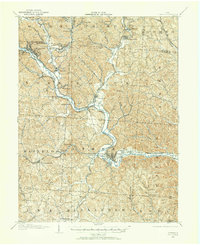 1903 Athens1958 Print · USGSSoutheast Ohio's Hocking Valley thrives at the height of its coal-mining era, before the shift in regional industry. Researchers can trace historic rail lines like the Electric railway and find vanished company towns such as Orbiston, Buchtel, and Cawthorn.
 - 1904 Map of Zaleski, 1955 Print
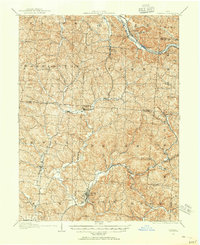 1904 Zaleski1955 Print · USGSVinton and Hocking Counties are shown at the turn of the century as the rail-and-river economy flourished. Trace family roots and vanished landmarks in Zaleski, Moonville, and the brick-making center of Haydenville.2 unique versions available
 - 1905 Map of Athens
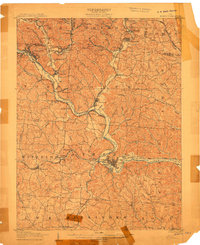 1905 Athens1905 Print · USGSAthens and the Hocking River valley appear here at the height of the coal and rail era in the early nineteen-hundreds. Genealogists can trace family roots in vanished settlements and industrial junctions like Orbiston, Buchtel, and Marshfield.6 unique versions available
 - 1907 Map of Zaleski, 1944 Print
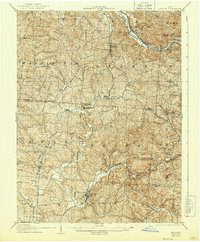 1907 Zaleski1944 Print · USGSVinton and Hocking counties at the turn of the century show an era of intense industrial activity along the coal branches. Trace the paths of the Baltimore and Ohio Southwestern RR through Moonville or find old homesteads near New Plymouth and Zaleski.
 - 1907 Map of Logan, 1954 Print
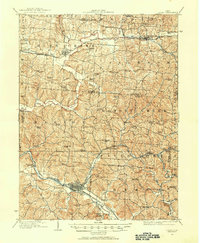 1907 Logan1954 Print · USGSSoutheast Ohio's industrial and rural landscape is captured here during the height of the local iron and rail era. Genealogists and historians can trace family roots through numerous country schools like Nickelplate School and landmarks such as Bessie Furnace or the County Infirmary.2 unique versions available
 - 1907 Map of Lancaster, 1958 Print
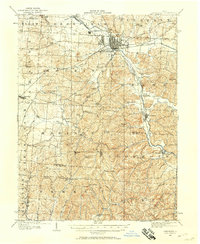 1907 Lancaster1958 Print · USGSFairfield and Hocking counties are captured here in the early twentieth century, showing a landscape defined by the Hocking River valley and early rail corridors. Researchers can locate vanished landmarks like the Abandoned Hocking Canal and the State Industrial School alongside numerous rural schools and churches.
 - 1909 Map of Lancaster, 1938 Print
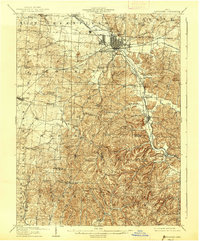 1909 Lancaster1938 Print · USGSFairfield County at the turn of the century shows a bustling rail hub and the remnants of the canal era. Historians can trace the Abandoned Hocking Canal or locate local landmarks like the State Industrial School and Hopewell Church.2 unique versions available
 - 1909 Map of Logan, 1941 Print
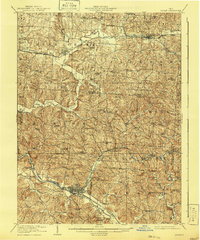 1909 Logan1941 Print · USGSSoutheastern Ohio at the start of the twentieth century shows a landscape defined by heavy iron works and a complex rail network. Genealogists can locate family-named landmarks like Britain School or Harvey Chapel and trace the lines of the Hocking Valley R. R. through Logan.
 - 1910 Map of Laurelville, 1962 Print
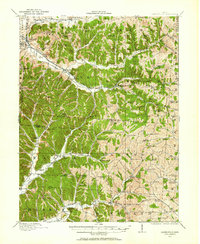 1910 Laurelville1962 Print · USGSHocking and Vinton counties come alive in the decade before the First World War, showing a landscape of ridge-top farms and valley hamlets. Genealogists can locate family landmarks like Eagle Mills, the Indian Mound, and dozens of schools including Tuling School and Union School.
 - 1911 Map of New Lexington, 1939 Print
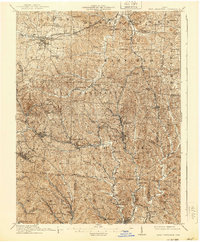 1911 New Lexington1939 Print · USGSPerry County and its neighbors hummed with industrial activity when this survey was conducted. Local researchers can trace old rail lines and family-linked landmarks from St Aloysius Academy down to the mining hubs of Shawnee and New Straitsville.2 unique versions available
 - 1912 Map of Laurelville, 1939 Print
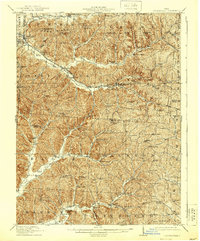 1912 Laurelville1939 Print · USGSHocking and Vinton counties at the dawn of the twentieth century show a landscape of ridge-top schools and creek-side settlements. Researchers can trace the path of the Columbus and Southern RR (Abandoned) and locate landmarks like Ash Cave and the Indian Mound.2 unique versions available
 - 1944 Map of Laurelville
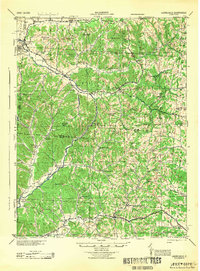 1944 Laurelville1944 Print · USGSMid-century Hocking and Vinton Counties appear here as a patchwork of tight-knit upland communities during the Second World War. Researchers can locate dozens of local landmarks including Adelphi, Eagle Mills, and the Chestnut Grove Church nestled among the hollows.
 - 1947 Map of Columbus, 1948 Print
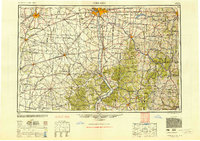 1947 Columbus1948 Print · USGSCentral Ohio in the late 1940s is captured in this survey, showing the post-war transition of its rail hubs and military airfield expansions. Genealogists and historians can trace the paths of the Ohio Canal, the Pennsylvania RR lines, and the Camp Sherman Military Reservation.
 - 1961 Map of Columbus
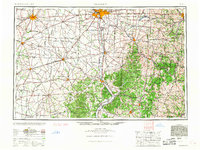 1961 Columbus1961 Print · USGSCentral and Southern Ohio are captured here in the early sixties, as the region's industrial rail hubs and military bases reached their peak. Genealogists and historians can trace the transition from urban Columbus to rural townships along the Scioto River, locating Lockbourne USAF and old junctions like Washington Court House.
 - 1961 Map of Nelsonville, 1962 Print
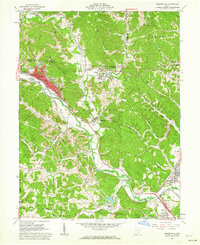 1961 Nelsonville1962 Print · USGSThe Hocking River valley in the early sixties is a landscape of coal extraction and rail transport at the heart of the Wayne National Forest. Researchers can trace old family sites and mining history through labels like Carbon Hill, Oak Grove Ch, and several Strip Mine works.7 unique versions available
 - 1961 Map of New Straitsville, 1962 Print
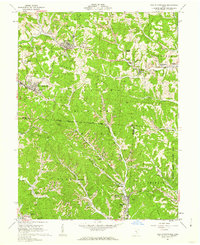 1961 New Straitsville1962 Print · USGSSoutheast Ohio's coal mining heartland is captured here in the early 1960s, showing a landscape shaped by deep hollows and active extraction. Genealogists can trace family sites at St Augustine Cem or locate former company towns like Carbon Hill and Jobs.6 unique versions available
 - 1961 Map of Clearport, 1963 Print
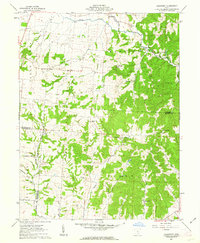 1961 Clearport1963 Print · USGSFairfield County in the early sixties was a landscape of high ridges and rural crossroads where three counties meet. Genealogists can trace family names at Shaeffer Cemetery or Kern Cemetery, and locate old meeting houses like Hopewell Church and Morgan Chapel.4 unique versions available
 - 1961 Map of Gore, 1963 Print
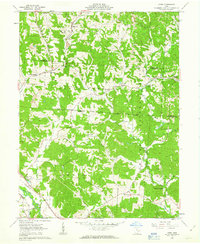 1961 Gore1963 Print · USGSHocking and Perry counties are shown here in the early sixties, where the industrial legacy of the Hocking Valley meets old land company boundaries. Genealogists and researchers can trace family sites at Webb Chapel Cem, Dawley Cem, and the old iron site at Bessie Furnace.3 unique versions available
 - 1961 Map of Union Furnace, 1963 Print
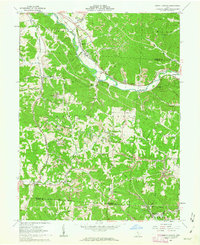 1961 Union Furnace1963 Print · USGSThe Hocking River valley and the Wayne National Forest are captured here in the early sixties as coal mining and brick manufacturing shaped the landscape. Genealogists and historians can trace family sites at Morris Chapel Cem, the pottery town of Haydenville, and the remote mining camp at Carbondale.6 unique versions available
 - 1961 Map of New Plymouth, 1963 Print
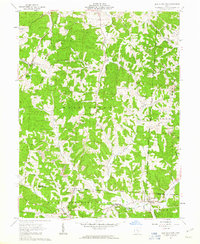 1961 New Plymouth1963 Print · USGSIn the early sixties, the Hocking-Vinton county line was a landscape of deep woods and active coal extraction. Genealogists and historians can locate family cemeteries like Strawn Cem and trace the rail path of the Chesapeake and Ohio through New Plymouth.4 unique versions available
 - 1961 Map of South Bloomingville, 1963 Print
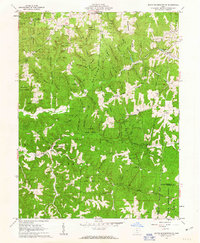 1961 South Bloomingville1963 Print · USGSThe Hocking Hills region in the early sixties was a landscape of deep hollows and forest camps at the height of its mid-century recreational development. Researchers can find numerous family cemeteries and remote landmarks like Old Baptist Cem, the Gold Mine near Huffine Hollow, and the Rock House Lookout Tower.4 unique versions available
 - 1961 Map of Logan, 1963 Print
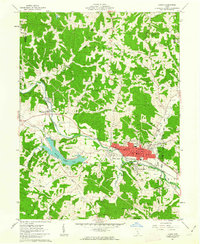 1961 Logan1963 Print · USGSHocking County at the start of the 1960s shows a landscape defined by the winding Hocking River and the steady hum of the oil and rail industries. Researchers can locate family sites at Oak Grove Cemetery, the Marion Sch, or trace the old Chesapeake and Ohio rail corridor.4 unique versions available
 - 1961 Map of Bremen, 1963 Print
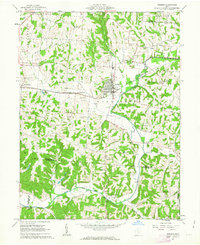 1961 Bremen1963 Print · USGSThe rail-and-oil economy of Fairfield County is on full display in the early 1960s, centered on the village of Bremen. Trace family history through numerous rural sites like Swartz Mill, Mendonite Cem, and Olive Branch Ch scattered among the hills and creek valleys.3 unique versions available
 - 1961 Map of Laurelville, 1963 Print
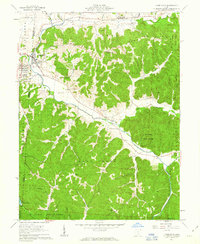 1961 Laurelville1963 Print · USGSLaurelville and Adelphi sat at the edge of the Ohio hill country in the early sixties, where farmland met deep forest. Genealogists can trace family landmarks like Schooley Cem and Bethel Ch or locate the ancient Indian Mound near the creek.4 unique versions available
 - 1961 Map of Ratcliffburg, 1963 Print
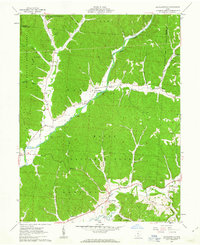 1961 Ratcliffburg1963 Print · USGSThe hills of Vinton County in the early sixties reveal a landscape of deep hollows and isolated rural communities. Researchers can trace family sites at Ratcliffburg, locate the ancient Indian Mound, or find old burial grounds like the Slagle Farm Cem.3 unique versions available
Showing maps 1-25 of 118
Top cities of Hocking County
Frequently asked questions
- What are the different types of historical maps available for Hocking County?
- What is the oldest map of Hocking County?
- Where can I purchase historical maps of Hocking County for my home or office?
- Where can I download high-res historical maps of Hocking County?
- Are there historical topographic maps available for Hocking County?
- Is there historical aerial imagery available for Hocking County?
- Where are historical maps of Hocking County sourced from?