Old Maps of Pataskala, Ohio for Metal Detecting
Plan your next treasure hunt with 43 historic maps of Pataskala. Find old homesites, ghost towns, trails, and gathering spots that may be lost to time — perfect for identifying promising metal detecting locations.
- Locate forgotten sites: Uncover places like long-lost settlements, abandoned rail lines, or gathering spots.
- Plan better hunts: Use map overlays combined with LiDAR or satellite views to narrow in on historically rich areas.
- Made for detectorists: Thousands of hobbyists use these maps to discover relics, coins, and hidden history.
Use these historic maps to boost your research and find new opportunities beneath the surface of Pataskala.
Pataskala, OH maps
(43)- 1902 Map of Westerville, 1958 Print
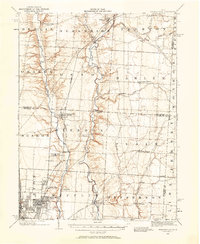 1902 Westerville1958 Print · USGSFranklin and Delaware counties at the turn of the century show a landscape transitioning from rural mill seats to rail-connected suburbs. Genealogists can trace family footprints through historic settlements like Westerville, Gahanna, and the trolley-linked Central College.
 - 1904 Map of Westerville, 1941 Print
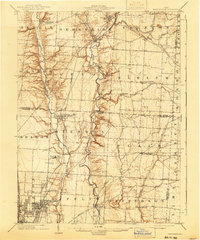 1904 Westerville1941 Print · USGSCentral Ohio at the turn of the century shows a landscape transitioning from rural crossroads to early suburban rail hubs. Genealogists and local historians can trace the paths of the Columbus and Newark Electric R.R. and locate vanished local points like Africa, Central College, and Unhook.2 unique versions available
 - 1907 Map of Thurston, 1960 Print
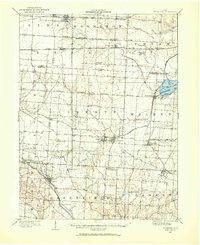 1907 Thurston1960 Print · USGSFairfield and Licking counties at the turn of the century are shown here as a bustling landscape of rail junctions and early canal segments. Researchers can trace family roots at New Zion Church, locate the Baltimore Campground, or follow the Hocking Canal near Lockville.
 - 1908 Map of Granville, 1959 Print
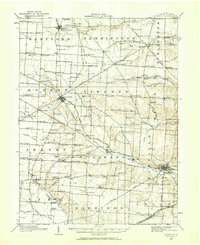 1908 Granville1959 Print · USGSLicking County at the start of the twentieth century remains a landscape of intimate rural communities and academic ambition. Researchers can trace ancestral farmstead locations near dozens of neighborhood hubs like Johnstown, Alexandria, and Denison University.
 - 1909 Map of Thurston, 1946 Print
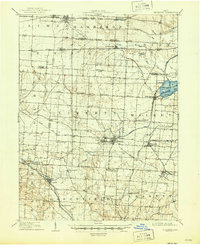 1909 Thurston1946 Print · USGSCentral Ohio at the start of the twentieth century was a landscape of bustling rail junctions and lakeside retreats. Trace the vanished canal ways and historic rail stops like Lockville, find family landmarks such as Ritter School, or explore the early layout of BUCKEYE LAKE.
 - 1910 Map of Granville, 1944 Print
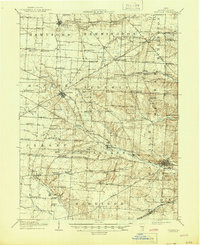 1910 Granville1944 Print · USGSLicking County at the dawn of the automobile era shows a landscape of tightly-knit farming townships and busy rail corridors. Genealogists can locate family-named landmarks like Hazelton Corners, rural congregations at Wesley Chapel, and numerous local schools such as Wright School.
 - 1925 Map of East Columbus, 1940 Print
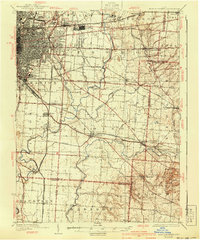 1925 East Columbus1940 Print · USGSGreater Columbus and its eastern suburbs were rapidly expanding in the 1920s as industry and transit lines bridged the gap between city and farm. Genealogists and historians can trace the paths of the ABANDONED CANAL, the legacy of NORTON FIELD, and old village centers like Canal Winchester and Lithopolis.3 unique versions available
 - 1943 Map of East Columbus
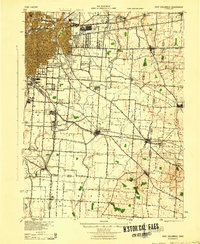 1943 East Columbus1943 Print · USGSEastern Columbus and the Refugee Tract are captured here during the mobilization of the early 1940s. Genealogists and historians can trace the foundations of modern aviation at Port Columbus or find vanished landmarks like the Childrens Home and Norton Field.
 - 1947 Map of Columbus, 1948 Print
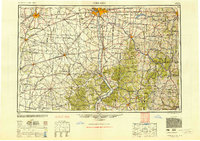 1947 Columbus1948 Print · USGSCentral Ohio in the late 1940s is captured in this survey, showing the post-war transition of its rail hubs and military airfield expansions. Genealogists and historians can trace the paths of the Ohio Canal, the Pennsylvania RR lines, and the Camp Sherman Military Reservation.
 - 1950 Map of Marion
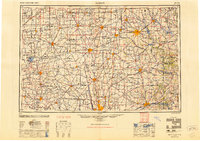 1950 Marion1950 Print · USGSCentral Ohio was a powerhouse of rail and river industry at the mid-century point, serving as a vital corridor between the Great Lakes and the Ohio River valley. Genealogists and rail historians can trace the paths of the Erie RR and Nickel Plate Road through towns like Bucyrus, Galion, and Upper Sandusky.
 - 1955 Map of New Albany, 1956 Print
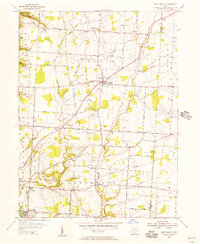 1955 New Albany1956 Print · USGSNortheast Franklin County comes into focus in the mid-1950s as a collection of rural hamlets and emerging reservoir lands. Genealogists can trace family roots through sites like Jersey Chapel, Ayers Cem, and the old Township Sch.
 - 1955 Map of Reynoldsburg, 1956 Print
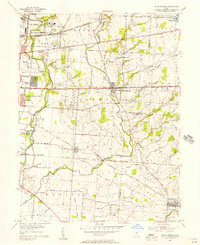 1955 Reynoldsburg1956 Print · USGSThe eastern edges of Columbus and the growing suburbs of Reynoldsburg and Whitehall appear here in the mid-fifties. Genealogists can trace family footprints at Forest Lawn Cemetery or Asbury Ch, while others can find industrial sites like the Claycraft kilns.
 - 1958 Map of Pataskala, 1959 Print
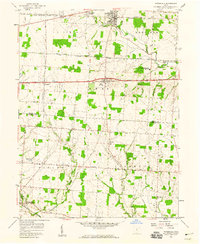 1958 Pataskala1959 Print · USGSPataskala and Pickerington are shown here in the late fifties, during a period of transition along the National Road. Genealogists can locate family landmarks such as Union Cem, Mt Zion Ch, and the small settlement of Wagram.4 unique versions available
 - 1961 Map of Columbus
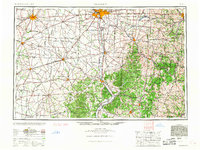 1961 Columbus1961 Print · USGSCentral and Southern Ohio are captured here in the early sixties, as the region's industrial rail hubs and military bases reached their peak. Genealogists and historians can trace the transition from urban Columbus to rural townships along the Scioto River, locating Lockbourne USAF and old junctions like Washington Court House.
 - 1961 Map of Jersey, 1962 Print
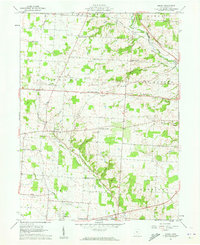 1961 Jersey1962 Print · USGSLicking County crossroads and rural hamlets are captured here in the early sixties as local farming communities maintained their traditional layout. Genealogists can locate family-named sites like Hazelton Corners and numerous small burial grounds including Swisher Cem and Moreland Cem.3 unique versions available
 - 1962 Map of Columbus
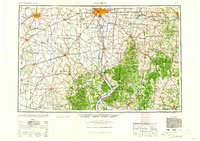 1962 Columbus1962 Print · USGSCentral Ohio during the early sixties reveals a transition from the industrial corridors of Columbus to the forested ridges of the south. Genealogists and historians can trace the rail networks of the Baltimore & Ohio RR and find local landmarks like Washington Court House and Camp Sherman Military Reservation.
 - 1962 Map of Marion
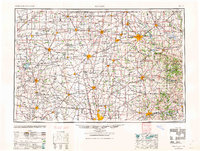 1962 Marion1962 Print · USGSCentral Ohio during the post-war era showcases a dense network of railroad towns and emerging interstate highways. Genealogists can trace family roots in smaller settlements like Houcktown and Marseilles or locate landmarks near Indian Lake.
 - 1964 Map of Reynoldsburg, 1965 Print
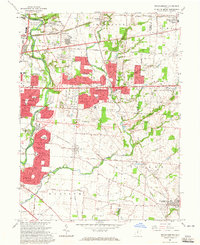 1964 Reynoldsburg1965 Print · USGSEastern Franklin County and parts of Licking and Fairfield counties are captured in the mid-sixties during a period of significant suburban growth. Researchers can trace old family cemetery sites like Pisgah Cem, early rail lines, and the footprint of Port Columbus as it stood decades ago.5 unique versions available
 - 1966 Map of Marion, 1968 Print
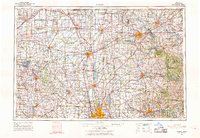 1966 Marion1968 Print · USGSCentral Ohio in the mid-sixties is captured during a period of rapid highway expansion and industrial connectivity. Genealogists and historians can trace rail-and-river networks through towns like Marion, Urbana, and Mount Vernon, or locate landmarks such as Malabar Farm and Black Hand Rock.3 unique versions available
 - 1966 Map of New Albany, 1968 Print
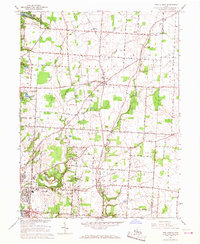 1966 New Albany1968 Print · USGSFranklin and Licking counties are captured here in the mid-sixties, as rural communities like New Albany and Gahanna began to expand. Genealogists and local historians can trace family-named sites such as Havens Corners, Burnside Cem, and Jersey Chapel.3 unique versions available
 - 1967 Map of Columbus, 1969 Print
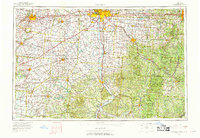 1967 Columbus1969 Print · USGSCentral Ohio during the late sixties serves as a vital corridor of rail and aviation, from the industrial streets of Springfield to the hangar lines of Lockbourne Air Force Base. Genealogists and researchers can trace the growth of towns like Circleville and London or locate rural landmarks such as St Paul church and the London Correctional Institution.2 unique versions available
 - 1984 Map of Lancaster, 1985 Print
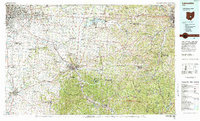 1984 Lancaster1985 Print · USGSCentral Ohio and the Hocking Valley come into focus during the mid-eighties as suburban growth meets the wooded ridges of the southeast. Researchers can trace transportation networks through Buckeye Lake or locate landmarks like Flint Ridge State Memorial and Moxahala Park.
 - 1992 Map of Pataskala, 1995 Print
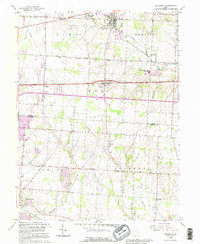 1992 Pataskala1995 Print · USGSLicking and Fairfield counties are shown during a period of suburban expansion in the early nineties, centered on the historic Refugee Tract. Genealogists can trace family connections at Mt Zion Ch, Wagram, and the Union Cem along the old National Road.
 - 2010 Map of Reynoldsburg, 2010 Print
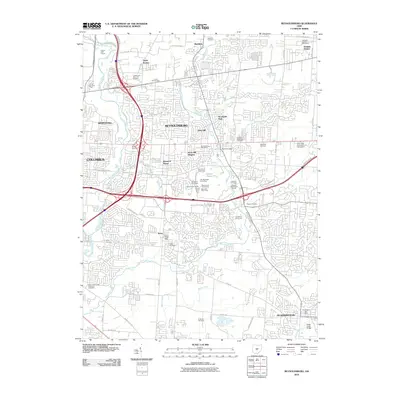 2010 Reynoldsburg2010 Print · USGSThe eastern suburbs of Columbus and Reynoldsburg are shown during the first decade of the 2000s as residential growth reshapes the landscape. Genealogists and local historians can locate many historic burial grounds including Pisgah Cemetery and Carlisle Cemetery or trace the development around Taylor Station.
 - 2010 Map of Pataskala, 2010 Print
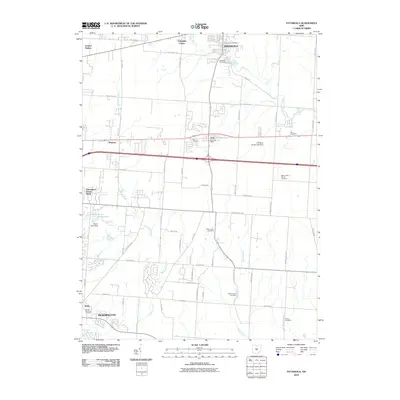 2010 Pataskala2010 Print · USGSThe Licking County suburbs east of Columbus are captured here in 2010 during a period of modern expansion. Genealogists can trace family names through numerous burial sites including Mount Zion Cemetery and Mount Olive Cemetery or locate the old Etna Post Office.
Showing maps 1-25 of 43
Top cities near Pataskala
- Columbus historical maps
- Newark historical maps
- Westerville historical maps
- Reynoldsburg historical maps
- Gahanna historical maps
- Pickerington historical maps
See more
Top neighborhoods of Pataskala
- Summit Station historical maps
- Moreland Corners historical maps
- Fursville historical maps
- Columbia Center historical maps
Frequently asked questions
- What are the different types of historical maps available for Pataskala?
- What is the oldest map of Pataskala?
- Where can I purchase historical maps of Pataskala for my home or office?
- Where can I download high-res historical maps of Pataskala?
- Are there historical topographic maps available for Pataskala?
- Is there historical aerial imagery available for Pataskala?
- Where are historical maps of Pataskala sourced from?