1900s (20th Century) Maps of Lexington Glen, Ohio
Explore 15 historic maps of Lexington Glen from the 1900s (20th Century). These maps offer a rare glimpse into what life looked like during the 1900s — showing old roads, neighborhoods, homes, and landmarks that have changed or disappeared over time.
Whether you're researching your family's past, planning a metal detecting trip, or studying how Lexington Glen's landscape evolved across the 1900s, these high-resolution maps are a powerful tool for exploring the history of this region.
- Focus on a specific era: All maps on this page are from the 1900s, giving you a focused view of this time period.
- See what’s changed: Compare century-old streets, trails, and buildings to today's modern landscape using overlays and satellite layers.
- Research with precision: Use these maps for genealogy, historical research, land use analysis, or educational projects.
- View, download, or print: Maps are fully viewable online in high resolution, and can be downloaded or printed for your own records.
Start exploring Lexington Glen's history through authentic maps from the 1900s. This is your window into the past.
Lexington Glen, OH maps
(15)- 1900 Map of Toledo, 1932 Print
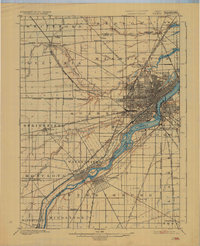 1900 Toledo1932 Print · USGSToledo and the lower Maumee River valley are shown at the height of the railroad era, as the city expanded into an industrial powerhouse. Researchers can trace early infrastructure like the Michigan Division Canal and locate historic sites like the Toledo Insane Asylum or the Oil Wells near Lime City.
 - 1911 Map of Swanton, 1956 Print
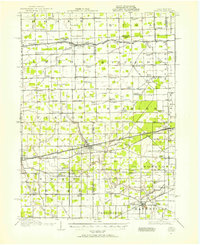 1911 Swanton1956 Print · USGSNorthwest Ohio and the Michigan border are captured here just before the era of major highway expansion. Genealogists can trace early twentieth-century property locations near Metamora, Raab Corners, and numerous rural schoolhouses like Frogpond School.
 - 1914 Map of Swanton, 1937 Print
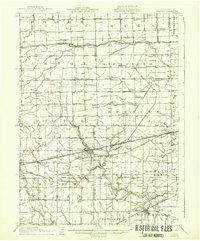 1914 Swanton1937 Print · USGSThe Ohio-Michigan borderlands come alive in this era of peak rail transit and rural schoolhouse density. Genealogists and historians can trace family roots through numerous local landmarks like Metamora, Richfield Center, and uniquely named sites such as Huckleberry School or Frogpond School.
 - 1935 Map of Whitehouse
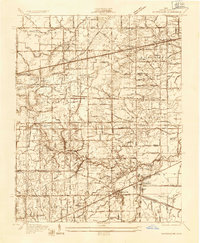 1935 Whitehouse1935 Print · USGSWestern Lucas County was a landscape of intricate drainage ditches and rail corridors in the mid-1930s. Researchers can trace the path of the Toledo and Indiana (Electric) line or locate family sites at Weckerly Cemetery and Roberts Chapel.
 - 1935 Map of Maumee
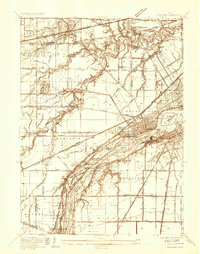 1935 Maumee1935 Print · USGSThe Maumee River valley is shown in the mid-1930s, just as electric railways and state highways began to reshape the old river towns. Genealogists and researchers can locate Springfield Chapel, trace the Cincinnati and Lake Erie line, or find the Hulls Crossing Mill.
 - 1938 Map of Maumee
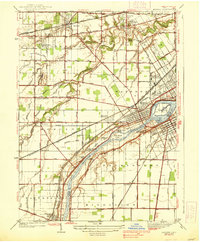 1938 Maumee1938 Print · USGSThe riverfront communities of Northwest Ohio thrive during the mid-1930s as rail and road networks begin to overtake the old canal system. Researchers can trace the legacy of the Miami and Erie Canal and explore historical sites like Fort Meigs and Fallen Timber State Park.2 unique versions available
 - 1940 Map of Whitehouse
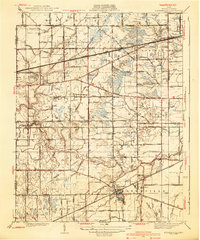 1940 Whitehouse1940 Print · USGSLucas County and the village of Whitehouse are shown here in the mid-1930s as a vital railroad crossroads. Researchers can trace the layout of early schools and cemeteries like Bordner Sch and the Whitehouse Cem, or locate the historic Airway Beacon.2 unique versions available
 - 1951 Map of Maumee, 1952 Print
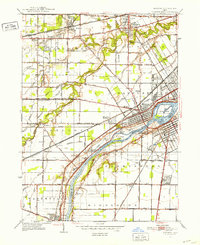 1951 Maumee1952 Print · USGSIn the early 1950s, the Maumee River valley was a corridor of burgeoning industry and deep frontier history. Researchers can trace military sites like Fort Meigs and Fort Miami, alongside local landmarks such as Turkey Foot Rock and Springfield Chapel.2 unique versions available
 - 1951 Map of Whitehouse, 1952 Print
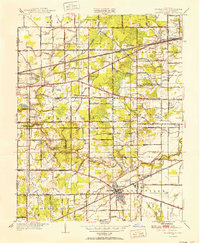 1951 Whitehouse1952 Print · USGSLucas County during the early fifties reveals a landscape of organized agriculture and rail-side hamlets. Genealogists and local historians can trace family land near Whitehouse, locate the Whitehouse Cemetery, and see the early layout of Monclova and Crissey.
 - 1956 Map of Toledo, 1968 Print
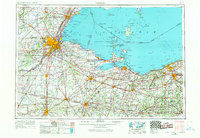 1956 Toledo1968 Print · USGSNorthwest Ohio and the Lake Erie shoreline are shown in detail during the late fifties, showcasing a landscape of heavy industry, railroads, and island communities. Genealogists and historians can trace rail networks like the Chesapeake & Ohio RR or locate landmarks such as the Erie Proving Ground and Kelleys Island.4 unique versions available
 - 1961 Map of Toledo
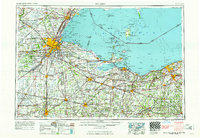 1961 Toledo1961 Print · USGSThe western basin of Lake Erie and the industrial heart of Northern Ohio are captured here during the post-war era. Researchers can trace historical rail lines like the New York Central or locate landmarks like the Erie Ordnance Depot and Pelee Island.
 - 1964 Map of Maumee, 1965 Print
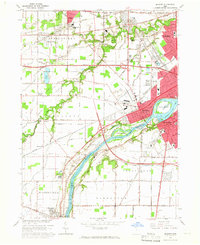 1964 Maumee1965 Print · USGSGreater Toledo and the riverfront communities of Maumee and Perrysburg are captured here during a period of mid-century suburban and industrial expansion. Trace the region's frontier roots at Fallen Timbers State Memorial or follow the historic rail paths of the Baltimore and Ohio Railroad.3 unique versions available
 - 1964 Map of Whitehouse, 1966 Print
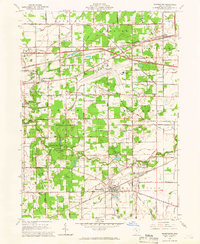 1964 Whitehouse1966 Print · USGSLucas County in the mid-sixties shows a landscape of traditional settlements like Whitehouse and Monclova increasingly defined by modern infrastructure. Researchers can trace the layout of Toledo Express Airport and find local landmarks like Love Lands Ch and the Roth Cem.2 unique versions available
 - 1986 Map of Toledo
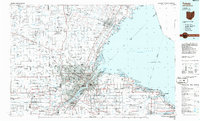 1986 Toledo1986 Print · USGSGreater Toledo and the Lake Erie shoreline are captured here in the mid-eighties, showcasing a massive network of industrial waterways and rail lines. You can trace the path of the Maumee River past Rossford or explore the conservation lands at Ottawa National Wildlife Refuge.2 unique versions available
 - 1994 Map of Maumee, 1998 Print
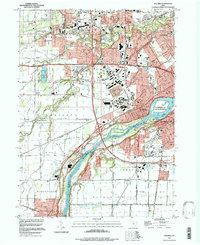 1994 Maumee1998 Print · USGSMaumee and Perrysburg are shown at the end of the twentieth century, anchored by the river and its historic military memorials. Researchers can trace the development of small settlements like Monclova and find sites such as Fort Meigs State Memorial and Riverside Cem.
End of results
Showing maps 1-15 of 15
Frequently asked questions
- What are the different types of historical maps available for Lexington Glen?
- What is the oldest map of Lexington Glen?
- Where can I purchase historical maps of Lexington Glen for my home or office?
- Where can I download high-res historical maps of Lexington Glen?
- Are there historical topographic maps available for Lexington Glen?
- Is there historical aerial imagery available for Lexington Glen?
- Where are historical maps of Lexington Glen sourced from?