1900s (20th Century) Maps of Austintown, Ohio
Explore 7 historic maps of Austintown from the 1900s (20th Century). These maps offer a rare glimpse into what life looked like during the 1900s — showing old roads, neighborhoods, homes, and landmarks that have changed or disappeared over time.
Whether you're researching your family's past, planning a metal detecting trip, or studying how Austintown's landscape evolved across the 1900s, these high-resolution maps are a powerful tool for exploring the history of this region.
- Focus on a specific era: All maps on this page are from the 1900s, giving you a focused view of this time period.
- See what’s changed: Compare century-old streets, trails, and buildings to today's modern landscape using overlays and satellite layers.
- Research with precision: Use these maps for genealogy, historical research, land use analysis, or educational projects.
- View, download, or print: Maps are fully viewable online in high resolution, and can be downloaded or printed for your own records.
Start exploring Austintown's history through authentic maps from the 1900s. This is your window into the past.
Austintown, OH maps
(7)- 1908 Map of Warren, 1937 Print
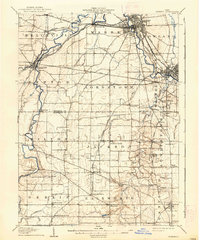 1908 Warren1937 Print · USGSTrumbull and Mahoning counties at the turn of the century show a landscape defined by the heavy rail corridors of the Mahoning River valley. Genealogists can trace family footprints near Russell School, the Infirmary, and early settlements like Mineral Ridge.2 unique versions available
 - 1950 Map of Cleveland
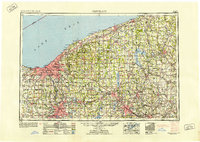 1950 Cleveland1950 Print · USGSCovers Austintown, including Cleveland, Akron, and other nearby areas
 - 1952 Map of Canfield, 1953 Print
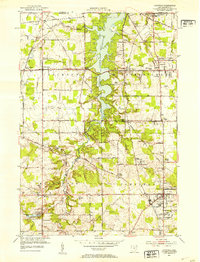 1952 Canfield1953 Print · USGSMahoning County is captured here in the early fifties as the post-war landscape began to shift around the expansive Meander Creek Reservoir. Researchers can locate family landmarks like the Dean Hill Cem, North Jackson Station, and the County Fairgrounds.
 - 1956 Map of Cleveland, 1967 Print
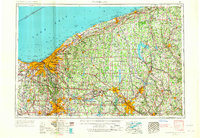 1956 Cleveland1967 Print · USGSNortheast Ohio and Western Pennsylvania are shown at their industrial height during the mid-fifties, from the steel mills to the lakeshore. Researchers can trace the massive Ravenna Arsenal, the Ohio Turnpike, and vanished rail sidings of the B & O RR.3 unique versions available
 - 1962 Map of Cleveland
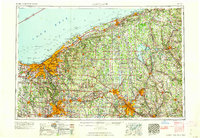 1962 Cleveland1962 Print · USGSNortheast Ohio and the Pennsylvania borderlands appear here during the industrial peak of the early sixties. Genealogists and historians can trace the expansive rail lines of the Nickel Plate Road and the growth of suburbs from Parma to Lyndhurst.
 - 1963 Map of Canfield, 1964 Print
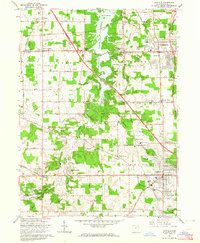 1963 Canfield1964 Print · USGSMahoning County in the early sixties reveals a landscape balancing its agricultural roots with suburban growth. Genealogists and local historians can locate long-standing landmarks like St Pauls Monastery, the County Fairgrounds, and the Old North Cem.4 unique versions available
 - 1986 Map of Youngstown, 1988 Print
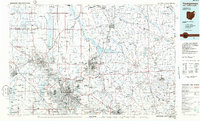 1986 Youngstown1988 Print · USGSThe industrial corridor of the Mahoning Valley and the collegiate towns of Western Pennsylvania are captured here in the mid-eighties. Researchers can trace the rail lines of the Conrail network or locate historical sites like Churchill and Crown Hill Cem.2 unique versions available
End of results
Showing maps 1-7 of 7
Top cities near Austintown
- Youngstown historical maps
- Boardman historical maps
- Warren historical maps
- Weathersfield Township historical maps
- Howland Township historical maps
- Niles historical maps
See more
Frequently asked questions
- What are the different types of historical maps available for Austintown?
- What is the oldest map of Austintown?
- Where can I purchase historical maps of Austintown for my home or office?
- Where can I download high-res historical maps of Austintown?
- Are there historical topographic maps available for Austintown?
- Is there historical aerial imagery available for Austintown?
- Where are historical maps of Austintown sourced from?