1900s (20th Century) Maps of Monroe Township, Ohio
Explore 15 historic maps of Monroe Township from the 1900s (20th Century). These maps offer a rare glimpse into what life looked like during the 1900s — showing old roads, neighborhoods, homes, and landmarks that have changed or disappeared over time.
Whether you're researching your family's past, planning a metal detecting trip, or studying how Monroe Township's landscape evolved across the 1900s, these high-resolution maps are a powerful tool for exploring the history of this region.
- Focus on a specific era: All maps on this page are from the 1900s, giving you a focused view of this time period.
- See what’s changed: Compare century-old streets, trails, and buildings to today's modern landscape using overlays and satellite layers.
- Research with precision: Use these maps for genealogy, historical research, land use analysis, or educational projects.
- View, download, or print: Maps are fully viewable online in high resolution, and can be downloaded or printed for your own records.
Start exploring Monroe Township's history through authentic maps from the 1900s. This is your window into the past.
Monroe Township, OH maps
(15)- 1906 Map of Mt Sterling, 1946 Print
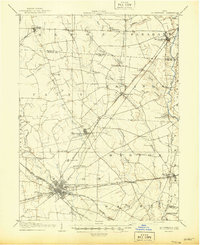 1906 Mt Sterling1946 Print · USGSCentral Ohio at the start of the twentieth century is a landscape of thriving rail hubs and rural townships. Trace the convergence of five railroads at Washington Courthouse and find family landmarks like the County Infirmary or Bloomingburg.
 - 1911 Map of Era, 1952 Print
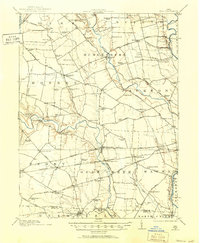 1911 Era1952 Print · USGSPickaway County at the start of the 1900s is a landscape of established farmsteads and creekside milling. Genealogists can trace family footprints through numerous rural school sites like Tick Ridge School or Locust Grove School and find early commerce hubs like Crownover Mill and Williamsport.
 - 1913 Map of Era, 1936 Print
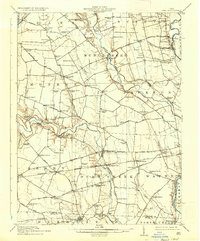 1913 Era1936 Print · USGSPickaway County agricultural life and early transport networks are preserved here in the years before the Great War. Genealogists and local historians can locate dozens of country schoolhouses like Dublin Hill School and river crossings such as Becks Ford and Gulicks Ford.
 - 1943 Map of Era
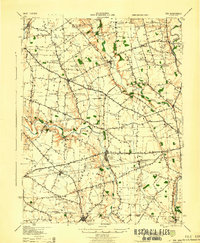 1943 Era1943 Print · USGSPickaway and Ross Counties are shown in the early 1940s, a period when rural education and river-based land divisions still shaped the Ohio countryside. Genealogists can locate dozens of country schoolhouses like Frogeye Sch and trace the Pennsylvania rail line through Williamsport and Atlanta.
 - 1947 Map of Columbus, 1948 Print
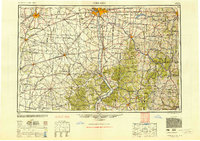 1947 Columbus1948 Print · USGSCentral Ohio in the late 1940s is captured in this survey, showing the post-war transition of its rail hubs and military airfield expansions. Genealogists and historians can trace the paths of the Ohio Canal, the Pennsylvania RR lines, and the Camp Sherman Military Reservation.
 - 1958 Map of Darbyville, 1959 Print
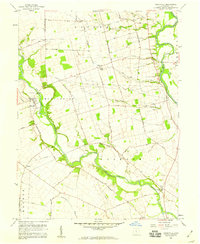 1958 Darbyville1959 Print · USGSThe rural Pickaway County landscape of the late fifties is defined by the winding paths of Big Darby Creek and the Scioto River. Researchers can trace old family sites near Robtown, find local burials at Florence Cemetery, and locate the old Township School.3 unique versions available
 - 1958 Map of Five Points, 1959 Print
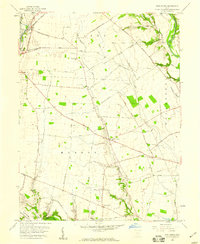 1958 Five Points1959 Print · USGSPickaway County farming life is captured in the late fifties as a network of rural roads connects local hubs like Five Points and Era. Genealogists and historians can trace family-named landmarks and routes like Whiteside-Lister Mill Road and Thomas Cem.4 unique versions available
 - 1961 Map of Columbus
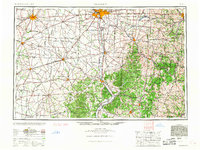 1961 Columbus1961 Print · USGSCentral and Southern Ohio are captured here in the early sixties, as the region's industrial rail hubs and military bases reached their peak. Genealogists and historians can trace the transition from urban Columbus to rural townships along the Scioto River, locating Lockbourne USAF and old junctions like Washington Court House.
 - 1961 Map of New Holland, 1963 Print
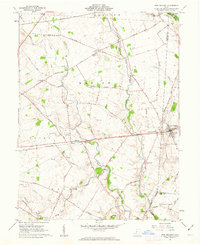 1961 New Holland1963 Print · USGSNew Holland and the surrounding townships of Pickaway and Fayette counties are captured here in the early sixties. Genealogists and local historians can trace family roots through numerous burial sites like Britton Chaffin Cem or locate the old Township Sch and the Pennsylvania railroad corridor.3 unique versions available
 - 1961 Map of Clarksburg, 1963 Print
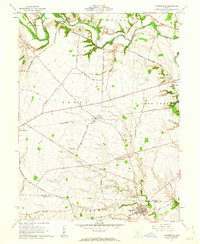 1961 Clarksburg1963 Print · USGSRoss and Pickaway Counties are shown here in the early sixties, highlighting a landscape of rail-connected villages and family farmsteads. Researchers can locate ancestral burial grounds like Grant Campbell Farm Cem and Crownover Mill Cem along the Pennsylvania RR.3 unique versions available
 - 1961 Map of Mount Sterling, 1963 Print
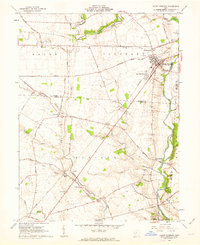 1961 Mount Sterling1963 Print · USGSMadison and Fayette counties come into focus during the early sixties as a network of rail and river commerce. Genealogists can trace family names at McClimansville Cemetery or Madison Mills Cem, and locate the Covered Bridge on Deer Creek.2 unique versions available
 - 1961 Map of Williamsport, 1963 Print
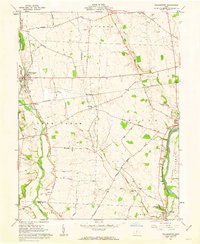 1961 Williamsport1963 Print · USGSCentral Ohio farm life and transit are preserved here during the early sixties, as the region’s agricultural roots remain firmly tied to the river valleys. Genealogists can trace family heritage through local burial sites like Peck Farm Cem or explore the historic path of the Erie Canal near Yellowbud.2 unique versions available
 - 1962 Map of Columbus
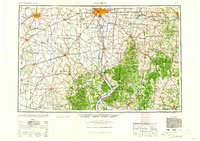 1962 Columbus1962 Print · USGSCentral Ohio during the early sixties reveals a transition from the industrial corridors of Columbus to the forested ridges of the south. Genealogists and historians can trace the rail networks of the Baltimore & Ohio RR and find local landmarks like Washington Court House and Camp Sherman Military Reservation.
 - 1967 Map of Columbus, 1969 Print
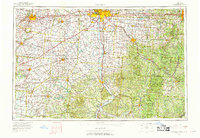 1967 Columbus1969 Print · USGSCentral Ohio during the late sixties serves as a vital corridor of rail and aviation, from the industrial streets of Springfield to the hangar lines of Lockbourne Air Force Base. Genealogists and researchers can trace the growth of towns like Circleville and London or locate rural landmarks such as St Paul church and the London Correctional Institution.2 unique versions available
 - 1986 Map of Springfield
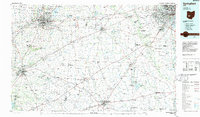 1986 Springfield1986 Print · USGSCentral Ohio in the mid-1980s shows the bustling rail-and-road network connecting Springfield and Xenia to the western outskirts of Columbus. Researchers can trace old family sites and transit routes through Glen Haven Mem Cem, Madison Lake State Park, and the CONRAIL line.2 unique versions available
End of results
Showing maps 1-15 of 15
Top cities near Monroe Township
- Columbus historical maps
- Grove City historical maps
- Circleville historical maps
- London historical maps
- Obetz historical maps
- Ashville historical maps
See more
Top neighborhoods of Monroe Township
Frequently asked questions
- What are the different types of historical maps available for Monroe Township?
- What is the oldest map of Monroe Township?
- Where can I purchase historical maps of Monroe Township for my home or office?
- Where can I download high-res historical maps of Monroe Township?
- Are there historical topographic maps available for Monroe Township?
- Is there historical aerial imagery available for Monroe Township?
- Where are historical maps of Monroe Township sourced from?