Old Maps of Elk Township, Ohio for Academic Research
Study the evolution of Elk Township with 42 high-resolution historic maps. Whether you're teaching, researching, or modeling changes in land use, these maps provide essential visual documentation of urban, environmental, and geographic change.
- Analyze long-term change: Track patterns in development, transportation, and natural features.
- Ideal for environmental or urban studies: Support academic projects with primary historical map data.
- Use in the classroom or lab: Educators and researchers rely on these maps to bring historical context to life.
These maps are a powerful tool for teaching, research, and visualizing how Elk Township has changed over the decades.
Elk Township, OH maps
(42)- 1904 Map of Zaleski, 1955 Print
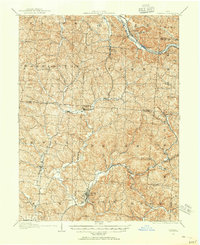 1904 Zaleski1955 Print · USGSVinton and Hocking Counties are shown at the turn of the century as the rail-and-river economy flourished. Trace family roots and vanished landmarks in Zaleski, Moonville, and the brick-making center of Haydenville.2 unique versions available
 - 1905 Map of Wilkesville, 1958 Print
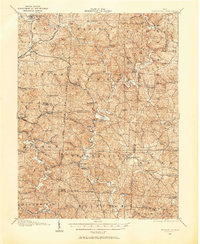 1905 Wilkesville1958 Print · USGSVinton County and its neighbors at the height of the early industrial era show a landscape shaped by charcoal furnaces and narrow-gauge rail interests. Genealogists can trace family footprints across dozens of local school districts like Auburn School or within established centers like Wilkesville and Minerton.
 - 1907 Map of Zaleski, 1944 Print
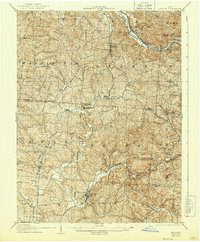 1907 Zaleski1944 Print · USGSVinton and Hocking counties at the turn of the century show an era of intense industrial activity along the coal branches. Trace the paths of the Baltimore and Ohio Southwestern RR through Moonville or find old homesteads near New Plymouth and Zaleski.
 - 1908 Map of Wilkesville, 1943 Print
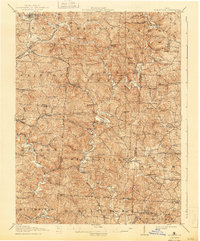 1908 Wilkesville1943 Print · USGSThe Vinton County hills are seen here during a peak era of iron furnaces and rail expansion before the Great War. Genealogists and researchers can trace dozens of family-named landmarks and institutions, from the Vinton Furnace site to Boring Church and the Haggerty School.
 - 1910 Map of Laurelville, 1962 Print
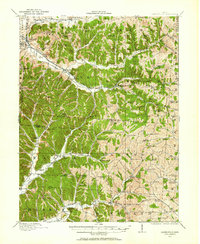 1910 Laurelville1962 Print · USGSHocking and Vinton counties come alive in the decade before the First World War, showing a landscape of ridge-top farms and valley hamlets. Genealogists can locate family landmarks like Eagle Mills, the Indian Mound, and dozens of schools including Tuling School and Union School.
 - 1912 Map of Laurelville, 1939 Print
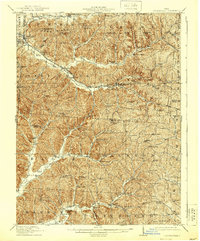 1912 Laurelville1939 Print · USGSHocking and Vinton counties at the dawn of the twentieth century show a landscape of ridge-top schools and creek-side settlements. Researchers can trace the path of the Columbus and Southern RR (Abandoned) and locate landmarks like Ash Cave and the Indian Mound.2 unique versions available
 - 1913 Map of Jackson, 1934 Print
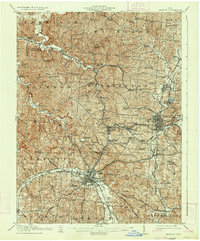 1913 Jackson1934 Print · USGSThe coal and iron heart of southern Ohio comes into focus during the early twentieth century, showing the dense rail networks of the Wellston and Jackson districts. Genealogists can trace family roots through numerous rural landmarks like the Jackson Furnace, School No 10, and Ridgewood Cemetery.2 unique versions available
 - 1944 Map of Jackson
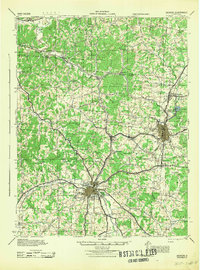 1944 Jackson1944 Print · USGSSouthern Ohio's industrial and rural heartland is detailed here during the mid-forties, centered on the coal and iron hubs of Jackson and Wellston. Genealogists can trace family roots through dozens of local landmarks like Ridgewood Cemetery and schools such as Oakland Sch.
 - 1944 Map of Laurelville
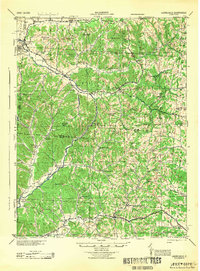 1944 Laurelville1944 Print · USGSMid-century Hocking and Vinton Counties appear here as a patchwork of tight-knit upland communities during the Second World War. Researchers can locate dozens of local landmarks including Adelphi, Eagle Mills, and the Chestnut Grove Church nestled among the hollows.
 - 1947 Map of Columbus, 1948 Print
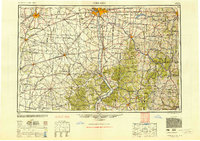 1947 Columbus1948 Print · USGSCentral Ohio in the late 1940s is captured in this survey, showing the post-war transition of its rail hubs and military airfield expansions. Genealogists and historians can trace the paths of the Ohio Canal, the Pennsylvania RR lines, and the Camp Sherman Military Reservation.
 - 1961 Map of Columbus
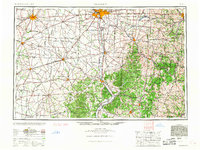 1961 Columbus1961 Print · USGSCentral and Southern Ohio are captured here in the early sixties, as the region's industrial rail hubs and military bases reached their peak. Genealogists and historians can trace the transition from urban Columbus to rural townships along the Scioto River, locating Lockbourne USAF and old junctions like Washington Court House.
 - 1961 Map of Mc Arthur
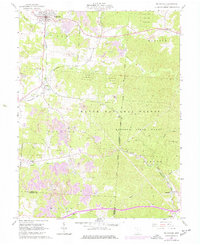 1961 Mc Arthur1961 Print · USGSCentral Vinton County during the early 1960s was a landscape defined by the intersection of industrial mining and deep state forests. You can trace early settlements and cemeteries like Dundas, Radcliff, and Hixon Cem along the busy Baltimore and Ohio rail lines.5 unique versions available
 - 1961 Map of Allensville, 1963 Print
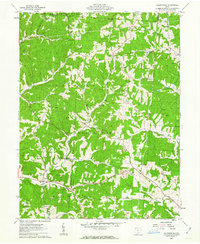 1961 Allensville1963 Print · USGSVinton County’s heavily wooded ridges and deep hollows are captured here in the early sixties, showing a landscape of small hill-country settlements. Researchers can locate several family cemeteries like Stella Cem and landmarks such as the Covered Bridge near Allensville.4 unique versions available
 - 1961 Map of Hamden, 1963 Print
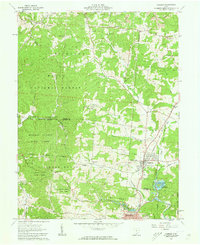 1961 Hamden1963 Print · USGSThe rail-junction town of Hamden thrived in the early 1960s at the crossing of two major lines amidst a landscape of timber and coal. Researchers can trace rural lineages through family landmarks like Martindill Cem or the remote Glen Nell settlement.2 unique versions available
 - 1961 Map of Zaleski, 1963 Print
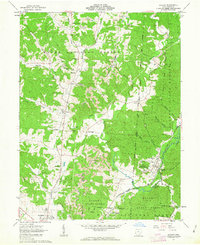 1961 Zaleski1963 Print · USGSSoutheast Ohio's Vinton County shows its industrial and forest-management character in the early sixties, centered on the historic rail town of Zaleski. Genealogists and researchers can locate the County Childrens Home, trace family names at Creola Cem, or find the Swan Sch and McArthur Chapel.5 unique versions available
 - 1962 Map of Columbus
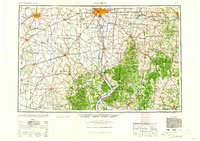 1962 Columbus1962 Print · USGSCentral Ohio during the early sixties reveals a transition from the industrial corridors of Columbus to the forested ridges of the south. Genealogists and historians can trace the rail networks of the Baltimore & Ohio RR and find local landmarks like Washington Court House and Camp Sherman Military Reservation.
 - 1967 Map of Columbus, 1969 Print
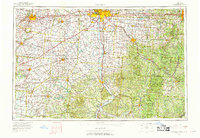 1967 Columbus1969 Print · USGSCentral Ohio during the late sixties serves as a vital corridor of rail and aviation, from the industrial streets of Springfield to the hangar lines of Lockbourne Air Force Base. Genealogists and researchers can trace the growth of towns like Circleville and London or locate rural landmarks such as St Paul church and the London Correctional Institution.2 unique versions available
 - 1980 Map of Wellston, 1982 Print
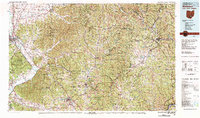 1980 Wellston1982 Print · USGSThe hill country of south-central Ohio in the early eighties shows a landscape of expansive state forests and deep-rooted river towns. Genealogists and historians can trace rural heritage through sites like Buckeye Furnace State Memorial and Mount Zion Cemetery.
 - 1992 Map of Allensville, 1994 Print
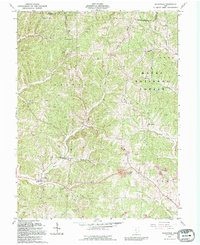 1992 Allensville1994 Print · USGSVinton County's wooded ridges and hollows are captured here in the early nineties, showing a landscape defined by small settlements and resource extraction. Researchers can locate numerous family burial grounds like Curry Cem and historical crossings including the Covered Bridge near Allensville.
 - 1992 Map of Hamden, 1995 Print
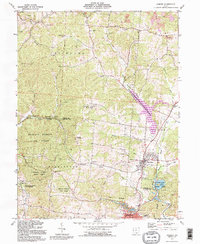 1992 Hamden1995 Print · USGSHamden and the surrounding forest lands of Vinton and Jackson Counties are shown here during a period of industrial activity and outdoor recreation. Researchers can locate family landmarks like Cassill Cem, the historic Richland Furnace, and the prominent Reed Hill Lookout Tower.
 - 2002 Map of Zaleski, 2006 Print
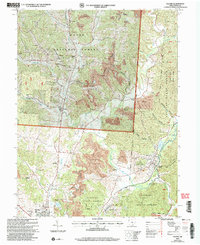 2002 Zaleski2006 Print · USGSVinton County at the turn of the millennium shows a landscape defined by state forestry and industrial reclamation. Genealogists can trace family names at Wesley Chapel Cem or locate the Swan Sch and the County Childrens Home.
 - 2002 Map of Allensville, 2006 Print
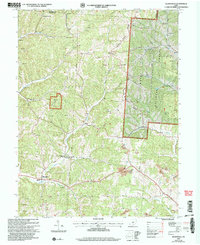 2002 Allensville2006 Print · USGSVinton County at the turn of the millennium shows a landscape defined by forest reserves and deep-rooted rural settlements. Trace family history through Bell Cem and Garrett Cem, or locate landmarks like the Covered Bridge and Otterbein Chapel.
 - 2010 Map of McArthur, 2010 Print
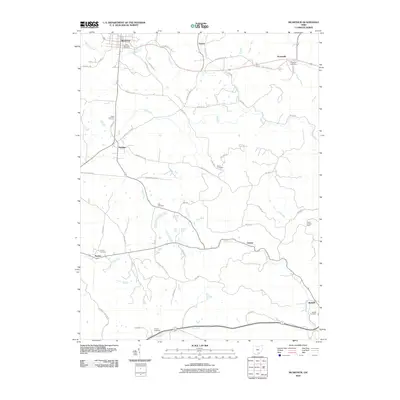 2010 McArthur2010 Print · USGSVinton County as it appeared in the early twenty-first century shows a landscape of deep hollows and scattered rural settlements. Researchers can trace family history through numerous burial sites like Old McArthur Cemetery, Beard Cemetery, and Radcliff Cemetery, or locate the Oreton Lookout Tower above Oreton.
 - 2010 Map of Hamden, 2010 Print
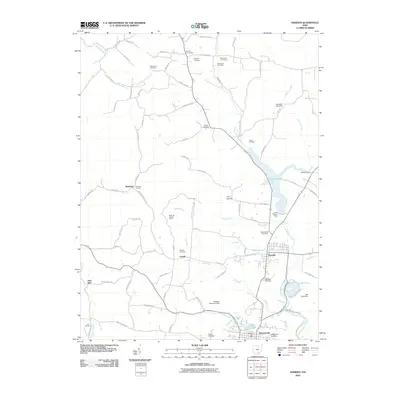 2010 Hamden2010 Print · USGSSouthern Ohio at the start of the new millennium reveals a landscape of industrial history and quiet rural junctions. Genealogists can locate family burial sites at Old Hamden Cemetery and Shiloh Cemetery, or trace the grounds of the Richland Furnace.
 - 2011 Map of Zaleski, 2011 Print
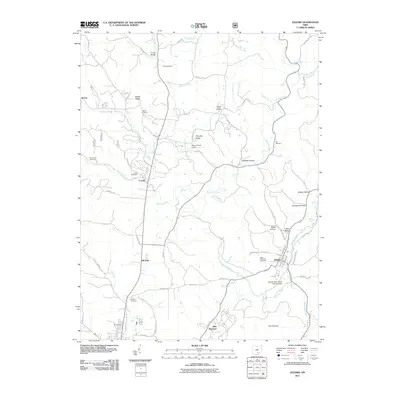 2011 Zaleski2011 Print · USGSVinton County's wooded ridges and hollows are documented here during the early twenty-first century. Genealogists and local historians can locate numerous rural burial grounds like Saint Sylvester Cemetery and Fee Cemetery or trace the early paths of Brushy Creek and Raccoon Creek.
Showing maps 1-25 of 42
Top cities near Elk Township
- Jackson historical maps
- Wellston historical maps
- Nelsonville historical maps
- McArthur historical maps
- Richland historical maps
- Starr historical maps
See more
Top neighborhoods of Elk Township
Frequently asked questions
- What are the different types of historical maps available for Elk Township?
- What is the oldest map of Elk Township?
- Where can I purchase historical maps of Elk Township for my home or office?
- Where can I download high-res historical maps of Elk Township?
- Are there historical topographic maps available for Elk Township?
- Is there historical aerial imagery available for Elk Township?
- Where are historical maps of Elk Township sourced from?