1970s Maps of Pawnee County, Oklahoma
Explore 17 historic maps of Pawnee County from the 1970s. These maps offer a rare glimpse into what life looked like during the 1970s — showing old roads, neighborhoods, homes, and landmarks that have changed or disappeared over time.
Whether you're researching your family's past, planning a metal detecting trip, or studying how Pawnee County's landscape evolved across the 1970s, these high-resolution maps are a powerful tool for exploring the history of this region.
- Focus on a specific era: All maps on this page are from the 1970s, giving you a focused view of this time period.
- See what’s changed: Compare century-old streets, trails, and buildings to today's modern landscape using overlays and satellite layers.
- Research with precision: Use these maps for genealogy, historical research, land use analysis, or educational projects.
- View, download, or print: Maps are fully viewable online in high resolution, and can be downloaded or printed for your own records.
Start exploring Pawnee County's history through authentic maps from the 1970s. This is your window into the past.
Pawnee County, OK maps
(17)- 1970 Map of Terlton, 1972 Print
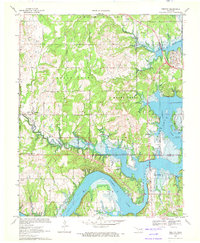 1970 Terlton1972 Print · USGSNear the convergence of Pawnee and Creek counties in the early 1970s, this map shows a landscape shaped by petroleum and the rising waters of the Keystone Reservoir. Trace the Old Indian Territory Oklahoma Territory Boundary alongside Terlton and the many Oil Wells that defined the local economy.2 unique versions available
 - 1972 Map of Morrison NE, 1974 Print
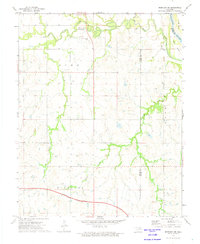 1972 Morrison NE1974 Print · USGSThe Otoe-Missouria tribal lands of Noble County are captured in the early 1970s just as the modern turnpike was being built. Trace local heritage at the Otoe-Missouria Indian Agency, the Otoe-Missouria Cem, and landmarks like Big Hill.3 unique versions available
 - 1972 Map of Morrison, 1974 Print
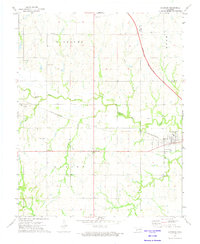 1972 Morrison1974 Print · USGSNoble County in the early seventies shows a landscape in transition as the St Louis - San Francisco railroad operates alongside a Turnpike Under Construction. Genealogists and local historians can locate Pleasant Valley Cem and trace family ties near Petes Corner or the town of Sumner.3 unique versions available
 - 1975 Map of West Point, 1979 Print
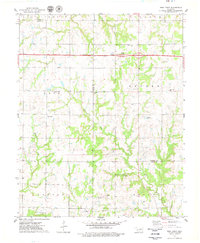 1975 West Point1979 Print · USGSNorth-central Oklahoma's oil-rich landscape comes into focus in the mid-1970s, where traditional boundaries meet modern industry. Researchers can trace family history at Mt Vernon Cem and Hopp Cem or locate old lease sites across the Oil Field.
 - 1975 Map of Glencoe, 1979 Print
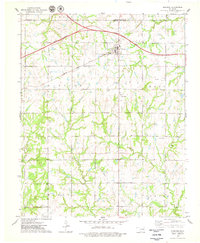 1975 Glencoe1979 Print · USGSThe crossroads of Glencoe and the surrounding prairie are captured here in the mid-seventies, just as the local energy and transit networks were maturing. Genealogists and historians can trace family plots at Glencoe Cem and Bethel Cem or locate the historic Old Indian Treaty Boundary.
 - 1978 Map of Pawnee
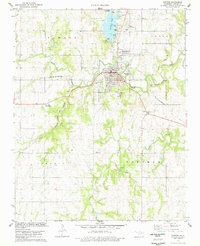 1978 Pawnee1978 Print · USGSPawnee and its surrounding townships in the late seventies showcase a landscape shaped by rail history and tribal heritage. Genealogists and historians can locate the North Indian Cem, the Old Town Trading Post, and the grounds of the Pawnee Bill Museum State Park.
 - 1978 Map of Lela
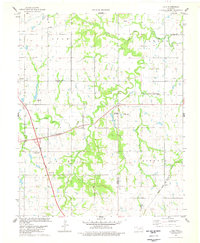 1978 Lela1978 Print · USGSPawnee and Noble counties are captured here in the late seventies, showing a landscape defined by prairie creeks and fossil fuel extraction. Researchers can trace family history at Indian Cem or follow the rails of the St Louis - San Francisco through Lela.
 - 1978 Map of Doga Creek
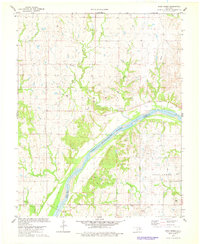 1978 Doga Creek1978 Print · USGSOsage and Pawnee counties meet along the Arkansas River in the late seventies, where the energy industry and tribal lands intersect. Researchers can trace family history at Drake Cem or map the industrial landscape of the Oil Field and Coal Creek.
 - 1978 Map of Masham
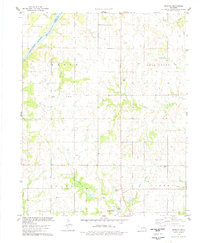 1978 Masham1978 Print · USGSNorthern Oklahoma in the late seventies is shown as a landscape of energy and agriculture along the Arkansas River. Researchers can trace old family sites at Masham Cem or locate early petroleum infrastructure at the Oil Field near Skedee.
 - 1978 Map of Skedee
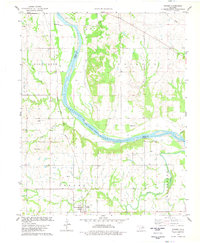 1978 Skedee1978 Print · USGSOklahoma's river borderlands in the late seventies show the intersection of the Osage Indian Reservation and the Pawnee county line. Genealogists can locate family burial sites at Riverside Cem and Wheeler Cem or trace the Atchison Topeka and Santa Fe rail line through Skedee.
 - 1978 Map of Casey
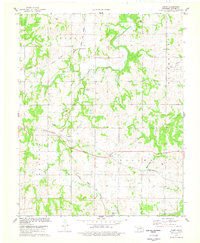 1978 Casey1978 Print · USGSOklahoma's petroleum and rail corridors are captured here in the late seventies as industrial development met the rural plains. Researchers can locate family landmarks like Valley Cem or trace the path of the St Louis San Francisco railroad through Casey.
 - 1978 Map of Watchorn
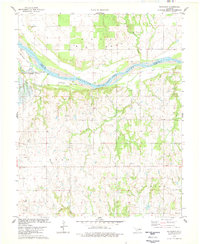 1978 Watchorn1978 Print · USGSThe Arkansas River corridor in the late seventies reveals a landscape shaped by petroleum extraction and tribal boundaries. Genealogists and researchers can locate the settlement of Watchorn and trace the complex network of an Oil Field, Oil Wells, and a regional Pipeline.
 - 1978 Map of Bug Creek
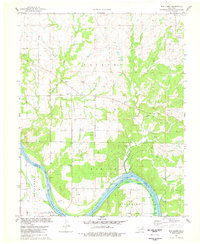 1978 Bug Creek1978 Print · USGSThe Arkansas River valley in the late 1970s shows a landscape transitioning between rural prairie and active petroleum production. Genealogists can locate Whitehorn Cem and Morrel Cem alongside the winding Bug Creek and Sycamore Creek.
 - 1978 Map of Fairfax
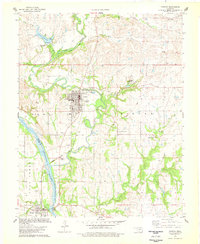 1978 Fairfax1978 Print · USGSOsage County's ranching and oil landscape is captured in the late seventies as the town of Fairfax thrives alongside the Arkansas River. Genealogists can locate Fairfax Cem and Gray Horse Cem while tracing the Atchison Topeka and Santa Fe Railroad.
 - 1978 Map of Blackburn
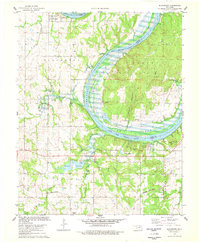 1978 Blackburn1978 Print · USGSThe Arkansas River curves through Pawnee and Osage counties in the late seventies, following the historic Osage Indian Reservation Boundary. Genealogists and historians can locate the Blackburn Cem, the Will Rogers Camp, and the industrial tracks of the St Louis - San Francisco railroad.2 unique versions available
 - 1978 Map of Jennings, 1979 Print
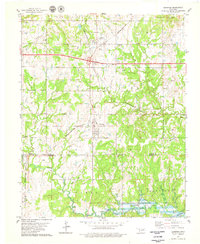 1978 Jennings1979 Print · USGSOil and rail history converge in this Oklahoma landscape near the Pawnee and Creek county line in the late seventies. Genealogists and historians can trace the Old Indian Territory-Oklahoma Boundary and find family sites at Bethany Cem or Jennings Cem.
 - 1978 Map of Maramec, 1979 Print
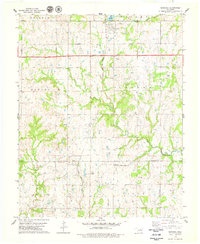 1978 Maramec1979 Print · USGSOklahoma oil country is captured here in the late seventies, showing the intersection of energy production and historic land boundaries. Researchers can locate the Old Indian Treaty Boundary and trace family sites near Maramec, Quay, and the Odd Fellows Cem.
End of results
Showing maps 1-17 of 17
Top cities of Pawnee County
- Cleveland historical maps
- Pawnee historical maps
- Jennings historical maps
- Ralston historical maps
- Westport historical maps
- Hallett historical maps
See more
Frequently asked questions
- What are the different types of historical maps available for Pawnee County?
- What is the oldest map of Pawnee County?
- Where can I purchase historical maps of Pawnee County for my home or office?
- Where can I download high-res historical maps of Pawnee County?
- Are there historical topographic maps available for Pawnee County?
- Is there historical aerial imagery available for Pawnee County?
- Where are historical maps of Pawnee County sourced from?