1900s (20th Century) Maps of Pawnee County, Oklahoma
Explore 41 historic maps of Pawnee County from the 1900s (20th Century). These maps offer a rare glimpse into what life looked like during the 1900s — showing old roads, neighborhoods, homes, and landmarks that have changed or disappeared over time.
Whether you're researching your family's past, planning a metal detecting trip, or studying how Pawnee County's landscape evolved across the 1900s, these high-resolution maps are a powerful tool for exploring the history of this region.
- Focus on a specific era: All maps on this page are from the 1900s, giving you a focused view of this time period.
- See what’s changed: Compare century-old streets, trails, and buildings to today's modern landscape using overlays and satellite layers.
- Research with precision: Use these maps for genealogy, historical research, land use analysis, or educational projects.
- View, download, or print: Maps are fully viewable online in high resolution, and can be downloaded or printed for your own records.
Start exploring Pawnee County's history through authentic maps from the 1900s. This is your window into the past.
Pawnee County, OK maps
(41)- 1912 Map of Hominy, 1960 Print
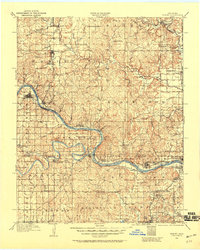 1912 Hominy1960 Print · USGSNortheastern Oklahoma comes alive in this pre-reservoir survey, documenting the river-valley settlements and tribal lands of the early statehood era. Genealogists can locate dozens of country schools and sites like Black Dog (Indian Village) or the early Oil City Barnsdall P O.
 - 1915 Map of Hominy
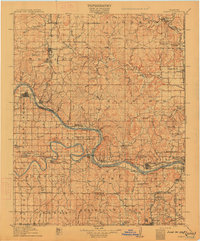 1915 Hominy1915 Print · USGSOsage and Creek counties come to life in the years before the Great War, showing a landscape defined by river confluences and the expansion of the rail industry. Genealogists can locate early settlements like Black Dog and schools like Dripping Spring School or Sunset School.2 unique versions available
 - 1915 Map of Hominy, 1928 Print
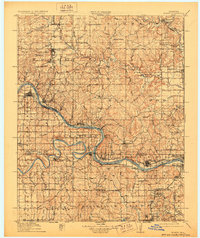 1915 Hominy1928 Print · USGSNortheast Oklahoma during the early oil and rail boom is captured here as the Osage and Creek county lines meet the great river bends. Genealogists can trace early homesteads near Black Dog, Oil City, and Union Chapel.2 unique versions available
 - 1929 Map of Yale, 1959 Print
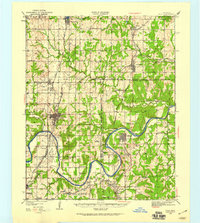 1929 Yale1959 Print · USGSOklahoma's oil and rail heartland comes into focus in the late 1920s as the petroleum industry reshapes the landscape of the former Indian Territory. Researchers can trace the extensive network of rural schools and industrial sites, from 35 Oil Tanks near Oilton to the many country schoolhouses like Lone Elm Sch and Bethel Sch.
 - 1929 Map of Ripley, 1959 Print
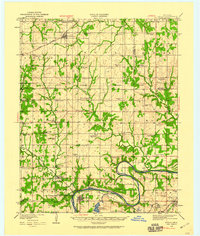 1929 Ripley1959 Print · USGSEastern Oklahoma townships in Payne and Pawnee Counties appear here as they were in the late 1920s, structured by early rail lines and river bends. You can trace the community life of the era through sites like Ingalls Signet P O, the Rosenwald Sch, and the Atchison Topeka and Santa Fe tracks.
 - 1929 Map of Skedee, 1975 Print
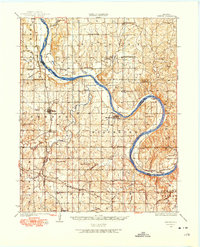 1929 Skedee1975 Print · USGSNorth-central Oklahoma's river-and-rail landscape is captured here in the late 1920s, dominated by the looping current of the Arkansas River. Genealogists and historians can trace numerous rural schools and early infrastructure, from the East Bend Ferry to the Bug Creek Indian Camp.
 - 1930 Map of Pawnee, 1958 Print
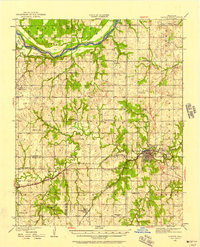 1930 Pawnee1958 Print · USGSNorth-central Oklahoma at the start of the 1930s shows a landscape shaped by river commerce, the oil industry, and early rail lines. Local historians can trace the Pawnee Indian School Reservation, the Old Town Trading Post, and numerous rural school sites like Highland Sch.
 - 1931 Map of Skedee
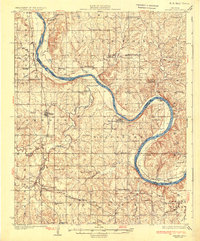 1931 Skedee1931 Print · USGSPawnee and Osage counties are shown here during the late 1920s, when river crossings and rural schools defined the community landscape. Genealogists can locate family landmarks like the Bug Creek Indian Camp, Mt Pleasant Cemetery, and the East Bend Ferry.3 unique versions available
 - 1932 Map of Yale
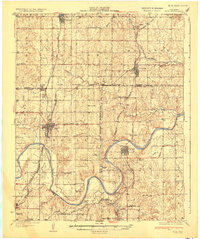 1932 Yale1932 Print · USGSThe oil-rich landscape along the Cimarron River is captured here just after the peak of the regional boom. Researchers can locate early schools and burial sites like Pleasantvale Sch and Greenwood Cem, alongside major petroleum infrastructure like the 35 Oil Tanks near Oilton.3 unique versions available
 - 1932 Map of Ripley
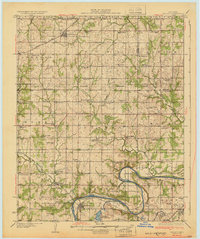 1932 Ripley1932 Print · USGSRipley and Glencoe anchor this Depression-era portrait of the Oklahoma landscape as the oil industry began to mark the riverbanks. Researchers can locate dozens of vanished rural schools and early landmarks like Twin Mounds, the Payne County Farm, and the Signet PO.2 unique versions available
 - 1932 Map of Fairfax
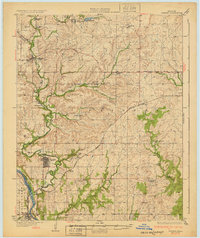 1932 Fairfax1932 Print · USGSOsage County is shown at the height of its oil-era development in the early thirties. Local historians can trace the industrial footprint of Carter Nine, find rural landmarks like St Johns Sch, and follow the Atchison Topeka and Santa Fe rail line.4 unique versions available
 - 1936 Map of Belford
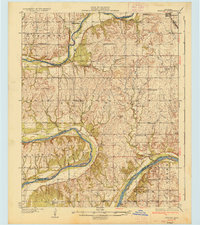 1936 Belford1936 Print · USGSOsage and Noble counties come into focus in the mid-1930s, showing a rural landscape defined by the winding Arkansas River. Genealogists and local historians can trace numerous country school sites like Braden Sch and Pleasant Valley Sch, alongside the Atchison Topeka and Santa Fe Ry through Apperson.3 unique versions available
 - 1936 Map of Pawnee
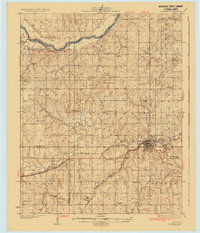 1936 Pawnee1936 Print · USGSPawnee County and the surrounding cattle and oil country come alive in this mid-thirties survey of the Oklahoma plains. Researchers can locate dozens of country schools like Star A Star Sch and trace the Pawnee Indian School Reservation and the Old Town Trading Post.2 unique versions available
 - 1955 Map of Enid, 1966 Print
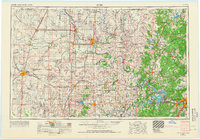 1955 Enid1966 Print · USGSNorth-central Oklahoma's transition from open plains to the blackjack hills of the Osage Indian Reservation is captured in the mid-1950s. Researchers can trace the development of the Naval Reserve Oil Field, the grounds of Vance AFB, and the early footprints of Tulsa and Stillwater.4 unique versions available
 - 1958 Map of Enid
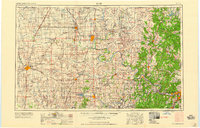 1958 Enid1958 Print · USGSNorthern Oklahoma is mapped here in the late fifties, showcasing a dense network of petroleum production and historic tribal lands. Researchers can trace the legacy of the Osage Indian Reservation, early energy hubs like the Cushing Oil Field, and the Chilocco Indian Agricultural School.2 unique versions available
 - 1958 Map of Keystone Dam, 1959 Print
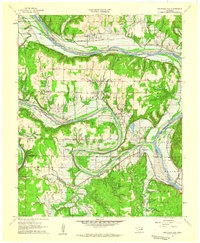 1958 Keystone Dam1959 Print · USGSOklahoma's river valleys underwent a massive transformation in the late fifties as the Keystone Dam Under Construction project began. Researchers can trace the original locations of Prue, Appalachia, and Keystone along with family-named sites like Dixie Cem.4 unique versions available
 - 1958 Map of Wekiwa, 1959 Print
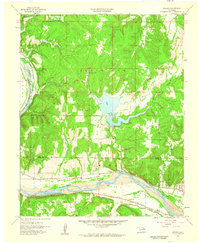 1958 Wekiwa1959 Print · USGSThe Arkansas River valley of the late 1950s was a landscape defined by the Osage Indian Reservation, heavy oil production, and vital rail lines. Genealogists and local historians can trace the foundations of Fisher and Wekiwa, along with rural landmarks like Anderson Sch and Fisher Ch.5 unique versions available
 - 1966 Map of Cleveland, 1967 Print
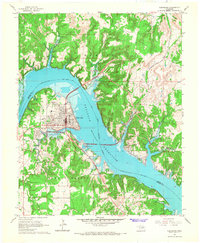 1966 Cleveland1967 Print · USGSCleveland and the Arkansas River valley are seen here in the mid-sixties as the newly formed reservoir reshaped the Pawnee County landscape. Researchers can locate family sites at Woodland Cemetery and Dixie Cem, or trace the rail corridor of the Missouri Kansas Texas.2 unique versions available
 - 1966 Map of New Prue, 1967 Print
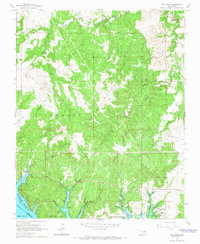 1966 New Prue1967 Print · USGSOsage County was undergoing a major geographic shift in the mid-sixties as the newly formed Keystone Reservoir altered the valley floor. Genealogists and historians can trace the early layout of New Prue and find industrial footprints in the Osage City Oil Field or near Wildhorse.3 unique versions available
 - 1968 Map of Ponca City SE, 1969 Print
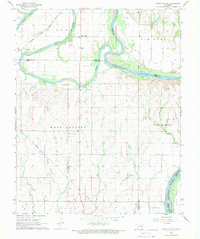 1968 Ponca City SE1969 Print · USGSThe confluence of the Salt Fork and Arkansas rivers defines this part of Noble County in the late sixties. Researchers can trace the Atchison Topeka and Santa Fe rail line and locate old community hubs like White Eagle and West Bressie.
 - 1970 Map of Terlton, 1972 Print
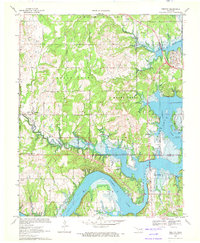 1970 Terlton1972 Print · USGSNear the convergence of Pawnee and Creek counties in the early 1970s, this map shows a landscape shaped by petroleum and the rising waters of the Keystone Reservoir. Trace the Old Indian Territory Oklahoma Territory Boundary alongside Terlton and the many Oil Wells that defined the local economy.2 unique versions available
 - 1972 Map of Morrison NE, 1974 Print
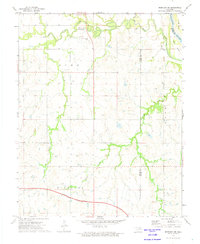 1972 Morrison NE1974 Print · USGSThe Otoe-Missouria tribal lands of Noble County are captured in the early 1970s just as the modern turnpike was being built. Trace local heritage at the Otoe-Missouria Indian Agency, the Otoe-Missouria Cem, and landmarks like Big Hill.3 unique versions available
 - 1972 Map of Morrison, 1974 Print
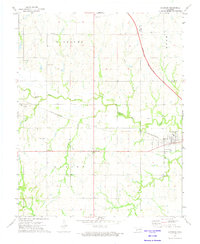 1972 Morrison1974 Print · USGSNoble County in the early seventies shows a landscape in transition as the St Louis - San Francisco railroad operates alongside a Turnpike Under Construction. Genealogists and local historians can locate Pleasant Valley Cem and trace family ties near Petes Corner or the town of Sumner.3 unique versions available
 - 1975 Map of West Point, 1979 Print
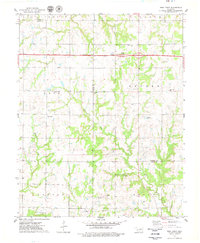 1975 West Point1979 Print · USGSNorth-central Oklahoma's oil-rich landscape comes into focus in the mid-1970s, where traditional boundaries meet modern industry. Researchers can trace family history at Mt Vernon Cem and Hopp Cem or locate old lease sites across the Oil Field.
 - 1975 Map of Glencoe, 1979 Print
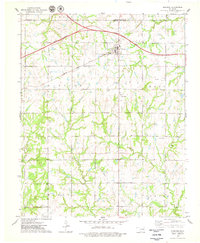 1975 Glencoe1979 Print · USGSThe crossroads of Glencoe and the surrounding prairie are captured here in the mid-seventies, just as the local energy and transit networks were maturing. Genealogists and historians can trace family plots at Glencoe Cem and Bethel Cem or locate the historic Old Indian Treaty Boundary.
Showing maps 1-25 of 41
Top cities of Pawnee County
- Cleveland historical maps
- Pawnee historical maps
- Jennings historical maps
- Ralston historical maps
- Westport historical maps
- Hallett historical maps
See more
Frequently asked questions
- What are the different types of historical maps available for Pawnee County?
- What is the oldest map of Pawnee County?
- Where can I purchase historical maps of Pawnee County for my home or office?
- Where can I download high-res historical maps of Pawnee County?
- Are there historical topographic maps available for Pawnee County?
- Is there historical aerial imagery available for Pawnee County?
- Where are historical maps of Pawnee County sourced from?