Old Maps of Washita County, Oklahoma for Hiking & Exploration
Hike through history with 182 historic maps of Washita County. Explore old trails, ghost towns, and forgotten backroads — perfect for outdoor adventurers and local explorers.
- Rediscover forgotten places: Map out old mining camps, roads, and footpaths that no longer exist on modern maps.
- Layer with modern tools: Combine with LiDAR or satellite views to plan hikes through historical terrain.
- Made for exploration: Popular among hikers, overlanders, and local history lovers.
Use these maps to find adventure and explore the hidden past of Washita County.
Washita County, OK maps
(182)- 1955 Map of Clinton, 1964 Print
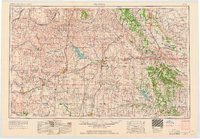 1955 Clinton1964 Print · USGSWestern Oklahoma during the mid-century transition shows a landscape of growing reservoirs and active military flight lines. Genealogists and historians can locate rural landmarks such as Mountain View Church, Berlin School, and the Riverside Indian School Reserve.3 unique versions available
 - 1956 Map of Cordell, 1958 Print
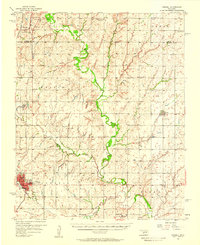 1956 Cordell1958 Print · USGSWashita County during the mid-fifties reveals a landscape of thriving rail towns and deep-rooted rural congregations. Genealogists can trace family footprints across the St Louis - San Francisco line and through local landmarks like Old Crow Cem or Bessie.2 unique versions available
 - 1957 Map of Clinton
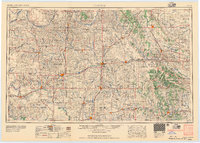 1957 Clinton1957 Print · USGSWestern Oklahoma in the mid-fifties is captured here as a landscape of river-valley settlements and emerging energy fields. Genealogists can trace family roots through numerous rural landmarks like the Swapping Back Indian School, Hebron Church, and the Riverside Indian School Reserve.
 - 1957 Map of Dill City, 1958 Print
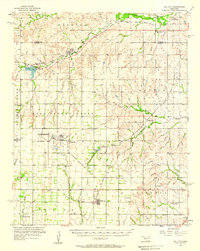 1957 Dill City1958 Print · USGSWestern Oklahoma during the late fifties centers on the expansive Clinton-Sherman Air Force Base and the crossroads of the Santa Fe and Rock Island railroads. Genealogists can trace family names through dozens of rural sites like Kerns Cem, Novis Cem, and the Parkersburg Sch.3 unique versions available
 - 1961 Map of Gotebo, 1962 Print
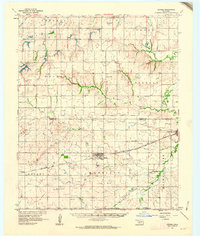 1961 Gotebo1962 Print · USGSKiowa and Washita County homesteads are mapped here in the early sixties, anchored by the rail corridor of the Chicago Rock Island and Pacific. Researchers can locate several rural landmarks including the Rainy Mountain Indian Mission Cemetery, Lone Wolf Chapel, and the Old Indian Boundary.2 unique versions available
 - 1961 Map of Eakly, 1962 Print
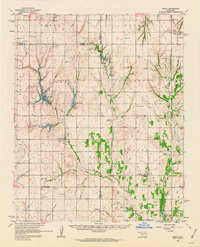 1961 Eakly1962 Print · USGSSettlement and farming patterns in central Oklahoma are captured here in the early sixties, just as the Fort Cobb Reservoir began to transform the local drainage. Genealogists and historians can locate numerous rural burial grounds and meeting houses, including Missouri Cem Ch, High Point Cem, and the Indian Cem.2 unique versions available
 - 1961 Map of Hobart, 1962 Print
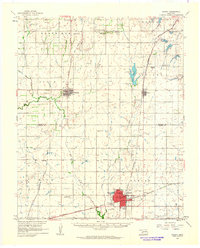 1961 Hobart1962 Print · USGSKiowa and Washita counties are shown here in the early 1960s as a bustling junction of major rail lines and rural agricultural life. Researchers can trace family history through sites like Huckaby Cem, Sentinel High Sch, and the Oil Field.2 unique versions available
 - 1961 Map of Carnegie, 1963 Print
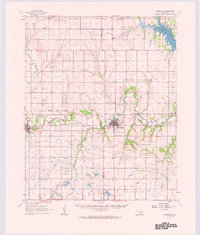 1961 Carnegie1963 Print · USGSThe Washita River valley in the early sixties serves as the focal point for this survey of Carnegie and Mountain View. Genealogists can trace family names at Indian Mission, Cedar Creek Cem, or the Old Indian Treaty Boundary.
 - 1961 Map of Retrop, 1963 Print
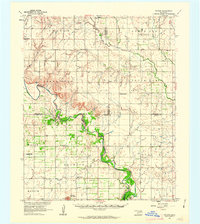 1961 Retrop1963 Print · USGSSouthwestern Oklahoma at the start of the sixties reveals a landscape shaped by river bends and rural oil fields. Genealogists can locate family landmarks like Poarch Cem, Port Sch, and the community of Retrop, all before modern development shifted the countryside.2 unique versions available
 - 1961 Map of Elk City, 1963 Print
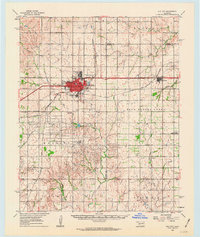 1961 Elk City1963 Print · USGSThe Beckham County plains in the early sixties reveal a landscape shaped by Route 66 and the energy industry. Genealogists and historians can trace rural family sites like Hefner Church, the Ural Cemetery, and local landmarks such as Merritt School.
 - 1976 Map of Dill City NE
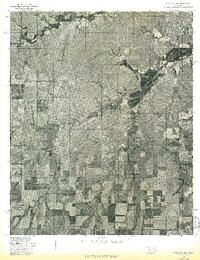 1976 Dill City NE1976 Print · USGSWashita County in the mid-seventies shows a landscape defined by agricultural precision and significant water infrastructure. You can trace the winding path of Turkey Creek as it feeds into Clinton Lake and locate the settlement of Foss.
 - 1976 Map of Dill City SE
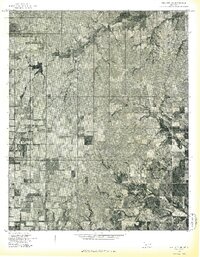 1976 Dill City SE1976 Print · USGSThe Washita County countryside in the mid-seventies is documented here through high-resolution aerial photography. Genealogists and land researchers can trace property boundaries and natural drainage along South Boggy Creek and Cavalry Creek.
 - 1983 Map of Bessie, 1984 Print
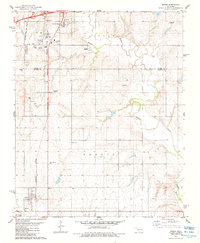 1983 Bessie1984 Print · USGSWashita County and Custer County meet along the river in the early 1980s, where the railroad network serves the local agricultural economy. Researchers can locate family sites at John Old Crow Cem, Peace Ch, and the Oklahoma Veterans Center.
 - 1983 Map of Foss, 1984 Print
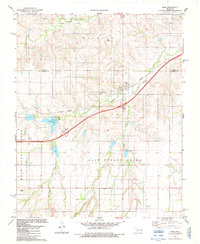 1983 Foss1984 Print · USGSWashita County's agricultural landscape is captured here in the early eighties as the FARMRAIL line and Highway 66 cut through the plains. Genealogists and local historians can trace legacy sites like Old Foss Cem, St Francis Cem, and the water works at Clinton Lake.
 - 1983 Map of Dill City, 1984 Print
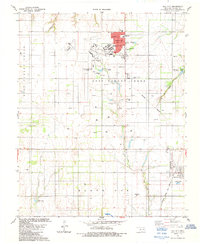 1983 Dill City1984 Print · USGSWashita County during the early 1980s displays a landscape shaped by aviation and rail. Trace the development of Burns Flat near the Clinton-Sherman Airport or find family history at Novis Cem and Boggy Cem.2 unique versions available
 - 1983 Map of Corn, 1984 Print
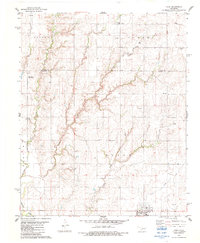 1983 Corn1984 Print · USGSWashita and Custer counties appear here in the early 1980s, centered on the rural community of Corn. Researchers can trace local lineage at Krimmer Cem and Zion Cem, or locate landmarks like the Bergthal Ch and Sleepy Hill Landing Strip.
 - 1983 Map of Dill City SE, 1984 Print
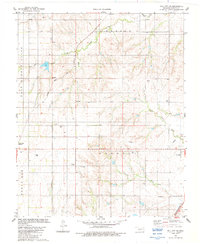 1983 Dill City SE1984 Print · USGSWashita County's agricultural and energy landscape is shown here in the early 1980s as rail transport and creek systems shaped local growth. Family historians can trace local roots through Old Boggy Cem and Sod Cem, or locate the junction at Burns Flat Junction.
 - 1983 Map of Cordell, 1984 Print
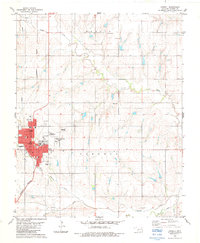 1983 Cordell1984 Print · USGSCordell and its surrounding prairies are captured in the early 1980s, showcasing a rural Oklahoma community centered on its schools and rail lines. Researchers can trace local heritage through the Lincoln School, Lawnview Cemetery, and the Burlington Northern railroad.
 - 1983 Map of Cloud Chief, 1984 Print
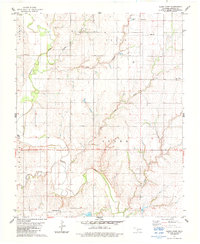 1983 Cloud Chief1984 Print · USGSWashita County's agricultural landscape is documented here in the early 1980s, centered on the settlement of Cloud Chief. Researchers can trace old family lineages and rural homesteads through landmarks like Shelley Cem, Brethren Cem, and the winding Washita River.
 - 1983 Map of Dill City NE, 1984 Print
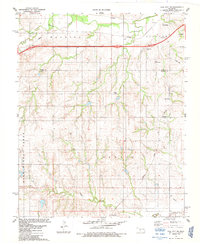 1983 Dill City NE1984 Print · USGSWashita County and the plains around Clinton come into focus during the early eighties, showing a landscape defined by its rail lines and river valleys. Genealogists and local historians can trace the rural communities of Alfalfa and Parkersburg alongside the Lutheran Cem and Werning Cem.
 - 1984 Map of Gotebo East, 1985 Print
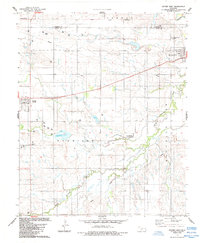 1984 Gotebo East1985 Print · USGSKiowa and Washita counties are shown here in the mid-1980s, where the landscape is still defined by early territorial markers. Researchers can trace the Old Indian Treaty Boundary and locate historic sites like the Rainy Mountain Indian Mission and Mountain View Cem.
 - 1984 Map of Eakly, 1985 Print
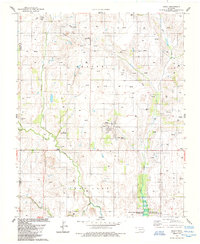 1984 Eakly1985 Print · USGSCaddo County's agricultural and water-management landscape comes into focus here in the mid-1980s. Local researchers can trace rural life through sites like Fairview Ch, private airfields like the Wheeler Landing Strip, and the early footprint of the Fort Cobb Reservoir.
 - 1984 Map of Colony, 1985 Print
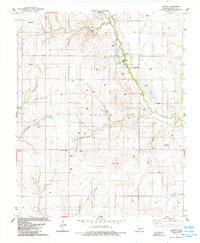 1984 Colony1985 Print · USGSIn the mid-eighties, this portion of Washita County maintained a rural landscape defined by deep-rooted family and tribal history. Researchers can trace local heritage through sites like Indian Cem, Washita Heights Sch, and Cowden Junction.
 - 1984 Map of Sentinel, 1985 Print
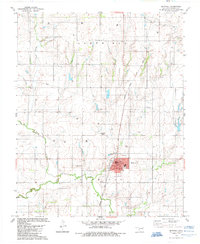 1984 Sentinel1985 Print · USGSSentinel and the surrounding Washita County landscape are captured in the mid-1980s during a period of steady energy and rail activity. Researchers can trace family sites at Sentinel Cem and Huckleby Cem or follow the Atchison Topeka and Santa Fe rail line.
 - 1984 Map of Cowden, 1985 Print
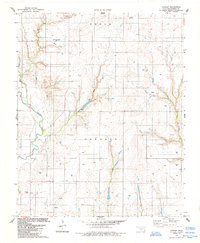 1984 Cowden1985 Print · USGSWashita County is captured here in the mid-1980s, showcasing a landscape defined by the Washita River and a growing energy infrastructure. Researchers can locate long-standing community landmarks like Cowden, Sappington Chapel Cem, and Oakdale Cem.
Showing maps 1-25 of 182
Top cities of Washita County
- New Cordell historical maps
- Burns Flat historical maps
- Sentinel historical maps
- Corn historical maps
- Canute historical maps
- Dill City historical maps
See more
Frequently asked questions
- What are the different types of historical maps available for Washita County?
- What is the oldest map of Washita County?
- Where can I purchase historical maps of Washita County for my home or office?
- Where can I download high-res historical maps of Washita County?
- Are there historical topographic maps available for Washita County?
- Is there historical aerial imagery available for Washita County?
- Where are historical maps of Washita County sourced from?