Old Maps of North Albany, Albany for Academic Research
Study the evolution of North Albany with 17 high-resolution historic maps. Whether you're teaching, researching, or modeling changes in land use, these maps provide essential visual documentation of urban, environmental, and geographic change.
- Analyze long-term change: Track patterns in development, transportation, and natural features.
- Ideal for environmental or urban studies: Support academic projects with primary historical map data.
- Use in the classroom or lab: Educators and researchers rely on these maps to bring historical context to life.
These maps are a powerful tool for teaching, research, and visualizing how North Albany has changed over the decades.
North Albany, Albany maps
(17)- 1912 Map of Jefferson
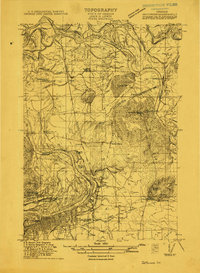 1912 Jefferson1912 Print · USGSThe Willamette Valley at the height of the pre-war rail era shows a landscape of river-bend towns and rural school districts. Genealogists can locate family lands near Millersburg or trace the routes of the Oregon Electric and Corvallis and Eastern railroads.
 - 1916 Map of Albany
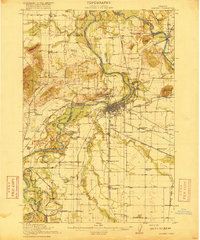 1916 Albany1916 Print · USGSThe Willamette Valley thrives at a peak of rail and river activity in the early twentieth century. Genealogists and local historians can trace rural school districts like Dixie School, early river crossings such as Fisher Ferry, and the original paths of the Southern Pacific railroad.4 unique versions available
 - 1944 Map of Albany
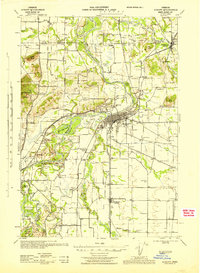 1944 Albany1944 Print · USGSThe Willamette Valley during the Second World War era shows a landscape of river-fed agriculture and growing rail hubs. Genealogists can locate family landmarks like Oakville Ch, Dover Cem, and dozens of district schools such as Fir Grove Sch.
 - 1953 Map of Salem
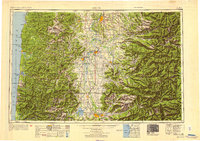 1953 Salem1953 Print · USGSMid-century Oregon comes to life through this detailed survey of the Willamette Valley and the adjacent Pacific coastline. Researchers can trace the rail lines of the Southern Pacific RR, visit rural hubs like Fairview School, or locate coastal landmarks like the Yaquina Head Lighthouse.
 - 1954 Map of Salem
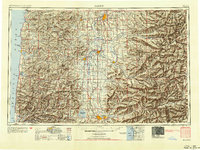 1954 Salem1954 Print · USGSMid-century Western Oregon is centered on the productive Willamette River valley as its cities and infrastructure expand toward the mountains. Genealogists and historians can trace the rail lines of the Southern Pacific RR and Oregon Electric Ry through towns like Dallas, Independence, and Brownsville.
 - 1957 Map of Albany, 1959 Print
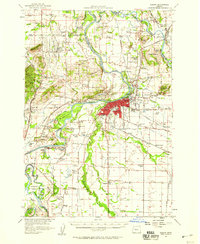 1957 Albany1959 Print · USGSThe Willamette Valley’s river-and-rail economy is on full display in the late 1950s as ALBANY grows between the SANTIAM RIVER and SOUTHERN PACIFIC lines. Genealogists can trace family roots through numerous landmarks like Morning Star Grange, Suver Cem, and McFarland School.2 unique versions available
 - 1960 Map of Salem, 1968 Print
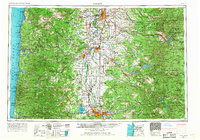 1960 Salem1968 Print · USGSThe Willamette Valley and the surrounding mountain ranges are shown here in the 1960s during a period of significant reservoir construction. Genealogists and historians can trace rail lines like the Oregon Electric and find communities from Lincoln City on the coast to Sweet Home and Mill City in the foothills.2 unique versions available
 - 1962 Map of Salem
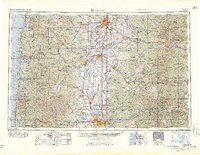 1962 Salem1962 Print · USGSThe Willamette Valley and the surrounding Oregon ranges are captured here in the early sixties, showing the vital growth of the state's primary agricultural and academic corridor. Researchers can trace the mid-century footprints of Oregon State University and the University of Oregon, alongside rural landmarks like Camp Adair and Black Butte Mine.
 - 1963 Map of Salem
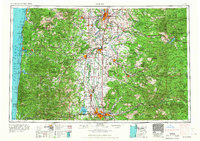 1963 Salem1963 Print · USGSMid-century Oregon comes into focus as the Willamette Valley’s timber and agricultural industries meet the growing campuses of Oregon State University and the University of Oregon. Researchers can trace old rail lines like the Oregon Electric Railway and locate family plots at Siletz Cem or Dallas Cem.
 - 1970 Map of Albany, 1972 Print
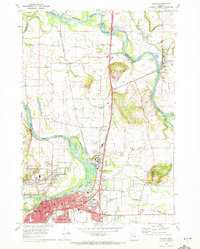 1970 Albany1972 Print · USGSThe Albany and Jefferson corridor in the early seventies shows a landscape defined by the WILLAMETTE RIVER and major rail lines. Genealogists can trace family roots through numerous sites like Waverly Cemetery, Dever School, and Hale Butte.3 unique versions available
 - 1976 Map of Albany, 1980 Print
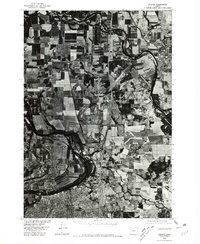 1976 Albany1980 Print · USGSThe Willamette Valley at the Bicentennial is captured in this orthophotograph, showcasing the agricultural heart of Oregon. Researchers can trace the mid-century footprints of Albany, North Albany, and Jefferson along the winding Santiam River.
 - 1980 Map of Corvallis, 1981 Print
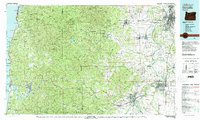 1980 Corvallis1981 Print · USGSThe Oregon Coast Range meets the fertile Willamette Valley in the early eighties, documenting a landscape of timber, agriculture, and growing college towns. Genealogists and historians can trace old rail lines like the Southern Pacific or locate landmarks like Marys Peak and the College of Education.
 - 2011 Map of Albany, 2011 Print
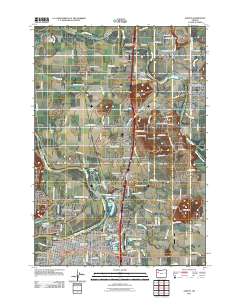 2011 Albany2011 Print · USGSThe Willamette Valley’s river-and-rail corridor is captured here in the early twenty-first century as Albany and Jefferson continue to grow. Family historians can trace local roots through Riverside Cemetery, Allphin Cemetery, and the Jefferson Post Office.
 - 2014 Map of Albany, 2014 Print
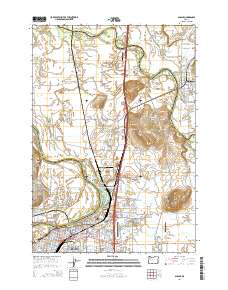 2014 Albany2014 Print · USGSThe Willamette Valley comes into focus in the early 2010s at the junction of the Santiam and Willamette rivers. Genealogists and local historians can trace legacy burial sites like Knox Butte Cem and explore the surroundings of Jefferson and Millersburg.
 - 2017 Map of Albany, 2017 Print
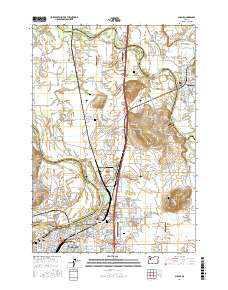 2017 Albany2017 Print · USGSAlbany and the Santiam River confluence are shown in detail during the late twenty-tens as the region's urban and rural boundaries continue to evolve. Researchers can locate numerous family burial sites and landmarks like Waverly Memorial Cem, Knox Butte, and Propst Airport.
 - 2020 Map of Albany, 2020 Print
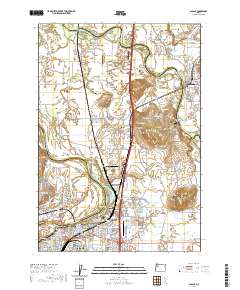 2020 Albany2020 Print · USGSThe Willamette and Santiam rivers meet in this 2020 overview of the Albany area, showing its development as a valley transportation hub. Researchers can trace historic cemeteries like Waverly Memorial Cem and Allphin Cem alongside the Linn County Courthouse.
 - 2023 Map of Albany, 2023 Print
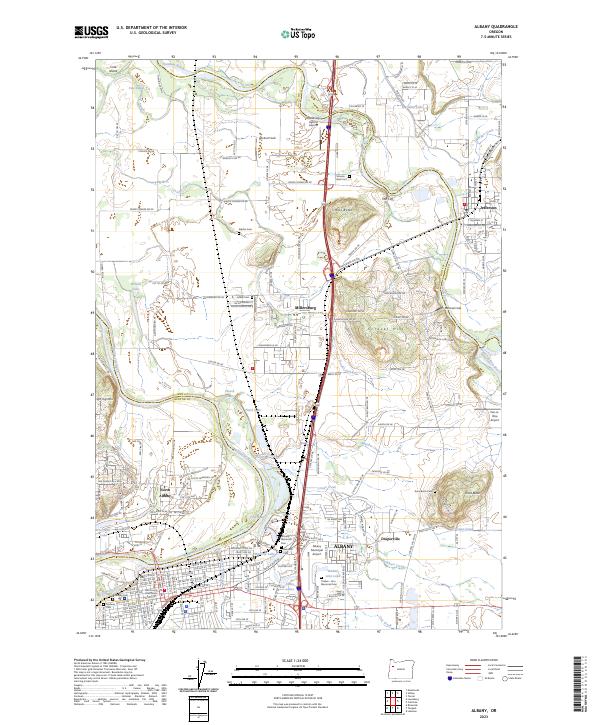 2023 Albany2023 Print · USGSThe Willamette Valley at the confluence of the Santiam and Willamette rivers shows a landscape shaped by water and rail. Genealogists can trace family names at Allphin Cem or Masonic Cem, while collectors can locate landmarks like Mitchell Field.
End of results
Showing maps 1-17 of 17
Frequently asked questions
- What are the different types of historical maps available for North Albany?
- What is the oldest map of North Albany?
- Where can I purchase historical maps of North Albany for my home or office?
- Where can I download high-res historical maps of North Albany?
- Are there historical topographic maps available for North Albany?
- Is there historical aerial imagery available for North Albany?
- Where are historical maps of North Albany sourced from?