Old Maps of Seaside, Oregon for Metal Detecting
Plan your next treasure hunt with 27 historic maps of Seaside. Find old homesites, ghost towns, trails, and gathering spots that may be lost to time — perfect for identifying promising metal detecting locations.
- Locate forgotten sites: Uncover places like long-lost settlements, abandoned rail lines, or gathering spots.
- Plan better hunts: Use map overlays combined with LiDAR or satellite views to narrow in on historically rich areas.
- Made for detectorists: Thousands of hobbyists use these maps to discover relics, coins, and hidden history.
Use these historic maps to boost your research and find new opportunities beneath the surface of Seaside.
Seaside, OR maps
(27)- 1919 Map of Astoria, 1928 Print
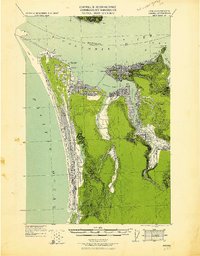 1919 Astoria1928 Print · USGSCoastal Oregon at the end of the Great War reveals a busy network of military posts, rail lines, and river commerce. Genealogists and historians can trace the early footprints of Astoria and Warrenton or locate specific sites like Fort Stevens and Cullaby Lake.
 - 1939 Map of Astoria
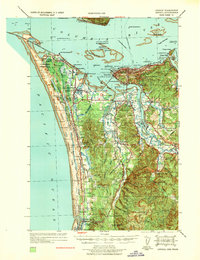 1939 Astoria1939 Print · USGSThe Columbia River mouth and Oregon coast appear here just before the Second World War, showing a landscape of maritime defense and timber industry. Genealogists can locate family-named landmarks and rural hubs like Netel Grange, Soldiers Cem, and Youngs River Falls Sch.
 - 1940 Map of Cape Falcon
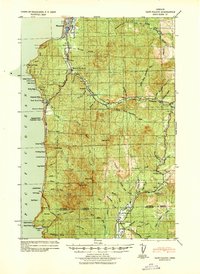 1940 Cape Falcon1940 Print · USGSCoastal Clatsop County is captured just before the war, showing the development of Seaside and Cannon Beach along the Pacific. Researchers can trace early logging operations at the Markham Callow Logging Camp or locate the Ferndale Sch and Henderson Ranch.
 - 1948 Map of Vancouver, 1957 Print
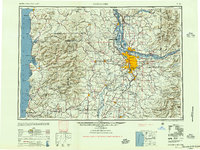 1948 Vancouver1957 Print · USGSPost-war growth transforms the river valleys of the Pacific Northwest as the timber and rail economy thrives. Trace family roots in Tillamook or Oregon City, and locate vanished landmarks like the spit at Bayocean or the Skamania Mine.
 - 1949 Map of Tillamook Head, 1955 Print
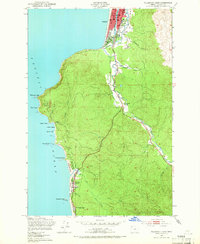 1949 Tillamook Head1955 Print · USGSThe Oregon coast at the end of the 1940s reveals a landscape of growing seaside resorts and deep timbered headlands. You can trace early transit corridors like the Old Railroad Grade or locate local landmarks including Central Sch and the monolith at Haystack Rock.3 unique versions available
 - 1949 Map of Gearhart, 1955 Print
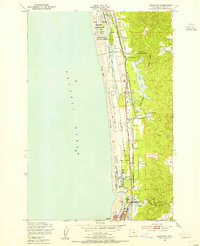 1949 Gearhart1955 Print · USGSThe Clatsop County coastline in the late 1940s reveals a landscape of military training grounds and quiet seaside resort towns. Trace the early footprints of Gearhart and Seaside alongside the Spokane Portland and Seattle Railway and the Clatsop Plains Sch.5 unique versions available
 - 1950 Map of Vancouver
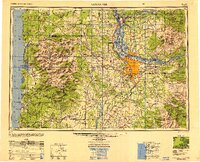 1950 Vancouver1950 Print · USGSCoastal Oregon and the lower Columbia River valley are captured in detail just after the war. Researchers can trace historic rail routes like the Southern Pacific or locate early settlements such as Vernonia, Gaston, and the Grand Ronde Indian Reservation.
 - 1950 Map of Vancouver, 1951 Print
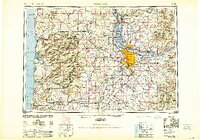 1950 Vancouver1951 Print · USGSThe Pacific Northwest urban corridor meets the rugged coast in the years following the war, showing the expansion of Portland and Vancouver. Genealogists and historians can trace the reach of the Southern Pacific RR and locate coastal communities like Tillamook, Seaside, and Tolovana Park.
 - 1953 Map of Hoquiam
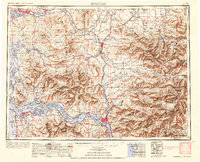 1953 Hoquiam1953 Print · USGSSouthwest Washington in the early fifties shows a landscape shaped by timber, rail, and river commerce from the coast to the Cascades. Genealogists and historians can trace the development of timber towns like Ryderwood and the industrial hubs of Hoquiam and Kelso.2 unique versions available
 - 1955 Map of Cannon Beach, 1958 Print
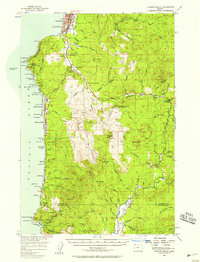 1955 Cannon Beach1958 Print · USGSThe Oregon coast in the mid-1950s reveals a landscape of growing seaside towns and deep timber country. Genealogists and historians can trace family plots at Evergreen Cemetery or locate early landmarks like the Necanicum Guard Sta and Aldervale.2 unique versions available
 - 1957 Map of Hoquiam
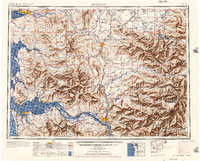 1957 Hoquiam1957 Print · USGSCoastal timber ports and inland rail hubs define Southwest Washington during the late fifties. Genealogists can trace early twentieth-century settlements like Bordeaux, Tono, and Cosmopolis alongside the expanding tracks of the Northern Pacific.
 - 1958 Map of Vancouver, 1968 Print
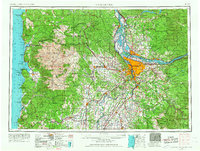 1958 Vancouver1968 Print · USGSThe Lower Columbia and Willamette valleys thrive in the late sixties as major rail and river hubs. Genealogists and historians can trace the development of Portland, identify the grounds of Camp Withycombe, and locate coastal landmarks from Tillamook Head to Garibaldi.3 unique versions available
 - 1958 Map of Hoquiam, 1969 Print
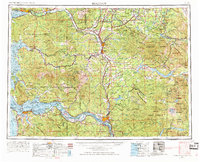 1958 Hoquiam1969 Print · USGSSouthwest Washington and the Columbia River estuary appear here in the mid-century, before major landscape shifts. Researchers can trace the rail lines of the Northern Pacific, locate the Fort Henness Site, or explore the Naselle Air Force Station.2 unique versions available
 - 1962 Map of Hoquiam
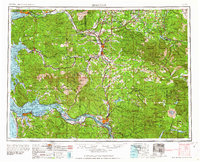 1962 Hoquiam1962 Print · USGSSouthwest Washington in the late fifties is defined by the bustling timber ports of Hoquiam and the rail-linked commerce of the interior valleys. Genealogists and historians can trace the early footprints of settlements like Raymond and Pe Ell, or locate family sites at Grand Mound Cem and Odd Fellows Cem.
 - 1964 Map of Vancouver
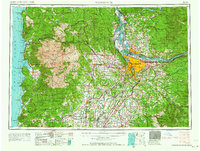 1964 Vancouver1964 Print · USGSThe Pacific Northwest interior and coast are shown here in the 1960s, from the Portland metropolitan hub to the rugged Pacific shoreline. Researchers can trace the legacy of the Grand Ronde Indian Reservation, the early layout of McMinnville, and the maritime approaches near Tillamook Head.
 - 1979 Map of Nehalem River, 1980 Print
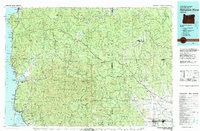 1979 Nehalem River1980 Print · USGSThe northern Oregon coast and its timber-rich interior are captured here in the late seventies, showing the vital connection between sea and forest. Researchers can trace the rail lines of the Southern Pacific and Burlington Northern through historic logging hubs like Vernonia, Timber, and Nehalem.3 unique versions available
 - 1981 Map of Astoria, 1982 Print
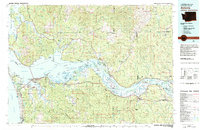 1981 Astoria1982 Print · USGSThe Oregon and Washington borderlands meet at the Columbia River estuary in the early eighties, a time of active timber transport and maritime trade. Researchers can trace the river's many islands, the grounds of Fort Stevens, and riverside towns like Cathlamet and Westport.3 unique versions available
 - 2011 Map of Gearhart, 2011 Print
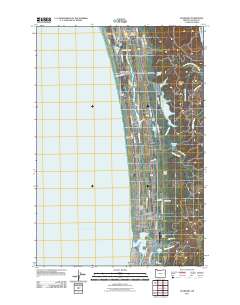 2011 Gearhart2011 Print · USGSThe Oregon coast north of Seaside appears in the early twenty-first century as a land of dune-shielded lakes and established seaside communities. Researchers can trace local history through landmarks like the Clatsop Plains Cemetery, the grounds of Camp Rilea, and the small settlement of Carnahan.
 - 2011 Map of Tillamook Head, 2011 Print
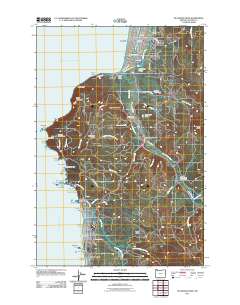 2011 Tillamook Head2011 Print · USGSThe Clatsop County coastline comes into sharp focus during this era of modern development and natural preservation. Researchers can trace property lines and civic landmarks from the Seaside Post Office to Evergreen Cemetery, or explore the wild headlands of Ecola State Park.
 - 2014 Map of Gearhart, 2014 Print
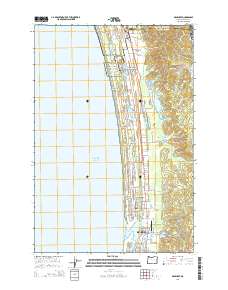 2014 Gearhart2014 Print · USGSThe Oregon coast at the Clatsop Plains is captured here just over a decade ago, showing the intersection of coastal development and federal parklands. Genealogists and local historians can trace the layouts of Gearhart, Seaside, and Surf Pines, or locate the Clatsop Plains Cem.
 - 2014 Map of Tillamook Head, 2014 Print
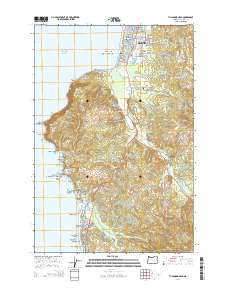 2014 Tillamook Head2014 Print · USGSThe northern Oregon coast at the start of the 2010s shows a landscape defined by resort development and dramatic seafaring geography. Trace the rugged shoreline from Tillamook Head down to the sea stacks of Haystack Rock and the landmark Evergreen Cem.
 - 2017 Map of Gearhart, 2017 Print
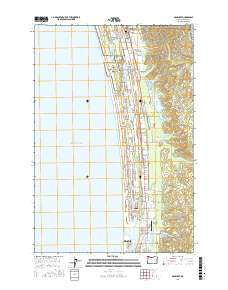 2017 Gearhart2017 Print · USGSCoastal Oregon at the turn of the millennium shows the intersection of historic shore settlements and protected landscapes. Researchers can trace the development of Gearhart and Seaside, locate the Clatsop Plains Cem, and explore the marshes around Cullaby Lake.
 - 2017 Map of Tillamook Head, 2017 Print
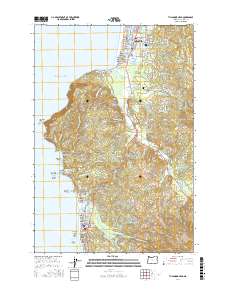 2017 Tillamook Head2017 Print · USGSCoastal Clatsop County is mapped here in the late twenty-tens, showing the established communities of Seaside and Cannon Beach along the Pacific. Researchers can trace land features from the Necanicum River to historical sites like Evergreen Cem and the Skibbereen Bridge.
 - 2020 Map of Gearhart, 2020 Print
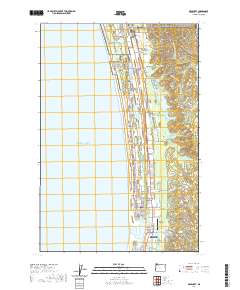 2020 Gearhart2020 Print · USGSCoastal Clatsop County near the turn of the decade shows a unique landscape of interdunal lakes and seaside communities. Genealogists and local historians can trace family ties at the Clatsop Plains Cem and explore the footprints of Gearhart, MTA Camp Rilea, and Carnahan.
 - 2020 Map of Tillamook Head, 2020 Print
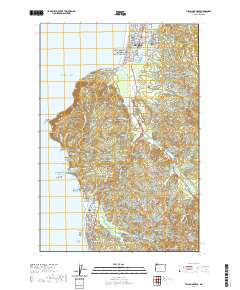 2020 Tillamook Head2020 Print · USGSThe Oregon coast at Seaside and Cannon Beach is shown here in the contemporary era, from the bustling promenade to the heights of Tillamook Head. Researchers can locate Evergreen Cem, the Skibbereen Bridge, and iconic landmarks like Haystack Rock.
Showing maps 1-25 of 27
Top cities near Seaside
- Astoria historical maps
- Warrenton historical maps
- Cannon Beach historical maps
- Gearhart historical maps
Frequently asked questions
- What are the different types of historical maps available for Seaside?
- What is the oldest map of Seaside?
- Where can I purchase historical maps of Seaside for my home or office?
- Where can I download high-res historical maps of Seaside?
- Are there historical topographic maps available for Seaside?
- Is there historical aerial imagery available for Seaside?
- Where are historical maps of Seaside sourced from?