1950s Maps of Josephine County, Oregon
Explore 22 historic maps of Josephine County from the 1950s. These maps offer a rare glimpse into what life looked like during the 1950s — showing old roads, neighborhoods, homes, and landmarks that have changed or disappeared over time.
Whether you're researching your family's past, planning a metal detecting trip, or studying how Josephine County's landscape evolved across the 1950s, these high-resolution maps are a powerful tool for exploring the history of this region.
- Focus on a specific era: All maps on this page are from the 1950s, giving you a focused view of this time period.
- See what’s changed: Compare century-old streets, trails, and buildings to today's modern landscape using overlays and satellite layers.
- Research with precision: Use these maps for genealogy, historical research, land use analysis, or educational projects.
- View, download, or print: Maps are fully viewable online in high resolution, and can be downloaded or printed for your own records.
Start exploring Josephine County's history through authentic maps from the 1950s. This is your window into the past.
Josephine County, OR maps
(22)- 1950 Map of Weed
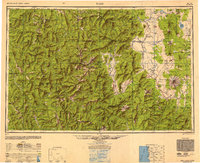 1950 Weed1950 Print · USGSSiskiyou County and the surrounding Klamath mountains appear in the mid-century before extensive modern development. Genealogists and local historians can locate remote outposts like the Lee Brown Ranch and the specialized settlement of Darlingtonia.
 - 1951 Map of Gasquet, 1953 Print
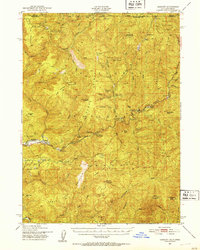 1951 Gasquet1953 Print · USGSDel Norte County's rugged mining and timber country is captured here during the early fifties, centering on the Smith River corridor. Genealogists and researchers can trace local operations like the Morrell Placer Mine, locate remote outposts like Elk Camp, and find early settlements at Gasquet and Darlingtonia.5 unique versions available
 - 1954 Map of Coos Bay
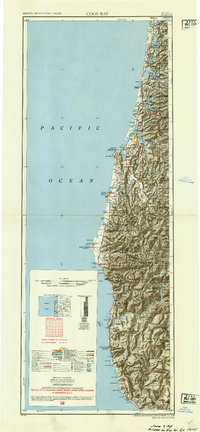 1954 Coos Bay1954 Print · USGSCoastal Oregon at mid-century shows a landscape of timber and tides, from the river ports to the edge of the Pacific. Researchers can trace family roots through coastal schools like Beachview School or follow the Southern Pacific RR through Reedsport and Coos Bay.
 - 1954 Map of Cave Junction, 1956 Print
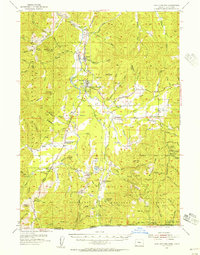 1954 Cave Junction1956 Print · USGSThe Illinois River valley in Southern Oregon comes alive in the mid-fifties, showing a landscape of mining camps and timber towns before modern development. Researchers can trace family sites at Takilma, locate the old Waldo townsite, or find historic workings like the Esterly Mine.3 unique versions available
 - 1954 Map of Oregon Caves, 1956 Print
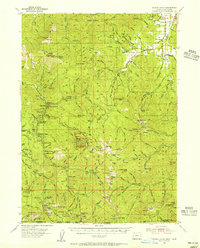 1954 Oregon Caves1956 Print · USGSThe Siskiyou Mountains come alive in the mid-1950s, showing a landscape defined by high-altitude mining and the early infrastructure of Oregon Caves National Monument. Genealogists and historians can trace old homesteads and mining sites like Browntown, Watts Cem, and Tiger Springs California Bar.3 unique versions available
 - 1954 Map of Marial, 1956 Print
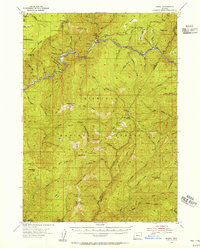 1954 Marial1956 Print · USGSThe Rogue River canyon in the 1950s is shown here as a remote landscape of forest camps and river bars. Genealogists and historians can trace old trails and lookouts including Dutch Henry Trail, Marial, and Paradise Bar Landing Field.4 unique versions available
 - 1954 Map of Glendale, 1956 Print
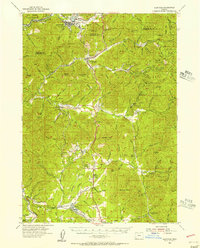 1954 Glendale1956 Print · USGSThe timber and mining country of Douglas and Josephine Counties is captured here in the mid-fifties, centered on the Southern Pacific line. You can trace the lineage of local claims at the Greenback Mine and Steam Beer Placer or find the sites of the Merlin Sanitarium and Aman Ranch.3 unique versions available
 - 1954 Map of Selma, 1956 Print
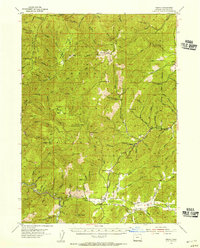 1954 Selma1956 Print · USGSJosephine County mountain life in the mid-fifties centered on timber and mining outposts along the Redwood Highway. Trace family roots at Deer Creek Cemetery or locate old industrial sites like Spaulding Mills (Site) and the Murray Mine.4 unique versions available
 - 1954 Map of Gold Hill, 1956 Print
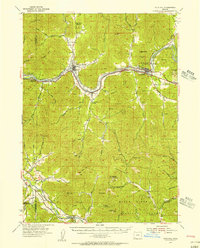 1954 Gold Hill1956 Print · USGSSouthern Oregon's river valleys and mining districts are captured here in the mid-1950s, showing the intersection of transit and timber. Genealogists and historians can trace the foundations of Rogue River and Gold Hill, finding landmarks like Log Town Cem and the Oregon Belle Mine.4 unique versions available
 - 1954 Map of Chetco Peak, 1956 Print
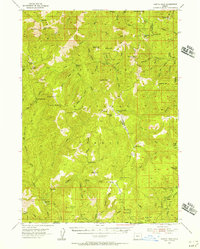 1954 Chetco Peak1956 Print · USGSThe Siskiyou high country in the mid-1950s shows a wilderness marked by ranger cabins and fire lookouts along the Curry and Josephine county line. Researchers can locate remote outposts like Madstone Cabin and trace the old routes to Chetco Peak or Cottonwood Camp.4 unique versions available
 - 1954 Map of Wimer, 1956 Print
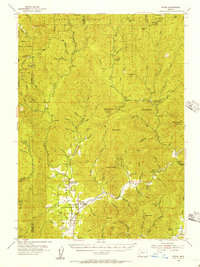 1954 Wimer1956 Print · USGSSouthern Oregon's timber and mountain country comes to life in the mid-fifties as the forest service network expands. Local historians can trace early rural life at Wimer, the Evans Valley Sch, and remote outposts like Salt Creek Guard Sta.3 unique versions available
 - 1954 Map of Grants Pass, 1956 Print
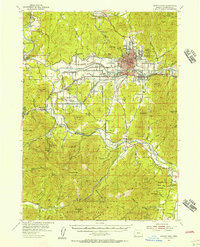 1954 Grants Pass1956 Print · USGSGrants Pass and the surrounding river valleys are captured here in the mid-fifties, showing a landscape defined by the Rogue River and timbered mountain ranges. Local historians can trace family-named schools and early mining operations, from Jerome Prairie Sch to the Humdinger Mine and Sloan Cem.4 unique versions available
 - 1954 Map of Collier Butte, 1956 Print
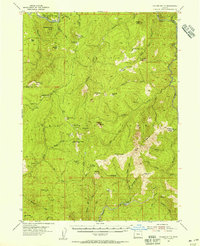 1954 Collier Butte1956 Print · USGSIn the mid-1950s, this remote corner of the Siskiyou National Forest was a landscape of river trails and isolated homesteads. Researchers can trace the locations of historic family sites like Tolman Ranch and Fritsche Cabin or locate the Mislatnah Lookout.3 unique versions available
 - 1954 Map of Pearsoll Peak, 1956 Print
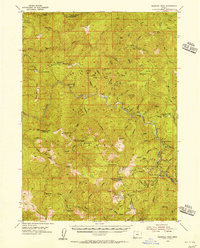 1954 Pearsoll Peak1956 Print · USGSIn the mid-1950s, the Josephine and Curry County borderlands were defined by rugged mining claims and fire lookouts. Genealogists and historians can trace isolated homesteads like Fantz Ranch and several notable mining sites including the Robertson Mine and Uncle Sam Mine.4 unique versions available
 - 1954 Map of Ruch, 1956 Print
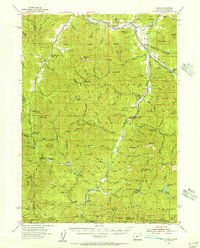 1954 Ruch1956 Print · USGSThe foothills of the Siskiyous in the 1950s show a landscape of active mining and forest management. Researchers can trace historic mineral claims like the Layton Mine or find early recreational and administrative sites like McKee Bridge Camp and Star Ranger Station.3 unique versions available
 - 1955 Map of Medford, 1964 Print
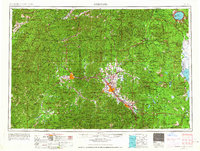 1955 Medford1964 Print · USGSSouthern Oregon's valley towns and high peaks are captured here in the mid-1950s, showing the region before the completion of the modern interstate system. Genealogists and historians can trace the development of timber and mining outposts from Wolf Creek to Butte Falls and the early roads to Crater Lake.3 unique versions available
 - 1956 Map of Happy Camp, 1958 Print
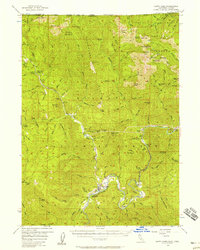 1956 Happy Camp1958 Print · USGSMid-century mining and forestry dominate this Klamath River landscape during the 1950s. Genealogists and historians can trace old claims like the Classic Hill Mine or find remote outposts including Fort Goff and Baileys Cabin.3 unique versions available
 - 1956 Map of Preston Peak, 1958 Print
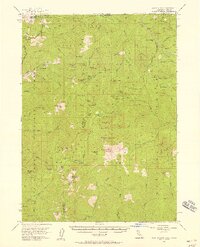 1956 Preston Peak1958 Print · USGSThe high wilderness of the Siskiyou and Klamath ranges is captured here in the mid-fifties, centered on the heights of Preston Peak. Researchers can locate remote high-country sites like Porters Camp, Prescott Cabin, and the mineral prospects near Poker Flat.2 unique versions available
 - 1957 Map of Medford
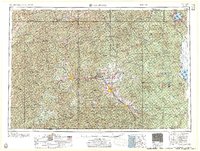 1957 Medford1957 Print · USGSSouthern Oregon during the mid-fifties is captured here as a region of growing valley cities and vast timberlands. Genealogists and historians can trace the rail-and-road corridors connecting Medford, Jacksonville, and Grants Pass to more remote locales like Wolf Creek or Butte Falls.
 - 1958 Map of Medford
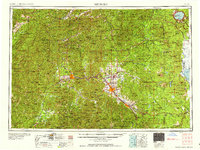 1958 Medford1958 Print · USGSSouthern Oregon's Rogue River valley thrived in the 1950s as a crossroads of rail and road. Researchers can trace the legacy of timber and tourism through Southern Pacific RR lines and landmarks like Crater Lake and Oregon Caves National Monument.
 - 1958 Map of Weed, 1963 Print
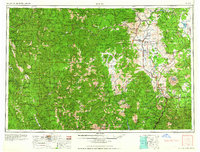 1958 Weed1963 Print · USGSThe Northern California high country of the late fifties is defined by the towering presence of Mt Shasta and the logging railroads of the Siskiyou range. Genealogists and researchers can trace remote mining sites like the China Mine and mountain settlements such as Sawyers Bar and Seiad Valley.3 unique versions available
 - 1958 Map of Coos Bay, 1974 Print
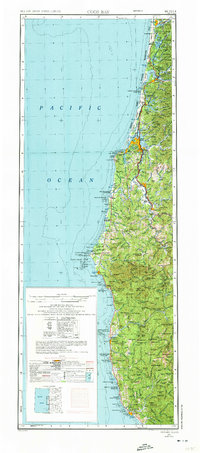 1958 Coos Bay1974 Print · USGSThe Southern Oregon coastline at mid-century reveals a bustling maritime and timber economy centered on Coos Bay and North Bend. Researchers can trace the legacy of coastal settlements from Bandon to Brookings, including rail lines of the Southern Pacific RR and the rugged reaches of the Siuslaw National Forest.
End of results
Showing maps 1-22 of 22
Top cities of Josephine County
Frequently asked questions
- What are the different types of historical maps available for Josephine County?
- What is the oldest map of Josephine County?
- Where can I purchase historical maps of Josephine County for my home or office?
- Where can I download high-res historical maps of Josephine County?
- Are there historical topographic maps available for Josephine County?
- Is there historical aerial imagery available for Josephine County?
- Where are historical maps of Josephine County sourced from?