1950s Maps of Butler County, Pennsylvania
Explore 22 historic maps of Butler County from the 1950s. These maps offer a rare glimpse into what life looked like during the 1950s — showing old roads, neighborhoods, homes, and landmarks that have changed or disappeared over time.
Whether you're researching your family's past, planning a metal detecting trip, or studying how Butler County's landscape evolved across the 1950s, these high-resolution maps are a powerful tool for exploring the history of this region.
- Focus on a specific era: All maps on this page are from the 1950s, giving you a focused view of this time period.
- See what’s changed: Compare century-old streets, trails, and buildings to today's modern landscape using overlays and satellite layers.
- Research with precision: Use these maps for genealogy, historical research, land use analysis, or educational projects.
- View, download, or print: Maps are fully viewable online in high resolution, and can be downloaded or printed for your own records.
Start exploring Butler County's history through authentic maps from the 1950s. This is your window into the past.
Butler County, PA maps
(22)- 1950 Map of Cleveland
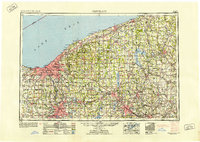 1950 Cleveland1950 Print · USGSCovers Butler County, including Cleveland, Akron, and other nearby areas
 - 1950 Map of Valencia, 1952 Print
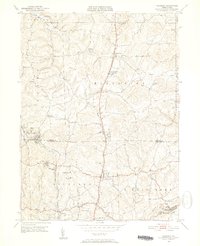 1950 Valencia1952 Print · USGSThe borderlands of Butler and Allegheny Counties are captured at mid-century as rural life met growing institutions and industry. Researchers can trace the rail-side growth of Valencia and Bakerstown, locate family landmarks like Galbreath School No 2, and find the Mine Dump near Bairdford.5 unique versions available
 - 1951 Map of Canton
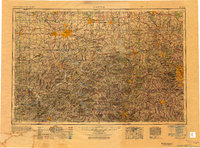 1951 Canton1951 Print · USGSThe industrial heartland of Ohio and Pennsylvania reached its mid-century peak during this era of heavy rail and river transit. Genealogists and historians can trace the development of steel towns like Aliquippa and Weirton alongside the Ohio River and major lines of the Pennsylvania RR.
 - 1953 Map of Pittsburgh
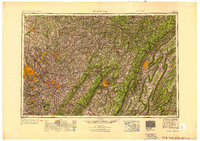 1953 Pittsburgh1953 Print · USGSWestern Pennsylvania's industrial landscape at the start of the fifties shows the steel and rail corridors between Pittsburgh and Altoona. Trace family roots in river towns like Tarentum or follow the Pennsylvania Turnpike across Laurel Hill.
 - 1953 Map of Canton
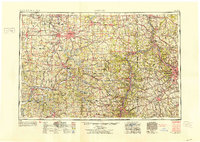 1953 Canton1953 Print · USGSThe industrial heartland of Ohio and Pennsylvania is captured at its mid-century peak in this detailed regional survey. Genealogists and historians can trace the vast rail networks of the Pennsylvania RR and find local landmarks like Nimisila Reservoir and Tappan Reservoir.
 - 1953 Map of Baden, 1955 Print
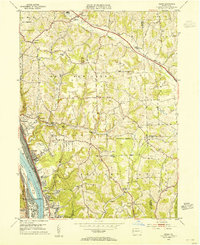 1953 Baden1955 Print · USGSThe industrial riverfronts and rural uplands of Beaver County meet in the early 1950s along the Ohio River. Researchers can trace the rail networks of the Pennsylvania and local landmarks like Mt Gallitzin Academy and Big Knob Grange.7 unique versions available
 - 1953 Map of Mars, 1955 Print
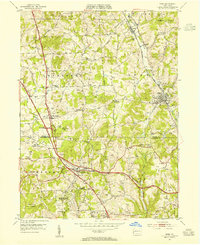 1953 Mars1955 Print · USGSButler and Allegheny counties are shown in the early fifties as small communities like Mars and Callery began to feel the influence of the Pennsylvania Turnpike. Local historians can trace old schools and churches such as Thorn Hill Industrial School, Cranberry Sch, and Dutilh Ch.5 unique versions available
 - 1953 Map of Curtisville, 1955 Print
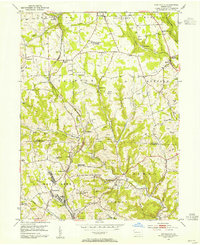 1953 Curtisville1955 Print · USGSThe mining and railroad culture of northern Allegheny County is captured here in the mid-1950s. Trace the Bessemer and Lake Erie rail line through Curtisville and Culmerville to find family-named churches, Mine No 1, and the Culmerville Airport.3 unique versions available
 - 1953 Map of Freeport, 1955 Print
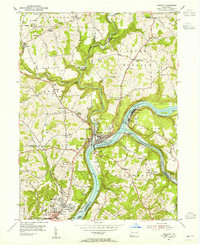 1953 Freeport1955 Print · USGSThe confluence of the Allegheny and Kiskiminetas rivers defines this mid-century industrial corridor. Trace the rail-and-river economy through Schenley, Butler Junction, and the vanished site of Garvers Ferry.4 unique versions available
 - 1954 Map of Pittsburgh
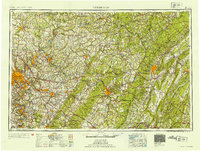 1954 Pittsburgh1954 Print · USGSWestern Pennsylvania in the early fifties remains a powerhouse of heavy industry and vital transit corridors. Genealogists and historians can trace the rail-and-river network connecting Pittsburgh, Johnstown, and Altoona via the Pennsylvania RR and the Lincoln Highway.2 unique versions available
 - 1956 Map of Cleveland, 1967 Print
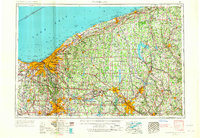 1956 Cleveland1967 Print · USGSNortheast Ohio and Western Pennsylvania are shown at their industrial height during the mid-fifties, from the steel mills to the lakeshore. Researchers can trace the massive Ravenna Arsenal, the Ohio Turnpike, and vanished rail sidings of the B & O RR.3 unique versions available
 - 1957 Map of Warren, 1964 Print
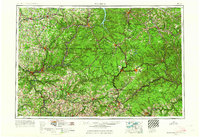 1957 Warren1964 Print · USGSThe northern Pennsylvania oil and timber country comes into focus in the mid-fifties, showing the region before modern highway expansions. Trace the industrial rail networks of the Pennsylvania RR and the early Allegheny River Reservoir near Warren and Oil City.4 unique versions available
 - 1957 Map of Canton, 1971 Print
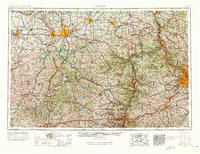 1957 Canton1971 Print · USGSThe industrial heartland of eastern Ohio and western Pennsylvania comes alive in this mid-century survey of the Ohio River Valley. Trace the heritage of rail and river commerce through Pittsburgh, the massive steel towns along the Ohio River, and major junctions on the Pennsylvania RR.3 unique versions available
 - 1958 Map of Pittsburgh
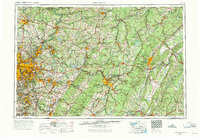 1958 Pittsburgh1958 Print · USGSWestern Pennsylvania in the late fifties shows an industrial heartland defined by the confluence of the Allegheny River and Monongahela River. Researchers can trace the sprawling rail networks of the Pennsylvania RR and find established towns like Butler, Latrobe, and Windber.5 unique versions available
 - 1958 Map of Warren
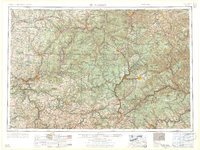 1958 Warren1958 Print · USGSNorthern Pennsylvania’s timber and oil country is captured here during the late fifties, showing the interplay of industrial valleys and vast state forests. Genealogists can trace family connections across the Cornplanter Indian Reservation or through rail hubs like Oil City and Saint Marys.
 - 1958 Map of Butler
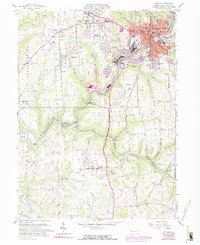 1958 Butler1958 Print · USGSButler and its industrial suburbs thrive during the late fifties as a major rail hub for three different lines. Researchers can trace family roots at Old Brownsdale Cem, locate the old Deshon V-A Hospital, or find vanished landmarks like the Drive-in Theater.3 unique versions available
 - 1958 Map of Evans City, 1959 Print
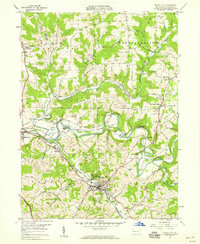 1958 Evans City1959 Print · USGSButler County in the late fifties reveals a landscape of winding creeks and coal mining operations. Trace the path of the Baltimore and Ohio railroad through Evans City and discover landmarks like Stamm Sch and Harmony Junction.5 unique versions available
 - 1958 Map of Worthington, 1959 Print
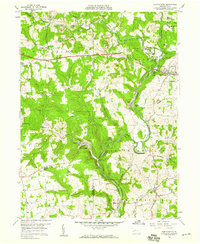 1958 Worthington1959 Print · USGSThe Armstrong and Butler county line in the late 1950s shows a landscape of industrial transition and rural community. Genealogists and researchers can locate historic brick kilns, rural congregations at McKee Chapel, and the milling history at Buffalo Mills.4 unique versions available
 - 1958 Map of Zelienople, 1959 Print
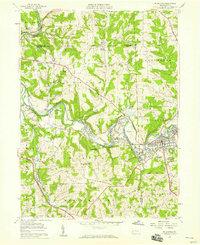 1958 Zelienople1959 Print · USGSZelienople and the Connoquenessing valley appear in the late fifties as coal mining and rail transport shaped the Butler County border. Genealogists can locate family landmarks like St Johns Ch, Wurtemburg Cem, and the Lillyville Sch during a period of industrial expansion.7 unique versions available
 - 1958 Map of Saxonburg, 1959 Print
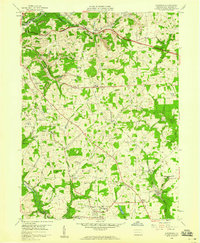 1958 Saxonburg1959 Print · USGSButler County in the late fifties is captured here as a landscape of small rail-side hamlets and hilltop schoolhouses. You can trace the legacy of local families through Gruenwalt Cem and Jefferson Center Cem, or follow the busy tracks of the Baltimore and Ohio railroad.4 unique versions available
 - 1959 Map of Warren
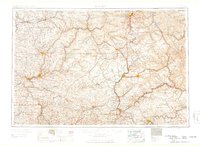 1959 Warren1959 Print · USGSNorthern Pennsylvania's oil and timber country comes alive in this late-fifties study of the forest-clad plateaus. Trace the historic Cornplanter (Indian Reservation), the sprawling Oil Field, and the rail lines of the Pennsylvania RR.2 unique versions available
 - 1959 Map of Pittsburgh
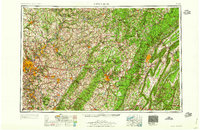 1959 Pittsburgh1959 Print · USGSWestern Pennsylvania in the late fifties is captured here at the height of its industrial era. Genealogists and historians can trace the riverfront growth of Pittsburgh, the rail works at Altoona, and the mountain gaps of Laurel Hill.
End of results
Showing maps 1-22 of 22
Top cities of Butler County
- Cranberry Township historical maps
- Butler historical maps
- Zelienople historical maps
- Slippery Rock historical maps
- Clinton Township historical maps
- Seven Fields historical maps
See more
Frequently asked questions
- What are the different types of historical maps available for Butler County?
- What is the oldest map of Butler County?
- Where can I purchase historical maps of Butler County for my home or office?
- Where can I download high-res historical maps of Butler County?
- Are there historical topographic maps available for Butler County?
- Is there historical aerial imagery available for Butler County?
- Where are historical maps of Butler County sourced from?