1960s Maps of Butler County, Pennsylvania
Explore 17 historic maps of Butler County from the 1960s. These maps offer a rare glimpse into what life looked like during the 1960s — showing old roads, neighborhoods, homes, and landmarks that have changed or disappeared over time.
Whether you're researching your family's past, planning a metal detecting trip, or studying how Butler County's landscape evolved across the 1960s, these high-resolution maps are a powerful tool for exploring the history of this region.
- Focus on a specific era: All maps on this page are from the 1960s, giving you a focused view of this time period.
- See what’s changed: Compare century-old streets, trails, and buildings to today's modern landscape using overlays and satellite layers.
- Research with precision: Use these maps for genealogy, historical research, land use analysis, or educational projects.
- View, download, or print: Maps are fully viewable online in high resolution, and can be downloaded or printed for your own records.
Start exploring Butler County's history through authentic maps from the 1960s. This is your window into the past.
Butler County, PA maps
(17)- 1961 Map of Grove City, 1963 Print
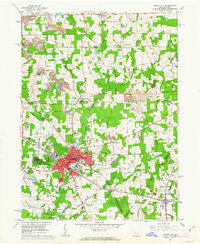 1961 Grove City1963 Print · USGSGrove City and Harrisville are shown in the early 1960s as industrial rail centers and college towns. Researchers can trace the Bessemer and Lake Erie line past Grove City College, Ebenezer Church, and local strip mines.4 unique versions available
 - 1961 Map of Slippery Rock, 1964 Print
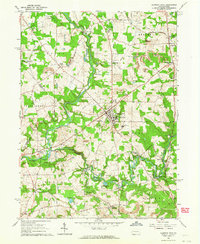 1961 Slippery Rock1964 Print · USGSSlippery Rock and its collegiate surroundings appear in the early sixties, caught between their industrial heritage and educational growth. Researchers can trace family-named landmarks like Moores Corners and Keisters, or locate early industrial sites such as Doughertys Mills and numerous oil wells.4 unique versions available
 - 1961 Map of Harlansburg, 1964 Print
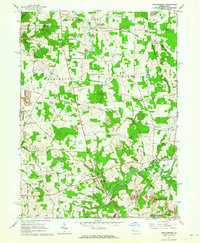 1961 Harlansburg1964 Print · USGSLawrence County at the dawn of the 1960s reveals a rural landscape defined by active mining and quiet river camps. Genealogists and local historians can trace family-named roads and sites like Harlansburg, Elliotts Mills, and the Jackson School.3 unique versions available
 - 1961 Map of Prospect, 1964 Print
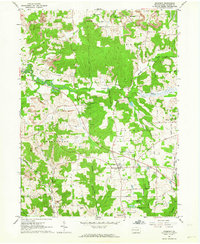 1961 Prospect1964 Print · USGSButler County's rural landscape is captured in the early sixties as industrial mining and traditional farming intersect near Prospect. Genealogists and historians can locate family landmarks like Crown Hill Cem, Bunker Hill Sch, and the Carnahan Airport.3 unique versions available
 - 1961 Map of Portersville, 1964 Print
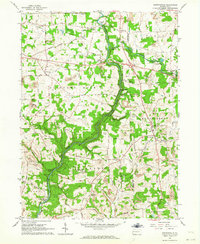 1961 Portersville1964 Print · USGSThe Slippery Rock Creek gorge and the industrial plateaus of Butler and Lawrence Counties are captured here in the early sixties. Researchers can trace rural lineages through Mt Hope Cem, visit Kennedy Mill, or locate mid-century coal operations like the strip mines near Portersville.4 unique versions available
 - 1962 Map of Canton
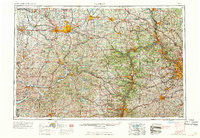 1962 Canton1962 Print · USGSThe industrial heartland of Eastern Ohio and Western Pennsylvania thrives in the early sixties as steel mills and rail lines dominate the river valleys. Genealogists and historians can trace local landmarks like McKinley National Memorial, Malone College, and industrial sites such as Republic Steel Corp.2 unique versions available
 - 1962 Map of Cleveland
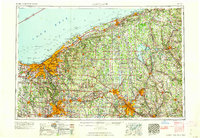 1962 Cleveland1962 Print · USGSNortheast Ohio and the Pennsylvania borderlands appear here during the industrial peak of the early sixties. Genealogists and historians can trace the expansive rail lines of the Nickel Plate Road and the growth of suburbs from Parma to Lyndhurst.
 - 1963 Map of Hilliards, 1965 Print
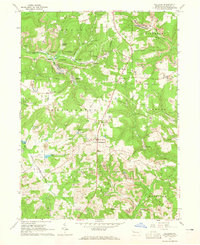 1963 Hilliards1965 Print · USGSButler County's northern townships are shown in the early sixties as a landscape defined by industry and rural tradition. Researchers can trace the footprint of numerous strip mines and oil wells near settlements like Hilliards, Argentine, and Annisville.4 unique versions available
 - 1963 Map of West Sunbury, 1965 Print
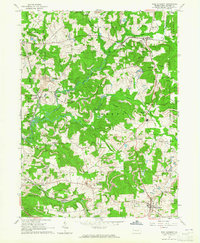 1963 West Sunbury1965 Print · USGSNorthern Butler County in the early 1960s shows a landscape of mining and rural settlements linked by the Bessemer and Lake Erie Railroad Grade. Trace family history and industry through Annandale Cem, the Moniteau High Sch, and various strip mines.3 unique versions available
 - 1963 Map of Barkeyville, 1965 Print
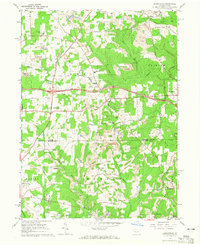 1963 Barkeyville1965 Print · USGSVenango and Butler counties are captured in the early 1960s, showing a landscape defined by traditional rural settlements and an intensive oil and coal industry. Researchers can trace family sites at Mt Irwin Cem and Victory Joint Sch or locate old operations in the Bullion and Clintonville Oil Fields.4 unique versions available
 - 1963 Map of Parker, 1965 Print
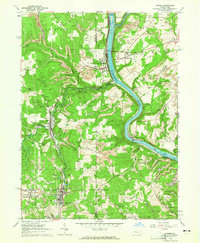 1963 Parker1965 Print · USGSThe river-and-rail corridor of northern Armstrong and Butler counties is captured here in the early sixties, showing an active landscape of energy extraction. Genealogists and historians can locate family landmarks such as Bear Creek Cemetery or Griswell Ch and trace the rail path through Petrolia and Bruin.5 unique versions available
 - 1963 Map of Emlenton, 1965 Print
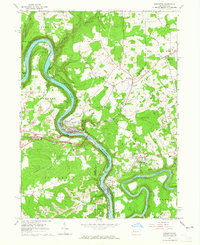 1963 Emlenton1965 Print · USGSThe Allegheny and Clarion rivers converge in the early 1960s, creating a hub of rail activity and resource extraction. Genealogists and historians can trace the numerous oil wells and strip mines surrounding communities like St Petersburg, Emlenton, and Foxburg.4 unique versions available
 - 1963 Map of Eau Claire, 1965 Print
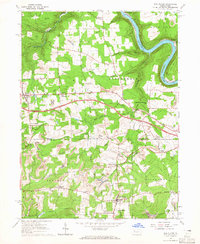 1963 Eau Claire1965 Print · USGSThe northern reaches of Butler and Venango Counties are captured here in the early sixties, showing a landscape defined by fossil fuel extraction. Genealogists can locate family-named settlements like Riddle Crossroads, landmarks such as the Anderson Stone House, and the Eau Claire Cemetery.5 unique versions available
 - 1964 Map of Pittsburgh
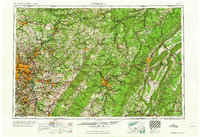 1964 Pittsburgh1964 Print · USGSWestern Pennsylvania in the late fifties and early sixties shows a landscape of powerful river industries and expanding highways. Genealogists and historians can trace the rail corridors of the Pennsylvania RR through industrial hubs like Johnstown, Altoona, and Nanty Glo.
 - 1964 Map of Chicora, 1965 Print
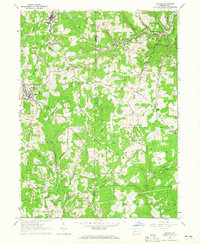 1964 Chicora1965 Print · USGSAcross Butler and Armstrong counties in the mid-sixties, this area reveals a landscape shaped by mining and rail. Genealogists can trace family names and landmarks like White Oak Cem, Kepples Corners, and the old Home for the Aged.3 unique versions available
 - 1964 Map of Mount Chestnut, 1965 Print
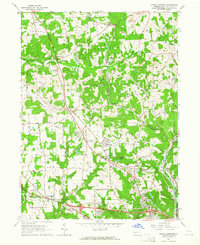 1964 Mount Chestnut1965 Print · USGSButler County's hills were undergoing a mid-century shift during the 1960s as new subdivisions and highways began to border traditional rail junctions. Researchers can trace family roots at Mount Chestnut Cem or locate community hubs like Unionville and the Drive-in Theater.4 unique versions available
 - 1964 Map of East Butler, 1965 Print
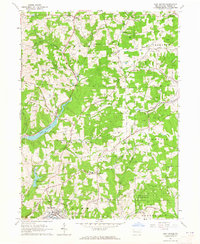 1964 East Butler1965 Print · USGSButler County in the mid-1960s reveals a landscape defined by industrial rail lines and emerging recreation. Genealogists and historians can trace rail-side settlements like Hooker and St Joe or locate local landmarks such as St Wendelin Sch and the Drive-in Theater.5 unique versions available
End of results
Showing maps 1-17 of 17
Top cities of Butler County
- Cranberry Township historical maps
- Butler historical maps
- Zelienople historical maps
- Slippery Rock historical maps
- Clinton Township historical maps
- Seven Fields historical maps
See more
Frequently asked questions
- What are the different types of historical maps available for Butler County?
- What is the oldest map of Butler County?
- Where can I purchase historical maps of Butler County for my home or office?
- Where can I download high-res historical maps of Butler County?
- Are there historical topographic maps available for Butler County?
- Is there historical aerial imagery available for Butler County?
- Where are historical maps of Butler County sourced from?