1900s (20th Century) Maps of South County, Rhode Island
Explore 58 historic maps of South County from the 1900s (20th Century). These maps offer a rare glimpse into what life looked like during the 1900s — showing old roads, neighborhoods, homes, and landmarks that have changed or disappeared over time.
Whether you're researching your family's past, planning a metal detecting trip, or studying how South County's landscape evolved across the 1900s, these high-resolution maps are a powerful tool for exploring the history of this region.
- Focus on a specific era: All maps on this page are from the 1900s, giving you a focused view of this time period.
- See what’s changed: Compare century-old streets, trails, and buildings to today's modern landscape using overlays and satellite layers.
- Research with precision: Use these maps for genealogy, historical research, land use analysis, or educational projects.
- View, download, or print: Maps are fully viewable online in high resolution, and can be downloaded or printed for your own records.
Start exploring South County's history through authentic maps from the 1900s. This is your window into the past.
South County, RI maps
(58)- 1904 Map of Montauk
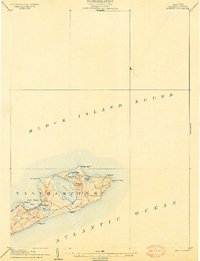 1904 Montauk1904 Print · USGSThe tip of Long Island at the turn of the century is a maritime frontier where the railway meets the Atlantic. Researchers can trace the early layout of Montauk, the vital Montauk Point L.H., and coastal life-saving stations like Ditch Plain L.S.S.6 unique versions available
 - 1904 Map of Newport, 1912 Print
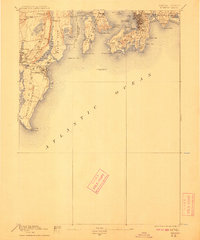 1904 Newport1912 Print · USGSCoastal Rhode Island thrived at the dawn of the century, with its bustling harbors and strategic military outposts guarding the bay. Trace the early streets of Newport, the defenses at Fort Adams, and the waterfront at Narragansett Pier.
 - 1919 Map of Charlestown
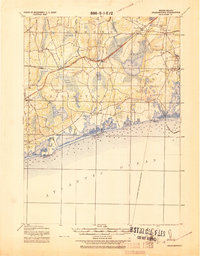 1919 Charlestown1919 Print · USGSCoastal Rhode Island just after the Great War shows a landscape of rail-connected mill villages and sprawling salt ponds. Researchers can trace the legacy of the R.I. Agricultural College or locate landmarks like the King Philip Monument and Indian Burying Hill.
 - 1919 Map of Narragansett Bay, 1921 Print
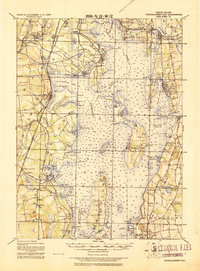 1919 Narragansett Bay1921 Print · USGSThe Rhode Island coast thrived as a hub of rail and maritime activity during the early twentieth century. Genealogists and historians can trace rail lines like the Sea View Electric R.R. and locate old landmarks like the Portsmouth Coal Mines and State Farm.2 unique versions available
 - 1920 Map of Moosup
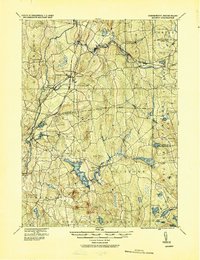 1920 Moosup1920 Print · USGSEastern Connecticut and the Rhode Island border were thriving hubs of textile milling and rail transit just after the Great War. Genealogists and local historians can trace family-named locations such as Hopkins Hollow, industrial sites like Sterling Station, and the intricate rail network at Plainfield Junction.
 - 1920 Map of Newport
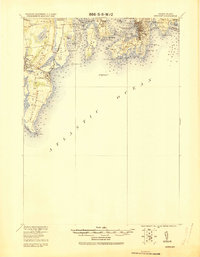 1920 Newport1920 Print · USGSNarragansett Bay at the end of the Great War reveals a landscape defined by coastal defense and maritime trade. Trace the lines of the Sea View R.R. Co. Electric R.R. or locate historic military sites like Fort Kearney and Fort Adams.2 unique versions available
 - 1921 Map of Charlestown
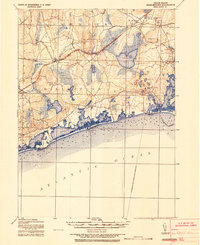 1921 Charlestown1921 Print · USGSThe Rhode Island coastline near Charlestown is shown in the early twentieth century before modern development altered the barrier beaches. Trace family history through the inland rail junctions and schools like R.I. Agricultural College and Wood River Junction.
 - 1921 Map of Stonington
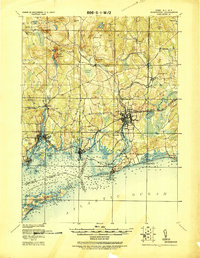 1921 Stonington1921 Print · USGSCoastal Connecticut and Rhode Island meet here between the wars, where river and rail drive the regional economy. Genealogists can trace family footprints in North Stonington and Westerly, or locate the Silex Mine and the Light House at Stonington.
 - 1922 Map of Newport
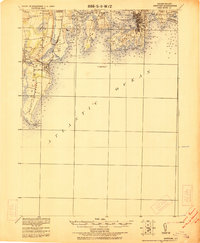 1922 Newport1922 Print · USGSThe Rhode Island coast after the turn of the century shows a landscape of strategic forts and bustling seaside resorts. Trace the path of the Sea View R.R. Co. Electric or locate historic military sites like Fort Adams and Fort Kearney.
 - 1931 Map of Newport
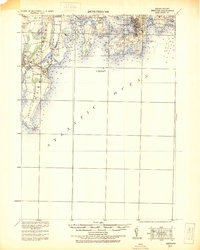 1931 Newport1931 Print · USGSCoastal Rhode Island just after the Great War shows a landscape of strategic forts and bustling summer colonies. Genealogists and historians can trace the early Sea View R.R. through Narragansett Pier or locate family estates near Ochre Point.
 - 1935 Map of Newport
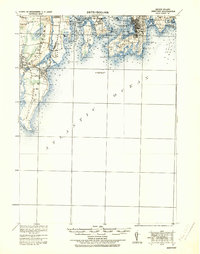 1935 Newport1935 Print · USGSNarragansett Bay's military and maritime character is on full display in the mid-1930s. Researchers can trace the Sea View R.R. Co. Electric R.R. or locate coastal fortifications like Fort Adams and Fort Kearney.
 - 1942 Map of Newport
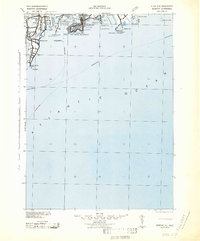 1942 Newport1942 Print · USGSThe Rhode Island coast appears here at a critical wartime moment, showing the heavy fortification of Narragansett Bay. Researchers can trace military sites like Fort Kearny, maritime landmarks like the Point Judith Life Saving Station, and old ferry routes.2 unique versions available
 - 1942 Map of Block Island, 1943 Print
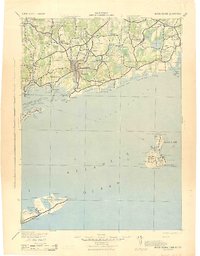 1942 Block Island1943 Print · USGSThe coastal borderlands of Rhode Island and Connecticut are captured here during the wartime years, documenting a landscape defined by rail and sea. Researchers can trace the NY NH & H RR through historic mill villages or locate landmarks like the Silex Mine and Indian Burying Hill.2 unique versions available
 - 1942 Map of Kingston, 1953 Print
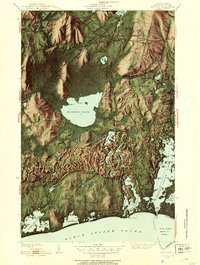 1942 Kingston1953 Print · USGSSouthern Rhode Island at the onset of the 1940s reveals a landscape of quiet academic towns, massive freshwater swamps, and busy salt-pond harbors. Genealogists and historians can trace family locations near the Great Swamp Fight Site, St Francis Cem, and the old campus of Rhode Island State College.4 unique versions available
 - 1942 Map of Wickford, 1957 Print
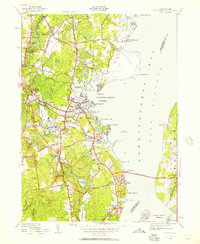 1942 Wickford1957 Print · USGSWickford and the West Passage are captured here just as modern transit began to reshape the coastline. Genealogists can trace family names at Quidnessett Cem and Allenton Cem or locate homes near Wickford Junction and Hamilton.
 - 1942 Map of Narragansett Pier, 1957 Print
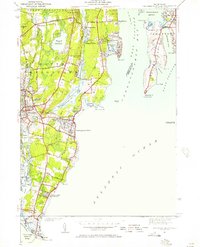 1942 Narragansett Pier1957 Print · USGSCoastal Rhode Island is captured here in the early 1940s, showing the intersection of resort life and maritime defense. Researchers can trace local landmarks from Narragansett Pier to the tactical grounds of Fort Nathaniel Green and Fort Phillip Kearney.
 - 1942 Map of East Greenwich, 1958 Print
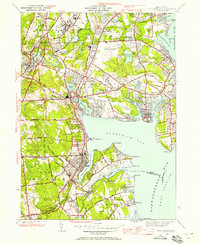 1942 East Greenwich1958 Print · USGSThe Rhode Island coast south of Cranston was a hub of institutional life and maritime activity in the early 1940s. Genealogists and historians can trace the foundations of Apponaug, the grounds of the State Farm, or locate the St Marys Ch and Oakland Beach Sch.
 - 1943 Map of Voluntown
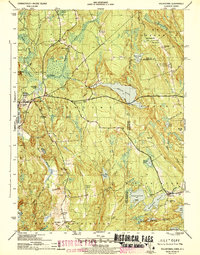 1943 Voluntown1943 Print · USGSThe Connecticut and Rhode Island borderlands are shown here during the early 1940s, capturing the rural character of New London and Washington Counties. Researchers can trace ancestral locations at Rockville and Voluntown, or locate historic sites like Wylie Sch and the Rockville Cem.4 unique versions available
 - 1943 Map of Providence
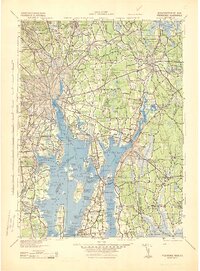 1943 Providence1943 Print · USGSNarragansett Bay and the industrial Blackstone Valley appear here in the midst of the Second World War. Genealogists and researchers can trace local landmarks like Lonsdale Station, the St Marys Reservoir, and the Rhode Island State Airport.
 - 1943 Map of Slocum
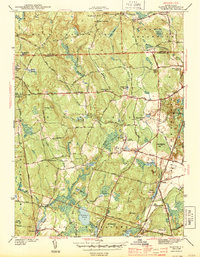 1943 Slocum1943 Print · USGSRhode Island's rural interior comes into focus during the early 1940s, showing a landscape of upland farms, mill ponds, and dispersed hamlets. Researchers can locate vanished schoolhouses and local landmarks like Hitty Corner Sch, Yorker Mill Pond, and the State Hospital.2 unique versions available
 - 1943 Map of Ashaway
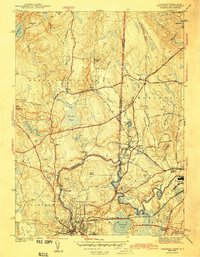 1943 Ashaway1943 Print · USGSThe Rhode Island-Connecticut borderlands during the early 1940s are defined here by textile-mill settlements and old turnpikes. Genealogists can trace family names and sites from Stillmanville to Potter Hill, including landmarks like Oak Grove Cem and St Michael Cem.2 unique versions available
 - 1943 Map of Hope Valley
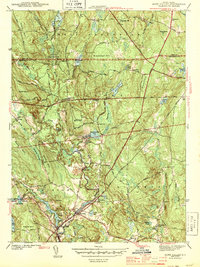 1943 Hope Valley1943 Print · USGSSouthern Rhode Island’s rural mill villages and inland waterways are preserved here in the early nineteen-forties. Genealogists and historians can trace the foundations of local life through the Barber Cem, the Old Bates Sch, and the industrial cluster at Hope Valley.2 unique versions available
 - 1943 Map of Carolina
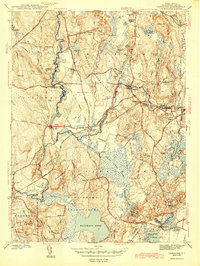 1943 Carolina1943 Print · USGSInland Washington County villages thrive along the rail lines and river bends during the early 1940s. Local researchers can trace family landmarks like Burdick Cem, explore the layout of Wood River Junction, and locate the Pawcatuck Valley Sch.2 unique versions available
 - 1943 Map of Putnam, 1944 Print
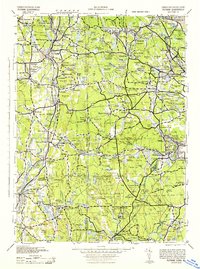 1943 Putnam1944 Print · USGSThe Connecticut and Rhode Island borderlands are captured here during the wartime era, showing a landscape defined by textile river towns and sprawling state forests. Trace the industrial rail corridor of the New York New Haven and Hartford through Putnam, Danielson, and Moosup.
 - 1944 Map of Kingston
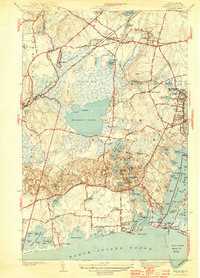 1944 Kingston1944 Print · USGSSouth Kingstown and the surrounding coastal villages are shown here during the early years of the Second World War. Genealogists and researchers can trace family landmarks and early civic life at Rhode Island State College, the Matunuck Sch, and the Great Swamp Fight Site.2 unique versions available
Showing maps 1-25 of 58
Top cities of South County
- South Kingstown historical maps
- North Kingstown historical maps
- Westerly historical maps
- Narragansett historical maps
- Hopkinton historical maps
- Richmond historical maps
See more
Frequently asked questions
- What are the different types of historical maps available for South County?
- What is the oldest map of South County?
- Where can I purchase historical maps of South County for my home or office?
- Where can I download high-res historical maps of South County?
- Are there historical topographic maps available for South County?
- Is there historical aerial imagery available for South County?
- Where are historical maps of South County sourced from?