Old Maps of Augusta Fields, South Carolina for Academic Research
Study the evolution of Augusta Fields with 11 high-resolution historic maps. Whether you're teaching, researching, or modeling changes in land use, these maps provide essential visual documentation of urban, environmental, and geographic change.
- Analyze long-term change: Track patterns in development, transportation, and natural features.
- Ideal for environmental or urban studies: Support academic projects with primary historical map data.
- Use in the classroom or lab: Educators and researchers rely on these maps to bring historical context to life.
These maps are a powerful tool for teaching, research, and visualizing how Augusta Fields has changed over the decades.
Augusta Fields, SC maps
(11)- 1892 Map of Abbeville
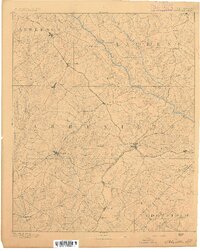 1892 Abbeville1892 Print · USGSSouth Carolina’s Upstate during the late 1800s reveals a landscape defined by critical river crossings and the arrival of the steam era. Genealogists can trace family roots through localized sites like Smith Ferry, Maddox Mill, and the bustling rail hub of Greenwood.6 unique versions available
 - 1949 Map of Greenwood
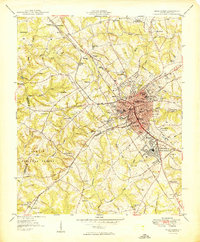 1949 Greenwood1949 Print · USGSGreenwood flourished as a major rail and textile crossroads in the late forties, its landscape defined by industrial villages and extensive trackage. Genealogists and historians can trace neighborhood roots through Lander College, the Connie Maxwell Childrens Home, and several mill villages.2 unique versions available
 - 1954 Map of Greenville, 1965 Print
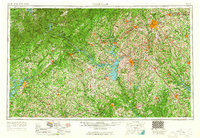 1954 Greenville1965 Print · USGSThe Upstate and Northeast Georgia are captured here during a decade of massive transformation as new reservoirs reshaped the Piedmont. Genealogists and hikers can trace the Appalachian Trail over Brasstown Bald or locate old community centers like Demorest, Westminster, and Royston.3 unique versions available
 - 1958 Map of Greenville
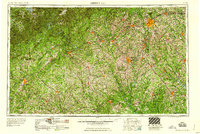 1958 Greenville1958 Print · USGSThe Piedmont and Blue Ridge foothills come alive in this mid-century survey of the Upstate and Northeast Georgia. Trace the regional rail-and-river economy through the Southern Railway corridors and early reservoir developments like Lake Sidney Lanier.
 - 1978 Map of Greenwood, 1979 Print
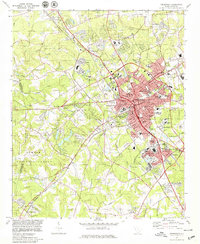 1978 Greenwood1979 Print · USGSGreenwood at the end of the 1970s shows a thriving regional hub where the SOUTHERN railroad meets a growing network of industrial and residential villages. Researchers can trace family sites at Promised Land, Lander College, and the Maxwell Childrens Home.
 - 1979 Map of Abbeville, 1980 Print
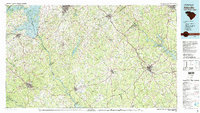 1979 Abbeville1980 Print · USGSThe South Carolina and Georgia borderlands are captured here during a period of significant hydroelectric development and regional growth. Researchers can trace the rail-and-river economy through the Seaboard Coast Line and landmarks like Hartwell Dam or the Silk Mills.2 unique versions available
 - 2011 Map of Greenwood, 2011 Print
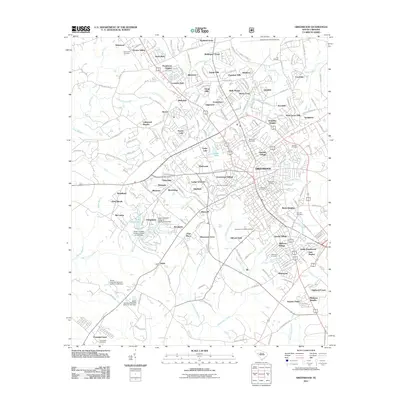 2011 Greenwood2011 Print · USGSGreenwood and its surrounding South Carolina suburbs are shown here in the early twenty-first century, displaying a landscape defined by residential growth and aviation. Researchers can trace local genealogy and land use through Morris Hill Cemetery, Grendel Village, and the rail-side industrial history of Downs Siding.
 - 2014 Map of Greenwood, 2014 Print
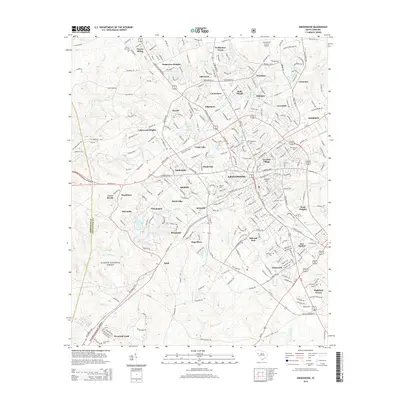 2014 Greenwood2014 Print · USGSGreenwood and its surrounding South Carolina uplands are shown in fine detail during the mid-2010s, balancing urban growth with the preservation of the Sumter National Forest. Genealogists can locate family sites near Magnolia Cem, Promised Land Ch, and the historic rail stop at Downs Siding.
 - 2017 Map of Greenwood, 2017 Print
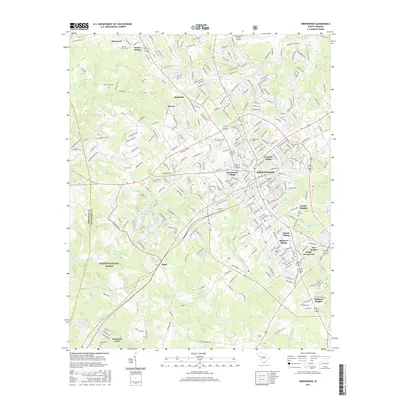 2017 Greenwood2017 Print · USGSThe industrial and residential growth of Greenwood is captured here in the early twenty-first century. Researchers can trace family ties through several outlying communities and burial grounds, including Promised Land, Grendel Village, and Magnolia Cem.
 - 2020 Map of Greenwood, 2020 Print
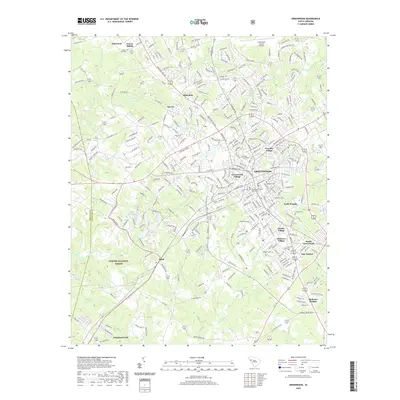 2020 Greenwood2020 Print · USGSGreenwood at the turn of the decade reflects a blend of educational prominence and deep-rooted residential villages. Trace local history through the city's unique neighborhoods like Panola Village or visit the campus of Lander University.
 - 2024 Map of Greenwood, 2024 Print
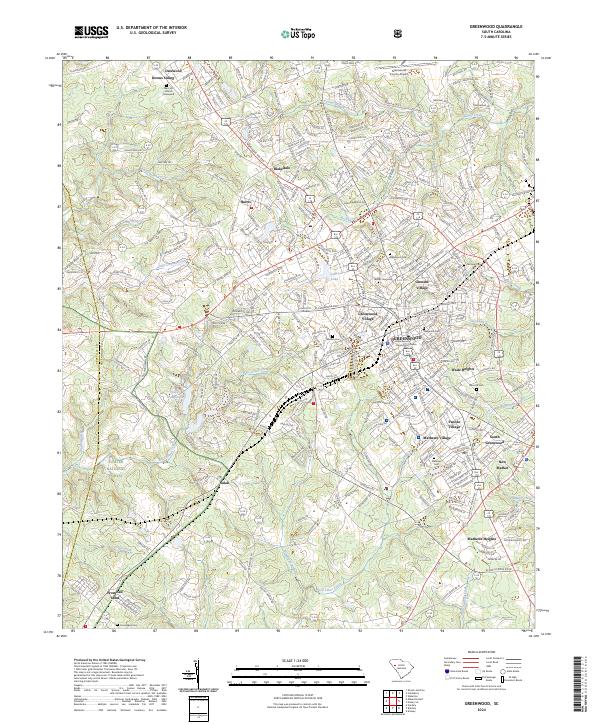 2024 Greenwood2024 Print · USGSGreenwood and its surrounding mill villages are captured here in the contemporary era, revealing the deep roots of this Piedmont hub. Researchers can locate family landmarks like Mars Hill Church, Magnolia Cem, and the historic settlement of Promised Land.
End of results
Showing maps 1-11 of 11
Top cities near Augusta Fields
- Greenwood historical maps
- Abbeville historical maps
- McCormick historical maps
- Ninety Six historical maps
- Cross Hill historical maps
- Donalds historical maps
See more
Frequently asked questions
- What are the different types of historical maps available for Augusta Fields?
- What is the oldest map of Augusta Fields?
- Where can I purchase historical maps of Augusta Fields for my home or office?
- Where can I download high-res historical maps of Augusta Fields?
- Are there historical topographic maps available for Augusta Fields?
- Is there historical aerial imagery available for Augusta Fields?
- Where are historical maps of Augusta Fields sourced from?