Old Maps of Custer County, South Dakota for Academic Research
Study the evolution of Custer County with 235 high-resolution historic maps. Whether you're teaching, researching, or modeling changes in land use, these maps provide essential visual documentation of urban, environmental, and geographic change.
- Analyze long-term change: Track patterns in development, transportation, and natural features.
- Ideal for environmental or urban studies: Support academic projects with primary historical map data.
- Use in the classroom or lab: Educators and researchers rely on these maps to bring historical context to life.
These maps are a powerful tool for teaching, research, and visualizing how Custer County has changed over the decades.
Custer County, SD maps
(235)- 1894 Map of Hermosa
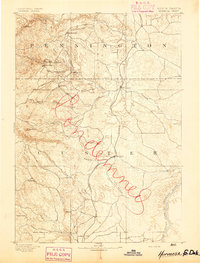 1894 Hermosa1894 Print · USGSThe Black Hills gold and ranching frontier comes into focus during the late nineteenth century as mining camps and rail lines began to anchor the territory. Genealogists and historians can trace early families in Keystone, Rockerville, and around the Etta Mine.2 unique versions available
 - 1896 Map of Oelrichs
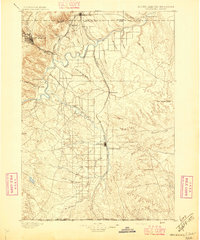 1896 Oelrichs1896 Print · USGSThe southern Black Hills and Cheyenne River valley come alive in this late nineteenth-century survey of the South Dakota and Nebraska borderlands. Genealogists and historians can trace early rail-side towns and industrial sites like Hot Springs, Smithwick, and the Evans Quarry.
 - 1896 Map of Harney Peak
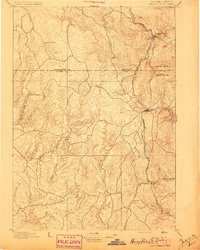 1896 Harney Peak1896 Print · USGSThe Black Hills were at the height of their early development in the 1890s as railroads and mining settlements reshaped the mountains. Genealogists and historians can trace the early tracks of the Burlington and Missouri River and locate the original town sites of Hill City, Custer, and Pringle.
 - 1899 Map of Newcastle, 1964 Print
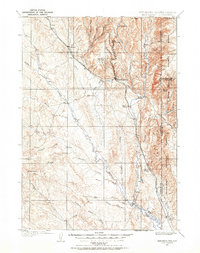 1899 Newcastle1964 Print · USGSThe Wyoming-South Dakota borderlands appear here at the close of the nineteenth century, as railroads and ranching reshaped the Black Hills. Researchers can trace early cattle operations like YT Ranch and mining infrastructure at Cambria and Newcastle.
 - 1900 Map of Oelrichs
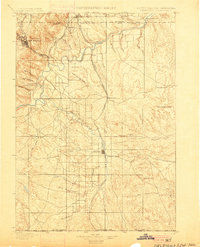 1900 Oelrichs1900 Print · USGSFall River County at the close of the nineteenth century reveals a landscape defined by the arrival of the railroad and the growth of early quarrying operations. Genealogists and historians can trace the Missouri Valley and Elkhorn RR through stops like Buffalo Gap and Oelrichs.4 unique versions available
 - 1901 Map of Hermosa
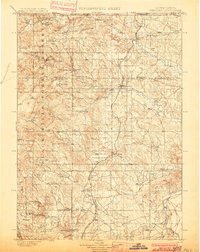 1901 Hermosa1901 Print · USGSThe Black Hills frontier comes alive in this survey of Pennington and Custer counties during the height of the regional mining boom. Researchers can trace the early footprints of Keystone, Rockerville, and Wind Cave, along with vanished industrial sites like Etta Mill.4 unique versions available
 - 1901 Map of Harney Peak
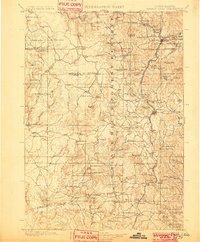 1901 Harney Peak1901 Print · USGSThe Black Hills at the dawn of the twentieth century was a hub of hard-rock mining and frontier ranching. Genealogists and historians can trace dozens of family-named homesteads like Hawks Ranch alongside significant early mines such as the Storm Hill Mine and Grizzly Bear Mine.4 unique versions available
 - 1901 Map of Newcastle
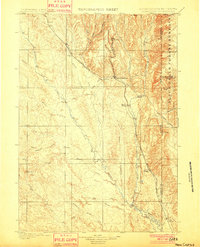 1901 Newcastle1901 Print · USGSThe Wyoming-South Dakota borderlands come alive in this survey conducted just before the turn of the century, centered on the railroad hub of Newcastle. Genealogists and historians can trace early cattle history at Lak Ranch and the industrial spur leading to the coal-mining town of Cambria.3 unique versions available
 - 1902 Map of Edgemont
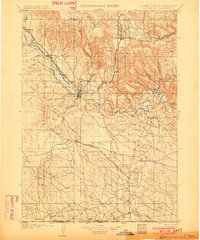 1902 Edgemont1902 Print · USGSThe Black Hills frontier meets the Nebraska plains at the turn of the century, centered on the rail hub of Edgemont. Trace early settlements and rail stops like Minnekahta, Ardmore, and the Quarry as they appeared in this early 1902 survey.4 unique versions available
 - 1950 Map of Hot Springs, 1952 Print
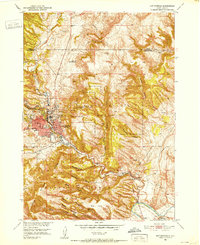 1950 Hot Springs1952 Print · USGSHot Springs and the southern Black Hills are captured here in the early postwar era, showing a community defined by its therapeutic waters and veteran services. Researchers can locate the Battle Mountain National Sanitarium, the State Soldiers Home, and local landmarks like Larive Lake or the Aaberg Sch.6 unique versions available
 - 1950 Map of Buffalo Gap, 1952 Print
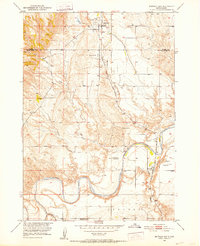 1950 Buffalo Gap1952 Print · USGSBuffalo Gap and the surrounding Custer County landscape are captured here in the early postwar era as the railroad remained central to local life. Researchers can locate the Friedrick Sch, the winding Cheyenne River, and the Buffalo Gap Cemetery.3 unique versions available
 - 1950 Map of Burdock, 1952 Print
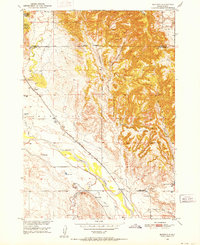 1950 Burdock1952 Print · USGSSouth Dakota's river-and-rail frontier is captured here in the early fifties, showing the ranching and irrigation patterns of Fall River County. Genealogists and researchers can locate old sites like Burdock and Marietta, the Burdock Sch, and the Doran Ranch.2 unique versions available
 - 1950 Map of Edgemont NE, 1952 Print
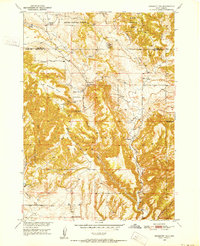 1950 Edgemont NE1952 Print · USGSThe southern Black Hills are captured here during the early fifties, a landscape defined by ranching and forest management. Researchers can locate remote schoolhouses like Robinson School and family homesteads including the Johnson Ranch and Hay Ranch.3 unique versions available
 - 1950 Map of Minnekahta, 1952 Print
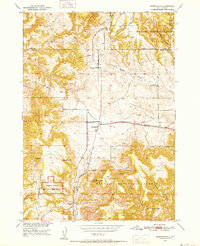 1950 Minnekahta1952 Print · USGSFall River County ranching and rail infrastructure are captured here in the early fifties at a time when remote outposts still thrived. Researchers can find family landmarks like Johnson Ranch, the tracks of the Chicago Burlington and Quincy, and the now-deauthorized Fossil Cycad National Monument.3 unique versions available
 - 1951 Map of Fairburn SE
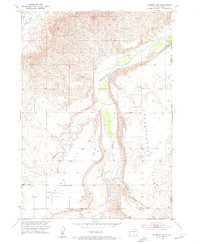 1951 Fairburn SE1951 Print · USGSThe Cheyenne River breaks across the South Dakota prairie in the early 1950s, marking the border between Custer and Shannon Counties. Genealogists and historians can locate rural landmarks like Harrison Flat Sch, Greives Sch, and the Pine Ridge Indian Reservation Boundary.2 unique versions available
 - 1951 Map of Red Shirt, 1952 Print
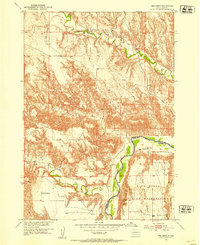 1951 Red Shirt1952 Print · USGSThe Cheyenne River valley and the Pine Ridge Indian Reservation are captured here in the early fifties. Genealogists and historians can trace the settlement at Red Shirt and locate early rural landmarks like Steele Sch and French Creek Sch.3 unique versions available
 - 1951 Map of Dewey, 1953 Print
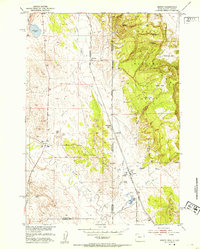 1951 Dewey1953 Print · USGSCrossing the state line during the early fifties, this map captures the railroad-dependent life of the Wyoming-South Dakota borderlands. Genealogists and historians can trace the rail corridor between Dakoming and Dewey or locate the Lucky Strike Bentonite Mine.4 unique versions available
 - 1951 Map of Twentyone Divide, 1953 Print
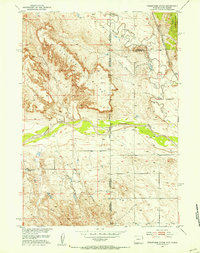 1951 Twentyone Divide1953 Print · USGSThe high ridges of the Wyoming and South Dakota border are captured here in the early 1950s. Trace the path of the Chicago Burlington and Quincy railroad or locate the isolated Cheyenne River School and the remote Artesian Well.2 unique versions available
 - 1951 Map of Fanny Peak, 1953 Print
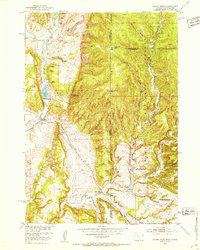 1951 Fanny Peak1953 Print · USGSThe Wyoming and South Dakota borderlands come into focus in the early 1950s, highlighting the rugged terrain where the Black Hills meet the high plains. Researchers can trace the layout of the L A K Ranch, locate the Sweet School, and identify high-altitude points like Fanny Peak.4 unique versions available
 - 1951 Map of Red Shirt NE, 1953 Print
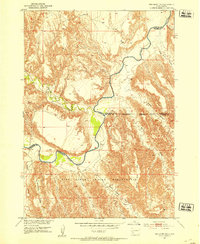 1951 Red Shirt NE1953 Print · USGSThe northern reaches of the Pine Ridge Indian Reservation and the winding Cheyenne River are captured here in the early fifties. Local history researchers can trace the intricate network of draws and tables, including Blindman Table and Plenty Star Table.3 unique versions available
 - 1951 Map of Red Shirt SW, 1953 Print
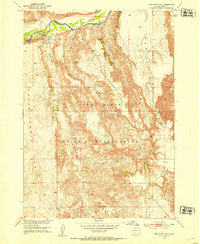 1951 Red Shirt SW1953 Print · USGSThe Pine Ridge Indian Reservation landscape is documented here in the early fifties, showing the intricate erosion of the high plains. Researchers can trace the Reservation Boundary along the Cheyenne River and locate Squaw Humper Table.2 unique versions available
 - 1951 Map of Smithwick NE, 1953 Print
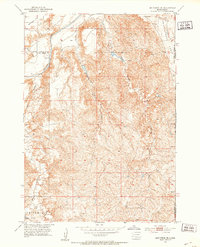 1951 Smithwick NE1953 Print · USGSThe Black Hills foothills meet the High Plains in the early fifties, where the Cheyenne River flows past Harrison Flat. Researchers can trace the Pine Ridge Indian Reservation Boundary and locate landmarks like Smithwick and the Squaw-Humper Table.
 - 1951 Map of Smithwick NW, 1953 Print
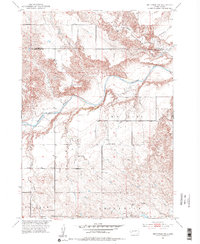 1951 Smithwick NW1953 Print · USGSThe Cheyenne River breaks through the South Dakota highlands in the early fifties, revealing a landscape of high flats and deeply cut drainages. Researchers can trace rural school locations like W G Flat Sch and the course of Lame Johnny Creek through Harrison Flat.3 unique versions available
 - 1951 Map of Minnekahta NE, 1953 Print
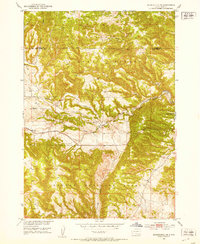 1951 Minnekahta NE1953 Print · USGSFall River County at the dawn of the fifties shows a landscape shaped by the southern Black Hills and the rail lines that served them. You can trace the rural school system at Miller Sch and follow the Burlington and Chicago railroad through Erskine.2 unique versions available
 - 1951 Map of Clifton, 1953 Print
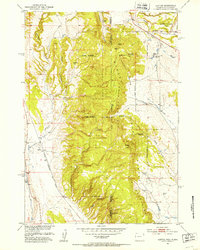 1951 Clifton1953 Print · USGSThe Wyoming and South Dakota borderlands come into focus in the early 1950s as a high-altitude ranching and rail corridor. Researchers can trace the Chicago Burlington and Quincy line past the Clifton School and family sites like Blaine Ranch.4 unique versions available
Showing maps 1-25 of 235
Top cities of Custer County
- Custer historical maps
- Hermosa historical maps
- Buffalo Gap historical maps
- Pringle historical maps
- Fairburn historical maps
Frequently asked questions
- What are the different types of historical maps available for Custer County?
- What is the oldest map of Custer County?
- Where can I purchase historical maps of Custer County for my home or office?
- Where can I download high-res historical maps of Custer County?
- Are there historical topographic maps available for Custer County?
- Is there historical aerial imagery available for Custer County?
- Where are historical maps of Custer County sourced from?