1900s (20th Century) Maps of Fort Thompson District, South Dakota
Explore 21 historic maps of Fort Thompson District from the 1900s (20th Century). These maps offer a rare glimpse into what life looked like during the 1900s — showing old roads, neighborhoods, homes, and landmarks that have changed or disappeared over time.
Whether you're researching your family's past, planning a metal detecting trip, or studying how Fort Thompson District's landscape evolved across the 1900s, these high-resolution maps are a powerful tool for exploring the history of this region.
- Focus on a specific era: All maps on this page are from the 1900s, giving you a focused view of this time period.
- See what’s changed: Compare century-old streets, trails, and buildings to today's modern landscape using overlays and satellite layers.
- Research with precision: Use these maps for genealogy, historical research, land use analysis, or educational projects.
- View, download, or print: Maps are fully viewable online in high resolution, and can be downloaded or printed for your own records.
Start exploring Fort Thompson District's history through authentic maps from the 1900s. This is your window into the past.
Fort Thompson District, SD maps
(21)- 1935 Map of Chamberlain, 1975 Print
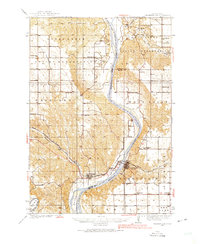 1935 Chamberlain1975 Print · USGSMid-century South Dakota river life centers on the Missouri crossing between Chamberlain and Oacoma during the mid-thirties. Genealogists can locate numerous country schools like Pleasant View Sch and historical sites such as the CCC Camp.
 - 1939 Map of Chamberlain
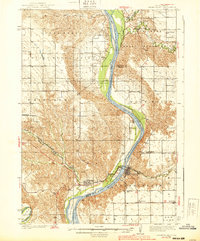 1939 Chamberlain1939 Print · USGSChamberlain and Oacoma face one another across the Missouri River in the late thirties, just as the region transitioned into the modern era. Genealogists and researchers can locate numerous country schools and churches, including St Albans Ch, Grace Mission Sch, and Riverview Cem.2 unique versions available
 - 1953 Map of Huron, 1959 Print
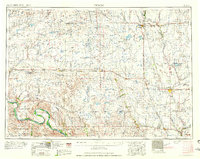 1953 Huron1959 Print · USGSCentral South Dakota comes alive in the mid-1950s as a thriving rail and agricultural corridor between the Missouri and James Rivers. Trace the legacy of family farms and prairie towns like Huron, Faulkton, and Wessington Springs along the historic Chicago and North Western rail lines.3 unique versions available
 - 1954 Map of Huron, 1977 Print
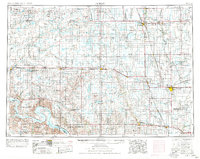 1954 Huron1977 Print · USGSCentral South Dakota was a landscape of grain elevators and river bends during the mid-fifties. Genealogists and historians can trace the development of the James River valley through railroad towns like Redfield and the sprawling Crow Creek Indian Reservation.
 - 1955 Map of Mitchell, 1973 Print
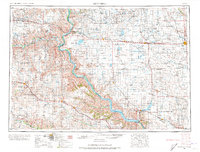 1955 Mitchell1973 Print · USGSThe Missouri River valley undergoes a massive transformation in the mid-1950s as the Fort Randall Dam creates Lake Francis Case. You can trace the rail lines of the Chicago Milwaukee St Paul and Pacific through Mitchell or locate local landmarks like Butler Town Hall.2 unique versions available
 - 1959 Map of Mitchell
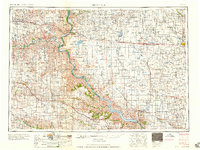 1959 Mitchell1959 Print · USGSSouth Dakota’s river and rail corridors come alive in the late fifties as the Missouri River valley undergoes dramatic change. Genealogists and historians can trace family roots through numerous small towns and schools such as Academy, Stickney, and Gregory.2 unique versions available
 - 1966 Map of Lower Brule NW, 1967 Print
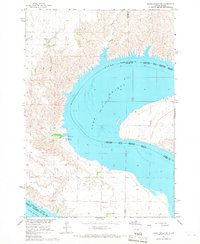 1966 Lower Brule NW1967 Print · USGSThe Missouri River valley in the mid-1960s shows a landscape transformed by the waters of Lake Sharpe. Researchers can locate rural landmarks like the Boot Bar Sch and Hidden Valley Sch alongside the West Bend Recreation Area.
 - 1966 Map of Big Bend Dam NE, 1967 Print
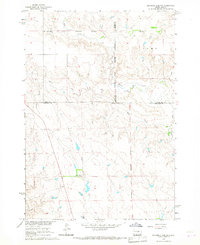 1966 Big Bend Dam NE1967 Print · USGSThe Missouri River Basin in the mid-1960s reveals a sparse ranching landscape divided by the Crow Creek Indian Reservation Boundary. Genealogists and researchers can locate landmarks like the Knippling Ranch, Como, and Curtis Sch among the forks of Elm Creek.
 - 1966 Map of Big Bend Dam SE, 1967 Print
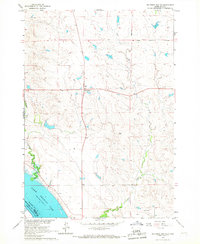 1966 Big Bend Dam SE1967 Print · USGSBuffalo County during the mid-sixties shows a landscape shaped by the Missouri River Basin development. Researchers can trace the tribal boundaries of the Crow Creek Indian Reservation and locate landmarks like Lees Corner and Lake Francis Case.
 - 1966 Map of Stephan, 1967 Print
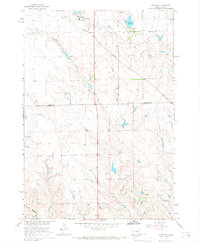 1966 Stephan1967 Print · USGSThe borderlands of Hyde and Buffalo counties are captured in the mid-1960s, showing the settlement of Stephan and the Indian Reservation Boundary. Researchers can locate community anchors like the Stephan Sch and trace the headwaters of Campbell Creek.
 - 1966 Map of Big Bend Dam, 1967 Print
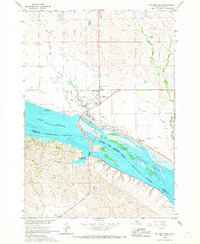 1966 Big Bend Dam1967 Print · USGSThe Missouri River landscape near the Crow Creek and Lower Brule reservations underwent dramatic changes in the mid-1960s following dam construction. Researchers can trace the layout of Fort Thompson, locate the St Joseph Cem, and identify old sites like the Big Bend Landing Strip.
 - 1966 Map of Lower Brule NE, 1967 Print
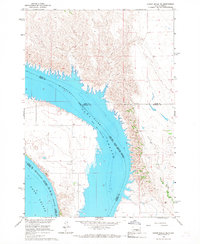 1966 Lower Brule NE1967 Print · USGSThe Missouri River valley in the mid-sixties reveals a landscape reshaped by the rising waters of Missouri River Lake Sharpe. Local historians can trace the borders of the Lower Brule Indian Reservation Boundary and locate a small Cem near the bluffs.
 - 1966 Map of Lower Brule, 1967 Print
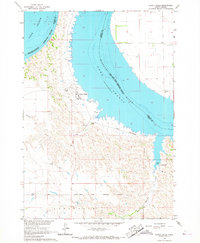 1966 Lower Brule1967 Print · USGSThe Missouri River breaks and the waters of Lake Sharpe define this mid-1960s look at the Lower Brule community. Researchers can locate the Council House, Christ Ch, and early recreation sites like the Counselor Creek Recreation Area.2 unique versions available
 - 1973 Map of Chapelle Lake SE, 1976 Print
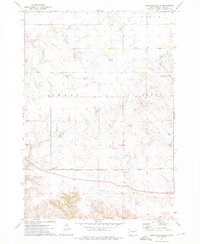 1973 Chapelle Lake SE1976 Print · USGSHyde County, South Dakota, is captured here in the mid-1970s, showcasing the high plains landscape and tribal boundaries. Genealogists and researchers can locate the settlement of Stephan, the rural Pratt Sch, and the Crow Creek Indian Reservation Boundary.
 - 1973 Map of Big Bend Dam 4 SW, 1976 Print
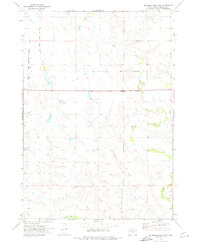 1973 Big Bend Dam 4 SW1976 Print · USGSBuffalo County prairie lands are documented in the early 1970s, showcasing the open rangeland along the Crow Creek Indian Reservation Boundary. Researchers can trace the path of the Old Indian Treaty Boundary and the natural courses of Elm Creek and Crow Creek.2 unique versions available
 - 1973 Map of Chapelle Lake SW, 1976 Print
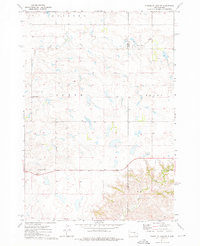 1973 Chapelle Lake SW1976 Print · USGSThe central South Dakota prairie and the Crow Creek Indian Reservation meet here during the mid-1970s. Trace old township life through the Snake Butte Sch, the settlement of Shaber, and landmarks like Pratt Butte.
 - 1973 Map of Macs Corner, 1976 Print
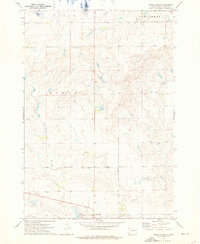 1973 Macs Corner1976 Print · USGSHyde County, South Dakota, is captured here in the early 1970s as a landscape of remote townships and reservation borders. Researchers can locate rural landmarks such as Macs Corner, the Peno Sch, and the shoreline of Lake Ambrose.2 unique versions available
 - 1974 Map of Bedashosha Lake, 1977 Print
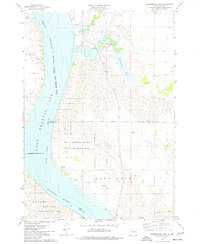 1974 Bedashosha Lake1977 Print · USGSThe Missouri River breaks of Buffalo and Brule Counties are captured here in the mid-seventies, showing a landscape shaped by tribal lands and recreation. Trace local history through landmarks like St Johns Ch and the public lands of Brule Bottom State Public Hunting Area.
 - 1985 Map of Big Bend Dam, 1986 Print
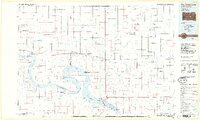 1985 Big Bend Dam1986 Print · USGSThe Missouri River landscape of the mid-1980s is defined by the massive Big Bend Dam and the sprawling waters of Lake Sharpe. Genealogists and historians can trace reservation boundaries and rural outposts like Fort Thompson, Stephan, and the Miller Dale Colony.2 unique versions available
 - 1986 Map of Chamberlain
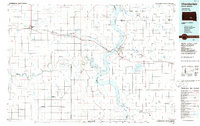 1986 Chamberlain1986 Print · USGSCentral South Dakota during the mid-eighties shows a landscape shaped by the Missouri River and the rise of Interstate 90. Researchers can trace the development of river towns like Chamberlain and Oacoma or locate remote landmarks like Bijou Hills and Hamill.2 unique versions available
 - 1990 Map of Mitchell, 1991 Print
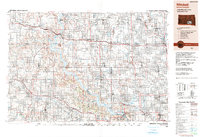 1990 Mitchell1991 Print · USGSThe Missouri River and the surrounding South Dakota plains are captured here in the early nineties, showing a landscape shaped by water and wire. Genealogists and historians can trace the gridded townships from Mitchell to the Bijou Hills, locating sites like the Platte Colony and Academy.
End of results
Showing maps 1-21 of 21
Top neighborhoods of Fort Thompson District
- Grey Hill East Township historical maps
- Grey Hill West Township historical maps
- Mac's Corner historical maps
- Victory West Township historical maps
- Stephan historical maps
Frequently asked questions
- What are the different types of historical maps available for Fort Thompson District?
- What is the oldest map of Fort Thompson District?
- Where can I purchase historical maps of Fort Thompson District for my home or office?
- Where can I download high-res historical maps of Fort Thompson District?
- Are there historical topographic maps available for Fort Thompson District?
- Is there historical aerial imagery available for Fort Thompson District?
- Where are historical maps of Fort Thompson District sourced from?