1980s Maps of Harding County, South Dakota
Explore 19 historic maps of Harding County from the 1980s. These maps offer a rare glimpse into what life looked like during the 1980s — showing old roads, neighborhoods, homes, and landmarks that have changed or disappeared over time.
Whether you're researching your family's past, planning a metal detecting trip, or studying how Harding County's landscape evolved across the 1980s, these high-resolution maps are a powerful tool for exploring the history of this region.
- Focus on a specific era: All maps on this page are from the 1980s, giving you a focused view of this time period.
- See what’s changed: Compare century-old streets, trails, and buildings to today's modern landscape using overlays and satellite layers.
- Research with precision: Use these maps for genealogy, historical research, land use analysis, or educational projects.
- View, download, or print: Maps are fully viewable online in high resolution, and can be downloaded or printed for your own records.
Start exploring Harding County's history through authentic maps from the 1980s. This is your window into the past.
Harding County, SD maps
(19)- 1980 Map of Capitol Rock
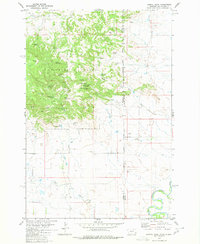 1980 Capitol Rock1980 Print · USGSThe Montana and South Dakota borderlands are captured here in the early 1980s, highlighting the transition from national forest to the river basin. Researchers can trace land use through named features like Plainview Sch, Capitol Rock, and Wickham Gulch Campground.
 - 1980 Map of Elkhorn Creek East
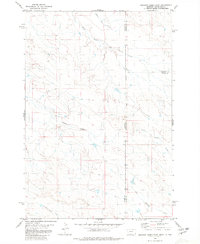 1980 Elkhorn Creek East1980 Print · USGSThe Montana-South Dakota borderlands are mapped here in the early 1980s, revealing a landscape of winding prairie drainages and tri-county boundaries. Trace the paths of South Beaver Dam Creek, Elkhorn Creek, and Frozen Horse Creek across the high plains.
 - 1980 Map of Redig
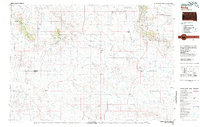 1980 Redig1980 Print · USGSNorthwest South Dakota is captured in the early eighties as a landscape of isolated ranges and sprawling ranchland. Researchers can locate remote outposts like Redig and Harding, or trace the rugged geography of Slim Buttes and the Short Pine Hills.
 - 1980 Map of Humbolt Hills
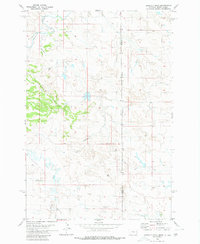 1980 Humbolt Hills1980 Print · USGSThe Montana and South Dakota borderlands come into focus in the early eighties, showcasing a remote landscape of high-plains drainage. Researchers can trace the path of Humbolt Creek and identify sites of energy exploration like an Oil Well or Drill Hole.
 - 1980 Map of Capitol
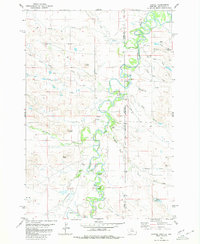 1980 Capitol1980 Print · USGSThe Montana and South Dakota borderlands come into focus in the early 1980s, centered on the winding Little Missouri River. Genealogists and local historians can locate the Capitol Cem, Capitol Sch, and landmarks like Sky Ranch and The Island.2 unique versions available
 - 1980 Map of Camp Crook
 1980 Camp Crook1980 Print · USGSNorthwestern South Dakota and the North Dakota borderlands come into focus in the late seventies, showing a landscape of high buttes and river breaks. Researchers can trace remote ranching outposts like Ralph and Ladner or locate landmarks like Window Rock and the Harding County Airport.
 - 1980 Map of North Slick Creek
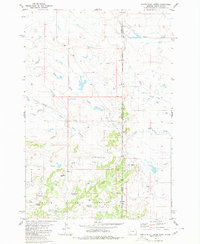 1980 North Slick Creek1980 Print · USGSThe border of Montana and South Dakota is captured here in the early 1980s, illustrating a remote landscape of ranching and national forest management. Genealogists and local historians can locate Carter School and several family-named landmarks like Pendleton Well and Brown Jug Spring.2 unique versions available
 - 1980 Map of Cactus Creek East, 1981 Print
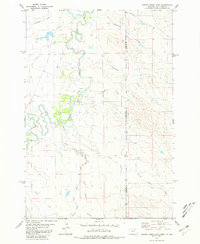 1980 Cactus Creek East1981 Print · USGSThe high plains of the Montana-South Dakota border are captured here in the early 1970s, where the Little Missouri River snakes through Carter and Harding Counties. Trace the Black Hills Meridian and historic river crossings at the Ford or the local Gravel Pit.
 - 1980 Map of Zeona, 1981 Print
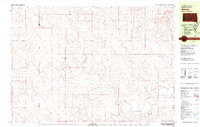 1980 Zeona1981 Print · USGSThe ranching country of western South Dakota is captured here in the late seventies, centered on the small community of Zeona. Researchers can trace the confluence of the North Fork Moreau River and locate local landmarks like Immanuel Ch and Ruby Cem.
 - 1980 Map of Snider Hill, 1983 Print
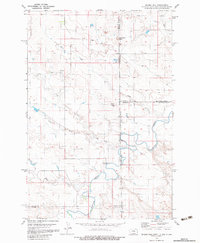 1980 Snider Hill1983 Print · USGSThe tri-state corner of Montana and the Dakotas is captured in the early 1980s, showcasing the high-plains ranching landscape. Trace the winding waters of Boxelder Creek and Coal Bank Creek as they cut between landmarks like Snider Hill and Monument Butte.
 - 1981 Map of Alzada, 1982 Print
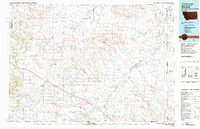 1981 Alzada1982 Print · USGSThe high plains of the Montana-Wyoming borderland appear here in the early eighties as a network of isolated ranches and creek drainages. Genealogists and historians can trace family-named sites like Ridgway and Albion or locate landmarks such as the Sky Ranch and the Claypits.
 - 1982 Map of Ekalaka, 1983 Print
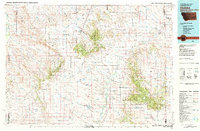 1982 Ekalaka1983 Print · USGSEastern Montana ranching country and the tri-state border lands are meticulously documented in the early 1980s. Local historians can trace the remote settlement of Ekalaka, the landmarks of Medicine Rocks, and the rugged profiles of Chalk Buttes and Long Pine Hills.
 - 1983 Map of Prairie City NW, 1984 Print
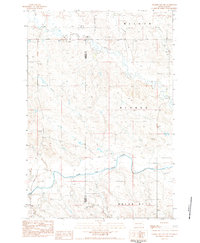 1983 Prairie City NW1984 Print · USGSPerkins County's high plains meet the winding South Fork Grand River in the early 1980s. Researchers can locate family landmarks like the South Grand River Cem and trace the paths of Big Nasty Creek and White Hill.
 - 1983 Map of Sorum, 1984 Print
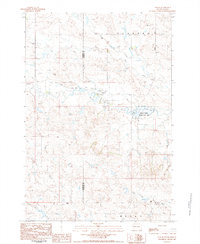 1983 Sorum1984 Print · USGSPerkins County ranching country is captured here in the early 1980s, centered on the small settlement of Sorum. Genealogists and local historians can trace family-named landmarks like the Meyer Landing Strip or follow the drainage of Rabbit Creek to the Sorum Dam.
 - 1983 Map of White Hill, 1984 Print
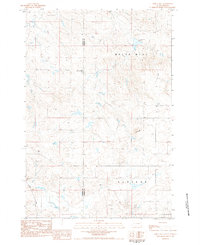 1983 White Hill1984 Print · USGSThe Perkins County plains in the early 1980s reveal a landscape of remote homesteads and critical water sources. Genealogists and historians can locate the Henry Bingaman Cemetery and trace the course of White Hill Creek near the White Hill Dam.
 - 1983 Map of Sorum SW, 1984 Print
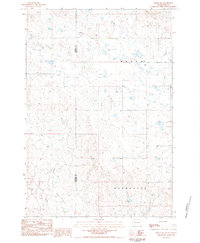 1983 Sorum SW1984 Print · USGSPerkins and Harding counties at the start of the 1980s showcase a wide-open landscape defined by seasonal drainages and cattle country. Researchers can trace the path of Antelope Creek and locate regional landmarks like Flat Butte or the Gravel Pits.
 - 1983 Map of Cow Butte SW, 1984 Print
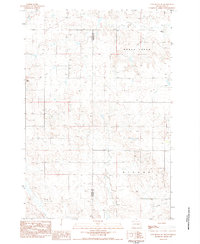 1983 Cow Butte SW1984 Print · USGSThe Perkins and Harding county line comes to life in the early eighties, showing a landscape of remote ranches and prairie drainages. Genealogists can locate family landmarks like Ellingson Sch, Swanson Sch, and the small Cem near Mud Butte.
 - 1984 Map of Faith
 1984 Faith1984 Print · USGSWestern South Dakota's open plains and river breaks appear here in the mid-1980s, centered on the ranching country around Faith. Researchers can trace remote settlements and essential water infrastructure like Sorum, Bixby Gaging Station, and Mourine Lake.3 unique versions available
 - 1984 Map of Lemmon
 1984 Lemmon1984 Print · USGSThe High Plains borderlands of South Dakota and North Dakota are documented here in the mid-1980s, centered on the Lemmon and Hettinger rail corridor. Genealogists and historians can trace local landmarks like Strool, the Shadehill Reservoir shoreline, and isolated buttes including White Butte and Square Top Butte.2 unique versions available
End of results
Showing maps 1-19 of 19
Top cities of Harding County
Frequently asked questions
- What are the different types of historical maps available for Harding County?
- What is the oldest map of Harding County?
- Where can I purchase historical maps of Harding County for my home or office?
- Where can I download high-res historical maps of Harding County?
- Are there historical topographic maps available for Harding County?
- Is there historical aerial imagery available for Harding County?
- Where are historical maps of Harding County sourced from?