1930s Maps of Coffee County, Tennessee
Explore 15 historic maps of Coffee County from the 1930s. These maps offer a rare glimpse into what life looked like during the 1930s — showing old roads, neighborhoods, homes, and landmarks that have changed or disappeared over time.
Whether you're researching your family's past, planning a metal detecting trip, or studying how Coffee County's landscape evolved across the 1930s, these high-resolution maps are a powerful tool for exploring the history of this region.
- Focus on a specific era: All maps on this page are from the 1930s, giving you a focused view of this time period.
- See what’s changed: Compare century-old streets, trails, and buildings to today's modern landscape using overlays and satellite layers.
- Research with precision: Use these maps for genealogy, historical research, land use analysis, or educational projects.
- View, download, or print: Maps are fully viewable online in high resolution, and can be downloaded or printed for your own records.
Start exploring Coffee County's history through authentic maps from the 1930s. This is your window into the past.
Coffee County, TN maps
(15)- 1936 Map of Ovoca
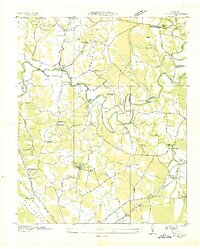 1936 Ovoca1936 Print · USGSCoffee County's rural landscape is captured here in the mid-1930s as the Tennessee Valley Authority mapped the region's complex river systems. Genealogists can locate family landmarks such as the Ovoca Orphans Home, the Holland Hill Cem, and numerous Duck River crossings like Richardson Ford.
 - 1936 Map of Alto
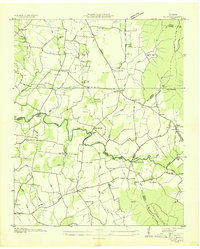 1936 Alto1936 Print · USGSThe Elk River valley at the Coffee and Franklin County line was a landscape of small settlements and river crossings in the mid-1930s. Genealogists can trace family roots through landmarks like Patton Sch, Bells Mill, and the Abernathy Cem.
 - 1936 Map of Fredonia
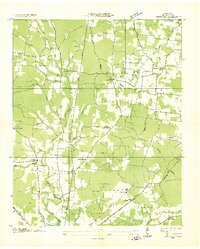 1936 Fredonia1936 Print · USGSCoffee County in the mid-1930s shows a landscape of small farmsteads and schools clustered along the Duck River and its many branches. Genealogists can trace family roots at Elam Cem or locate the old Forest Mill Sch and Strauss Mill.
 - 1936 Map of Manchester
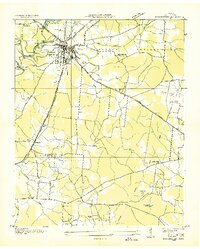 1936 Manchester1936 Print · USGSCoffee County during the mid-1930s shows a landscape of river-fed industry and deep history near the Old Stone Fort. Genealogists can trace family names at Hickerson Cem or locate rural landmarks like Logan Chapel Sch and Belmont.
 - 1936 Map of Cumberland Springs
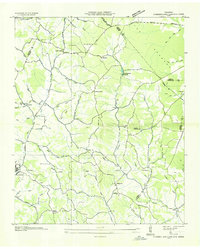 1936 Cumberland Springs1936 Print · USGSMoore County and Lynchburg are captured in the mid-1930s as a land of narrow hollows and high ridges. Researchers can trace the early layout of Lynchburg and find community centers like Raysville Sch, Smith Chapel, and Cumberland Springs.
 - 1936 Map of Burrow Cove
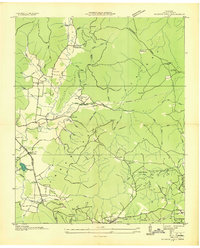 1936 Burrow Cove1936 Print · USGSThe Cumberland Plateau of Tennessee is shown in the mid-1930s, featuring the deep hollows and high points of Grundy County. Researchers can trace historic landmarks like Wonder Cave, CCC Camp No 1476, and rural centers such as Piedmont and Summerfield.
 - 1936 Map of Beech Grove
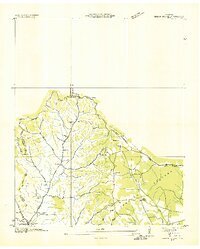 1936 Beech Grove1936 Print · USGSCoffee County rural life in the mid-1930s is detailed here along the winding Garrison Fork and Duck River. Researchers can trace family ties at the Barnes Store, Union Ch, and numerous burial grounds like the Arnold Cem.
 - 1936 Map of Petty Gap
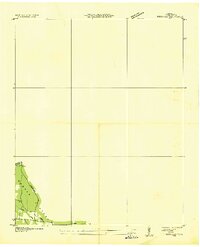 1936 Petty Gap1936 Print · USGSMiddle Tennessee’s highland terrain is captured during the mid-1930s expansion of the Tennessee Valley Authority. Local researchers can trace the specific watershed boundaries of the Tennessee Basin Divide and the course of Perry and Greek creeks.
 - 1936 Map of Noah
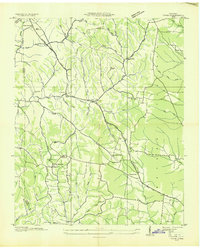 1936 Noah1936 Print · USGSCoffee County and the Bedford border are captured here in the mid-1930s as rural life centered on the forks and ridges. Genealogists can locate family burial grounds like Alley Cem and Riley Creek Cem or local school sites such as Model Sch and Beech Grove Sch.
 - 1936 Map of Morrison
 1936 Morrison1936 Print · USGSThe Barren Plateau in the mid-1930s shows a landscape of upland drainage and early utility expansion. Local researchers can trace the Tennessee River Basin Divide and early infrastructure like the T E P C O Trans Line and Grassy Pond.
 - 1936 Map of Hillsboro
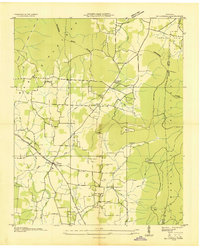 1936 Hillsboro1936 Print · USGSCoffee and Grundy counties appear here during the mid-1930s, showing the rural landscape where the Tennessee Basin meets the plateau. Genealogists can locate family landmarks like Price Cem, Zion Hill Ch, and schools such as Stephenson Sch.
 - 1936 Map of Camp Peay
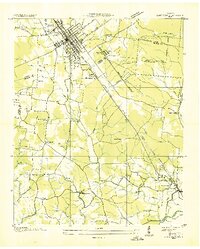 1936 Camp Peay1936 Print · USGSIn the mid-1930s, the area around Tullahoma and Estill Springs was a hub of military and rail activity. Genealogists and historians can trace the National Guard Reservation at Camp Peay, family burial sites like Maplewood Cem, and local landmarks including the Girls Vocational Sch.
 - 1936 Map of Capitol Hill
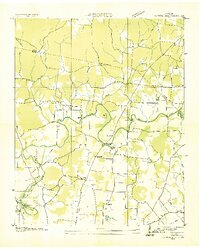 1936 Capitol Hill1936 Print · USGSThe Tennessee Valley during the mid-1930s shows a landscape of river-dependent industry and small rural crossroads. Genealogists can trace family roots through landmarks like Knight Ch, Call Sch, and the riverside operations at Dixon Mill.
 - 1936 Map of Cane Hollow
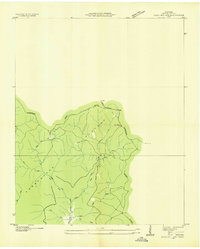 1936 Cane Hollow1936 Print · USGSThe Cumberland Plateau in the mid-1930s is captured here just as modern aerial surveying began to detail its complex drainage basins. Trace the old path of State Highway No 108 and locate landmarks like the Altamont Fire Tower and the headwaters of the Elk River at Burrows Cove.
 - 1936 Map of Normandy
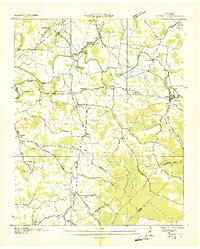 1936 Normandy1936 Print · USGSBedford and Moore counties come to life in the 1930s as the rail-and-river economy centers on the town of Normandy. Genealogists and historians can trace family locations at Bugscuffle, locate Jenkins Sch, or find industrial landmarks like Cortners Mill.
End of results
Showing maps 1-15 of 15
Top cities of Coffee County
Frequently asked questions
- What are the different types of historical maps available for Coffee County?
- What is the oldest map of Coffee County?
- Where can I purchase historical maps of Coffee County for my home or office?
- Where can I download high-res historical maps of Coffee County?
- Are there historical topographic maps available for Coffee County?
- Is there historical aerial imagery available for Coffee County?
- Where are historical maps of Coffee County sourced from?