Old Maps of Keese, Decherd for Metal Detecting
Plan your next treasure hunt with 11 historic maps of Keese. Find old homesites, ghost towns, trails, and gathering spots that may be lost to time — perfect for identifying promising metal detecting locations.
- Locate forgotten sites: Uncover places like long-lost settlements, abandoned rail lines, or gathering spots.
- Plan better hunts: Use map overlays combined with LiDAR or satellite views to narrow in on historically rich areas.
- Made for detectorists: Thousands of hobbyists use these maps to discover relics, coins, and hidden history.
Use these historic maps to boost your research and find new opportunities beneath the surface of Keese.
Keese, Decherd maps
(11)- 1928 Map of Decherd
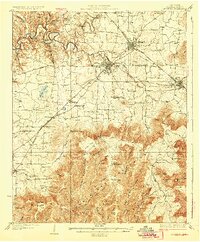 1928 Decherd1928 Print · USGSFranklin County in the late twenties shows a landscape defined by the rise of the Cumberland Mountains and the busy lines of the Nashville Chattanooga and St Louis Railway. Genealogists can locate family landmarks in Motlow Cove or trace students at Peabody Sch and Hatchett Sch.3 unique versions available
 - 1936 Map of Winchester
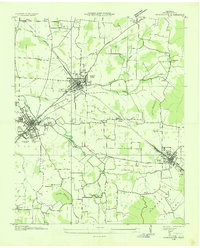 1936 Winchester1936 Print · USGSFranklin County's rail-connected towns of Winchester and Decherd are shown here in the mid-1930s as they transition during the TVA era. Genealogists can trace numerous local landmarks including Pig Trot Sch, Owen Chapel, and the Mc Illhearn Cem.
 - 1947 Map of Winchester, 1948 Print
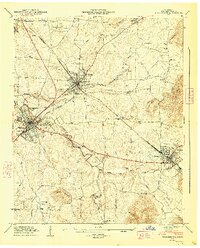 1947 Winchester1948 Print · USGSFranklin County in the late 1940s is captured at a point of industrial and municipal expansion along the Nashville Chattanooga and St Louis railway. Researchers can trace family history through local landmarks like Cedar Bluff Mill, the County Fairgrounds, and numerous cemeteries including Mt Garner Cem.3 unique versions available
 - 1956 Map of Columbia, 1960 Print
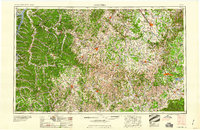 1956 Columbia1960 Print · USGSMiddle Tennessee in the mid-fifties presents a landscape of established river towns and critical rail hubs before the arrival of the modern interstate system. Researchers can trace the routes of the Louisville and Nashville railroad or locate historic landmarks like Stones River National Military Park and the Tennessee National Wildlife Refuge.6 unique versions available
 - 1971 Map of Winchester, 1973 Print
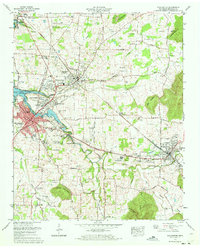 1971 Winchester1973 Print · USGSFranklin County at the start of the seventies reveals a landscape transformed by the new Tims Ford Lake and steady town growth. Trace the heritage of Winchester and Decherd through local landmarks like Cedar Bluff Mill, Owens Chapel, and the Louisville and Nashville rail lines.
 - 1981 Map of Tullahoma, 1982 Print
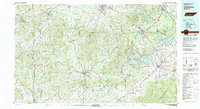 1981 Tullahoma1982 Print · USGSSouthern Tennessee enters the 1980s with a mix of aerospace technology and deep rural roots. Researchers can trace the L & N RR through Shelbyville and Fayetteville or locate family sites like Old Salem Cem and Blanton Chapel near the Cumberland Plateau.
 - 2010 Map of Winchester, 2010 Print
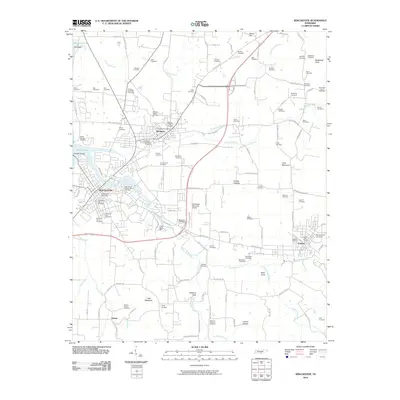 2010 Winchester2010 Print · USGSFranklin County communities are documented here in the early twenty-first century, centered on the historic rail corridor connecting Winchester and Cowan. Genealogists can trace family lineage through dozens of named sites like Mount Garner Cemetery and the Decherd Negro Cemetery.
 - 2013 Map of Winchester, 2013 Print
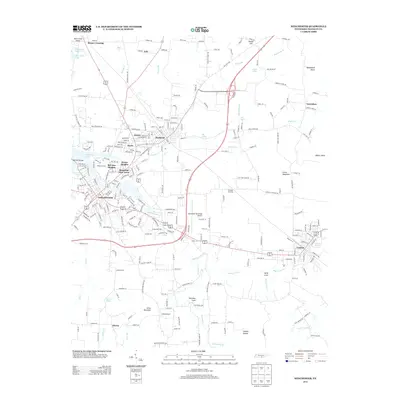 2013 Winchester2013 Print · USGSFranklin County's landscape in the early 2010s is defined by the proximity of the Cumberland Plateau and the waters of Tims Ford Lake. Genealogists and local historians can trace the connecting corridor between Winchester, Decherd, and Cowan, alongside rural markers like Keith Cove and Liberty.
 - 2016 Map of Winchester, 2016 Print
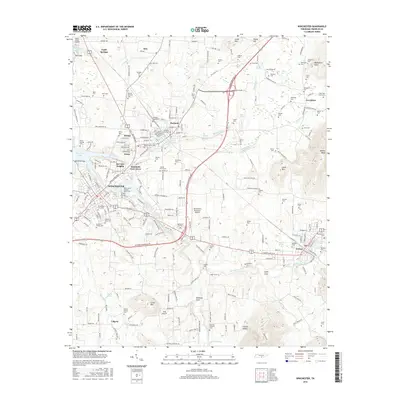 2016 Winchester2016 Print · USGSFranklin County shows a bustling modern landscape north of the Cumberland Plateau in this recent survey. Genealogists and historians can trace numerous family and community sites like Mount Garner Cemetery, Warren Chapel, and the historic Red Mill Bridge.
 - 2019 Map of Winchester, 2019 Print
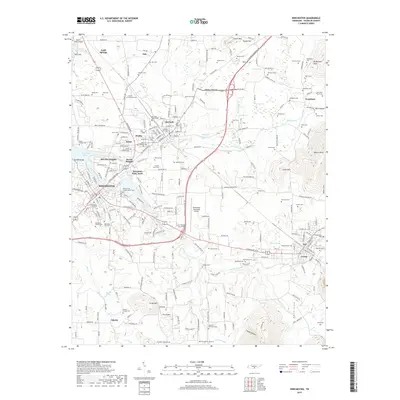 2019 Winchester2019 Print · USGSWinchester and Decherd are showcased in the late twenty-teens as they sit at the edge of the Cumberland Plateau and the shores of Tims Ford Lake. Genealogists can trace family names through dozens of sites like Mount Garner Cem, Goshen Cem, and the historic Red Mill Bridge.
 - 2022 Map of Winchester, 2022 Print
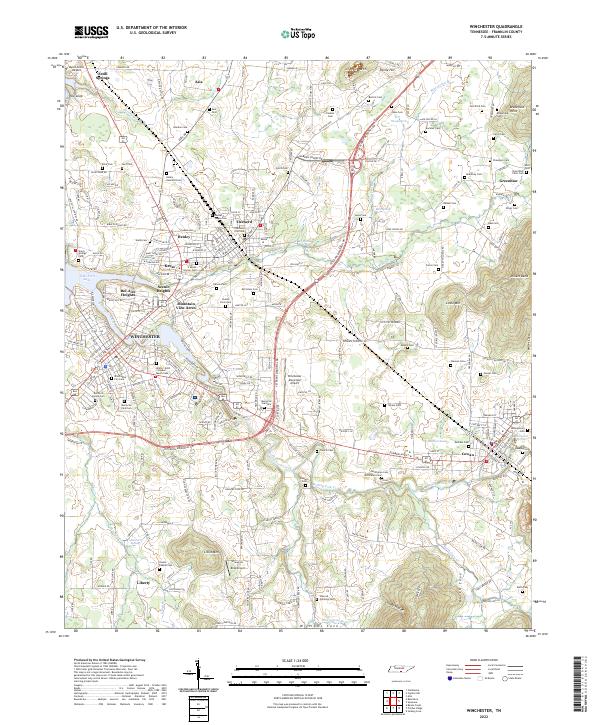 2022 Winchester2022 Print · USGSFranklin County's central corridor comes into focus in the early 2020s, centered on the growing hubs of WINCHESTER and Decherd. Genealogists and researchers can trace dozens of burial sites and family landmarks, from the Mount Garner Cem to the Mary Sharp Sch.
End of results
Showing maps 1-11 of 11
Top cities near Keese
- Tullahoma historical maps
- Manchester historical maps
- Winchester historical maps
- Sewanee historical maps
- Estill Springs historical maps
- Decherd historical maps
See more
Frequently asked questions
- What are the different types of historical maps available for Keese?
- What is the oldest map of Keese?
- Where can I purchase historical maps of Keese for my home or office?
- Where can I download high-res historical maps of Keese?
- Are there historical topographic maps available for Keese?
- Is there historical aerial imagery available for Keese?
- Where are historical maps of Keese sourced from?