1940s Maps of Chattanooga, Tennessee
Explore 15 historic maps of Chattanooga from the 1940s. These maps offer a rare glimpse into what life looked like during the 1940s — showing old roads, neighborhoods, homes, and landmarks that have changed or disappeared over time.
Whether you're researching your family's past, planning a metal detecting trip, or studying how Chattanooga's landscape evolved across the 1940s, these high-resolution maps are a powerful tool for exploring the history of this region.
- Focus on a specific era: All maps on this page are from the 1940s, giving you a focused view of this time period.
- See what’s changed: Compare century-old streets, trails, and buildings to today's modern landscape using overlays and satellite layers.
- Research with precision: Use these maps for genealogy, historical research, land use analysis, or educational projects.
- View, download, or print: Maps are fully viewable online in high resolution, and can be downloaded or printed for your own records.
Start exploring Chattanooga's history through authentic maps from the 1940s. This is your window into the past.
Chattanooga, TN maps
(15)- 1940 Map of Chattanooga
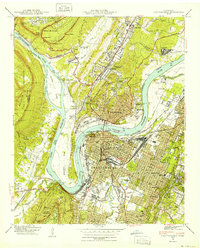 1940 Chattanooga1940 Print · USGSChattanooga and the Tennessee River valley are captured here at the dawn of the 1940s, showcasing a bustling rail and river hub. Researchers can trace the legacy of Union Station, find family plots in National Cem, or locate the historic Cravens House on the slopes of Lookout Mountain.2 unique versions available
 - 1940 Map of Ooltewah, 1954 Print
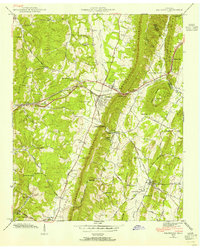 1940 Ooltewah1954 Print · USGSSoutheast Tennessee is captured here just before the mid-century as a landscape of ridge-and-valley farming and emerging education. Genealogists can trace family names at Sylar Cem and Pollard Cem or locate the early campus of Southern Junior College.
 - 1941 Map of Chattanooga
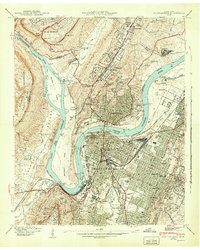 1941 Chattanooga1941 Print · USGSChattanooga was a powerhouse of rail and river industry just before the Second World War. Genealogists and historians can trace the early city grid from Union Station to MISSIONARY RIDGE, locating landmarks like Ruby Falls and National Cem.5 unique versions available
 - 1941 Map of Ooltewah
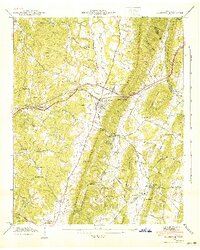 1941 Ooltewah1941 Print · USGSThe valleys and ridges of Hamilton and Bradley counties are shown here just before the mid-century industrial boom. Genealogists can locate family names and sites like Bell Mill, Mineral Park Chapel, and the campus of Southern Junior College.
 - 1942 Map of East Chattanooga
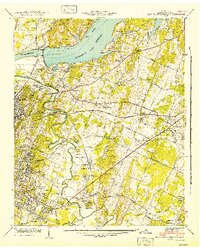 1942 East Chattanooga1942 Print · USGSHamilton County's river landscape underwent massive changes during the early Forties as the Tennessee Valley Authority completed the Chickamauga Dam. Genealogists can trace family roots through the Silverdale Confederate Cem, Brainerd Cem, and numerous rural schools like Jersey Sch.2 unique versions available
 - 1942 Map of Fort Oglethorpe, 1946 Print
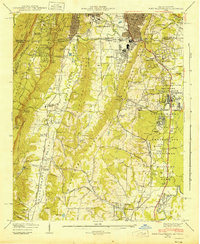 1942 Fort Oglethorpe1946 Print · USGSThe Tennessee-Georgia borderlands are captured here during the early 1940s, highlighting the transition from historic battlefields to growing residential communities. Genealogists and historians can trace family-named sites like Snodgrass House, McCallie Lake, and Lee and Gordon Mill.3 unique versions available
 - 1942 Map of Wauhatchie, 1952 Print
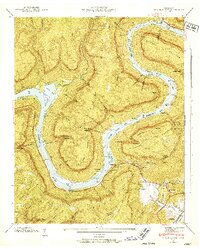 1942 Wauhatchie1952 Print · USGSMarion and Hamilton counties are mapped here during the early years of the Hales Bar Reservoir era. Genealogists can locate family landmarks like Stanley Sett, Pot Cem, and schools such as McNabb Sch nestled among the hollows.2 unique versions available
 - 1943 Map of Daisy
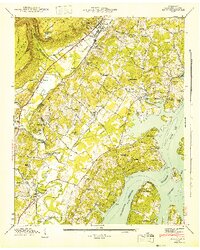 1943 Daisy1943 Print · USGSThe Tennessee River valley near Daisy was being transformed by the new Chickamauga Reservoir during the early years of the war. Genealogists and local historians can trace legacy sites like Jackson Chapel, Burks Chapel, and the Barker Cem before modern development altered the shoreline.2 unique versions available
 - 1943 Map of Wauhatchie
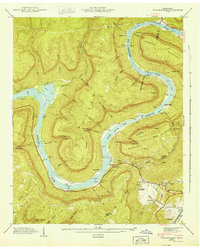 1943 Wauhatchie1943 Print · USGSMarion and Hamilton County terrain is defined by the winding Tennessee River during the era of the Tennessee Valley Authority. Genealogists can trace family footprints at Kellys Ferry, rural schools like Suck Port Sch, and family burial sites including Francis Cem.
 - 1943 Map of East Ridge, 1957 Print
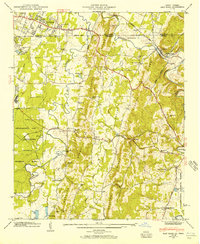 1943 East Ridge1957 Print · USGSThe Tennessee-Georgia borderlands come to life in the 1940s as a landscape of rural schools, family cemeteries, and military reservations. Genealogists can trace family roots through Lomenick Cem, Boynton, and landmarks like Burning Bush Sch.
 - 1945 Map of Hooker, 1954 Print
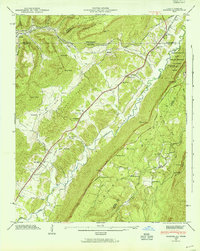 1945 Hooker1954 Print · USGSThe Georgia-Tennessee borderlands appear here in the mid-1940s, showing the intersection of heavy rail and mountain terrain. Genealogists can trace family landmarks like Sarah Chapel, West Brow Sch, and the Dickens Cem along the slopes of Lookout Mountain.2 unique versions available
 - 1945 Map of Fairmount, 1957 Print
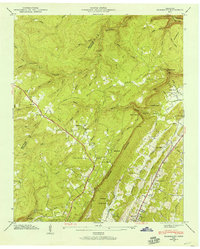 1945 Fairmount1957 Print · USGSThe Cumberland Plateau meets the valley floor north of Chattanooga in the mid-1940s. Local researchers can trace family landmarks along Sawyer Road and locate rural hubs like Lone Oak, Summertown, and the Nathan L Bachman Sch.
 - 1946 Map of East Ridge, 1947 Print
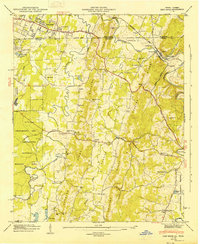 1946 East Ridge1947 Print · USGSThe Tennessee and Georgia borderlands come alive in the mid-forties as postwar expansion reaches into the ridges south of Chattanooga. Genealogists and historians can trace family sites like Newnan Spring Cem, old landmarks like Swanson Mill, and the early footprint of Lake Winnepesaukah.2 unique versions available
 - 1946 Map of Fairmount, 1947 Print
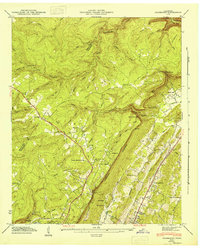 1946 Fairmount1947 Print · USGSHamilton County uplands and the plateau settlements north of Chattanooga are captured here just after the war. Genealogists can locate family landmarks like Vandergriff Cem and Levi Cem or trace rural routes like the William Howard Taft Highway.
 - 1946 Map of Hooker, 1947 Print
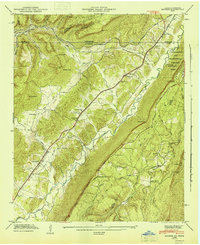 1946 Hooker1947 Print · USGSLookout Valley in the mid-1940s served as a vital rail corridor through the gaps of the Appalachians between Georgia and Tennessee. Genealogists can trace family footprints at Sarah Chapel, North Dade Sch, and Magill Cem along the winding course of Lookout Creek.2 unique versions available
End of results
Showing maps 1-15 of 15
Top cities near Chattanooga
- East Ridge historical maps
- East Ridge historical maps
- Soddy-Daisy historical maps
- Fort Oglethorpe historical maps
- Collegedale historical maps
- Signal Mountain historical maps
See more
Top neighborhoods of Chattanooga
- Alton Park historical maps
- Glenwood historical maps
- Andrea Heights historical maps
- Avondale historical maps
- Colonial Village historical maps
- Hampton Heights historical maps
See more
Frequently asked questions
- What are the different types of historical maps available for Chattanooga?
- What is the oldest map of Chattanooga?
- Where can I purchase historical maps of Chattanooga for my home or office?
- Where can I download high-res historical maps of Chattanooga?
- Are there historical topographic maps available for Chattanooga?
- Is there historical aerial imagery available for Chattanooga?
- Where are historical maps of Chattanooga sourced from?