1960s Maps of Chattanooga, Tennessee
Explore 11 historic maps of Chattanooga from the 1960s. These maps offer a rare glimpse into what life looked like during the 1960s — showing old roads, neighborhoods, homes, and landmarks that have changed or disappeared over time.
Whether you're researching your family's past, planning a metal detecting trip, or studying how Chattanooga's landscape evolved across the 1960s, these high-resolution maps are a powerful tool for exploring the history of this region.
- Focus on a specific era: All maps on this page are from the 1960s, giving you a focused view of this time period.
- See what’s changed: Compare century-old streets, trails, and buildings to today's modern landscape using overlays and satellite layers.
- Research with precision: Use these maps for genealogy, historical research, land use analysis, or educational projects.
- View, download, or print: Maps are fully viewable online in high resolution, and can be downloaded or printed for your own records.
Start exploring Chattanooga's history through authentic maps from the 1960s. This is your window into the past.
Chattanooga, TN maps
(11)- 1960 Map of Chattanooga
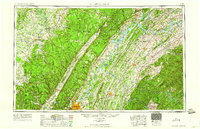 1960 Chattanooga1960 Print · USGSSoutheast Tennessee and the southern Appalachians are shown here at the height of the river-management era. You can trace the valley rail lines and locate Lookout Mountain and the expansive waters of Chickamauga Reservoir.
 - 1961 Map of Rome
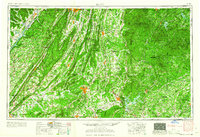 1961 Rome1961 Print · USGSNorthwest Georgia and neighboring Tennessee and Alabama are shown here at a moment of significant mid-century growth. Researchers can trace the rail networks of the Central of Georgia or locate landmarks within Chickamauga and Chattanooga Nat Military Park.
 - 1963 Map of Rome
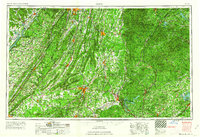 1963 Rome1963 Print · USGSThe tri-state corner of Georgia, Alabama, and Tennessee is captured here during a period of massive reservoir expansion and post-war growth. Genealogists and historians can trace the rail corridors of the Southern Ry or locate landmarks like Fort Oglethorpe and Cloudland Canyon State Park.
 - 1964 Map of Chattanooga
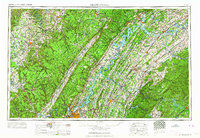 1964 Chattanooga1964 Print · USGSSoutheast Tennessee and the western Carolinas appear in the mid-sixties as a powerhouse of river-driven industry and mountain wilderness. Genealogists and historians can trace rail-town lineages along the Southern Ry or locate family landmarks near Watts Bar Lake and Tellico Plains.
 - 1964 Map of Ooltewah, 1966 Print
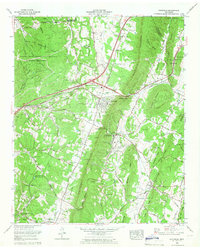 1964 Ooltewah1966 Print · USGSHamilton County in the mid-sixties reveals a landscape balancing its military history with growing educational and rail hubs. Researchers can trace family-named cemeteries such as Sylar Cemetery and Plowman Cemetery or locate landmarks like Bell Mill and the Southern Missionary College.4 unique versions available
 - 1969 Map of Chattanooga
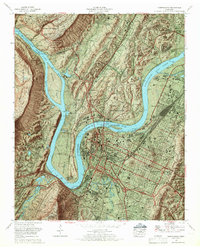 1969 Chattanooga1969 Print · USGSChattanooga and the Tennessee River valley are captured in the late sixties as new interstate construction began to cut through the city's historic core. Trace the layout of the National Cemetery, the rail lines at Cravens Yards, and the unique development of Moccasin Bend.6 unique versions available
 - 1969 Map of Fort Oglethorpe, 1970 Print
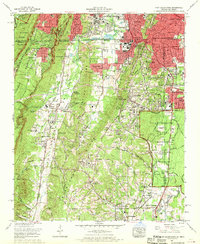 1969 Fort Oglethorpe1970 Print · USGSThe Georgia-Tennessee borderlands south of Chattanooga come into focus in the late sixties, showing the suburban expansion and military heritage of the region. Researchers can trace family roots through Humphreys Cem, locate the Chattanooga Valley High School, or study the grounds of Chickamauga and Chattanooga National Military Park.
 - 1969 Map of East Ridge, 1970 Print
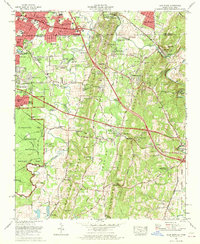 1969 East Ridge1970 Print · USGSThe Tennessee-Georgia borderlands are captured here in the late sixties as suburban expansion meets Civil War history. Genealogists can trace family landmarks like Lomenick Cem, Spring Creek Church, and the original path of the Dixie Highway.2 unique versions available
 - 1969 Map of East Chattanooga, 1970 Print
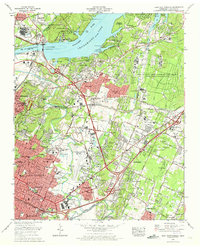 1969 East Chattanooga1970 Print · USGSHamilton County enters a period of post-war suburban and industrial growth as the Chattanooga city limits expand toward the Tennessee River. Genealogists and historians can trace family locations near Stubblefield Cem, Bonny Oaks Sch, and the Volunteer Army Ammunition Plant.5 unique versions available
 - 1969 Map of Daisy, 1972 Print
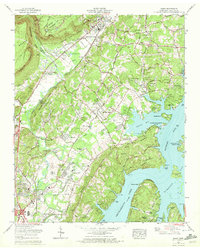 1969 Daisy1972 Print · USGSHamilton County experienced significant growth along the Tennessee River during the late sixties as older settlements met new suburban expansion. Genealogists and historians can trace family roots through sites like John H Allen School, the Old Mill, and numerous local burial grounds including Hensley Cem.
 - 1969 Map of Fairmount, 1972 Print
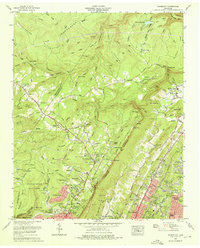 1969 Fairmount1972 Print · USGSHamilton County uplands and the Chattanooga valley come into focus during the late sixties as suburban growth climbs the ridges. Trace family history through Sawyer Cem and Brown Chapel Cem, or locate landmarks like the Wines T Thrasher School and Falling Water Falls.5 unique versions available
End of results
Showing maps 1-11 of 11
Top cities near Chattanooga
- East Ridge historical maps
- East Ridge historical maps
- Soddy-Daisy historical maps
- Fort Oglethorpe historical maps
- Collegedale historical maps
- Signal Mountain historical maps
See more
Top neighborhoods of Chattanooga
- Alton Park historical maps
- Glenwood historical maps
- Andrea Heights historical maps
- Avondale historical maps
- Colonial Village historical maps
- Hampton Heights historical maps
See more
Frequently asked questions
- What are the different types of historical maps available for Chattanooga?
- What is the oldest map of Chattanooga?
- Where can I purchase historical maps of Chattanooga for my home or office?
- Where can I download high-res historical maps of Chattanooga?
- Are there historical topographic maps available for Chattanooga?
- Is there historical aerial imagery available for Chattanooga?
- Where are historical maps of Chattanooga sourced from?