1940s Maps of McMinn County, Tennessee
Explore 24 historic maps of McMinn County from the 1940s. These maps offer a rare glimpse into what life looked like during the 1940s — showing old roads, neighborhoods, homes, and landmarks that have changed or disappeared over time.
Whether you're researching your family's past, planning a metal detecting trip, or studying how McMinn County's landscape evolved across the 1940s, these high-resolution maps are a powerful tool for exploring the history of this region.
- Focus on a specific era: All maps on this page are from the 1940s, giving you a focused view of this time period.
- See what’s changed: Compare century-old streets, trails, and buildings to today's modern landscape using overlays and satellite layers.
- Research with precision: Use these maps for genealogy, historical research, land use analysis, or educational projects.
- View, download, or print: Maps are fully viewable online in high resolution, and can be downloaded or printed for your own records.
Start exploring McMinn County's history through authentic maps from the 1940s. This is your window into the past.
McMinn County, TN maps
(24)- 1940 Map of Benton
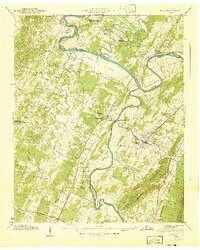 1940 Benton1940 Print · USGSPolk County life in the early 1940s centers on the fertile river bottoms and the rail lines connecting these valley communities. Researchers can trace family roots through numerous local landmarks, from Chestuee Mills to rural sites like New Harmony Ch and Baker Chapel Cem.3 unique versions available
 - 1940 Map of Ten Mile
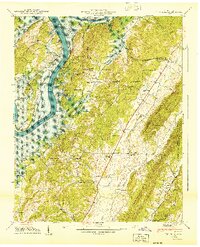 1940 Ten Mile1940 Print · USGSMeigs and Roane counties are captured here just as the Tennessee Valley Authority was transforming the river landscape. Genealogists and local historians can trace rural family life through markers like Deatherage Cem, Euchee Sch, and the settlement at Ten Mile.
 - 1940 Map of Pattie Gap
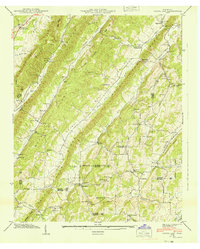 1940 Pattie Gap1940 Print · USGSThe rural valleys of East Tennessee are captured here in 1940, showing a landscape of small farmsteads and family-named landmarks. Researchers can trace ancestral roots through sites like the Fuller Cem, Morrison Store, and Dry Fork Sch.
 - 1941 Map of Sweetwater, 1954 Print
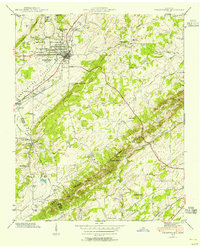 1941 Sweetwater1954 Print · USGSIn the early 1940s, this Monroe County corridor was a bustling intersection of rail and road transport centered on Sweetwater. Genealogists can trace family roots through numerous country churches and schools like Watson Chapel, Liberality Sch, and Sharps Chapel Sch.
 - 1941 Map of Niota, 1960 Print
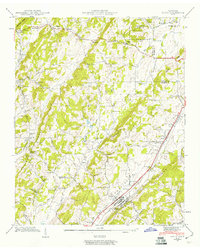 1941 Niota1960 Print · USGSNiota and the surrounding McMinn County countryside are captured here in the early 1940s, following the path of the Southern Railway. Researchers can trace old agrarian roots at Barton Mill, local landmarks like Beulah Chapel, and small settlements including Prigmore.2 unique versions available
 - 1941 Map of Tranquillity, 1960 Print
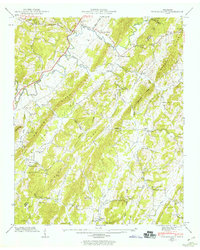 1941 Tranquillity1960 Print · USGSMcMinn County was a landscape of ridge-top lookouts and valley farms in the early 1940s, shortly after the Tennessee Valley Authority began its local survey. Researchers can locate vanished landmarks like Collins Mill and the Old Walnut Grove Cem, or trace the old roads connecting Tranquillity to Fiketon.2 unique versions available
 - 1942 Map of Tranquillity
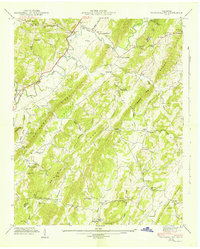 1942 Tranquillity1942 Print · USGSMcMinn County at the start of the 1940s reveals a landscape of ridge-and-valley farms and tight-knit rural communities. Genealogists can trace family roots through several schools and churches, such as Turkeypen Sch, Collins Mill, and Hutsell Cem.
 - 1942 Map of Sweetwater
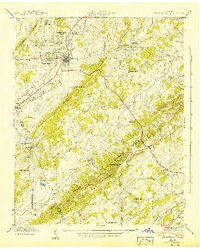 1942 Sweetwater1942 Print · USGSMonroe and McMinn counties in the early 1940s reveal a landscape of ridge-and-valley farming and early transit corridors. Genealogists can locate family landmarks like West View Cem, Tennessee Military Institute, and rural schools such as Sharps Chapel Sch.2 unique versions available
 - 1942 Map of Niota
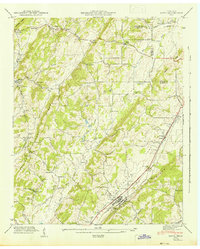 1942 Niota1942 Print · USGSNiota and the surrounding McMinn County valleys are captured here in the early 1940s as a landscape of small farms, railroad stops, and rural industry. Genealogists can locate family landmarks like Shearman Cem, Barton Mill, and the Murray Store.
 - 1942 Map of Goodfield, 1960 Print
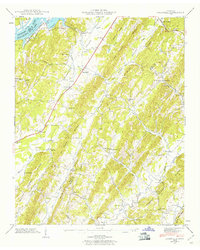 1942 Goodfield1960 Print · USGSThe Tennessee River valley and its surrounding ridges come alive in this wartime survey of Meigs and Rhea counties. Researchers can pinpoint several family burial grounds like Howser Cem and rural centers including Goodfield and Shiloh Sch.
 - 1942 Map of Charleston, 1960 Print
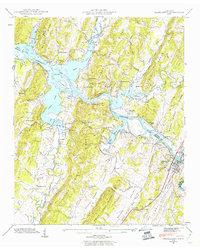 1942 Charleston1960 Print · USGSThe riverfront communities of Charleston and Calhoun are captured at a pivotal moment in the 1940s as the Hiwassee River meets the backwaters of the new reservoir. Researchers can trace the Southern railroad line and locate family-named sites like Godsey Cem and Blevins Chapel.2 unique versions available
 - 1942 Map of Decatur, 1962 Print
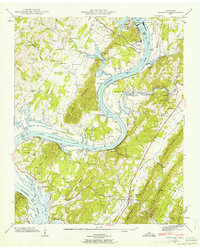 1942 Decatur1962 Print · USGSMeigs County at the dawn of the hydroelectric era shows the Tennessee River transitioning into a reservoir system. Genealogists can trace family-named sites like Johns Chapel and Old Goodfield Cem near the newly formed Chickamauga Lake.2 unique versions available
 - 1943 Map of Tellico
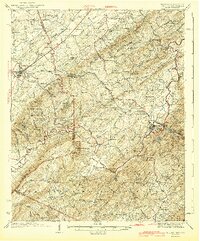 1943 Tellico1943 Print · USGSThe valleys and mountain foothills of eastern Tennessee appear here in the 1930s and 40s during the height of the rural schoolhouse era. Genealogists can trace family names through dozens of landmarks like Isbell Cem, Union Grove Ch, and schools such as Manila Sch or Hance Sch.2 unique versions available
 - 1943 Map of Goodfield, 1946 Print
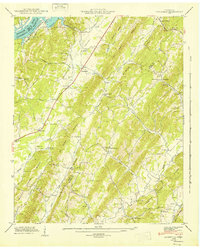 1943 Goodfield1946 Print · USGSMeigs County in the early 1940s reveals a landscape of ridge-and-valley farming communities just as the newly formed reservoir was reshaping the riverfront. Genealogists can locate family landmarks like Cox Cem, Allen Store, and the rural Shiloh Sch.
 - 1943 Map of Charleston, 1946 Print
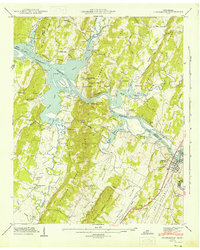 1943 Charleston1946 Print · USGSThe Tennessee riverfront and reservoir shoreline come alive in this mid-1940s survey of the Bradley and McMinn county lines. Genealogists can trace family roots at Maddux Cem, Mt Harmony Sch, and the riverside communities of Charleston and Calhoun.2 unique versions available
 - 1943 Map of Riceville, 1946 Print
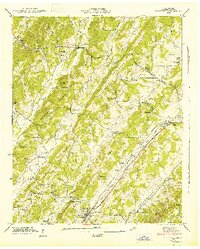 1943 Riceville1946 Print · USGSMcMinn County life in the mid-1940s is centered on the railroad corridor between Riceville and Coile. Researchers can trace old family footprints at Mouse Creek Mill, the Sullins Cem, and many small country schools like Poplar Hill Sch.2 unique versions available
 - 1943 Map of Decatur, 1946 Print
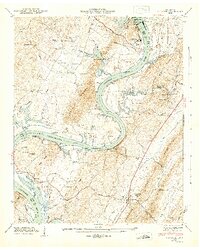 1943 Decatur1946 Print · USGSMeigs County was undergoing a massive transformation in the early 1940s as the Tennessee River was harnessed for power and navigation. Researchers can locate dozens of ancestral sites, from Kings Mill and Pinhook Ferry to rural schools like Fairview Sch.
 - 1943 Map of Etowah, 1960 Print
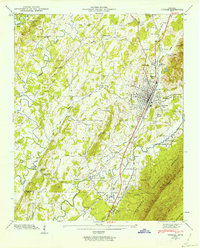 1943 Etowah1960 Print · USGSMcMinn County in the early 1940s centers on the bustling rail hub of Etowah as it expands along the Louisville and Nashville line. Genealogists and historians can trace family locations at rural landmarks like Old Salem Ch, Gravel Hill Sch, and the Buttram Cem.2 unique versions available
 - 1943 Map of Calhoun, 1960 Print
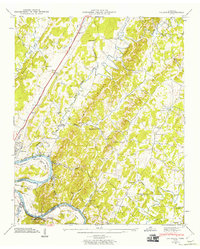 1943 Calhoun1960 Print · USGSThe Hiwassee River valley at the onset of the 1940s reveals a rural landscape of ridges and river bends at the borders of McMinn and Bradley counties. Genealogists and historians can trace family locations near Whites Mill, Gentry Store, and the Womack Cem.2 unique versions available
 - 1944 Map of Calhoun, 1946 Print
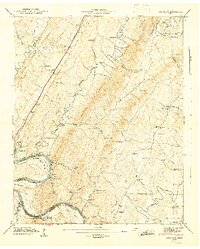 1944 Calhoun1946 Print · USGSThe Hiwassee River corridor in the 1940s reveals a landscape of river bends and rural crossroads. Local historians can trace the foundations of the community at Whites Mill, the small rail siding at Sanford, and early schools like Claxton Sch.2 unique versions available
 - 1944 Map of Etowah, 1946 Print
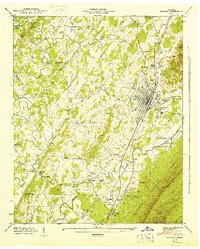 1944 Etowah1946 Print · USGSMcMinn County in the mid-1940s reveals a landscape defined by the Louisville and Nashville railroad and rural life. Researchers can trace family roots at Buttram Cem or locate vanished schools like Wesleyana Sch.
 - 1944 Map of Athens, 1946 Print
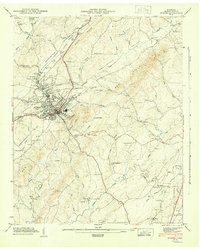 1944 Athens1946 Print · USGSMcMinn County at the end of the Second World War shows a landscape defined by its rail junctions and ridge-and-valley farming. Genealogists can trace family names through dozens of landmarks, including Cunningham Cem, Zion Hill Sch, and the County Farm.3 unique versions available
 - 1944 Map of Englewood, 1960 Print
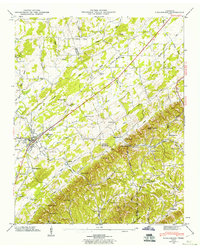 1944 Englewood1960 Print · USGSEnglewood and its surroundings at the end of the war show a landscape defined by the Louisville and Nashville railroad and rural valley life. Researchers can trace the Old Federal Road, find small family burial grounds like Cochran Cem, and locate vanished community sites like Manila.4 unique versions available
 - 1945 Map of Englewood, 1946 Print
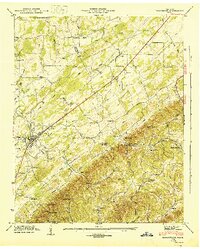 1945 Englewood1946 Print · USGSThe rail-and-creek economy of McMinn County is on full display in the 1940s, centered on the growth of Englewood and the rural hills. Researchers can trace family roots at Cochran Cem, visit New Bethel Ch, or locate the site of the old County Farm.
End of results
Showing maps 1-24 of 24
Top cities of McMinn County
- Athens historical maps
- Etowah historical maps
- Englewood historical maps
- Niota historical maps
- Calhoun historical maps
Frequently asked questions
- What are the different types of historical maps available for McMinn County?
- What is the oldest map of McMinn County?
- Where can I purchase historical maps of McMinn County for my home or office?
- Where can I download high-res historical maps of McMinn County?
- Are there historical topographic maps available for McMinn County?
- Is there historical aerial imagery available for McMinn County?
- Where are historical maps of McMinn County sourced from?