1900s (20th Century) Maps of Morgan County, Tennessee
Explore 59 historic maps of Morgan County from the 1900s (20th Century). These maps offer a rare glimpse into what life looked like during the 1900s — showing old roads, neighborhoods, homes, and landmarks that have changed or disappeared over time.
Whether you're researching your family's past, planning a metal detecting trip, or studying how Morgan County's landscape evolved across the 1900s, these high-resolution maps are a powerful tool for exploring the history of this region.
- Focus on a specific era: All maps on this page are from the 1900s, giving you a focused view of this time period.
- See what’s changed: Compare century-old streets, trails, and buildings to today's modern landscape using overlays and satellite layers.
- Research with precision: Use these maps for genealogy, historical research, land use analysis, or educational projects.
- View, download, or print: Maps are fully viewable online in high resolution, and can be downloaded or printed for your own records.
Start exploring Morgan County's history through authentic maps from the 1900s. This is your window into the past.
Morgan County, TN maps
(59)- 1935 Map of Gobey
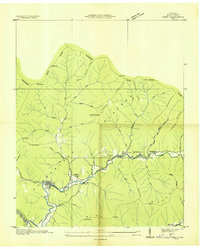 1935 Gobey1935 Print · USGSMorgan County is captured during the mid-1930s when logging and rail lines defined the life of the plateau. Trace the timber economy through the Lumber Company rail spurs and find family landmarks like Elizabeth Sch and Macedonia Ch.
 - 1935 Map of Camp Austin
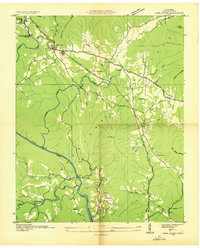 1935 Camp Austin1935 Print · USGSMorgan County in the mid-1930s shows a landscape of plateau settlements and new New Deal infrastructure. Genealogists and historians can trace local landmarks like CCC Camp No 1463, rural outposts like Deermont Sch, and the rail corridor of the Southern.2 unique versions available
 - 1935 Map of Elverton
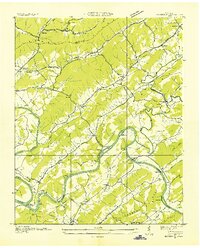 1935 Elverton1935 Print · USGSMid-1930s Roane County and Morgan County were characterized by river-bottom agriculture and ridgeline settlements before the arrival of the atomic age. Genealogists can trace family landmarks like Gallagher Ferry, Orchard View Sch, and the community of Wheat.
 - 1935 Map of Harriman
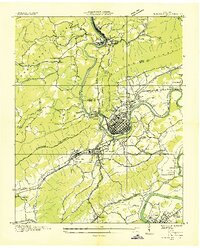 1935 Harriman1935 Print · USGSMid-1930s Roane County reveals a busy rail and river corridor where the Cumberland Escarpment meets the Tennessee Valley. Genealogists and historians can trace family landmarks like Suddaths Ferry, Bazzletown Sch, and the grounds of CCC Camp No 37.
 - 1935 Map of Lancing
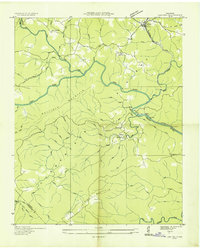 1935 Lancing1935 Print · USGSMorgan County, Tennessee, is captured here in the mid-1930s as the railroad and river networks shaped local life. Genealogists and researchers can trace family lands near Lancing, the settlement at Nemo, and community centers like Catoosa Sch and Clear Creek Ch.
 - 1935 Map of Pilot Mountain
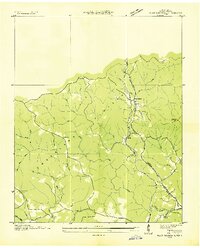 1935 Pilot Mountain1935 Print · USGSMorgan County’s high plateau country is captured here during the mid-1930s electrification era. Researchers can trace the families near Rome Ch, locate the Pilot Mtn Fire Tower, or follow the Southern rail line through Annadel.
 - 1936 Map of Hebbertsburg
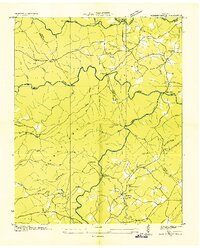 1936 Hebbertsburg1936 Print · USGSCumberland and Morgan Counties come together in the mid-1930s along the winding Obed River and Daddy Creek. Researchers can locate old community hubs like Hebbertsburg and Frankfort, alongside river crossings at Hegler Ford and Potter Ford.
 - 1936 Map of Hogbell Gap
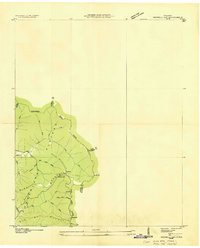 1936 Hogbell Gap1936 Print · USGSThe Tennessee Cumberland Mountains are captured during the mid-1930s, revealing a landscape of high ridges and critical mountain passes. Researchers can trace the rugged topography of Bird Mountain and locate early landmarks such as Hogbell Gap and The Garden Spot.
 - 1936 Map of Twin Bridges
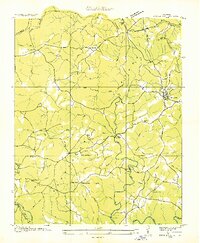 1936 Twin Bridges1936 Print · USGSMorgan County life during the mid-1930s centered on the high ridges of the Cumberland Plateau and the waters of Clear Creek. Researchers can trace old mountain communities through sites like Deer Lodge, Island Ford Sch, and Lavender Ch.
 - 1936 Map of Cardiff
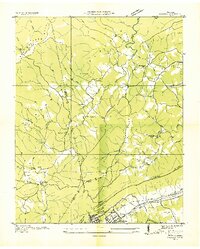 1936 Cardiff1936 Print · USGSThe Cumberland Plateau meets the valley floor in the mid-1930s, showing a landscape shaped by the ridge and rail. Researchers can trace the development of Rockwood and Cardiff or locate rural landmarks like Dry Hill Ch and Hatley Sch.2 unique versions available
 - 1936 Map of Windrock
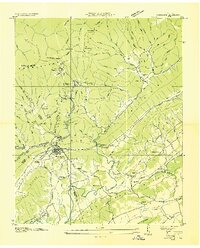 1936 Windrock1936 Print · USGSAnderson County and its neighbors are captured here in the mid-1930s as industrial rail lines bridged the gap between mountain coal and valley towns. Genealogists can trace family names at Grave Hill Cemetery or locate the old Frost Bottom School.
 - 1936 Map of Petros
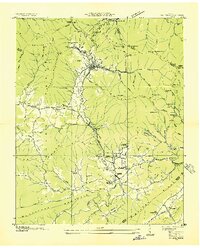 1936 Petros1936 Print · USGSMorgan County is shown at the height of its coal-mining era in the mid-1930s. Genealogists and historians can trace the foundations of Brushy Mountain State Prison and industrial camps like Coalfield Camp No 1 and Petros.
 - 1936 Map of Jones Knob
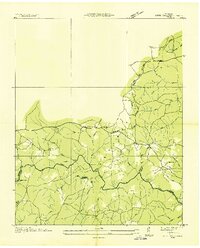 1936 Jones Knob1936 Print · USGSFentress and Morgan counties in the mid-1930s reveal a landscape of high plateaus and vital river crossings. Researchers can locate remote rural landmarks including Jones Sch, Ashburn Ford, and the distinctive Jones Knob among the deep creek basins.
 - 1941 Map of Harriman
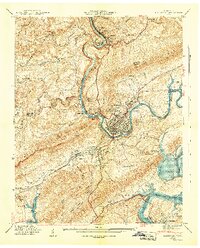 1941 Harriman1941 Print · USGSHarriman and the Emory River valley are captured here just as the landscape was transforming for the new reservoir system. Researchers can trace the convergence of three major railroads and find family landmarks like Delozier Cem, Woods Chapel, and Cardiff Sch.3 unique versions available
 - 1941 Map of Elverton
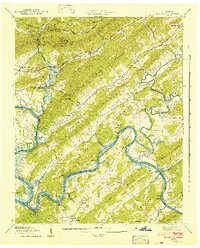 1941 Elverton1941 Print · USGSThe Clinch and Emory Rivers meet at the dawn of the Tennessee Valley Authority era, just as the Watts Bar Reservoir began to fill. Local historians can trace the foundations of old Roane County through Smallman Mill, Gallaher Ferry, and the County Farm.3 unique versions available
 - 1943 Map of Hebbertsburg, 1957 Print
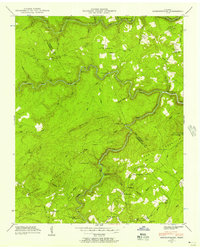 1943 Hebbertsburg1957 Print · USGSThe Cumberland Plateau landscape near the Morgan and Cumberland county line comes to life in the 1940s. Genealogists and local historians can trace the foundations of mountain life through Frankfort, the New Home Church, and old river crossings like Potter Ford.5 unique versions available
 - 1943 Map of Twin Bridges, 1965 Print
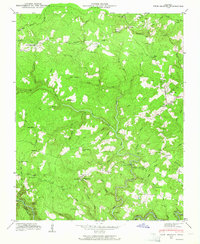 1943 Twin Bridges1965 Print · USGSMorgan County is captured here in the early 1940s, showing a rural landscape of ridges and river crossings before modern infrastructure. Researchers can trace family history through sites like Deer Lodge Academy, Adkins Mill, and the Shadeland Cem.4 unique versions available
 - 1945 Map of Hebbertsburg
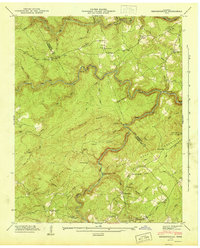 1945 Hebbertsburg1945 Print · USGSCumberland and Morgan counties appear here in the mid-1940s, where river fords and mountain ridges dictated the pace of rural life. Genealogists and local historians can locate old landmarks like Potter Chapel Sch, Hebbertsburg, and the Pilot Knob Lookout Tower.
 - 1945 Map of Twin Bridges, 1946 Print
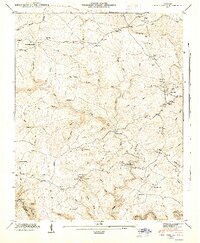 1945 Twin Bridges1946 Print · USGSThe Cumberland Plateau of Morgan County is captured here in the mid-1940s, showing a landscape of high divides and deep creek hollows. Local historians can trace early community life through Deer Lodge Academy, Adkins Mill, and Island Ford Sch.
 - 1946 Map of Gobey
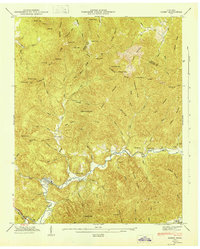 1946 Gobey1946 Print · USGSThe Morgan and Scott County border comes alive in the mid-1940s, showing a region defined by timber transport and mountain hollows. Genealogists can trace family names through Mc Cartt Cem, Elizabeth School, and the winding Emory River Railroad.
 - 1946 Map of Camp Austin
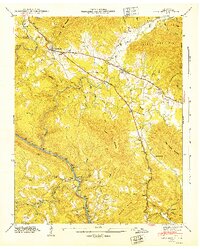 1946 Camp Austin1946 Print · USGSMorgan County is shown during the mid-1940s as the rail and river networks shaped local life. Genealogists can trace family connections through landmarks like Wartburg Cem, Mossy Grove Ch, and the rural Piney Sch along the river.2 unique versions available
 - 1946 Map of Cardiff
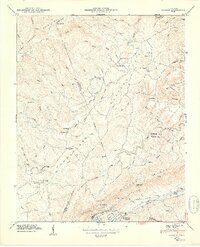 1946 Cardiff1946 Print · USGSThe industrial corridor near Rockwood and Cardiff sits at the foot of Walden Ridge during the mid-1940s. Genealogists can trace family footprints across several rural schools and burial grounds, including Dry Hill Sch, Skidmore Cem, and Ault Cem.
 - 1946 Map of Petros, 1947 Print
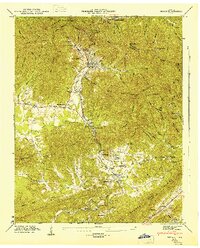 1946 Petros1947 Print · USGSMorgan County and the Cumberland Plateau are shown just after the war when coal and incarceration shaped the local landscape. Trace the footprint of Brushy Mountain State Prison and the rail-dependent camps at Coalfield Camp No 1 and Coalfield.2 unique versions available
 - 1946 Map of Fork Mountain, 1947 Print
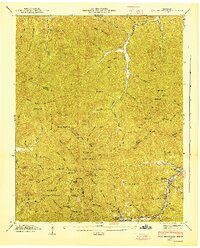 1946 Fork Mountain1947 Print · USGSThe rugged intersections of Scott, Morgan, and Anderson counties are captured here in the mid-1940s, highlighting a remote mountain landscape shaped by the timber and coal industries. Researchers can locate vanished infrastructure like the Lumber Railroad and trace family roots at the Beech Grove Cem and Mooretown.2 unique versions available
 - 1946 Map of Windrock, 1947 Print
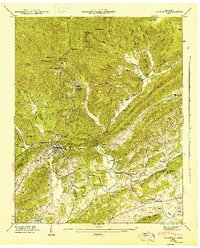 1946 Windrock1947 Print · USGSThe mining and rail landscape of Anderson County comes into focus in the mid-1940s. Researchers can trace family sites at Robertsville and Frost Bottom, or locate old landmarks like Donovan Sch and the Oliver Springs Cem.2 unique versions available
Showing maps 1-25 of 59
Top cities of Morgan County
Frequently asked questions
- What are the different types of historical maps available for Morgan County?
- What is the oldest map of Morgan County?
- Where can I purchase historical maps of Morgan County for my home or office?
- Where can I download high-res historical maps of Morgan County?
- Are there historical topographic maps available for Morgan County?
- Is there historical aerial imagery available for Morgan County?
- Where are historical maps of Morgan County sourced from?