Old Maps of Coke County, Texas
Explore 161 old maps of Coke County, spanning from 1891 to today. These high-resolution historic maps reveal how streets, neighborhoods, landmarks, and natural features evolved over time — perfect for genealogy, metal detecting, research, and local history exploration.
What you can do with these maps:
- See how Coke County changed over time: Compare historical maps to modern-day views to trace roads, homesites, rail lines & more.
- View detailed metadata: Each map includes creators, publishers, year, scale, and archive source.
- Overlay maps with satellite & LiDAR: Visualize the past alongside modern tools to explore terrain & human change.
- Trusted historical sources: Maps sourced from the USGS, Library of Congress, and other archives.
- Access maps your way: View online, download high-res files, or order prints for personal or research use.
Start exploring old maps of Coke County to uncover forgotten places, hidden landmarks, and the deep history beneath your feet.
Coke County, TX maps
(161)- 1891 Map of Hayrick
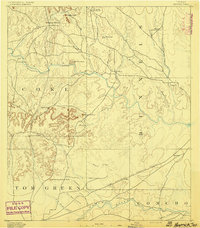 1891 Hayrick1891 Print · USGSTexas ranching country and the arrival of the iron horse meet in the 1890s as the Colorado River divides emerging frontier counties. Genealogists and historians can trace the early foundations of Hayrick and Rowena, or locate remote landmarks like Harris Ranch and the Rock Spring School House.
 - 1893 Map of Sweetwater
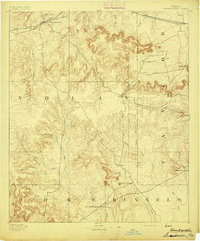 1893 Sweetwater1893 Print · USGSNolan and Taylor counties come alive in the 1890s as the railroad fuels the growth of frontier cattle towns. Genealogists and historians can trace the early streets of Sweetwater and Merkel or locate the historic site of Fort Chadbourne near Church Mountain.4 unique versions available
 - 1894 Map of Hayrick
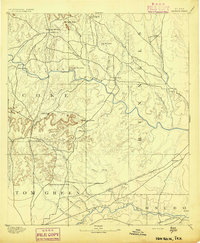 1894 Hayrick1894 Print · USGSWest Texas ranching and rail life come into focus in the 1890s as the frontier gives way to established counties and communities. Researchers can trace early family outposts like Harris Ranch, rural education at Rock Spring School House, and the arrival of the Gulf Colorado and Santa Fe Railway.5 unique versions available
 - 1921 Map of Bronte
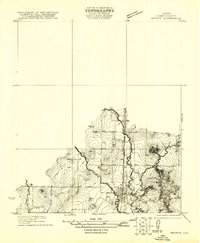 1921 Bronte1921 Print · USGSCoke County ranching and rail life are centered around the town of Bronte during the early 1920s. Researchers can trace the path of the Kansas City Mexico and Orient railroad or locate rural landmarks like Turkey Creek School and the local Cem.
 - 1921 Map of Baker Flat
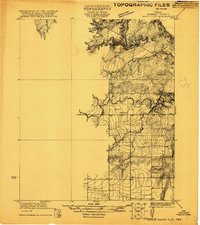 1921 Baker Flat1921 Print · USGSRunnels County ranch lands and rural school districts are captured in this early 1920s survey. Researchers can locate the Red Bank School and trace the drainage of Antelope Creek through the Baker Flat area.
 - 1921 Map of Maverick
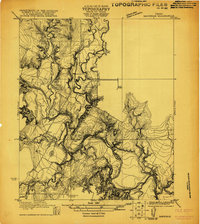 1921 Maverick1921 Print · USGSThe rural landscape of Runnels and Coke County is captured here in the early 1920s, showing the early infrastructure of the Maverick area. Researchers can locate the Brookshire School and trace the original courses of Oak Creek and the Colorado River.
 - 1921 Map of Mays School
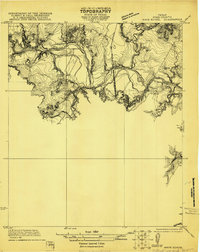 1921 Mays School1921 Print · USGSCoke County's river-cut landscape is captured here in the early 1920s as the railroad established new routes through West Texas. Researchers can locate the rural Mays School and trace the original path of the Kansas City Mexico and Orient rail line near Kickapoo Creek.
 - 1954 Map of Big Spring, 1965 Print
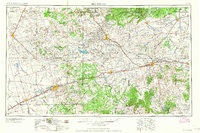 1954 Big Spring1965 Print · USGSWest Texas in the mid-1950s shows a landscape of growing oil towns and vital rail links along the Texas and Pacific RR. Researchers can trace the development of Big Spring, find smaller settlements like Knott and Lomax, or locate landmarks such as Boyds Chapel and Signal Mountain.4 unique versions available
 - 1954 Map of San Angelo, 1967 Print
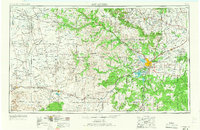 1954 San Angelo1967 Print · USGSThe Concho Valley and eastern Permian Basin transition from ranching to a burgeoning oil economy during the mid-twentieth century. Trace the expansion of San Angelo near Goodfellow AFB and locate old crossroads like Stiles, Texon, and Barnhart along the SANTA FE railroad.2 unique versions available
 - 1957 Map of Carlsbad, 1958 Print
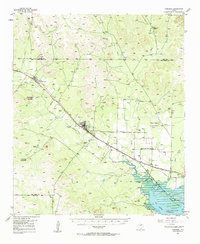 1957 Carlsbad1958 Print · USGSTom Green County ranching and rail infrastructure are on full display in the late fifties as the San Angelo Reservoir takes shape. Genealogists can locate family landmarks like the McKnight State Sanatorium, Grape Creek Cem, and Turner Ranch Headquarters.2 unique versions available
 - 1957 Map of Miles, 1958 Print
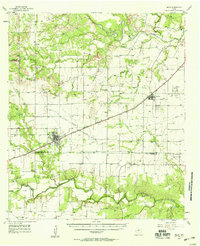 1957 Miles1958 Print · USGSRunnels and Tom Green Counties are shown in the late fifties as the regional economy balanced between rail-side agriculture and a growing oil industry. Genealogists can locate several burial sites including Evergreen Cem and Protestant Cem, or trace early river crossings like 10 Mile Crossing.
 - 1957 Map of Harriet, 1958 Print
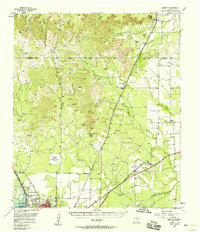 1957 Harriet1958 Print · USGSTom Green County landscape in the late fifties shows the northward reach of San Angelo and its neighboring rail-side settlements. Genealogists and historians can trace the sites of Mule Creek Cem, the Harriet Sch, and the military footprint of the Pulliam Air Force Auxiliary Airfield.2 unique versions available
 - 1958 Map of San Angelo
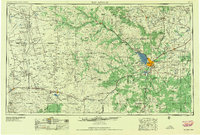 1958 San Angelo1958 Print · USGSWest Texas in the late fifties centers on the growing hub of San Angelo and its vital river confluences. Genealogists and historians can trace the paths of the Santa Fe railroad to outposts like Fort Chadbourne, Big Lake, and the specialized community of Sanatorium.
 - 1958 Map of Big Spring
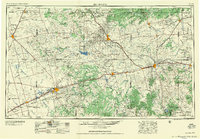 1958 Big Spring1958 Print · USGSThe West Texas oil boom was in full swing during the late fifties, transforming the landscape around Howard and Mitchell counties. Genealogists and historians can trace the growth of Big Spring and Snyder alongside industrial landmarks like the Kelly-Snyder Oil Field and the Santa Fe rail lines.
 - 1959 Map of Silver, 1960 Print
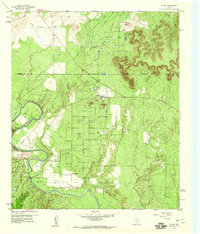 1959 Silver1960 Print · USGSMid-century Coke County is defined here by the booming Jameson Strawn Oil Field and the community of Silver. Genealogists and researchers can trace local family landmarks like McKenzie Cem and the Panhandle and Santa Fe rail line.3 unique versions available
 - 1959 Map of Dead Indian Mountain, 1960 Print
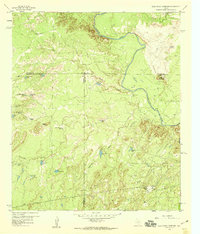 1959 Dead Indian Mountain1960 Print · USGSThe West Texas oil boom is in full swing at the end of the fifties as petroleum pipelines and wells spread across the Coke County line. Trace family ranching roots and industrial history through landmarks like Perkins Plant, Dead Indian Mountain, and the Old McWhorter Tank.
 - 1961 Map of Maverick, 1962 Print
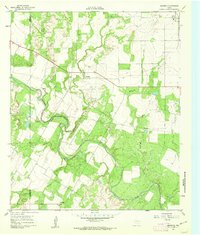 1961 Maverick1962 Print · USGSRunnels and Coke counties are captured here in the early sixties as the ranching and oil economies shaped the land. Genealogists can trace family sites at Maverick Cem, Norton Cem, and Brookshier Ch along the winding Colorado River.2 unique versions available
 - 1961 Map of Shawville, 1962 Print
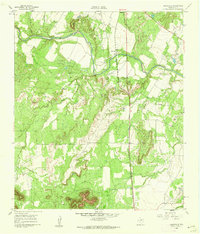 1961 Shawville1962 Print · USGSCoke County's river valley and rail corridor are captured here in the early 1960s. Genealogists and historians can trace the development of Shawville and the Fort Chadbourne Oil Field or locate landmarks like Cedar Mtn.2 unique versions available
 - 1961 Map of Hog Mountain, 1962 Print
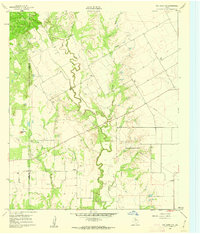 1961 Hog Mountain1962 Print · USGSThe West Texas frontier meets the mid-century oil boom along the Coke and Runnels county line in the early sixties. Historians and genealogists can trace the site of Fort Chadbourne, the former settlement at Marie (Site), and the secluded Hall Cem.2 unique versions available
 - 1961 Map of Bronte, 1962 Print
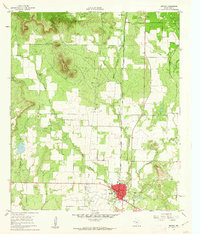 1961 Bronte1962 Print · USGSCoke County in the early sixties reveals a landscape defined by the West Texas petroleum boom and the historic cattle country around Bronte. Researchers can trace the Panhandle and Santa Fe rail line or locate family sites near the Fort Chadbourne Cemetery and Fairview Cemetery.2 unique versions available
 - 1962 Map of Edith, 1964 Print
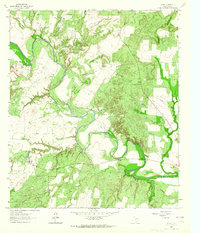 1962 Edith1964 Print · USGSThe Colorado River valley in Coke County comes alive in this early 1960s survey of the rural landscape. Genealogists and researchers can trace local landmarks like Edith, the Sanco Cem, and the natural flow of Dripping Springs.2 unique versions available
 - 1962 Map of Sanco, 1964 Print
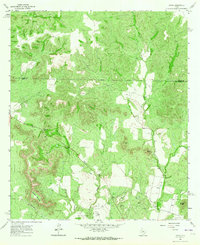 1962 Sanco1964 Print · USGSCoke County in the early 1960s was a landscape of rugged peaks and growing petroleum infrastructure. This survey allows researchers to trace the I A B Oil Field and landmarks like Sanco, Panther Gap, and Horse Mountain.2 unique versions available
 - 1962 Map of Cement Mountain, 1964 Print
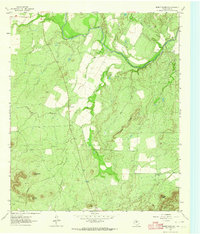 1962 Cement Mountain1964 Print · USGSCoke County ranching and early oil exploration define this landscape in the early sixties. Genealogists can trace family landmarks and local hubs like Valley View, the Wendland Oil Field, and Community Center.3 unique versions available
 - 1962 Map of Millican Mountains, 1964 Print
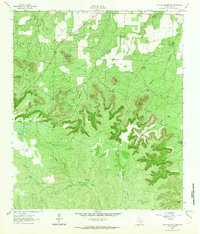 1962 Millican Mountains1964 Print · USGSCoke County ranch lands are captured here during the early sixties, showing a landscape defined by high peaks and deep canyon drainages. Researchers can trace historic water sources and rural infrastructure through Wildcat Sch, Lone Mountain, and the Sterman Windmill.2 unique versions available
 - 1962 Map of Green Mountain, 1964 Print
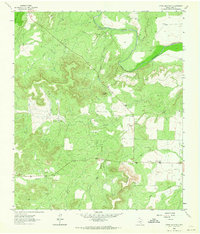 1962 Green Mountain1964 Print · USGSCoke County ranchlands and oil fields are captured here in the early sixties, showing the rural landscape before modern development. Genealogists can locate family landmarks like Terry Cem, Pecan Ch, and the Green Mountain Community Center.3 unique versions available
Showing maps 1-25 of 161
Top cities of Coke County
Frequently asked questions
- What are the different types of historical maps available for Coke County?
- What is the oldest map of Coke County?
- Where can I purchase historical maps of Coke County for my home or office?
- Where can I download high-res historical maps of Coke County?
- Are there historical topographic maps available for Coke County?
- Is there historical aerial imagery available for Coke County?
- Where are historical maps of Coke County sourced from?