1960s Maps of Coleman County, Texas
Explore 27 historic maps of Coleman County from the 1960s. These maps offer a rare glimpse into what life looked like during the 1960s — showing old roads, neighborhoods, homes, and landmarks that have changed or disappeared over time.
Whether you're researching your family's past, planning a metal detecting trip, or studying how Coleman County's landscape evolved across the 1960s, these high-resolution maps are a powerful tool for exploring the history of this region.
- Focus on a specific era: All maps on this page are from the 1960s, giving you a focused view of this time period.
- See what’s changed: Compare century-old streets, trails, and buildings to today's modern landscape using overlays and satellite layers.
- Research with precision: Use these maps for genealogy, historical research, land use analysis, or educational projects.
- View, download, or print: Maps are fully viewable online in high resolution, and can be downloaded or printed for your own records.
Start exploring Coleman County's history through authentic maps from the 1960s. This is your window into the past.
Coleman County, TX maps
(27)- 1960 Map of Lake Scarborough, 1962 Print
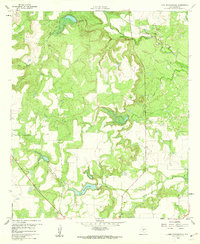 1960 Lake Scarborough1962 Print · USGSColeman County infrastructure and industry come into focus in the early sixties as the regional water supply and local aviation take center stage. Trace the development of Lake Scarborough and its Filtration Plant, alongside rural landmarks like Morris Field and scattered Oil Wells.2 unique versions available
 - 1960 Map of Coleman NE, 1962 Print
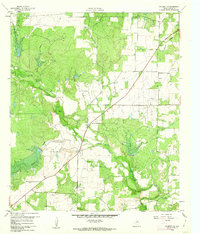 1960 Coleman NE1962 Print · USGSNortheast Coleman County was a landscape of burgeoning energy production and frontier history at the dawn of the 1960s. Researchers can trace the legacy of the Amzak Morris Oil Field and locate the Camp Colorado historical site near the banks of Jim Ned Creek.3 unique versions available
 - 1960 Map of Burkett, 1962 Print
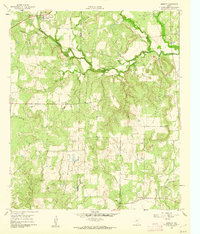 1960 Burkett1962 Print · USGSSettlement and industry meet in this pocket of Central Texas at the dawn of the 1960s, showing the rural landscape before modern expansion. Researchers can locate the Burkett townsite, the Cem, and numerous Oil Wells scattered near the Holloway Mountains.
 - 1960 Map of Cross Cut, 1962 Print
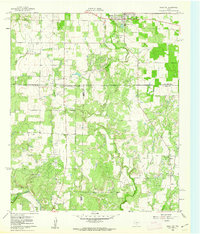 1960 Cross Cut1962 Print · USGSMid-century Texas oil and ranching land come into focus here during the early 1960s. Genealogists and industrial historians can trace the Old Railroad Grade or locate family sites near Dressy Cem and the small community of Cross Cut.2 unique versions available
 - 1960 Map of Webbville, 1962 Print
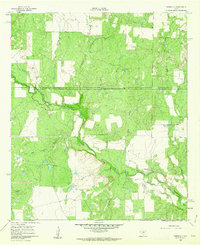 1960 Webbville1962 Print · USGSThe West Texas landscape at the start of the 1960s reveals a region defined by cattle country and petroleum extraction. Trace local history through the Anzah Morris Oil Field, the settlement of Webbville, and the Adams Cem along the disputed county line.2 unique versions available
 - 1960 Map of Crooked Creek, 1962 Print
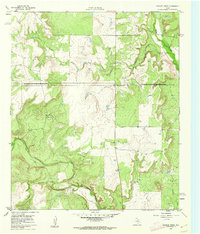 1960 Crooked Creek1962 Print · USGSTexas ranching and oil country come to life in the early 1960s along the winding paths of Jim Ned Creek and Crooked Creek. Researchers can trace old property lines across the 1885 county boundary survey while locating numerous Oil Wells and a Quarry in the hills near Ranger.2 unique versions available
 - 1962 Map of Speck Mountain, 1964 Print
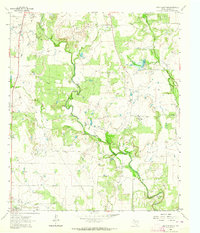 1962 Speck Mountain1964 Print · USGSIn the early 1960s, Coleman County's landscape was a patchwork of ranching and oil production. Trace the energy history of Rockwood and Speck through numerous Oil Wells, Gravel Pit sites, and the landmark Horseshoe Bend.2 unique versions available
 - 1962 Map of Trickham, 1964 Print
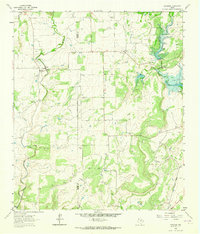 1962 Trickham1964 Print · USGSEarly 1960s Brown County ranch land is captured here as the landscape transitioned with new water control measures. Genealogists can locate Lee Cem and Smith Cem or trace the path of the Old Railroad Grade near Shields.2 unique versions available
 - 1962 Map of Gouldbusk, 1964 Print
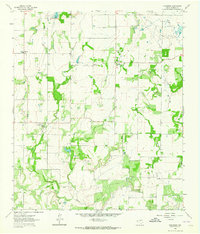 1962 Gouldbusk1964 Print · USGSColeman County ranching and rural life are captured in the early sixties, centered on the community of Gouldbusk. Genealogists and historians can trace family locations near Sant Willow Ch, Shields, and the local Cem or find old extraction sites like the Quarry.
 - 1962 Map of Santa Anna, 1964 Print
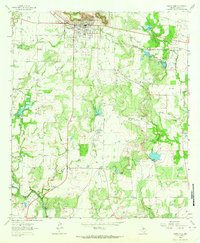 1962 Santa Anna1964 Print · USGSThe Santa Anna Mountains overlook a landscape defined by Texas petroleum production and ranching in the early sixties. Researchers can trace local landmarks like Cleveland Ch, the Gulf Colorado and Santa Fe railroad, and several named oil fields.2 unique versions available
 - 1962 Map of Bangs West, 1964 Print
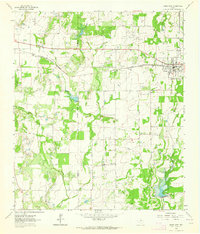 1962 Bangs West1964 Print · USGSThe central Texas landscape near Bangs is captured in the early sixties as a region of rural settlements and rail-line industry. Genealogists can trace family connections at Mukewater Cem and old locales like Liberty and Obregon.3 unique versions available
 - 1963 Map of Lake San Tana, 1964 Print
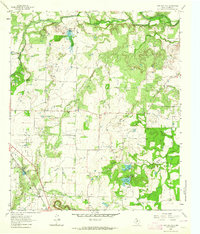 1963 Lake San Tana1964 Print · USGSMid-century Coleman County is captured here during a period of steady oil production and water development. Researchers can trace the Gulf Colorado and Santa Fe rail lines at San Angelo Junction and explore family landmarks near Hords Creek and the Santa Anna Mountains.2 unique versions available
 - 1963 Map of Coleman, 1964 Print
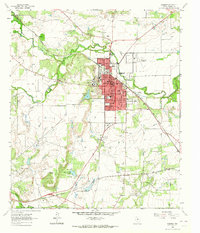 1963 Coleman1964 Print · USGSColeman was a thriving regional hub in the early sixties, defined by its intersection of rail transport and local civic life. Researchers can trace the town's development through its many schools, the Gulf Colorado and Santa Fe rail line, and landmarks like Shiloh Church.2 unique versions available
 - 1964 Map of Fisk
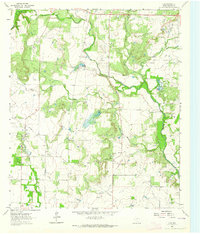 1964 Fisk1964 Print · USGSMid-century Coleman County is captured here during a time of active petroleum development and quiet ranch life. Genealogists and local historians can trace family ties at the Brown Ranch Cem or locate the Overall Oil Field and the community center at Fisk.2 unique versions available
 - 1967 Map of Talpa, 1969 Print
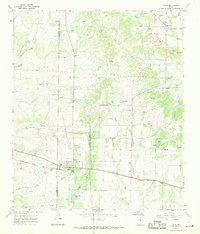 1967 Talpa1969 Print · USGSColeman County saw a landscape defined by ranching and the oil industry in the late sixties. Genealogists and historians can trace the Atchison Topeka and Santa Fe rail line through Talpa and locate family plots at Herring Cem or Glen Cove Cem.2 unique versions available
 - 1967 Map of Novice West, 1969 Print
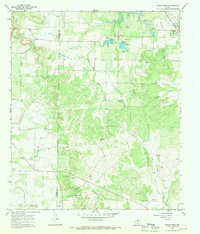 1967 Novice West1969 Print · USGSThe West Texas ranchlands and oil fields of Coleman and Runnels Counties are captured here in the late sixties. Genealogists can trace family names and local landmarks through sites like Atoka Cem, Crews Cem, and the railroad town of Novice.2 unique versions available
 - 1967 Map of Doole, 1969 Print
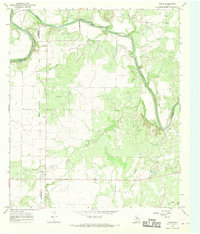 1967 Doole1969 Print · USGSCentral Texas ranching country comes into focus in the late sixties along the winding Colorado River. Local historians can trace family roots around Stacy and Doole, or locate the rural Cem and isolated landmarks like Wallooppe.
 - 1967 Map of Little Grape Creek, 1969 Print
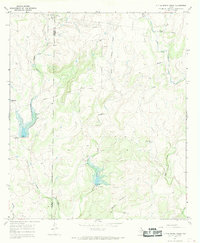 1967 Little Grape Creek1969 Print · USGSThe border of Runnels and Coleman counties in the late sixties reveals a landscape of ranching and early energy development. Researchers can trace the industrial footprint of Oil Wells and Gas Wells alongside local water features like Little Grape Creek and Elm Creek.3 unique versions available
 - 1967 Map of Novice East, 1969 Print
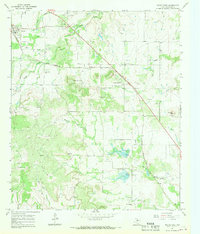 1967 Novice East1969 Print · USGSColeman County ranching and oil production are in full view during the late sixties. Genealogists and historians can trace the Atchison Topeka and Santa Fe line past Novice, Silver Valley Cem, and the prominent Robinson Peak.2 unique versions available
 - 1967 Map of Voss, 1969 Print
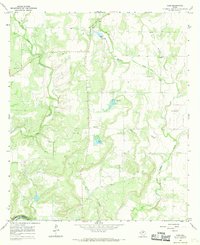 1967 Voss1969 Print · USGSNear the Coleman and Concho county line in the late sixties, this survey shows a landscape of West Texas ranching and riverside terrain. Researchers can locate the settlement of Voss, the Hill Cem, and the dramatic loop of the Colorado R at Horseshoe Bend.2 unique versions available
 - 1967 Map of Mustang Creek, 1969 Print
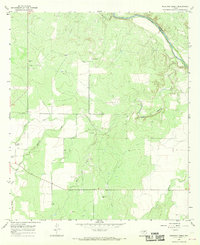 1967 Mustang Creek1969 Print · USGSConcho County ranching and river lands are captured here in the late sixties, just as the regional landscape was mapped in high detail. Researchers can trace land boundaries through Stevens Ranch, locate the Millersview Cem, and follow the many forks of Mustang Creek.3 unique versions available
 - 1967 Map of Valera, 1969 Print
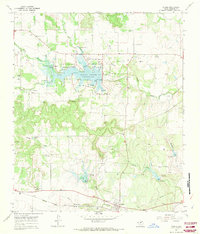 1967 Valera1969 Print · USGSThe community of Valera is captured here in the late 1960s alongside the developing recreation areas of Hords Creek Reservoir. Genealogists and local historians can locate the Old Valera Cemetery, Centennial School, and the path of the Atchison Topeka and Santa Fe railroad.
 - 1967 Map of Leaday, 1969 Print
 1967 Leaday1969 Print · USGSThe convergence of the Colorado and Concho Rivers defines this Central Texas landscape in the late sixties. Genealogists can locate family burial sites at Gann Cem and Leaday Cem, or trace the winding course of Little Grape Creek.2 unique versions available
 - 1967 Map of McEwen Draw, 1969 Print
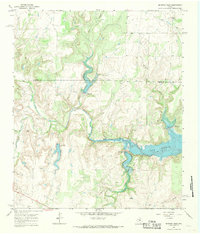 1967 McEwen Draw1969 Print · USGSThe Callahan and Coleman County borderlands come into focus in the late sixties as the local landscape is reshaped by water and oil. Trace family history at the Jim Ned Cem and explore the early footprint of Lake Coleman.2 unique versions available
 - 1967 Map of Bead Mountian, 1970 Print
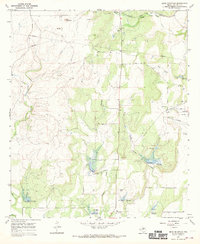 1967 Bead Mountian1970 Print · USGSWestern Coleman County in the late sixties shows a landscape of cattle ranching and emerging energy production. Genealogists and historians can locate Valera, trace the Atchison Topeka and Santa Fe rail line, or find family plots at Valera Cem and Voss Cem.2 unique versions available
Showing maps 1-25 of 27
Top cities of Coleman County
Frequently asked questions
- What are the different types of historical maps available for Coleman County?
- What is the oldest map of Coleman County?
- Where can I purchase historical maps of Coleman County for my home or office?
- Where can I download high-res historical maps of Coleman County?
- Are there historical topographic maps available for Coleman County?
- Is there historical aerial imagery available for Coleman County?
- Where are historical maps of Coleman County sourced from?