Old Maps of Johnson County, Texas for Genealogy
Trace your family roots with 132 historic maps of Johnson County. These high-res maps reveal old neighborhoods, homesites, landmarks, and streets — helping you uncover where your ancestors lived and how the area evolved over time.
- Explore historic neighborhoods: Identify where your relatives may have lived in the 1800s or 1900s.
- Compare maps over time: Trace the changes in streets, buildings, and landmarks for multi-generational research.
- Perfect for genealogy & ancestry research: Used by family historians and researchers to map out lineage and migration.
These maps are an incredible resource for exploring your personal connection to Johnson County's past.
Johnson County, TX maps
(132)- 1889 Map of Granbury
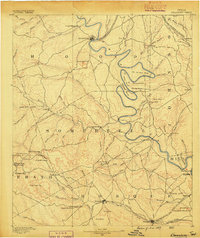 1889 Granbury1889 Print · USGSIn the late 1880s, the Brazos River dictated the life and travel of North Texas, carving deep bends through Hood and Somervell counties. Genealogists and historians can trace early settlements like Fort Spunky and Glenrose or the routes of the Texas Central Railroad.6 unique versions available
 - 1891 Map of Weatherford
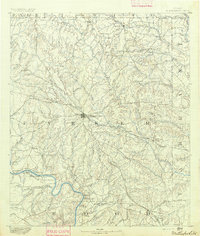 1891 Weatherford1891 Print · USGSParker County and the surrounding ranchlands are shown here in the 1890s as the rail network transformed the region. Researchers can trace early river transport at Powell Ferry or locate vanished sites like Veal Station, Center Mill, and the Bear Creek P.O.
 - 1891 Map of Cleburne
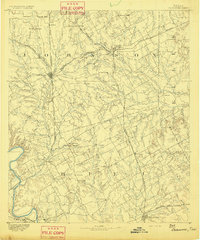 1891 Cleburne1891 Print · USGSNorth Texas in the late nineteenth century was a land transformed by new iron rails and established river crossings. Genealogists and researchers can trace the early footprints of Cleburne and Hillsboro alongside vanished stops like Port Graham and Files Valley.
 - 1893 Map of Weatherford
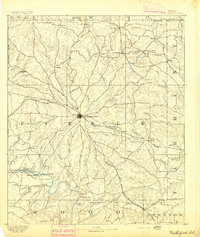 1893 Weatherford1893 Print · USGSParker County was at a pivotal turning point in the late nineteenth century as railroads began to stitch together the North Texas cattle country. Genealogists and local historians can trace early crossings like Powell Ferry and landmarks like Center Mill or Veal Station.5 unique versions available
 - 1894 Map of Cleburne
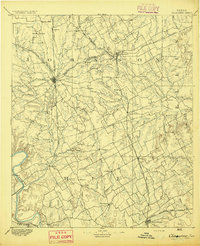 1894 Cleburne1894 Print · USGSNorth Central Texas was a burgeoning rail and cattle hub in the late nineteenth century. Genealogists and historians can trace the growth of Cleburne and Hillsboro alongside vanished river landings like Fort Graham and Kimball on the Brazos River.5 unique versions available
 - 1894 Map of Fort Worth, 1918 Print
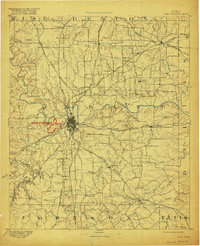 1894 Fort Worth1918 Print · USGSNorth Texas at the end of the nineteenth century centers on a burgeoning Fort Worth and its strategic rail junctions. Researchers can locate early township sites like Johnson Station and Birdville or trace the military footprint of Camp Bowie.3 unique versions available
 - 1924 Map of Cleburne 3-B
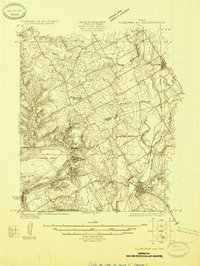 1924 Cleburne 3-B1924 Print · USGSNorth of the Brazos River in the mid-1920s, this area shows a landscape of rural schools and winding creek hollows. Genealogists and historians can trace the early rail influence through Rio Vista and Blum or find family-named landmarks like Klondike Ranch and Plain View School.
 - 1924 Map of Granbury 4-a
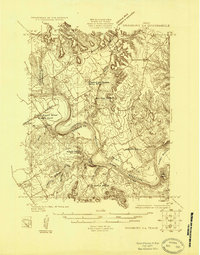 1924 Granbury 4-a1924 Print · USGSThe Brazos River landscape in the mid-1920s reveals a rural Texas community defined by its winding waterways and local schoolhouses. Genealogists can locate family landmarks like the Rohme Ranch, New Hope Church, and the Frog Hollow School.
 - 1927 Map of Blum
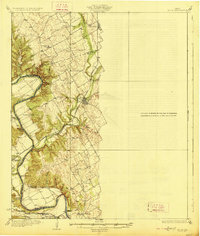 1927 Blum1927 Print · USGSThe Brazos River valley and the rail towns of Hill and Bosque Counties are captured here in the mid-twenties. Genealogists can trace rural landmarks like Plainview School, Heath Cem, and historic river fords like Ft Graham Crossing.2 unique versions available
 - 1928 Map of Godley
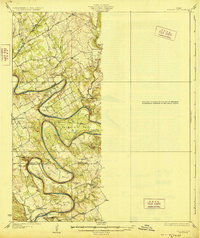 1928 Godley1928 Print · USGSThe Brazos River winds through Hood and Somervell Counties in the mid-1920s, defining a landscape of deep river bends and rural crossroads. Researchers can locate early educational landmarks like Cordova Bend School and Harmony School, or trace the site of Ft Spunky.2 unique versions available
 - 1931 Map of Morgan
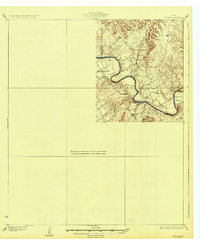 1931 Morgan1931 Print · USGSThe Brazos River's dramatic winding oxbows define this rural Texas landscape in the 1920s where Somervell, Johnson, and Bosque Counties meet. Genealogists and local historians can trace family roots at Brazos Point or find old school sites like Frog Hollow Sch and Highland Sch.2 unique versions available
 - 1954 Map of Dallas, 1963 Print
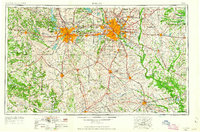 1954 Dallas1963 Print · USGSNorth Texas in the mid-fifties and early sixties reveals a landscape of rapid urban growth and water management. Genealogists and historians can trace the evolution of the metroplex through landmarks like Hensley Field, Boles Orphan Home, and the Texas & Pacific RR.4 unique versions available
 - 1955 Map of Burleson, 1956 Print
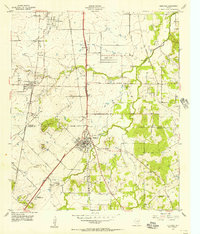 1955 Burleson1956 Print · USGSJohnson County is caught in a moment of post-war transition in the mid-fifties, where expanding settlements like Burleson and Crowley meet a landscape of rural cemeteries and research farms. Researchers can trace ancestral locations through the Prairie Springs Cem, Redchain Research Farm, and the rail corridors of the Missouri Pacific.4 unique versions available
 - 1955 Map of Primrose, 1956 Print
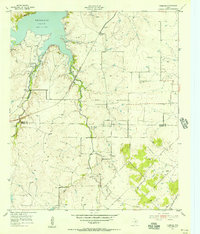 1955 Primrose1956 Print · USGSThe ranchlands of Tarrant and Johnson Counties are captured here in the mid-fifties, just as the landscape was being reshaped by the waters of Benbrook Lake. Researchers can trace the Gulf Colorado and Santa Fe rail line and locate rural landmarks like Primrose and a local Cem.2 unique versions available
 - 1955 Map of Cresson, 1956 Print
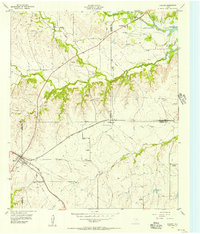 1955 Cresson1956 Print · USGSThe rail junction at Cresson and the rising waters of Benbrook Lake define this mid-century Texas landscape. Genealogists can locate several family-named landmarks and rural burial grounds, including Corn Cem, Day-Radcliff Cemetery, and the Wheatland School.3 unique versions available
 - 1958 Map of Dallas
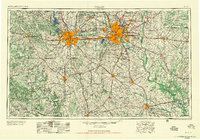 1958 Dallas1958 Print · USGSNorth Texas in the late fifties shows the dramatic expansion of the Metroplex as it absorbs surrounding farm towns. Genealogists and historians can trace old rail lines like the Missouri-Kansas-Texas and locate early lakefront developments at Eagle Mountain Lake and Lake Worth Village.
 - 1959 Map of Britton, 1960 Print
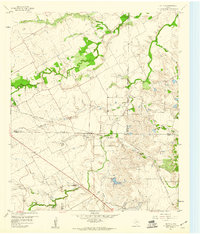 1959 Britton1960 Print · USGSNorth Texas farm and rail country comes into focus in the late fifties at the junction of Tarrant, Dallas, and Ellis counties. Genealogists can trace family landmarks like Pleasant Valley Cem, St Paul Ch, and the rail junction at Britton.6 unique versions available
 - 1959 Map of Mansfield, 1960 Print
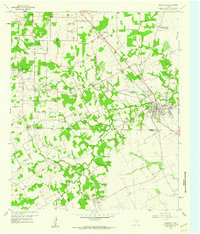 1959 Mansfield1960 Print · USGSNear the close of the 1950s, this area south of Fort Worth shows a rural landscape of small towns and family farms. Researchers can trace the rail corridors of the Missouri Pacific or locate local landmarks like Poverty Knob, Retta, and Mansfield High Sch.5 unique versions available
 - 1959 Map of Arlington, 1961 Print
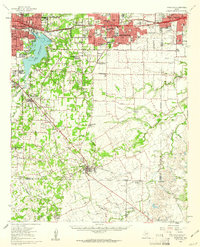 1959 Arlington1961 Print · USGSArlington and Mansfield are caught in a moment of post-war transformation as the suburbs of North Texas begin to bloom. Genealogists and local historians can trace family locations near Rehoboth Cem, study the footprint of Arlington State College, or locate vanished landmarks like Lucas Airport.
 - 1959 Map of Cresson, 1961 Print
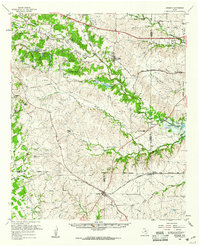 1959 Cresson1961 Print · USGSNorth Texas ranching and rail junctions dominate the landscape in the late fifties as Benbrook Lake takes shape. Genealogists can trace family roots through numerous remote burial grounds like Cresson Cem and Dixon Cem, while rail enthusiasts follow the Texas and Pacific line through Aledo.
 - 1960 Map of Keene, 1963 Print
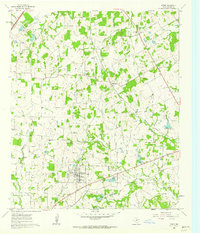 1960 Keene1963 Print · USGSJohnson County is shown here during a period of steady growth centered on the town of Keene and its local college. Genealogists and historians can trace the foundations of the community through rural landmarks like Lane Prairie Ch, Hopewell Cem, and the path of the Missouri Kansas and Texas railroad.3 unique versions available
 - 1960 Map of Cleburne East, 1963 Print
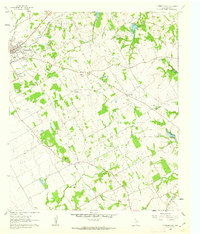 1960 Cleburne East1963 Print · USGSThe eastern outskirts of Cleburne and the nearby rural farming communities appear here in the early 1960s. Genealogists and local historians can trace rural congregations and family burial sites like Watts Chapel, Morrow Cem, and the Liberty Chapel Sch.4 unique versions available
 - 1961 Map of Cleburne West, 1963 Print
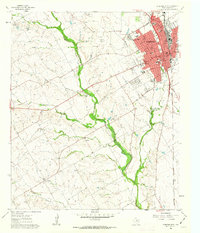 1961 Cleburne West1963 Print · USGSCleburne enters the 1960s as a bustling rail and transit hub, surrounded by a rural landscape of family-named settlements. Trace local heritage at Bono Cem, find old schools like Cooke Sch, or follow the Gulf Colorado and Santa Fe railroad through town.3 unique versions available
 - 1961 Map of Maypearl, 1963 Print
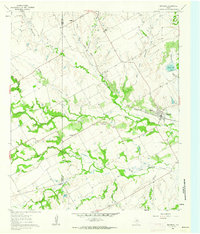 1961 Maypearl1963 Print · USGSMaypearl and the Ellis County countryside are captured here in the early sixties, showing the agricultural landscape before suburban expansion. Genealogists can trace family landmarks and rural burial sites like Auburn Cem, Odom Cem, and the rail-side community of Griffith.3 unique versions available
 - 1961 Map of Alvarado, 1963 Print
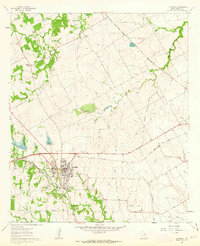 1961 Alvarado1963 Print · USGSAlvarado and the surrounding Johnson County prairies appear at the height of the railroad era in the early 1960s. Genealogists can trace family footprints at Glenwood Cemetery or the Duke Cem, and locate landmarks like the Geo Washington Carver school.3 unique versions available
Showing maps 1-25 of 132
Top cities of Johnson County
- Burleson historical maps
- Cleburne historical maps
- Joshua historical maps
- Keene historical maps
- Venus historical maps
- Alvarado historical maps
See more
Frequently asked questions
- What are the different types of historical maps available for Johnson County?
- What is the oldest map of Johnson County?
- Where can I purchase historical maps of Johnson County for my home or office?
- Where can I download high-res historical maps of Johnson County?
- Are there historical topographic maps available for Johnson County?
- Is there historical aerial imagery available for Johnson County?
- Where are historical maps of Johnson County sourced from?