Old Maps of Dayton, Texas for Hiking & Exploration
Hike through history with 52 historic maps of Dayton. Explore old trails, ghost towns, and forgotten backroads — perfect for outdoor adventurers and local explorers.
- Rediscover forgotten places: Map out old mining camps, roads, and footpaths that no longer exist on modern maps.
- Layer with modern tools: Combine with LiDAR or satellite views to plan hikes through historical terrain.
- Made for exploration: Popular among hikers, overlanders, and local history lovers.
Use these maps to find adventure and explore the hidden past of Dayton.
Dayton, TX maps
(52)- 1916 Map of Huffman
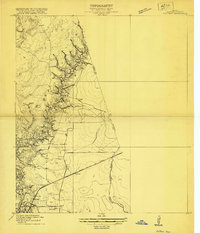 1916 Huffman1916 Print · USGSThe Harris and Liberty County border comes into focus during the early twentieth century as a landscape of bayous and rails. Genealogists can trace the early layout of Huffman and the path of the Beaumont Sour Lake and Western railroad near Luce Bayou.3 unique versions available
 - 1920 Map of Huffman
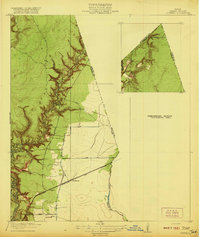 1920 Huffman1920 Print · USGSCoastal prairie and timberlands north of Houston come into focus during the early twentieth century as a burgeoning rail and road network took shape. Genealogists can trace family landmarks and early transit routes through Huffman, Scott Ranch, and the Lumber R R.2 unique versions available
 - 1943 Map of Liberty
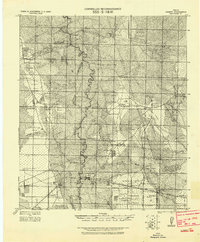 1943 Liberty1943 Print · USGSLiberty and the surrounding Big Thicket are documented here during the early twentieth-century boom in timber and oil. Researchers can locate vanished landmarks such as the Yellow School House, trace family lands like Mears Ranch, and follow the path of the Old Tram through the river bottomlands.
 - 1950 Map of Houston, 1953 Print
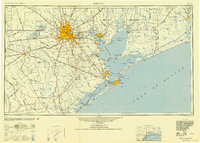 1950 Houston1953 Print · USGSCoastal Texas in the early fifties reveals a landscape of massive civil engineering and industrial transit. Genealogists and researchers can trace the growth of the Houston suburbs and the maritime infrastructure of Galveston Bay, including the Gulf Freeway and the Texas City Dike.
 - 1954 Map of Beaumont, 1964 Print
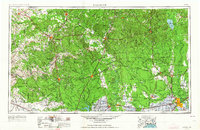 1954 Beaumont1964 Print · USGSSoutheast Texas in the mid-fifties reveals a landscape of massive national forests, emerging reservoirs, and a booming oil economy. Genealogists and researchers can trace rural settlements like Dallardsville and Village Mills or locate early drilling sites at Sour Lake Oil Field.3 unique versions available
 - 1955 Map of Liberty, 1957 Print
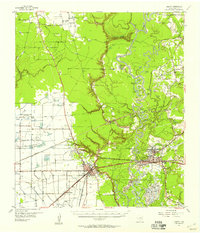 1955 Liberty1957 Print · USGSLiberty and Dayton thrived at the crossroads of the Trinity River and major rail lines during the mid-fifties. Genealogists and historians can trace family landmarks like Magnolia Cem, Daniel Ranch, and schools like Colbert High Sch.2 unique versions available
 - 1956 Map of Houston, 1963 Print
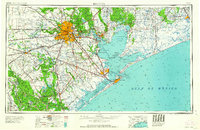 1956 Houston1963 Print · USGSSoutheast Texas in the mid-fifties is captured here as a powerhouse of oil and maritime trade. Genealogists and historians can trace the foundations of Houston and its ports, alongside landmarks like the Rice Institute and the Spindletop Oil Field.2 unique versions available
 - 1957 Map of Beaumont
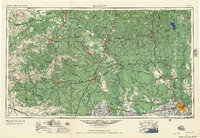 1957 Beaumont1957 Print · USGSSoutheast Texas in the mid-fifties is defined by the timber-rich lands between the Trinity River and Beaumont. Trace the history of the Alabama and Coushatti Indian Reservation or locate early campus sites like Prairie View College.
 - 1960 Map of Huffman, 1962 Print
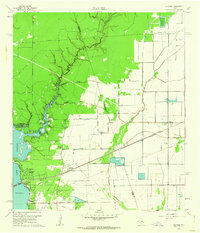 1960 Huffman1962 Print · USGSNortheast Harris County in the early sixties was a landscape of bayous and rail lines at the edge of the rising Houston Lake. Genealogists and local historians can trace the foundations of Huffman, locating the Huffman School, St Annes Church, and the historic Atascocita Road.4 unique versions available
 - 1961 Map of Sheeks, 1964 Print
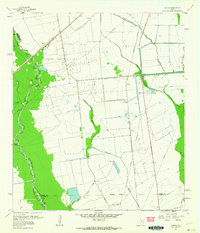 1961 Sheeks1964 Print · USGSThe Liberty and Chambers county line comes alive in the early sixties as a hub of petroleum and irrigation. Trace the legacy of Esperson Dome Oil Field and Sheeks along the Southern Pacific tracks.
 - 1961 Map of Moss Bluff, 1964 Print
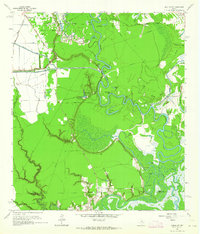 1961 Moss Bluff1964 Print · USGSCoastal Texas industry meets the winding river bottoms in the early sixties as the petroleum fields near Liberty expanded. Researchers can trace family sites like the Winfree Cem, the Guedry Cem, and the riverside Moore Bluff Pumping Sta.3 unique versions available
 - 1975 Map of Houston, 1977 Print
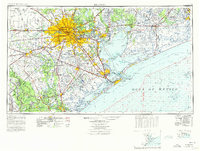 1975 Houston1977 Print · USGSThe Texas Gulf Coast in the mid-seventies shows a sprawling Houston metropolis linked to the sea by the massive Houston Ship Channel. Researchers can trace the mid-century industrial landscape from the Astrodome to the Lyndon B. Johnson Space Center.2 unique versions available
 - 1982 Map of Sheeks
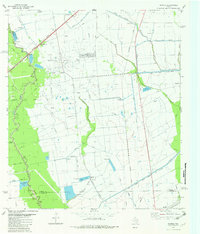 1982 Sheeks1982 Print · USGSCoastal Texas industry and rural life meet in the early eighties as petroleum production and complex canal systems reshape the Liberty County landscape. Genealogists and historians can locate the Harvey Cem, the Esperson D.O.M.E. Oil Field, and the Sheeks rail siding.
 - 1983 Map of Anahuac
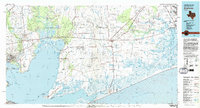 1983 Anahuac1983 Print · USGSThe Upper Texas Coast and its energy-driven landscape are detailed here in the early eighties. Genealogists and historians can trace coastal settlements like Anahuac and Winnie alongside the storied Spindletop Oil Field and the Anahuac National Wildlife Refuge.2 unique versions available
 - 1984 Map of Beaumont
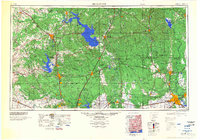 1984 Beaumont1984 Print · USGSSoutheast Texas in the late seventies and early eighties shows a landscape of expanding reservoirs and deep timber industry. Researchers can trace the development of the Sam Houston National Forest or locate regional landmarks like Grabbs Prairie and the Wynne State Prison Farm.3 unique versions available
 - 1984 Map of Dayton, 1985 Print
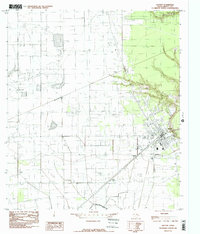 1984 Dayton1985 Print · USGSDayton and the surrounding Liberty County coastal plains are captured here in the mid-1970s and early 1980s. Local researchers can trace the rail-and-canal infrastructure near Dayton or locate smaller settlements like Stilson, Martha, and Gum Grove.2 unique versions available
 - 1984 Map of Liberty, 1985 Print
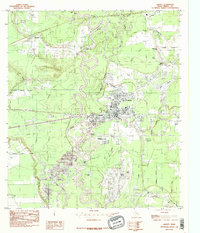 1984 Liberty1985 Print · USGSLiberty and the lower Trinity River valley are captured in the mid-eighties as a busy corridor of energy and river commerce. Genealogists and researchers can trace the roads through Kenefick, Ames, and South Liberty, or locate family sites near Graveyard Hill and the Port of Liberty.2 unique versions available
 - 1984 Map of Simmons Bottom, 1985 Print
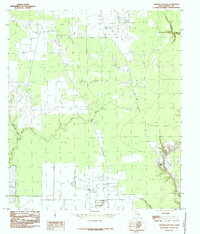 1984 Simmons Bottom1985 Print · USGSLiberty County's bottomlands are captured here in the mid-1980s, showing a landscape defined by seasonal waters and winding bayous. Genealogists and environmental researchers can trace the intricate paths of Luce Bayou, Tarkington Bayou, and the settlement at Simmons Bottom.
 - 1985 Map of Conroe
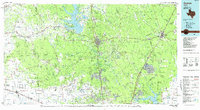 1985 Conroe1985 Print · USGSSoutheast Texas in the mid-eighties shows a landscape of timberlands and new lakeside developments. Researchers can trace the legacy of rail lines like the Southern Pacific RR or locate rural communities such as Plantersville, Yarboro, and Hufsmith.2 unique versions available
 - 1986 Map of Beaumont
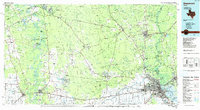 1986 Beaumont1986 Print · USGSThe East Texas piney woods and coastal prairies are captured here in the mid-eighties, a period of established energy production and conservation. Researchers can trace the industrial footprint of the Oil and Gas Field near Daisetta and Batson, or locate family sites at Graveyard Hill Cem.
 - 1993 Map of Sheeks, 1994 Print
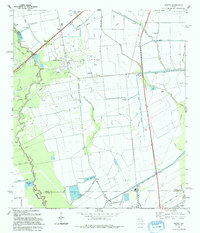 1993 Sheeks1994 Print · USGSCoastal Texas in the early nineties reveals a landscape of heavy industry and intricate water management. Genealogists and historians can trace family ties at Harvey Cem or locate the sprawling Esperson Dome Oil Field near Gum Island.
 - 1993 Map of Moss Bluff, 1994 Print
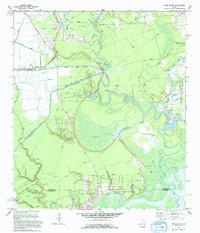 1993 Moss Bluff1994 Print · USGSThe oxbows of the Trinity River define this Liberty County landscape in the early nineties, where water management and oil production shape the terrain. Genealogists and researchers can locate old burial sites and parish centers like Heir Lawn Cem, Winfree Ch, and the settlement of Moss Bluff.
 - 2010 Map of Simmons Bottom, 2010 Print
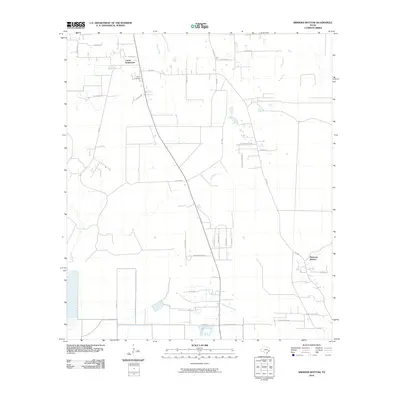 2010 Simmons Bottom2010 Print · USGSThis Liberty County landscape near Dayton shows a unique mix of rural Texas heritage and modern residential growth. Genealogists and local historians can trace the Carter Settlement, find the Ryan Cemetery, or follow the winding Luce Bayou.
 - 2010 Map of Liberty, 2010 Print
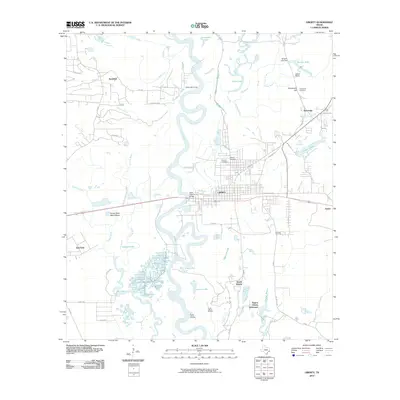 2010 Liberty2010 Print · USGSLiberty and the surrounding wetlands are shown here in the early twenty-first century as the city expands near the winding Trinity. Genealogists and historians can locate Old Hardin Cemetery, the South Liberty Oil Field, and the historic Atascosito site.
 - 2010 Map of Huffman, 2010 Print
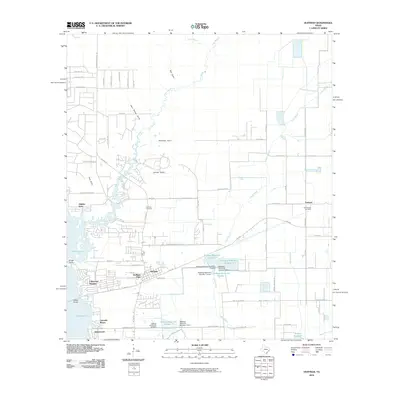 2010 Huffman2010 Print · USGSThe Huffman area and the eastern shores of Lake Houston are shown in detail during a period of significant suburban development. Researchers can trace family history through the Huffman and Saint Annes cemeteries or locate early neighborhood footprints like Lakewood Heights and Hidden Echo.
Showing maps 1-25 of 52
Top cities near Dayton
- Houston historical maps
- Baytown historical maps
- Highlands historical maps
- Liberty historical maps
- Mont Belvieu historical maps
- Roman Forest historical maps
See more
Top neighborhoods of Dayton
Frequently asked questions
- What are the different types of historical maps available for Dayton?
- What is the oldest map of Dayton?
- Where can I purchase historical maps of Dayton for my home or office?
- Where can I download high-res historical maps of Dayton?
- Are there historical topographic maps available for Dayton?
- Is there historical aerial imagery available for Dayton?
- Where are historical maps of Dayton sourced from?