Old Maps of Lynn County, Texas
Explore 171 old maps of Lynn County, spanning from 1954 to today. These high-resolution historic maps reveal how streets, neighborhoods, landmarks, and natural features evolved over time — perfect for genealogy, metal detecting, research, and local history exploration.
What you can do with these maps:
- See how Lynn County changed over time: Compare historical maps to modern-day views to trace roads, homesites, rail lines & more.
- View detailed metadata: Each map includes creators, publishers, year, scale, and archive source.
- Overlay maps with satellite & LiDAR: Visualize the past alongside modern tools to explore terrain & human change.
- Trusted historical sources: Maps sourced from the USGS, Library of Congress, and other archives.
- Access maps your way: View online, download high-res files, or order prints for personal or research use.
Start exploring old maps of Lynn County to uncover forgotten places, hidden landmarks, and the deep history beneath your feet.
Lynn County, TX maps
(171)- 1954 Map of Lubbock, 1958 Print
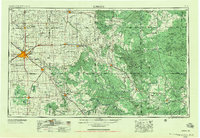 1954 Lubbock1958 Print · USGSThe High Plains and Caprock region of West Texas come alive in the mid-1950s, showing a landscape defined by oil discovery and the Brazos River headwaters. Genealogists and historians can trace rail-connected towns like Roaring Springs, find the Pleasant Valley church, or locate family-named landmarks such as Soldier Mound.4 unique versions available
 - 1954 Map of Hobbs, 1963 Print
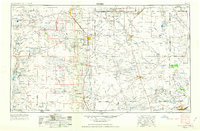 1954 Hobbs1963 Print · USGSThe High Plains and Permian Basin transition is captured here at the height of the mid-century energy boom. Genealogists and industrial historians can trace the foundations of Humble City, locate the Potash Mine and Plant, and follow the Texas-New Mexico RR.2 unique versions available
 - 1954 Map of Big Spring, 1965 Print
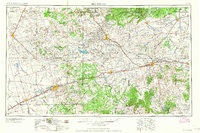 1954 Big Spring1965 Print · USGSWest Texas in the mid-1950s shows a landscape of growing oil towns and vital rail links along the Texas and Pacific RR. Researchers can trace the development of Big Spring, find smaller settlements like Knott and Lomax, or locate landmarks such as Boyds Chapel and Signal Mountain.4 unique versions available
 - 1954 Map of Brownfield, 1975 Print
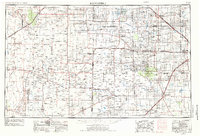 1954 Brownfield1975 Print · USGSThe High Plains of the Texas-New Mexico border are captured here in the mid-twentieth century, as ranching and oil extraction shaped the Llano Estacado. Genealogists and historians can trace small rural centers like Lums Chapel, Hillburn City, and the Friendship Sch amid a landscape of windmills.2 unique versions available
 - 1957 Map of New Home, 1958 Print
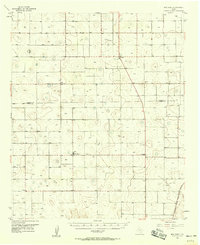 1957 New Home1958 Print · USGSThe rural High Plains of West Texas are meticulously detailed in the late 1950s, showing the early infrastructure of several crossroads communities. Genealogists and researchers can locate landmarks like Dixie Sch (Aband), the settlement of Slide, and the Athletic Field at New Home.
 - 1957 Map of Meadow, 1958 Print
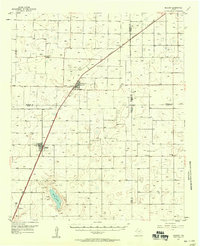 1957 Meadow1958 Print · USGSThe West Texas cotton and rail corridor comes alive in this mid-century survey of the High Plains. Genealogists and local historians can trace the foundations of Meadow and Ropesville or locate family sites near Lakeview Ch and the Meadow Cem.
 - 1958 Map of Brownfield
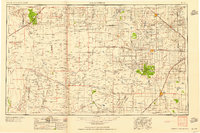 1958 Brownfield1958 Print · USGSThe High Plains of the Texas-New Mexico border are captured here during a mid-century oil boom. Genealogists and historians can trace old community sites like Lums Chapel and Tokio alongside the vast Levelland and Slaughter Oil and Gas Field.
 - 1958 Map of Big Spring
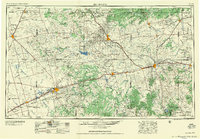 1958 Big Spring1958 Print · USGSThe West Texas oil boom was in full swing during the late fifties, transforming the landscape around Howard and Mitchell counties. Genealogists and historians can trace the growth of Big Spring and Snyder alongside industrial landmarks like the Kelly-Snyder Oil Field and the Santa Fe rail lines.
 - 1958 Map of Hobbs
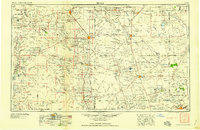 1958 Hobbs1958 Print · USGSThe High Plains of the Texas-New Mexico border are shown here during the height of the mid-century oil boom. Genealogists and historians can trace the development of Hobbs, Lovington, and Jal, alongside ranching landmarks like James Ranch and the early Texas-New Mexico Railway.
 - 1962 Map of Brownfield
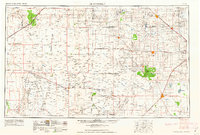 1962 Brownfield1962 Print · USGSThe High Plains of Texas and New Mexico are captured in the early sixties as a thriving hub of oil production and ranching. Researchers can trace the industrial footprint of the Levelland and Slaughter Oil and Gas Field or locate smaller towns like Sundown and Littlefield.
 - 1965 Map of Slaton, 1966 Print
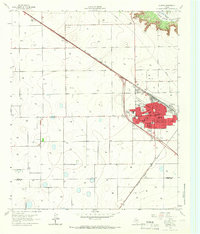 1965 Slaton1966 Print · USGSSlaton and the South Plains are captured in the mid-sixties as the railroad and agriculture define the landscape. Researchers can trace the community through Englewood Cem, Mercy Hospital, and local schools like Lubbock Sch.2 unique versions available
 - 1965 Map of Southland, 1966 Print
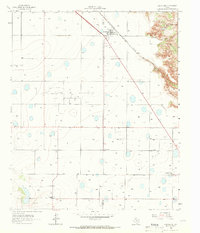 1965 Southland1966 Print · USGSMid-century Lynn and Garza counties are captured here during a period of significant oil production and rail activity. Genealogists and researchers can trace the roads connecting Southland and Hackberry or locate family sites near Resthaven Cem and Gordon.
 - 1965 Map of Wilson, 1966 Print
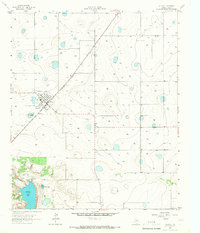 1965 Wilson1966 Print · USGSThe community of Wilson is shown in the mid-1960s at the height of its rail-era layout. Genealogists can trace the Green Memorial Park (Cem) and the St Paul Sch, while topographic fans will note the detail of Tahoka Lake.
 - 1965 Map of Slaton NE, 1966 Print
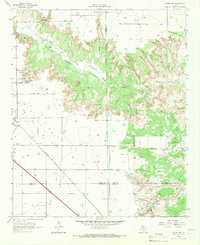 1965 Slaton NE1966 Print · USGSThe West Texas caprock country comes into focus in the mid-1960s as the rail lines and ranch lands around Lubbock County were being mapped in detail. Genealogists and local historians can trace the tracks of the Atchison Topeka and Santa Fe and locate family-named landmarks like Wood Ranch or the Katy K Ranch.2 unique versions available
 - 1969 Map of Welch East, 1971 Print
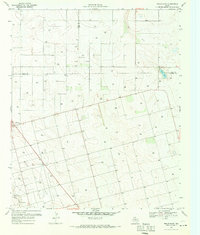 1969 Welch East1971 Print · USGSThe Texas South Plains in the late sixties reveals a landscape shaped by the Welch Oil Field at the junction of three counties. Genealogists and researchers can locate the Pride Cem and trace the small rural communities of Pride and Milo.
 - 1969 Map of Mound Lake, 1971 Print
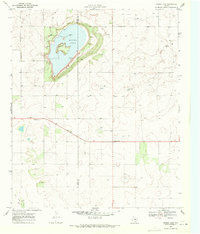 1969 Mound Lake1971 Print · USGSMound Lake straddles the Terry and Lynn county line in the late sixties, capturing a landscape of High Plains ranching and oil extraction. Researchers can locate the West Point settlement, the rest stop at Roadside Park, and the winding course of Lost Draw.
 - 1969 Map of Skeen Lake, 1971 Print
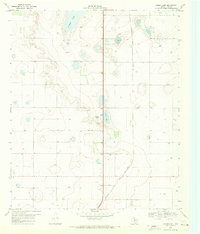 1969 Skeen Lake1971 Print · USGSThe High Plains of Lynn County appear in the late sixties as an expansive agricultural landscape defined by the Atchison Topeka and Santa Fe railroad. Researchers can locate numerous water sources including Guthrie Lake and Skeen Lake alongside various local Wells.
 - 1969 Map of Gooch Lake, 1971 Print
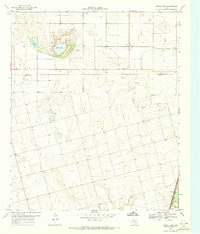 1969 Gooch Lake1971 Print · USGSThe High Plains of West Texas are captured here in the late sixties at the boundary of Dawson and Lynn counties. Trace the rail-side settlements of Grandview and Hindman along the Atchison Topeka and Santa Fe and the namesake Gooch Lake.
 - 1969 Map of O'Donnell, 1971 Print
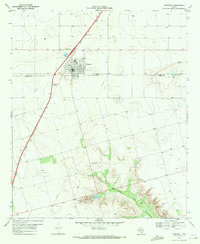 1969 O'Donnell1971 Print · USGSThe high plains of West Texas meet the Lynn and Dawson county line in the late sixties, where the railroad drives local industry. Genealogists can locate the O'Donnell Cem and trace ranching life at Caprock Ranch or the Rodeo Ground.2 unique versions available
 - 1969 Map of New Moore, 1971 Print
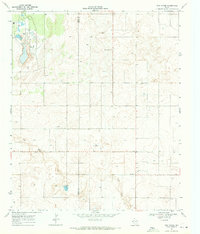 1969 New Moore1971 Print · USGSLynn and Terry Counties are captured in the late sixties, showing a landscape defined by ranching and rural utility. Researchers can trace the path of Lost Draw and locate the small settlement of New Moore alongside various family Wells.
 - 1969 Map of Tahoka, 1971 Print
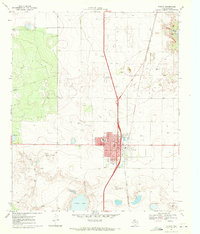 1969 Tahoka1971 Print · USGSTahoka and the surrounding Lynn County plains are captured here in the late sixties as the town expanded along the Atchison Topeka and Santa Fe line. Trace local landmarks like the T Bar Airfield, Tahoka Lake, and the town Cem.2 unique versions available
 - 1969 Map of Tahoka SW, 1971 Print
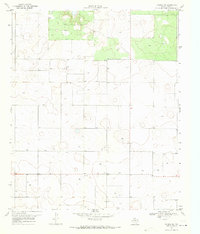 1969 Tahoka SW1971 Print · USGSThe Texas High Plains of Lynn County are captured here in the late sixties, showing a landscape of rural homesteads and vital water sources. Researchers can trace the layout of the Wells Ch community and dozens of individual water Wells.
 - 1969 Map of Double Lakes, 1971 Print
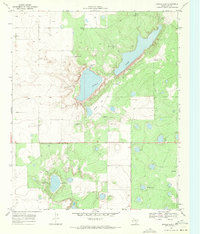 1969 Double Lakes1971 Print · USGSThe alkaline basins of Lynn County are captured here in the late 1960s, showing a ranching landscape centered on the vital water of the high plains. Genealogists and local historians can trace the T Bar Ranch and named landmarks like Crows Nest Windmill and Twin Lakes.
 - 1969 Map of Indian Canyon NE, 1971 Print
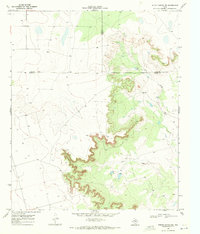 1969 Indian Canyon NE1971 Print · USGSThe High Plains plateau gives way to the deep canyon breaks of Borden and Garza counties in the late sixties. Trace the ranching landscape around Dennis Ranch or follow the paths of Bull Creek and Salt Draw past early oil wells.
 - 1969 Map of Grassland SE, 1972 Print
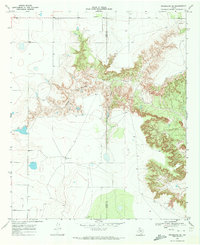 1969 Grassland SE1972 Print · USGSThe High Plains of West Texas meet the broken breaks of the Brazos River in the late sixties. Trace family land at Post Montgomery Ranch, locate the Grassland Cem, and follow the winding Dead Negro Draw.
Showing maps 1-25 of 171
Top cities of Lynn County
Frequently asked questions
- What are the different types of historical maps available for Lynn County?
- What is the oldest map of Lynn County?
- Where can I purchase historical maps of Lynn County for my home or office?
- Where can I download high-res historical maps of Lynn County?
- Are there historical topographic maps available for Lynn County?
- Is there historical aerial imagery available for Lynn County?
- Where are historical maps of Lynn County sourced from?