1900s (20th Century) Maps of Monahans, Texas
Explore 11 historic maps of Monahans from the 1900s (20th Century). These maps offer a rare glimpse into what life looked like during the 1900s — showing old roads, neighborhoods, homes, and landmarks that have changed or disappeared over time.
Whether you're researching your family's past, planning a metal detecting trip, or studying how Monahans's landscape evolved across the 1900s, these high-resolution maps are a powerful tool for exploring the history of this region.
- Focus on a specific era: All maps on this page are from the 1900s, giving you a focused view of this time period.
- See what’s changed: Compare century-old streets, trails, and buildings to today's modern landscape using overlays and satellite layers.
- Research with precision: Use these maps for genealogy, historical research, land use analysis, or educational projects.
- View, download, or print: Maps are fully viewable online in high resolution, and can be downloaded or printed for your own records.
Start exploring Monahans's history through authentic maps from the 1900s. This is your window into the past.
Monahans, TX maps
(11)- 1954 Map of Pecos, 1964 Print
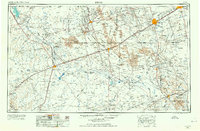 1954 Pecos1964 Print · USGSMid-century West Texas reveals a landscape of expanding oil fields and cattle ranching along the winding Pecos River. Local historians can trace family ranch lands like Goodrich Ranch, follow the Texas and Pacific rails, or locate the historic Horsehead Crossing.3 unique versions available
 - 1957 Map of Pecos
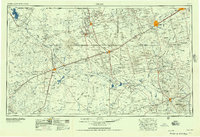 1957 Pecos1957 Print · USGSWest Texas in the mid-fifties is a landscape of desert oil fields and vital rail corridors. Researchers can trace the sprawling Pyote Air Force Base, the historic Horsehead Crossing, and the rail stops at Mentone and Saragosa.
 - 1968 Map of Monahans SE, 1970 Print
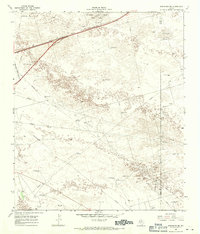 1968 Monahans SE1970 Print · USGSThe West Texas dunes and oil fields of Ward County are captured here in the late sixties. Trace the intersection of energy and ranching through landmarks like the Janelle Oil Field, High Lonesome Windmill, and the Texas and Pacific rail line.
 - 1968 Map of Wink South, 1971 Print
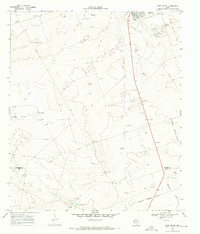 1968 Wink South1971 Print · USGSWinkler County ranching and petroleum interests intersect in the Permian Basin during the late sixties. Researchers can trace the layout of the Old Railroad Grade and locate named rural landmarks like Oats Windmill and the Waldron site.2 unique versions available
 - 1968 Map of China Ranch, 1971 Print
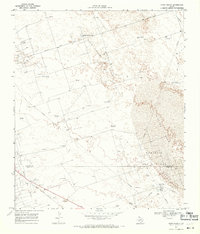 1968 China Ranch1971 Print · USGSThe high desert of Winkler and Ward counties is shown here during the peak of the late-sixties oil boom. Researchers can trace the industrial footprint of Halley Field, the Texas New Mexico railroad, and family-named landmarks like China Ranch and Mitchell Windmill.2 unique versions available
 - 1969 Map of Pyote NE, 1971 Print
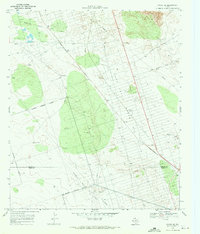 1969 Pyote NE1971 Print · USGSWinkler and Ward Counties are defined by the mid-century petroleum boom in these expansive West Texas oil fields. Researchers can trace the industrial footprint of the Halley Oil Field and locate remote water sources like Red Tank Windmill and Wildcat Windmill.
 - 1969 Map of Pyote East, 1971 Print
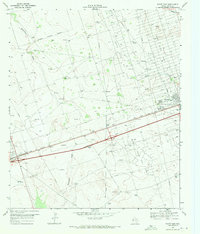 1969 Pyote East1971 Print · USGSWard County during the late sixties shows a landscape transformed by the West Texas oil boom. Researchers can trace the industrial footprint of the refinery at Wickett or locate family ranching landmarks like Tie Ranch and Thorton Ranch.2 unique versions available
 - 1969 Map of Monahans, 1971 Print
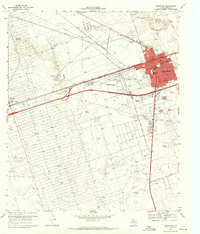 1969 Monahans1971 Print · USGSMonahans and Ward County are shown in the late sixties as the regional oil and ranching economy flourished along the Texas and Pacific line. Researchers can trace local landmarks like Hurd Memorial Airfield, Municipal Cem, and the Wagonwheel Ranch.2 unique versions available
 - 1969 Map of Pyote West, 1971 Print
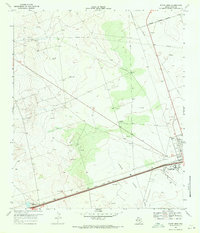 1969 Pyote West1971 Print · USGSWestern Ward County at the end of the 1960s was a hub for energy extraction and specialized institutions. Researchers can trace the layout of Pyote and the West Texas Childrens Home alongside the Texas and Pacific railroad and family sites like Wilson Ranch.2 unique versions available
 - 1986 Map of Kermit
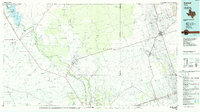 1986 Kermit1986 Print · USGSWest Texas during the mid-eighties was a landscape defined by the energy industry and the winding Pecos River. Trace the development of Oil Field networks near Kermit, the historic Horsehead Crossing, and the rail lines of the Missouri Pacific.2 unique versions available
 - 1986 Map of Odessa
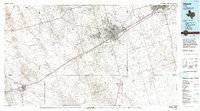 1986 Odessa1986 Print · USGSThe Permian Basin’s oil-driven landscape is revealed in the mid-eighties, showing the sprawl of Odessa and Midland. Trace the growth of energy infrastructure at the South Cowden Oil Field or explore the unique Sand Dunes of Monahans Sand Hills State Park.2 unique versions available
End of results
Showing maps 1-11 of 11
Top cities near Monahans
- Kermit historical maps
- Wink historical maps
- Thorntonville historical maps
- Wickett historical maps
- Pyote historical maps
Top neighborhoods of Monahans
- Airport historical maps
- Ballard historical maps
- Quail View historical maps
- Bellaire historical maps
- Ranchero Heights No. 1 historical maps
- Buddy historical maps
See more
Frequently asked questions
- What are the different types of historical maps available for Monahans?
- What is the oldest map of Monahans?
- Where can I purchase historical maps of Monahans for my home or office?
- Where can I download high-res historical maps of Monahans?
- Are there historical topographic maps available for Monahans?
- Is there historical aerial imagery available for Monahans?
- Where are historical maps of Monahans sourced from?