1950s Maps of Orange County, Texas
Explore 19 historic maps of Orange County from the 1950s. These maps offer a rare glimpse into what life looked like during the 1950s — showing old roads, neighborhoods, homes, and landmarks that have changed or disappeared over time.
Whether you're researching your family's past, planning a metal detecting trip, or studying how Orange County's landscape evolved across the 1950s, these high-resolution maps are a powerful tool for exploring the history of this region.
- Focus on a specific era: All maps on this page are from the 1950s, giving you a focused view of this time period.
- See what’s changed: Compare century-old streets, trails, and buildings to today's modern landscape using overlays and satellite layers.
- Research with precision: Use these maps for genealogy, historical research, land use analysis, or educational projects.
- View, download, or print: Maps are fully viewable online in high resolution, and can be downloaded or printed for your own records.
Start exploring Orange County's history through authentic maps from the 1950s. This is your window into the past.
Orange County, TX maps
(19)- 1952 Map of Lake Charles
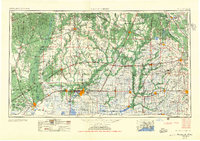 1952 Lake Charles1952 Print · USGSSouthwest Louisiana is captured here in the mid-fifties, showing a landscape defined by the rise of the petrochemical industry and deep-water navigation. Researchers can trace family roots through numerous small-town settlements and oil developments like Nibletts Bluff, the Lockport Oil Field, and Starks.
 - 1954 Map of Toomey
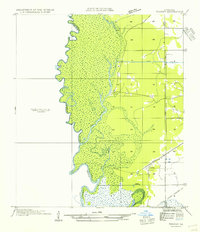 1954 Toomey1954 Print · USGSThe Louisiana-Texas borderlands in the mid-fifties are defined here by the winding Sabine River and the marshes of Calcasieu Parish. Researchers can locate Nibletts Bluff on the riverbank or trace family names at the Comier Cemetery near Toomey.
 - 1954 Map of Phoenix Lake
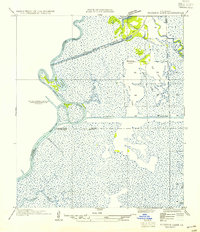 1954 Phoenix Lake1954 Print · USGSThe Louisiana-Texas borderlands are captured here in the mid-fifties, showing a landscape defined by wetlands and the Sabine River. Researchers can trace early infrastructure like Burton Shell Road and named landmarks such as Sassafras Island or Phoenix Lake.
 - 1954 Map of Port Arthur
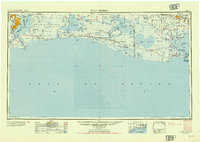 1954 Port Arthur1954 Print · USGSThe Texas and Louisiana coastlines meet here in the mid-fifties, showing the industrial rise of Port Arthur alongside vast wildlife preserves. Researchers can trace remote coastal settlements and infrastructure like Pecan Island, the Sabine Pass Lighthouse, and the North Island School.
 - 1954 Map of Lake Charles, 1964 Print
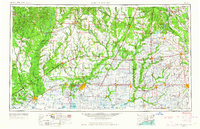 1954 Lake Charles1964 Print · USGSSouthwest Louisiana in the mid-fifties is defined by its massive petroleum industry and its complex network of bayous and rail lines. Researchers can trace the development of the Sulphur Mines Oil Field or locate historic settlements like Longville and De Quincy.3 unique versions available
 - 1954 Map of Beaumont, 1964 Print
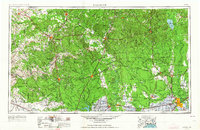 1954 Beaumont1964 Print · USGSSoutheast Texas in the mid-fifties reveals a landscape of massive national forests, emerging reservoirs, and a booming oil economy. Genealogists and researchers can trace rural settlements like Dallardsville and Village Mills or locate early drilling sites at Sour Lake Oil Field.3 unique versions available
 - 1955 Map of Orange, 1956 Print
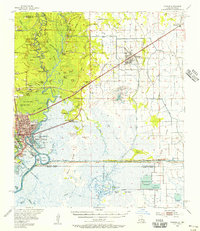 1955 Orange1956 Print · USGSThe Texas-Louisiana borderlands in the mid-fifties center on the industrial hubs and vast marshlands of the Sabine River. Genealogists and historians can locate community sites like Reed Cem, Crossroad Ch, and the Gum Cove Ferry crossing.
 - 1956 Map of Port Arthur, 1965 Print
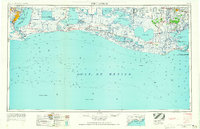 1956 Port Arthur1965 Print · USGSThe Texas and Louisiana coastlines meet here in the mid-fifties, showing a landscape of sprawling marshes and growing refinery towns. Genealogists and historians can trace ridge settlements like Grand Cheniere or find the Sabine Pass Lighthouse and Pecan Island.3 unique versions available
 - 1957 Map of Beaumont
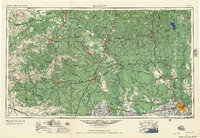 1957 Beaumont1957 Print · USGSSoutheast Texas in the mid-fifties is defined by the timber-rich lands between the Trinity River and Beaumont. Trace the history of the Alabama and Coushatti Indian Reservation or locate early campus sites like Prairie View College.
 - 1957 Map of Texla, 1958 Print
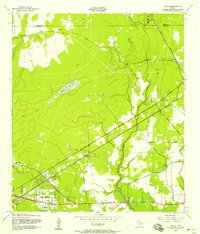 1957 Texla1958 Print · USGSOrange County's transition from timber and rail to mid-century residential growth is captured here in the late fifties. Genealogists and local historians can trace family sites like Singleton Cem and the Log Cabin Tabernacle near the old Texla townsite.3 unique versions available
 - 1957 Map of Orangefield, 1958 Print
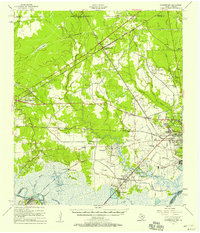 1957 Orangefield1958 Print · USGSSoutheast Texas at the peak of the mid-century oil boom is detailed here, showing the intricate intersection of rail lines and bayous. Genealogists can locate family landmarks such as Linscomb Cem, Winfree Ch, and the settlement of Mauriceville.2 unique versions available
 - 1957 Map of Terry, 1958 Print
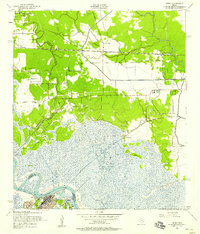 1957 Terry1958 Print · USGSThe Texas Gulf Coast comes into focus in the 1950s as a landscape of marshy bayous, rail-side hamlets, and rising oil industry. Researchers can trace family history through numerous small burial grounds like Thomas Cem or locate the old landing at Bessie Heights near the Neches River.6 unique versions available
 - 1957 Map of West of Greens Bayou, 1958 Print
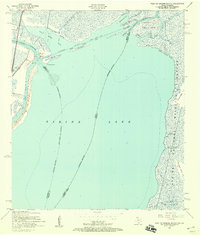 1957 West of Greens Bayou1958 Print · USGSThe maritime borderlands of Southeast Texas and Louisiana appear in the late fifties as a vast network of islands and industrial waterways. Researchers can trace the original paths of the Sabine River and Neches River around landmarks like Sydney Island and the marshes of the Sabine National Wildlife Refuge.4 unique versions available
 - 1957 Map of Port Arthur North, 1958 Print
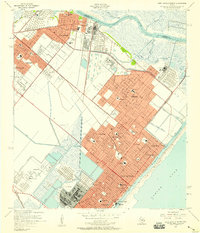 1957 Port Arthur North1958 Print · USGSSoutheast Texas industrial centers thrive mid-century as the refinery and shipping corridor expands between the Neches River and Sabine Lake. Genealogy and local history researchers can locate specific family landmarks including Port Neches-Groves High Sch, Greenlawn Memorial Park, and the St Marys Hospital campus.4 unique versions available
 - 1957 Map of Port Arthur, 1958 Print
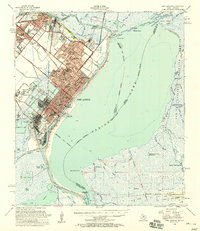 1957 Port Arthur1958 Print · USGSCoastal Texas and Louisiana are mapped during a period of rapid industrial expansion and shoreline change. Genealogists and local historians can trace the mid-century footprints of Groves, locate family plots at Johnson Cem, or explore the old docks at Johnsons Bayou Landing.2 unique versions available
 - 1957 Map of Orangefield, 1958 Print
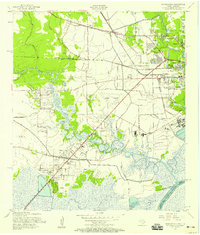 1957 Orangefield1958 Print · USGSThe coastal marshlands and oil-country settlements of Orange County are captured here in the late fifties as Bridge City and Orangefield began to expand. Genealogists can locate numerous family landmarks, including Winfree Ch, Jett Cem, and the old McLewis Sch.7 unique versions available
 - 1957 Map of Mauriceville, 1958 Print
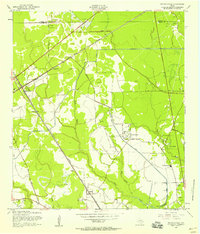 1957 Mauriceville1958 Print · USGSMauriceville and the Orange County wetlands are shown here in the mid-fifties, where rail hubs met the oil and timber landscape. Genealogists and researchers can trace the Kansas City Southern line through Lemonville, find Wilkinson Cem, or locate the Little Cypress Sch.3 unique versions available
 - 1958 Map of Port Arthur
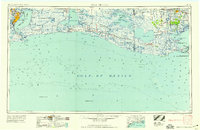 1958 Port Arthur1958 Print · USGSThe Texas and Louisiana coastlines meet in the late fifties at the busy industrial port of Port Arthur. Historians and genealogists can trace the early rail networks of the Southern Pacific and locate coastal settlements like Cameron, Pecan Island, and Abbeville.
 - 1959 Map of Port Arthur
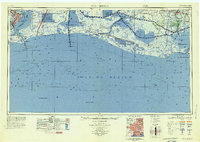 1959 Port Arthur1959 Print · USGSThe Texas and Louisiana coastlines meet in this late-fifties study of a landscape defined by industry and wildlife preserves. Trace the Intracoastal Waterway past Pecan Island and Abbeville, or locate the shipping channels at Sabine Pass.
End of results
Showing maps 1-19 of 19
Top cities of Orange County
- Orange historical maps
- Vidor historical maps
- Bridge City historical maps
- West Orange historical maps
- Pinehurst historical maps
- Pine Forest historical maps
See more
Frequently asked questions
- What are the different types of historical maps available for Orange County?
- What is the oldest map of Orange County?
- Where can I purchase historical maps of Orange County for my home or office?
- Where can I download high-res historical maps of Orange County?
- Are there historical topographic maps available for Orange County?
- Is there historical aerial imagery available for Orange County?
- Where are historical maps of Orange County sourced from?