1950s Maps of Polk County, Texas
Explore 10 historic maps of Polk County from the 1950s. These maps offer a rare glimpse into what life looked like during the 1950s — showing old roads, neighborhoods, homes, and landmarks that have changed or disappeared over time.
Whether you're researching your family's past, planning a metal detecting trip, or studying how Polk County's landscape evolved across the 1950s, these high-resolution maps are a powerful tool for exploring the history of this region.
- Focus on a specific era: All maps on this page are from the 1950s, giving you a focused view of this time period.
- See what’s changed: Compare century-old streets, trails, and buildings to today's modern landscape using overlays and satellite layers.
- Research with precision: Use these maps for genealogy, historical research, land use analysis, or educational projects.
- View, download, or print: Maps are fully viewable online in high resolution, and can be downloaded or printed for your own records.
Start exploring Polk County's history through authentic maps from the 1950s. This is your window into the past.
Polk County, TX maps
(10)- 1953 Map of Palestine, 1964 Print
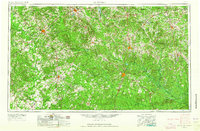 1953 Palestine1964 Print · USGSEast Texas was defined by its deep pine forests and burgeoning energy sector in the mid-1950s. Genealogists and historians can trace the rail-and-river economy through settlements like Tennessee Colony and Pollok or explore the early footprints of the Cayuga Oil Field and Davy Crockett National Forest.2 unique versions available
 - 1954 Map of Beaumont, 1964 Print
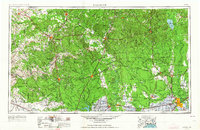 1954 Beaumont1964 Print · USGSSoutheast Texas in the mid-fifties reveals a landscape of massive national forests, emerging reservoirs, and a booming oil economy. Genealogists and researchers can trace rural settlements like Dallardsville and Village Mills or locate early drilling sites at Sour Lake Oil Field.3 unique versions available
 - 1955 Map of Saratoga, 1956 Print
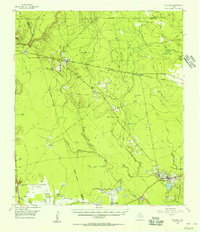 1955 Saratoga1956 Print · USGSHardin County oil and timber industries are on full display in the mid-fifties, showing the region's dense baygalls and rail towns. Genealogists and historians can trace family sites at Mt Calvary Ch or the Saratoga Oil Field.4 unique versions available
 - 1955 Map of Camden, 1956 Print
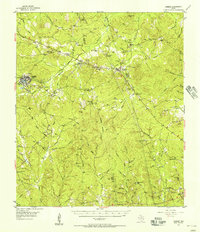 1955 Camden1956 Print · USGSThe deep piney woods of Polk and Tyler Counties are shown here during the mid-fifties, when timber industry rails still threaded the hills. Researchers can trace the layout of Camden and Chester or locate family sites like the Darden Palestine Sch Ch and Peach Tree Village Cem.2 unique versions available
 - 1955 Map of Rayburn, 1957 Print
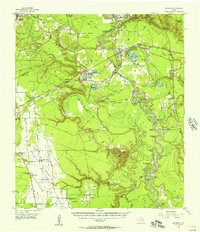 1955 Rayburn1957 Print · USGSDeep in East Texas during the mid-fifties, this survey reveals the intricate oxbows of the Trinity River and the rural communities of Tarkington Prairie. Genealogists can locate family landmarks like Concord Cem and the Tarkington Prairie Sch.2 unique versions available
 - 1955 Map of New Willard, 1957 Print
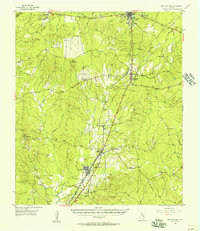 1955 New Willard1957 Print · USGSPolk County at the height of the 1950s reveals a landscape of East Texas timber towns and essential rail corridors. Genealogists and historians can trace family roots through numerous rural sites like Bold Springs Ch, Seven Oaks, and the Leggett-Alexander Cem.3 unique versions available
 - 1957 Map of Beaumont
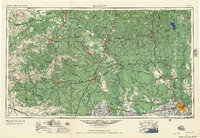 1957 Beaumont1957 Print · USGSSoutheast Texas in the mid-fifties is defined by the timber-rich lands between the Trinity River and Beaumont. Trace the history of the Alabama and Coushatti Indian Reservation or locate early campus sites like Prairie View College.
 - 1957 Map of Palestine
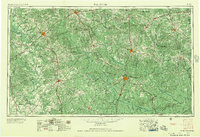 1957 Palestine1957 Print · USGSEast Texas in the mid-fifties reveals a landscape of deep pine forests and winding river valleys before the era of massive reservoir construction. Researchers can trace the legacy of the timber and rail industries through labels for the Missouri Pacific RR, Davy Crockett National Forest, and Nacogdoches.
 - 1958 Map of Livingston, 1960 Print
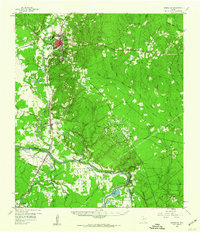 1958 Livingston1960 Print · USGSThe Piney Woods of East Texas are captured here during a period of industrial expansion, centered on the Livingston rail and oil hub. Researchers can trace the path of the Texas and New Orleans RR or locate rural sites like Drews Landing and Mt Moriah Ch.2 unique versions available
 - 1958 Map of Segno, 1960 Print
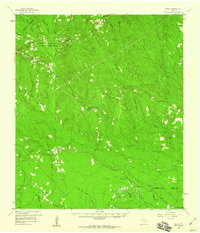 1958 Segno1960 Print · USGSDeep in the East Texas Piney Woods during the late fifties, this area shows the intersection of tribal lands and the burgeoning oil industry. Genealogists can locate family sites near Indian Village, Segno, and the Midway Cem.2 unique versions available
End of results
Showing maps 1-10 of 10
Top cities of Polk County
- Livingston historical maps
- Corrigan historical maps
- Onalaska historical maps
- Goodrich historical maps
- Seven Oaks historical maps
Frequently asked questions
- What are the different types of historical maps available for Polk County?
- What is the oldest map of Polk County?
- Where can I purchase historical maps of Polk County for my home or office?
- Where can I download high-res historical maps of Polk County?
- Are there historical topographic maps available for Polk County?
- Is there historical aerial imagery available for Polk County?
- Where are historical maps of Polk County sourced from?