1900s (20th Century) Maps of San Angelo, Texas
Explore 21 historic maps of San Angelo from the 1900s (20th Century). These maps offer a rare glimpse into what life looked like during the 1900s — showing old roads, neighborhoods, homes, and landmarks that have changed or disappeared over time.
Whether you're researching your family's past, planning a metal detecting trip, or studying how San Angelo's landscape evolved across the 1900s, these high-resolution maps are a powerful tool for exploring the history of this region.
- Focus on a specific era: All maps on this page are from the 1900s, giving you a focused view of this time period.
- See what’s changed: Compare century-old streets, trails, and buildings to today's modern landscape using overlays and satellite layers.
- Research with precision: Use these maps for genealogy, historical research, land use analysis, or educational projects.
- View, download, or print: Maps are fully viewable online in high resolution, and can be downloaded or printed for your own records.
Start exploring San Angelo's history through authentic maps from the 1900s. This is your window into the past.
San Angelo, TX maps
(21)- 1924 Map of San Angelo 2-c
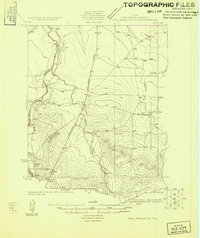 1924 San Angelo 2-c1924 Print · USGSTom Green County was a land of expanding rural infrastructure in the mid-twenties, where new roads followed the path of old watercourses. Researchers can trace the original route of the San Angelo and Christoval Road and locate the Harmony School or the banks of the South Concho River.
 - 1924 Map of Sherwood 1-d
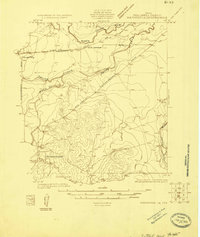 1924 Sherwood 1-d1924 Print · USGSTom Green County ranching country is captured here in the mid-1920s, showing the early infrastructure of the Concho Valley. You can trace the Kansas City Mexico and Orient rail line through Tankersly or locate the rural crossroads of Knickerbocker.
 - 1924 Map of San Angelo 2-b
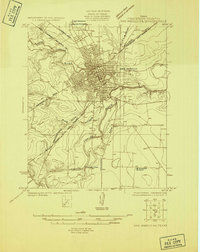 1924 San Angelo 2-b1924 Print · USGSSan Angelo sits at the junction of the Concho River forks in the mid-1920s, showing a city expanding along new rail lines. Local historians can trace old routes like Knickerbocker Road and locate the Lakeview School or the Fair Grounds.
 - 1924 Map of Sherwood 1-a
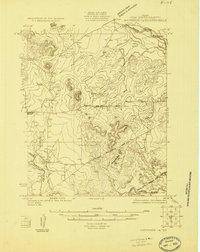 1924 Sherwood 1-a1924 Print · USGSTom Green County in the mid-1920s shows a landscape of expansive ranching country and early rail development. Local historians can trace the course of the Kansas City Mexico and Orient railroad and locate rural landmarks like Midway School and the distinct Twin Buttes.
 - 1928 Map of Wall
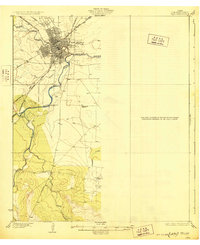 1928 Wall1928 Print · USGSSan Angelo flourished as a West Texas rail and river hub during the mid-twenties, shown here at a moment of significant growth. Genealogists and historians can trace old wagon routes like Mexico Road and locate rural landmarks such as Bismarck School and Harmony School.2 unique versions available
 - 1928 Map of Tankersly
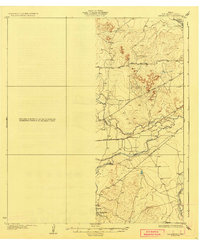 1928 Tankersly1928 Print · USGSWest Texas ranching country comes alive in the late 1920s, centered on the strategic river junctions of Tom Green County. Trace the early cattle and rail routes near Knickerbocker, the distinctive Twin Buttes, and the Middle Concho River.3 unique versions available
 - 1954 Map of San Angelo, 1967 Print
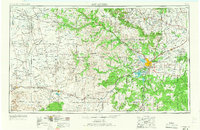 1954 San Angelo1967 Print · USGSThe Concho Valley and eastern Permian Basin transition from ranching to a burgeoning oil economy during the mid-twentieth century. Trace the expansion of San Angelo near Goodfellow AFB and locate old crossroads like Stiles, Texon, and Barnhart along the SANTA FE railroad.2 unique versions available
 - 1957 Map of Twin Buttes, 1958 Print
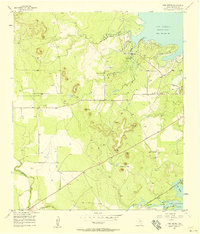 1957 Twin Buttes1958 Print · USGSTom Green County during the mid-fifties is captured here as a landscape of oil production and developing water infrastructure. Genealogists and historians can trace the early footprint of the Pulliam Oil Field or locate the Chapel-on-the-Hill and the Panhandle and Santa Fe railroad.4 unique versions available
 - 1957 Map of San Angelo South, 1958 Print
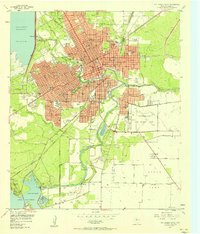 1957 San Angelo South1958 Print · USGSSan Angelo underwent significant expansion in the late fifties as military and educational growth reshaped the Concho Valley. Local researchers can locate mid-century landmarks like San Angelo College, the Goodfellow Air Force Base, and the State Fish Hatchery No 2.4 unique versions available
 - 1957 Map of Knickerbocker, 1958 Print
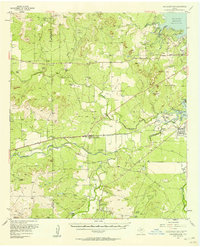 1957 Knickerbocker1958 Print · USGSTom Green County and the Concho River forks are captured here in the late fifties as San Angelo's water system expanded. Genealogists and historians can locate family landmarks like the Mayer Ranch, the Midway Cem, and the Knickerbocker settlement.2 unique versions available
 - 1957 Map of Harriet, 1958 Print
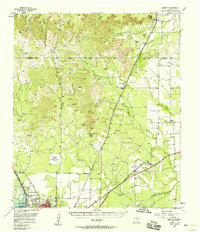 1957 Harriet1958 Print · USGSTom Green County landscape in the late fifties shows the northward reach of San Angelo and its neighboring rail-side settlements. Genealogists and historians can trace the sites of Mule Creek Cem, the Harriet Sch, and the military footprint of the Pulliam Air Force Auxiliary Airfield.2 unique versions available
 - 1957 Map of Wall, 1958 Print
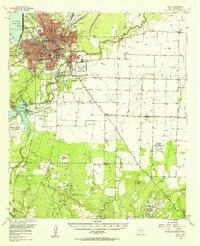 1957 Wall1958 Print · USGSSan Angelo and its surrounding Texas plains are captured here in the late fifties, showcasing a period of significant military and industrial presence. Researchers can find Goodfellow Air Force Base, the Pecan Station Oil Field, and rural landmarks like St Marys Sch and Veribest.
 - 1957 Map of San Angelo North, 1958 Print
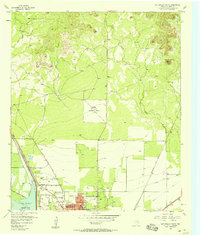 1957 San Angelo North1958 Print · USGSSan Angelo's northern periphery in the late fifties shows a landscape of mid-century growth and Cold War aviation. Trace the city's early expansion near the Pulliam Airfield, the Drive-in Theater, and the Red Creek Sch.3 unique versions available
 - 1958 Map of San Angelo
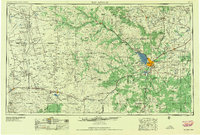 1958 San Angelo1958 Print · USGSWest Texas in the late fifties centers on the growing hub of San Angelo and its vital river confluences. Genealogists and historians can trace the paths of the Santa Fe railroad to outposts like Fort Chadbourne, Big Lake, and the specialized community of Sanatorium.
 - 1965 Map of San Angelo
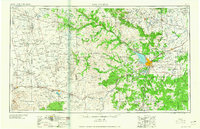 1965 San Angelo1965 Print · USGSWest Texas in the mid-sixties reveals a landscape shaped by the petroleum industry and strategic water management. Genealogists and historians can trace the rail corridor through Texon and Big Lake, or locate military landmarks like Goodfellow AFB and Broome Air Force Auxiliary Airfield.
 - 1984 Map of Veribest
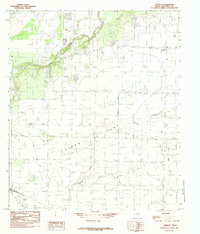 1984 Veribest1984 Print · USGSThe rural community of Veribest and the productive acreage of the Lipan Flat are captured here during the mid-seventies. Local historians can trace the vital irrigation systems of the Main Canal and the natural path of the Concho River.
 - 1984 Map of Pecan Station
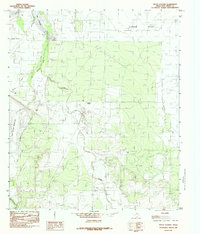 1984 Pecan Station1984 Print · USGSTom Green County in the mid-1980s shows a landscape shaped by river systems and aviation. Genealogists and historians can trace the topography of Lipan Flat, find the local Pecan Station, and locate landmarks like Mathis Field.
 - 1984 Map of Knickerbocker
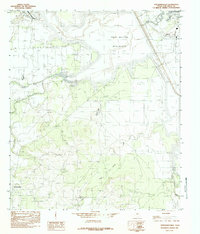 1984 Knickerbocker1984 Print · USGSTom Green County was navigating a period of hydraulic and aerial expansion in the early eighties. Genealogists and historians can trace the Knickerbocker settlement and its Cem alongside landmarks like Mathis Field and Twin Buttes Reservoir.
 - 1984 Map of Harriet
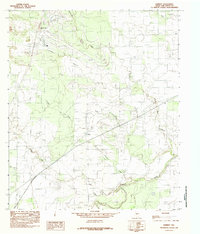 1984 Harriet1984 Print · USGSThe rural landscape of Tom Green County during the mid-eighties shows a world of ranchland and river drainages. Genealogists and researchers can trace the vicinity of Harriet and landmarks like Rattle Snake Hill, the Test Facility, and the banks of the Concho River.
 - 1986 Map of San Angelo
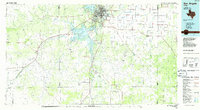 1986 San Angelo1986 Print · USGSSan Angelo and the Concho Valley appear here in the mid-1980s as a landscape shaped by massive reservoirs and a thriving energy industry. Researchers can trace the Atchison Topeka and Santa Fe rail line past Knickerbocker and explore the sprawling Oil and Gas Fields of the western plains.2 unique versions available
 - 1986 Map of Robert Lee
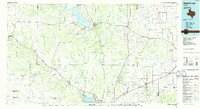 1986 Robert Lee1986 Print · USGSWest Texas ranching and oil country come into focus in the mid-eighties as the E V Spence Reservoir reshapes the landscape near Robert Lee. Researchers can trace the path of the Atchison Topeka and Santa Fe railroad through Rowena or locate the historic Fort Chadbourne.2 unique versions available
End of results
Showing maps 1-21 of 21
Top cities near San Angelo
Top neighborhoods of San Angelo
- Alvery Junction historical maps
- Belaire historical maps
- Bentwood historical maps
- Butler Farms historical maps
- Central historical maps
- Riverside historical maps
See more
Frequently asked questions
- What are the different types of historical maps available for San Angelo?
- What is the oldest map of San Angelo?
- Where can I purchase historical maps of San Angelo for my home or office?
- Where can I download high-res historical maps of San Angelo?
- Are there historical topographic maps available for San Angelo?
- Is there historical aerial imagery available for San Angelo?
- Where are historical maps of San Angelo sourced from?