1950s Maps of Layton, Utah
Explore 6 historic maps of Layton from the 1950s. These maps offer a rare glimpse into what life looked like during the 1950s — showing old roads, neighborhoods, homes, and landmarks that have changed or disappeared over time.
Whether you're researching your family's past, planning a metal detecting trip, or studying how Layton's landscape evolved across the 1950s, these high-resolution maps are a powerful tool for exploring the history of this region.
- Focus on a specific era: All maps on this page are from the 1950s, giving you a focused view of this time period.
- See what’s changed: Compare century-old streets, trails, and buildings to today's modern landscape using overlays and satellite layers.
- Research with precision: Use these maps for genealogy, historical research, land use analysis, or educational projects.
- View, download, or print: Maps are fully viewable online in high resolution, and can be downloaded or printed for your own records.
Start exploring Layton's history through authentic maps from the 1950s. This is your window into the past.
Layton, UT maps
(6)- 1954 Map of Ogden, 1967 Print
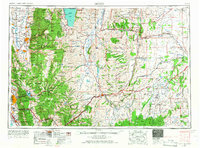 1954 Ogden1967 Print · USGSThe northern Utah corridor and Wyoming borderlands are captured here in the mid-1950s, showing the region's transition from mountain wilderness to settled valleys. Researchers can trace historic institutions like Utah State University or locate vanished points like Church Butte Station and the Trappist Monastery.3 unique versions available
 - 1954 Map of Brigham City, 1968 Print
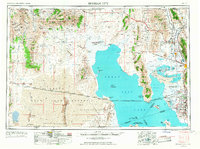 1954 Brigham City1968 Print · USGSNorthern Utah and the edges of the Great Salt Lake are captured here during the mid-fifties, showing the region's transition from pioneer rail hubs to modern military ranges. Researchers can find old sidings like Lemay Siding, the Golden Spike Monument, and settlements like Washakie.4 unique versions available
 - 1955 Map of Clearfield, 1956 Print
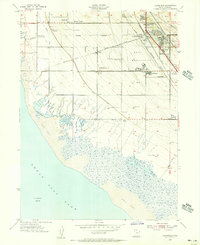 1955 Clearfield1956 Print · USGSCoastal Davis County is shown in the mid-fifties as the military and rail hub of the region expands toward the Great Salt Lake. Genealogists can trace family plots at West Point Cemetery or locate old school sites like Wasatch Sch and settlements at Laytona.
 - 1955 Map of Kaysville, 1956 Print
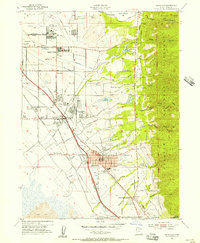 1955 Kaysville1956 Print · USGSDavis County transitioned from an agrarian valley to a strategic defense hub during the mid-fifties as the suburbs began to expand. You can trace the path of the electric Bamberger Railroad and locate civic landmarks like Sahara Village and the County High School.4 unique versions available
 - 1958 Map of Ogden
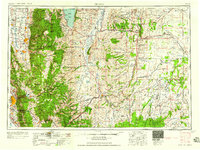 1958 Ogden1958 Print · USGSNorthern Utah and southwestern Wyoming are captured here during a period of steady growth and military expansion. You can trace the Union Pacific rail lines and early road networks connecting Ogden and Logan to Bear Lake and Evanston.
 - 1958 Map of Brigham City
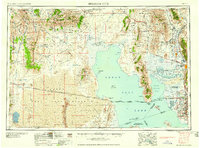 1958 Brigham City1958 Print · USGSNorthern Utah in the late fifties shows a landscape of extremes, from the salt flats to the bustling Bear River Valley. Trace historical routes like the Old Immigrant Trail and locate local landmarks such as the Brigham Sugar Mill and Booth Valley School.
End of results
Showing maps 1-6 of 6
Top cities near Layton
- Salt Lake City historical maps
- Ogden historical maps
- Bountiful historical maps
- Roy historical maps
- Kaysville historical maps
- Syracuse historical maps
See more
Top neighborhoods of Layton
- Chapel Hill historical maps
- Diamond Hills historical maps
- Victorian Oaks historical maps
- Snow Canyon historical maps
- Parkdale historical maps
- Indian Oaks historical maps
See more
Frequently asked questions
- What are the different types of historical maps available for Layton?
- What is the oldest map of Layton?
- Where can I purchase historical maps of Layton for my home or office?
- Where can I download high-res historical maps of Layton?
- Are there historical topographic maps available for Layton?
- Is there historical aerial imagery available for Layton?
- Where are historical maps of Layton sourced from?