1900s (20th Century) Maps of Cedar Heights, Kanab
Explore 7 historic maps of Cedar Heights from the 1900s (20th Century). These maps offer a rare glimpse into what life looked like during the 1900s — showing old roads, neighborhoods, homes, and landmarks that have changed or disappeared over time.
Whether you're researching your family's past, planning a metal detecting trip, or studying how Cedar Heights's landscape evolved across the 1900s, these high-resolution maps are a powerful tool for exploring the history of this region.
- Focus on a specific era: All maps on this page are from the 1900s, giving you a focused view of this time period.
- See what’s changed: Compare century-old streets, trails, and buildings to today's modern landscape using overlays and satellite layers.
- Research with precision: Use these maps for genealogy, historical research, land use analysis, or educational projects.
- View, download, or print: Maps are fully viewable online in high resolution, and can be downloaded or printed for your own records.
Start exploring Cedar Heights's history through authentic maps from the 1900s. This is your window into the past.
Cedar Heights, Kanab maps
(7)- 1953 Map of Cedar City, 1966 Print
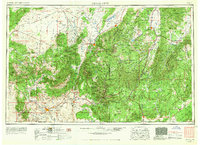 1953 Cedar City1966 Print · USGSSouthwestern Utah's high plateaus and desert basins are mapped here during the mid-fifties, showing the region before the modern interstate system. Researchers can trace historic mining at Silver Reef, follow the Union Pacific line, and locate early settlements like Kanarraville and Toquerville.3 unique versions available
 - 1954 Map of Kanab SE, 1956 Print
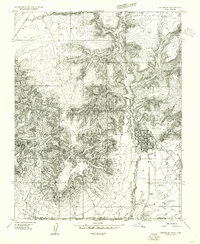 1954 Kanab SE1956 Print · USGSThe Utah-Arizona borderlands come into focus during the mid-fifties, centered on the settlement of Kanab and the northern edge of the Kaibab Indian Reservation. Researchers can locate a Cem, the local Landing Strip, and ancient Cliff Dwellings tucked into the surrounding canyons.
 - 1957 Map of Kanab, 1960 Print
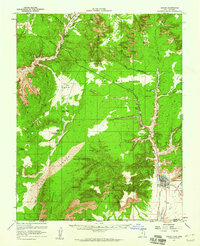 1957 Kanab1960 Print · USGSSouthern Utah during the mid-fifties shows a landscape of deep canyons and high desert mesas on the edge of the Arizona border. Genealogists and historians can trace the early layout of Kanab and Mt Carmel, alongside remote sites like a Cliff Dwelling and the Foot Ranch.2 unique versions available
 - 1958 Map of Cedar City
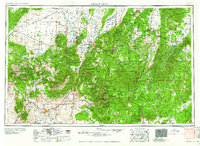 1958 Cedar City1958 Print · USGSSouthwestern Utah in the late fifties was a land of mineral extraction and monumental landscapes. Genealogists and historians can trace pioneer-era settlements like Grafton and Parowan alongside industrial sites such as the Silver Reef Mine.2 unique versions available
 - 1962 Map of Cedar City
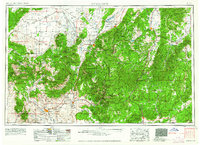 1962 Cedar City1962 Print · USGSSouthern Utah in the early sixties showcases a landscape of dramatic plateaus and historic mining outposts. Trace the early settlement patterns at the Silver Reef (ruins), locate the Iron Mine near the Hurricane Cliffs, or find the Fort Harmony Monument.
 - 1980 Map of Kanab, 1981 Print
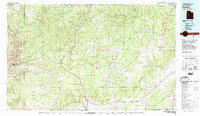 1980 Kanab1981 Print · USGSSouthern Utah in the late seventies is a landscape of massive geologic terraces and isolated ranching towns. Trace the growth of Kanab and Springdale or locate vanished sites like Shunesburg among the White Cliffs and Vermilion Cliffs.
 - 1985 Map of Kanab
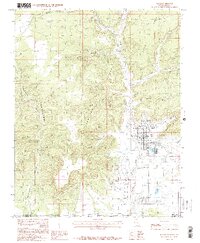 1985 Kanab1985 Print · USGSThe high desert landscape of the Utah-Arizona border comes into focus in the mid-1980s, centered on the settlement of Kanab. Researchers can trace the town's footprint, including the Cem, the Movie Set (Fort), and the rugged Vermilion Cliffs.2 unique versions available
End of results
Showing maps 1-7 of 7
Frequently asked questions
- What are the different types of historical maps available for Cedar Heights?
- What is the oldest map of Cedar Heights?
- Where can I purchase historical maps of Cedar Heights for my home or office?
- Where can I download high-res historical maps of Cedar Heights?
- Are there historical topographic maps available for Cedar Heights?
- Is there historical aerial imagery available for Cedar Heights?
- Where are historical maps of Cedar Heights sourced from?