1900s (20th Century) Maps of Independence, Utah
Explore 21 historic maps of Independence from the 1900s (20th Century). These maps offer a rare glimpse into what life looked like during the 1900s — showing old roads, neighborhoods, homes, and landmarks that have changed or disappeared over time.
Whether you're researching your family's past, planning a metal detecting trip, or studying how Independence's landscape evolved across the 1900s, these high-resolution maps are a powerful tool for exploring the history of this region.
- Focus on a specific era: All maps on this page are from the 1900s, giving you a focused view of this time period.
- See what’s changed: Compare century-old streets, trails, and buildings to today's modern landscape using overlays and satellite layers.
- Research with precision: Use these maps for genealogy, historical research, land use analysis, or educational projects.
- View, download, or print: Maps are fully viewable online in high resolution, and can be downloaded or printed for your own records.
Start exploring Independence's history through authentic maps from the 1900s. This is your window into the past.
Independence, UT maps
(21)- 1907 Map of Strawberry Valley, 1955 Print
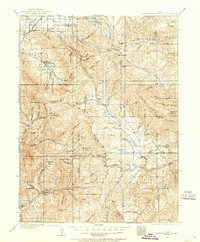 1907 Strawberry Valley1955 Print · USGSIn the early 1900s, this high-mountain territory was defined by the ranching and rail connections of the Uinta region. Researchers can trace family-named outposts like Averetts Ranch, the Diamond Battle Monument, and the early route of the D and R G RR.2 unique versions available
 - 1909 Map of Strawberry Valley
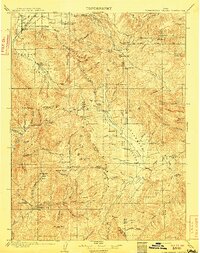 1909 Strawberry Valley1909 Print · USGSWasatch County at the dawn of the twentieth century shows a landscape of mountain ranches and early settlements before the major dams. Genealogists and historians can trace family locations at Averetts Ranch, locate the Diamond Battle Monument, and follow the old D and R G RR line.2 unique versions available
 - 1954 Map of Salt Lake City, 1964 Print
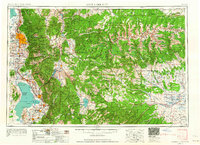 1954 Salt Lake City1964 Print · USGSThe Wasatch Front and Uinta Mountains are captured here in the mid-fifties, showing the industrial heart of Utah and its high mountain wilderness. Researchers can locate vanished infrastructure and landmarks like the Geneva Steel Plant, Bingham Canyon Mine, and the Utah State Prison.4 unique versions available
 - 1958 Map of Salt Lake City
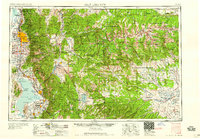 1958 Salt Lake City1958 Print · USGSThe Wasatch Front and Uinta Basin are captured during a period of significant post-war growth and industrial development. Researchers can trace the mid-century rail lines of the Bamberger RR and locate sites like the Kiegley Limestone Quarry and Camp Williams Military Reservation.
 - 1960 Map of Salt Lake City
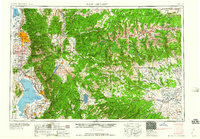 1960 Salt Lake City1960 Print · USGSThe Wasatch Front and High Uintas are captured mid-century as the Salt Lake Valley underwent significant postwar expansion. Genealogists and historians can trace rail lines like the Union Pacific and locate established landmarks such as Fort Douglas, Camp Williams, and the Bingham Canyon Mine.
 - 1966 Map of Charleston, 1969 Print
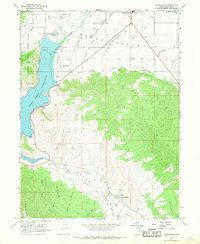 1966 Charleston1969 Print · USGSThe Heber Valley of the mid-1960s is defined by its deep mountain canyons and its sophisticated irrigation systems. Genealogists and researchers can trace local families near Charleston, locate the Cem, or follow the Denver and Rio Grande Western rail lines.
 - 1967 Map of Center Creek, 1969 Print
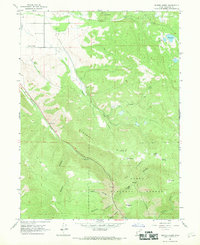 1967 Center Creek1969 Print · USGSHeber Valley and the Uinta National Forest highlands are captured here in the late sixties during a period of transition between ranching and recreation. Local researchers can locate the Center Creek settlement and Cem, trace the Pack Trail into Daniels Canyon, or find family landmarks like Parker and Clegg Canyon.2 unique versions available
 - 1967 Map of Heber Mountain, 1969 Print
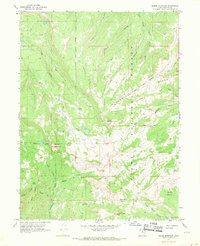 1967 Heber Mountain1969 Print · USGSHigh in the Uinta mountains during the late sixties, this survey shows the rugged divide between the Provo and Duchesne watersheds. Researchers can trace the Indian Treaty Boundary and the Old Duchesne Road past Heber Mountain.2 unique versions available
 - 1967 Map of Co-Op Creek, 1969 Print
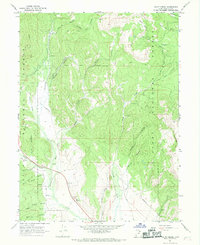 1967 Co-Op Creek1969 Print · USGSHigh in the Wasatch range during the late sixties, this survey reveals a mountain landscape being reshaped by water engineering and forest management. Researchers can trace the Indian Treaty Boundary and locate remote outposts like the Hub Guard Station or the Currant Creek Feeder Canal.2 unique versions available
 - 1967 Map of Twin Peaks, 1969 Print
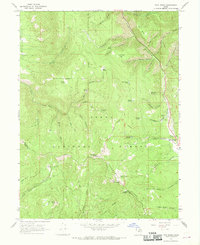 1967 Twin Peaks1969 Print · USGSThe high ridges of the Wasatch Range come into focus in the late sixties, showing a landscape defined by forest boundaries and remote trails. Trace early land divisions and mountain landmarks like the Old Indian Treaty Boundary, Strawberry Peak, and Barrys Reservoir.2 unique versions available
 - 1986 Map of Provo
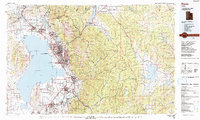 1986 Provo1986 Print · USGSThe Utah Valley during the mid-eighties shows a bustling corridor of growth between the mountains and Utah Lake. Genealogists and historians can trace the rail lines of the Union Pacific RR through settlements like Springville, Spanish Fork, and Payson.
 - 1993 Map of Heber Mountain
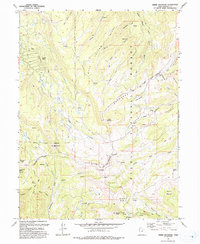 1993 Heber Mountain1993 Print · USGSHigh in the Wasatch Range in the early 1990s, this area shows a landscape defined by federal forests and tribal lands. Researchers can trace historic trails and boundaries between Heber Mountain, the Uinta and Ouray Reservation, and Timber Lakes.
 - 1993 Map of Charleston
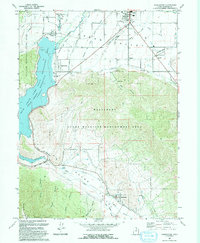 1993 Charleston1993 Print · USGSHeber Valley and Round Valley are shown in the early nineties as the region's agricultural roots met modern expansion. Genealogists and local historians can trace family-named sites like Billy Haws Canyon and landmarks including the Midway Hatchery and Cem.
 - 1993 Map of Center Creek
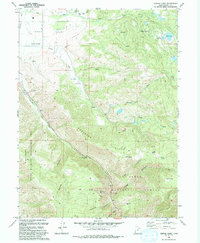 1993 Center Creek1993 Print · USGSThe eastern edge of the Heber Valley in the early nineties shows the rise from rural farmsteads into mountain wilderness. Genealogists and historians can trace the Cem at Center Creek or explore the heights around Timber Lakes and Witts Lake.
 - 1993 Map of Co-Op Creek
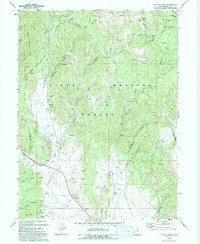 1993 Co-Op Creek1993 Print · USGSWasatch County’s high-country terrain is captured here in the early nineties, showing a landscape defined by the Uinta National Forest and the Strawberry River. Researchers can trace old mountain routes and water developments like the Sugar Mill, Bull Spring, and an Abandoned Canal.
 - 1994 Map of Twin Peaks
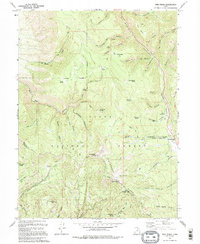 1994 Twin Peaks1994 Print · USGSThe high ridges of Wasatch and Utah counties come into focus in the mid-1990s, revealing a landscape of alpine peaks and forest boundaries. Researchers can trace the Uintah and Indian Reservation Boundary and locate landmarks like Harrys Reservoir or the Lodgepole Campground.2 unique versions available
 - 1998 Map of Center Creek, 2000 Print
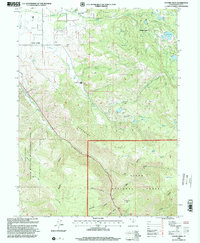 1998 Center Creek2000 Print · USGSThe high Wasatch backcountry comes into focus in the late nineties as recreation and mountain ranching intersect. Researchers can trace land use through landmarks like Whiskey Spring, the Hogsback Exclosure, and the developing Timber Lakes area.
 - 1998 Map of Charleston, 2000 Print
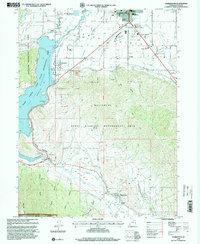 1998 Charleston2000 Print · USGSThe Heber Valley and Round Valley regions are captured here in the late nineties, showing a landscape shaped by water and rail. Researchers can trace the Heber Valley Railroad or find landmarks like Charleston Town Hall and the local Cem.
 - 1998 Map of Twin Peaks, 2000 Print
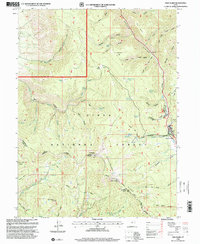 1998 Twin Peaks2000 Print · USGSWasatch County’s high country is captured here in the late nineties, showing a landscape defined by the Uinta National Forest and the tribal boundaries of the Uinta and Ouray Reservation. Local historians can trace high-altitude landmarks like Strawberry Peak, the route through Daniels Pass, and the waters of Strawberry Reservoir.
 - 1998 Map of Co-Op Creek, 2002 Print
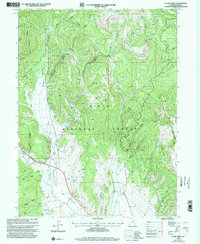 1998 Co-Op Creek2002 Print · USGSThe high country of Wasatch County is documented in the late nineties, showcasing the intersection of the Uinta National Forest and the Uintah Reservation Boundary. Researchers can trace old mountain routes past Shingle Mill Canyon, Dock Flat, and the headwaters of the Strawberry River.
 - 1998 Map of Heber Mountain, 2002 Print
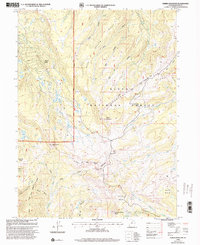 1998 Heber Mountain2002 Print · USGSHigh in the Wasatch Range during the late nineties, this survey tracks the boundaries where the Uinta National Forest meets tribal lands. Trace family-named landmarks like Heber Mountain, the residential roads of Timber Lakes, and the high waters of Currant Creek.
End of results
Showing maps 1-21 of 21
Top cities near Independence
- Provo historical maps
- Heber City historical maps
- Park City historical maps
- Midway historical maps
- Francis historical maps
- Charleston historical maps
See more
Top neighborhoods of Independence
Frequently asked questions
- What are the different types of historical maps available for Independence?
- What is the oldest map of Independence?
- Where can I purchase historical maps of Independence for my home or office?
- Where can I download high-res historical maps of Independence?
- Are there historical topographic maps available for Independence?
- Is there historical aerial imagery available for Independence?
- Where are historical maps of Independence sourced from?