Old Maps of Rupert, Vermont for Metal Detecting
Plan your next treasure hunt with 65 historic maps of Rupert. Find old homesites, ghost towns, trails, and gathering spots that may be lost to time — perfect for identifying promising metal detecting locations.
- Locate forgotten sites: Uncover places like long-lost settlements, abandoned rail lines, or gathering spots.
- Plan better hunts: Use map overlays combined with LiDAR or satellite views to narrow in on historically rich areas.
- Made for detectorists: Thousands of hobbyists use these maps to discover relics, coins, and hidden history.
Use these historic maps to boost your research and find new opportunities beneath the surface of Rupert.
Rupert, VT maps
(65)- 1893 Map of Fort Ann, 1954 Print
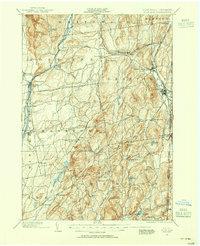 1893 Fort Ann1954 Print · USGSWashington County was a crossroads of canal and rail commerce in the late nineteenth century. Genealogists and local historians can trace the foundations of Granville, locate family homes near Chamberlain Mills, and follow the path of the Abandoned Delaware and Hudson Canal.2 unique versions available
 - 1894 Map of Pawlet, 1964 Print
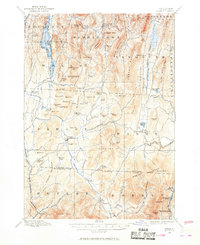 1894 Pawlet1964 Print · USGSRutland and Bennington Counties at the close of the nineteenth century reveal a rugged landscape of rail-linked valley towns and high mountain hollows. Genealogists can locate family lands near Middletown Springs, Danby Four Corners, or the remote Burnham Hollow.
 - 1894 Map of Equinox, 1964 Print
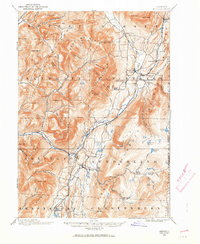 1894 Equinox1964 Print · USGSBennington County's river valleys and mountain peaks are captured here in the late nineteenth century as timber and rail defined the local economy. Genealogists and historians can trace the early layouts of Arlington, Manchester, and vanished settlements like Kansas or Fayville.2 unique versions available
 - 1895 Map of Cambridge
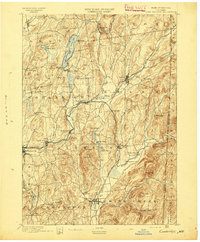 1895 Cambridge1895 Print · USGSWashington County, New York, is captured in the 1890s as a landscape of interconnected rail lines and riverside villages. Genealogists and historians can trace the paths of the Rutland and Washington R.R. through Salem or locate family roots in hamlets like Pumpkin Hook and Shushan.
 - 1895 Map of Fort Ann
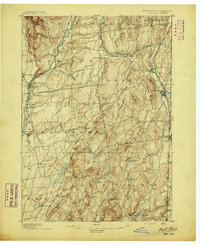 1895 Fort Ann1895 Print · USGSWashington County in the late nineteenth century is a landscape defined by the Saratoga and Champlain Canal and early railroads. You can trace the development of hamlets like Chamberlain Mills and Truthville as they appeared before the modern era.
 - 1896 Map of Equinox
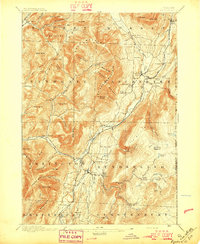 1896 Equinox1896 Print · USGSBennington County’s mountain valleys and river corridors are captured here in the late nineteenth century during a period of robust rail expansion. Genealogists and local historians can trace family locations near Manchester Center, find remote settlements like Kelley Stand, or follow the Bennington and Rutland R. R. line.
 - 1897 Map of Pawlet
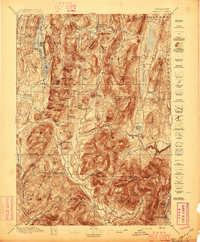 1897 Pawlet1897 Print · USGSVermont's Taconic borderlands are captured here in the late nineteenth century, showing a landscape of high peaks and tightly clustered valley settlements. Researchers can trace the routes of the DELAWARE AND HUDSON RR or locate vanished hamlets like Spanktown and Brimstone Corners.8 unique versions available
 - 1898 Map of Cambridge
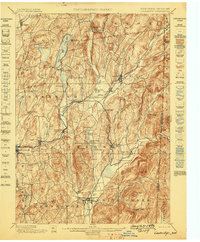 1898 Cambridge1898 Print · USGSWashington County at the close of the nineteenth century was a landscape of river-powered hamlets and busy rail corridors. Researchers can trace ancestral farmsteads and early industry near Batten Kill or explore the rail stops at Easton Sta. and Salem.
 - 1898 Map of Fort Ann
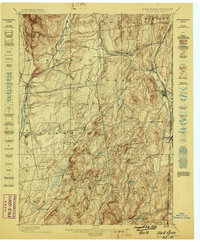 1898 Fort Ann1898 Print · USGSUpper Washington County at the close of the nineteenth century reveals a landscape dominated by the Champlain Canal and the Mettawee River. Genealogists and local historians can trace early settlements and transit points like Smith Basin, Chamberlain Mills, and Battle Hill.
 - 1900 Map of Equinox
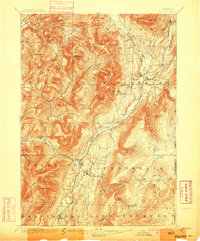 1900 Equinox1900 Print · USGSBennington County’s valley corridor and high mountain notches are captured here in the final years of the nineteenth century. Researchers can trace the early rail-and-river network through Manchester Depot, identify old homesteads at Kelley Stand, and locate vanished landmarks like Fayville.7 unique versions available
 - 1901 Map of Fort Ann
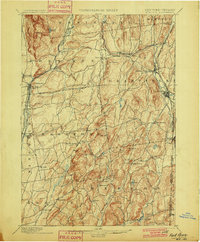 1901 Fort Ann1901 Print · USGSWashington County at the close of the nineteenth century was a vital corridor of New York commerce, defined by its historic canal and rail lines. You can trace the early industrial landscape through Smith Basin, find family homesteads near Slyboro, and follow the Mettawee River as it crosses the Vermont border.
 - 1901 Map of Cambridge
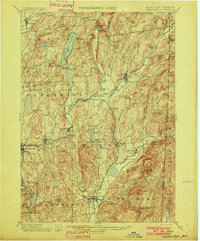 1901 Cambridge1901 Print · USGSWashington County at the turn of the century is a landscape of river-powered industry and sprawling rail networks connecting New York to Vermont. Genealogists and historians can trace the paths of the Batten Kill, find old rail stops at Easton Sta., and locate vanished names like Pumpkin Hook.8 unique versions available
 - 1903 Map of Mettawee
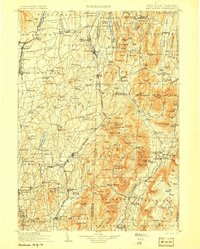 1903 Mettawee1903 Print · USGSThe New York and Vermont borderlands come alive in this turn-of-the-century survey of the Mettawee Valley. Genealogists can trace family footprints from Middletown Springs down to the Saratoga and Champlain Canal at Fort Ann.2 unique versions available
 - 1904 Map of Fort Ann
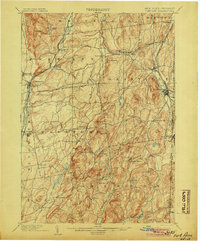 1904 Fort Ann1904 Print · USGSWashington County at the turn of the century shows a landscape defined by the slate industry and early rail lines along the Vermont border. Genealogists can locate family lands near Chamberlain Mills, Smith Basin, and the crossroads of North Hebron or Slyboro.6 unique versions available
 - 1944 Map of Salem, 1958 Print
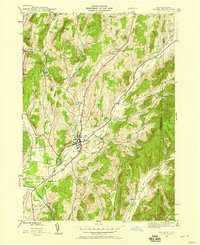 1944 Salem1958 Print · USGSThe village of Salem and the surrounding Washington County hills are shown during the mid-1940s, highlighting the area's rail and river connections. Genealogists and researchers can locate Evergreen Cem, the Delaware and Hudson line, and rural settlements like Rexleigh.2 unique versions available
 - 1944 Map of West Pawlet, 1958 Print
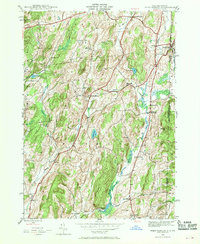 1944 West Pawlet1958 Print · USGSThe borderlands of New York and Vermont are captured here during the mid-forties, showing a region of quiet hamlets and well-established family farms. Genealogists and local researchers can trace early settlers through numerous sites like Taylor Hill Cem, Chamberlain Mills, and the Hebron Ch.2 unique versions available
 - 1946 Map of West Pawlet
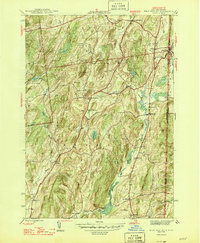 1946 West Pawlet1946 Print · USGSThe borderlands between New York and Vermont are captured here during the mid-1940s as rural life centered on the Delaware and Hudson RR. Genealogists can locate family landmarks such as Taylor Hill Cem or trace the now-quiet sites of Sch No 4 (abandoned) and Chamberlain Mills.2 unique versions available
 - 1946 Map of Salem
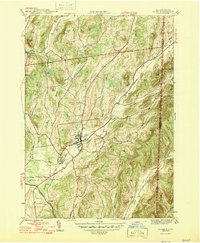 1946 Salem1946 Print · USGSWashington County at the end of the Second World War shows a rural landscape anchored by rail hubs and valley farming. Genealogists and historians can trace family locations near Salem, find burials at Evergreen Cem, or follow the Batten Kill river through Rexleigh.
 - 1950 Map of Glens Falls
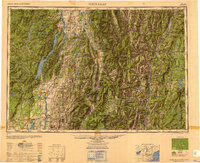 1950 Glens Falls1950 Print · USGSThe Adirondacks and the Green Mountains meet in this mid-century survey of the New York and Vermont borderlands. Researchers can trace the industrial rail corridors of the Rutland RR and Delaware & Hudson RR connecting Glens Falls, Rutland, and the shores of Lake George.
 - 1950 Map of Salem, 1951 Print
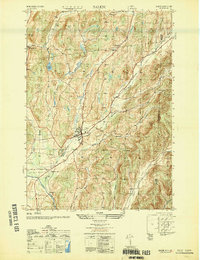 1950 Salem1951 Print · USGSMid-century Washington County reveals a landscape of valley farms and mountain ridges just as the post-war era began. Genealogists and local historians can trace the tracks of the Delaware and Hudson railroad or locate family plots in Evergreen Cem and Cleveland Cem.
 - 1956 Map of Glens Falls, 1968 Print
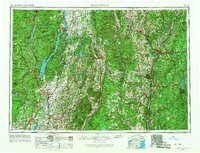 1956 Glens Falls1968 Print · USGSUpper New York and the Vermont mountains are captured here in the mid-fifties, showing the rugged rail-and-river network of the Northeast. Researchers can trace the paths of the Delaware and Hudson RR and Rutland RR as they wind through valley towns like Poultney and Whitehall.3 unique versions available
 - 1959 Map of Glens Falls
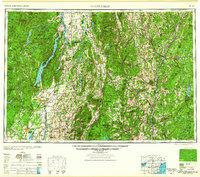 1959 Glens Falls1959 Print · USGSUpper New York and Vermont are captured here during the late 1950s, a period of transition for these mountain communities. Researchers can trace the legacy of the region's river-and-rail economy through landmarks like Lake George, Saratoga Springs, and Killington Peak.2 unique versions available
 - 1964 Map of Glens Falls
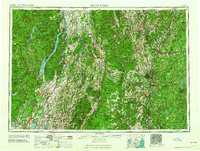 1964 Glens Falls1964 Print · USGSThe tri-state borderlands of New York, Vermont, and New Hampshire appear here in the mid-1960s. Researchers can trace the rail routes of the Rutland RR and find historic sites like Ticonderoga and Saratoga National Historical Park.
 - 1967 Map of West Rupert, 1972 Print
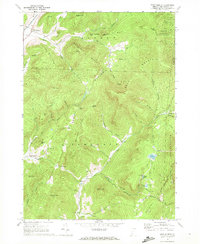 1967 West Rupert1972 Print · USGSBennington County’s highlands are captured here during the late sixties, showcasing a landscape of steep hollows and mountain forests. Researchers can trace family names across Shatterack Mountain or locate early settlements like West Sandgate and Beartown.
 - 1967 Map of Pawlet, 1972 Print
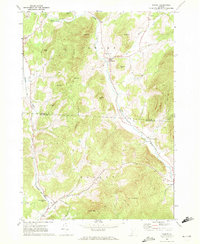 1967 Pawlet1972 Print · USGSRutland and Bennington counties are shown here in the late sixties, a time when the slate industry and small valley farms still dominated the landscape. Genealogists and historians can trace the Delaware and Hudson rail line or locate family plots in the Mettawee Valley Cem and other local burial grounds.
Showing maps 1-25 of 65
Top cities near Rupert
- Granville historical maps
- Fort Ann historical maps
- Greenwich historical maps
- Manchester historical maps
- Whitehall historical maps
- Argyle historical maps
See more
Top neighborhoods of Rupert
Frequently asked questions
- What are the different types of historical maps available for Rupert?
- What is the oldest map of Rupert?
- Where can I purchase historical maps of Rupert for my home or office?
- Where can I download high-res historical maps of Rupert?
- Are there historical topographic maps available for Rupert?
- Is there historical aerial imagery available for Rupert?
- Where are historical maps of Rupert sourced from?