1900s (20th Century) Maps of Bedford County, Virginia
Explore 57 historic maps of Bedford County from the 1900s (20th Century). These maps offer a rare glimpse into what life looked like during the 1900s — showing old roads, neighborhoods, homes, and landmarks that have changed or disappeared over time.
Whether you're researching your family's past, planning a metal detecting trip, or studying how Bedford County's landscape evolved across the 1900s, these high-resolution maps are a powerful tool for exploring the history of this region.
- Focus on a specific era: All maps on this page are from the 1900s, giving you a focused view of this time period.
- See what’s changed: Compare century-old streets, trails, and buildings to today's modern landscape using overlays and satellite layers.
- Research with precision: Use these maps for genealogy, historical research, land use analysis, or educational projects.
- View, download, or print: Maps are fully viewable online in high resolution, and can be downloaded or printed for your own records.
Start exploring Bedford County's history through authentic maps from the 1900s. This is your window into the past.
Bedford County, VA maps
(57)- 1907 Map of Natural Bridge Special
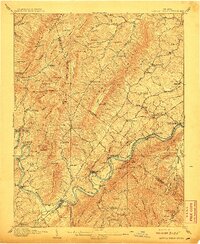 1907 Natural Bridge Special1907 Print · USGSThe James River corridor in Botetourt and Rockbridge counties is captured here just after the turn of the century. Genealogists can locate family landmarks like Rapps Mill, Dunkard Church, and the riverfront settlement of Buchanan along the Chesapeake and Ohio RR.4 unique versions available
 - 1929 Map of Roanoke
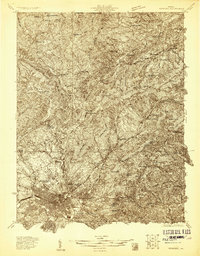 1929 Roanoke1929 Print · USGSThe Roanoke Valley is shown just before the Great Depression, documenting the area's transition from rural townships to a developing urban center. Genealogists can locate family landmarks such as Forest Chapel Sch, Coyner Springs, and the early neighborhoods of Riverdale.3 unique versions available
 - 1933 Map of Roanoke
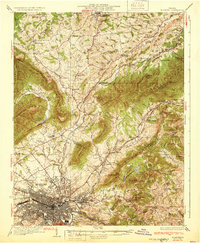 1933 Roanoke1933 Print · USGSThe Roanoke Valley in the early thirties shows a thriving rail-and-river hub surrounded by a landscape of small crossroads schools and churches. Genealogists can trace family names through landmarks like Hollins College, Gravel Hill Sch, and Trinity church.3 unique versions available
 - 1935 Map of Buena Vista
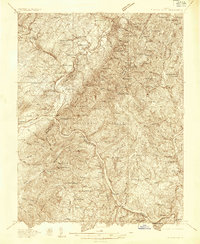 1935 Buena Vista1935 Print · USGSThe James River corridor in the mid-1930s reveals a landscape of hydroelectric power and deep-rooted mountain communities. Genealogists and historians can locate dozens of country schools and churches, from Ivory Hill Sch to Mt Zion Ch, alongside industrial sites like the LONE JACK QUARRY.
 - 1935 Map of Amherst
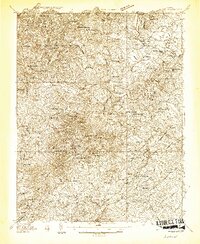 1935 Amherst1935 Print · USGSAmherst County in the mid-thirties reveals a landscape of mountain hollows and rail-connected settlements along the edge of the George Washington National Forest. Genealogists and historians can locate rural landmarks like the Indian Mission, Sweet Briar College, and the old Southern Mineral Plant.
 - 1939 Map of Amherst
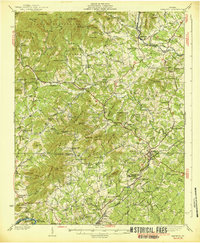 1939 Amherst1939 Print · USGSAmherst County in the mid-1930s is a landscape of mountain ridges and tight-knit rural communities. Genealogists and historians can trace the exact locations of many local landmarks, from Sweet Briar and Amherst to the Indian Mission and Dodds Store.
 - 1939 Map of Buena Vista
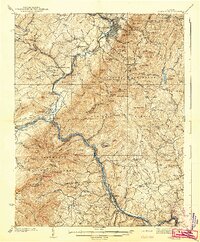 1939 Buena Vista1939 Print · USGSThe James River corridor near Buena Vista was a bustling intersection of rail and water transport in the years before World War II. Researchers can trace the early Appalachian Trail and find rural community hubs like Pedlar Mills, CCC Camp No 10, and Buffalo Forge.
 - 1940 Map of Buena Vista
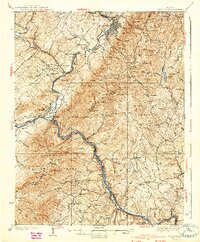 1940 Buena Vista1940 Print · USGSThe industrial and rail corridor of the James River is captured here as the region's mountain economy evolved in the 1930s. Researchers can trace the dual rail lines serving Glasgow, find CCC Camp No 10, and locate rural landmarks like Buffalo Forge and Ben Salam Sch.2 unique versions available
 - 1944 Map of Lynchburg
 1944 Lynchburg1944 Print · USGSThe James River corridor hums with activity during the mid-1940s as four major railways converge on the industrial and collegiate city of Lynchburg. Researchers can trace old family sites and schools like the Rosenwald Sch, Oxford Furnace, and Galts Mill.3 unique versions available
 - 1947 Map of Roanoke, 1948 Print
 1947 Roanoke1948 Print · USGSCentral Virginia in the late 1940s reveals a region defined by its great mountain ridges and the powerful river-and-rail economy connecting Roanoke to Lynchburg. Researchers can trace the path of the Virginian RR and locate historic county seats like Charlotte Court House.2 unique versions available
 - 1950 Map of Goode, 1952 Print
 1950 Goode1952 Print · USGSMid-century Bedford and Campbell Counties are documented here as the rural landscape meets the mountains. Genealogists can trace the location of numerous country landmarks like Poplar Forest, Coltons Mill, and the many schools and churches including North Bedford Ch.3 unique versions available
 - 1950 Map of Peaks of Otter, 1952 Print
 1950 Peaks of Otter1952 Print · USGSThe Blue Ridge highlands meet the Piedmont here in the mid-century, defined by the mountain peaks and the busy Norfolk and Western rail line. Genealogists can trace family landmarks like Walnut Grove Ch, Joppa Mill, and the small community of Thaxton.5 unique versions available
 - 1950 Map of Buena Vista, 1958 Print
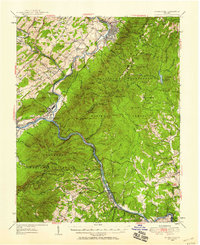 1950 Buena Vista1958 Print · USGSThe Blue Ridge high country is captured here at mid-century as the Blue Ridge Parkway and Appalachian Trail were becoming established. Genealogists and historians can trace family locations near Pedlar Mills, Buffalo Forge, and the riverside rail junction at Glasgow.2 unique versions available
 - 1950 Map of Amherst, 1960 Print
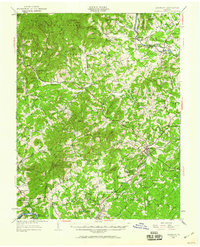 1950 Amherst1960 Print · USGSAmherst and the surrounding Blue Ridge foothills are documented here at mid-century, just as rural communities and mountain gaps remained largely unchanged. Genealogists can trace family locations through Dodds Store, Mt Moriah Ch, and the Sweet Briar College campus.
 - 1950 Map of Lynchburg, 1963 Print
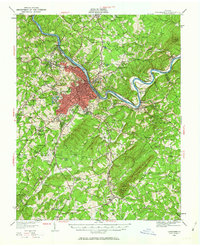 1950 Lynchburg1963 Print · USGSMid-century Lynchburg and the surrounding Piedmont hills are caught in a moment of industrial and rail prominence. Researchers can trace the legacy of local commerce and community through landmarks like Oxford Furnace, Tomahawk Mill, and Lynchburg Womens College.
 - 1951 Map of Boones Mill, 1953 Print
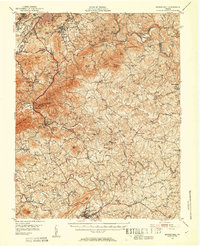 1951 Boones Mill1953 Print · USGSFranklin and Roanoke Counties are captured in the early fifties, showing the Blue Ridge foothills before modern development. Genealogists can locate family landmarks such as Oylers Cem, Piedmont Mill, and several rural churches like St Pauls Ch and Brook Hill Ch.3 unique versions available
 - 1951 Map of Moneta, 1953 Print
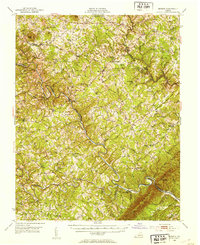 1951 Moneta1953 Print · USGSMid-century Bedford and Franklin counties are shown here before the inundation of the Roanoke valley. Genealogists and historians can trace the foundations of rural life through landmarks like Davis Mill, the VIRGINIAN rail line, and Emmaus Sch.3 unique versions available
 - 1951 Map of Altavista, 1953 Print
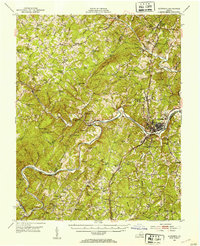 1951 Altavista1953 Print · USGSThe Roanoke River valley in the early fifties shows a region defined by its rail-and-river economy and tight-knit rural communities. Genealogists and local historians can trace family roots through landmarks like Bethlehem Ch, Lynch Sta, and Greasy Sch.2 unique versions available
 - 1952 Map of Amherst
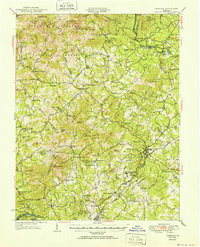 1952 Amherst1952 Print · USGSAmherst County and the Blue Ridge heights are captured here in the early fifties before modern development reshaped the rural landscape. Genealogists can trace family lines through dozens of local landmarks like Dodds Store, Indian Mission, and Pleasant Grove Ch.
 - 1952 Map of Buena Vista
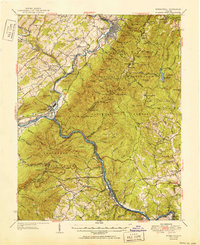 1952 Buena Vista1952 Print · USGSThe James River corridor and the Blue Ridge mountains meet here during the mid-twentieth century, showcasing a landscape of rail-fed industrial towns and remote forest settlements. Trace the heritage of Pedlar Mills and Buffalo Forge, or find local landmarks like Wesley Chapel and the Bluff Mtn Lookout Tower.2 unique versions available
 - 1959 Map of Roanoke
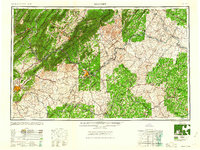 1959 Roanoke1959 Print · USGSCentral Virginia and the Blue Ridge appear in great detail during the late fifties, showcasing the transition from mountain industry to Piedmont farmland. Trace the path of the Norfolk and Western railroad or find old river towns like Appomattox and Amelia Court House.
 - 1961 Map of Arnold Valley, 1963 Print
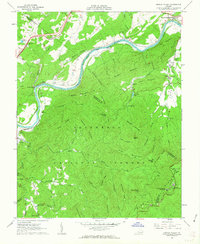 1961 Arnold Valley1963 Print · USGSBotetourt and Rockbridge counties are shown here in the early sixties as industrial rail lines follow the bends of the James River. Genealogists and historians can locate old landmarks like the Glenwood Furnace (Ruins), Bedford Air Force Station, and High Bridge Cem.3 unique versions available
 - 1963 Map of Roanoke
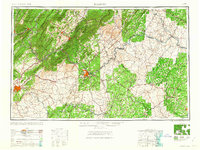 1963 Roanoke1963 Print · USGSCentral Virginia and the Blue Ridge front appear here in the early sixties, caught between their deep railroad roots and new postwar developments. Genealogists and historians can trace the rail lines of the Norfolk and Western through towns like Bedford and Altavista, or locate family landmarks near Smith Mountain Lake.
 - 1963 Map of Hardy
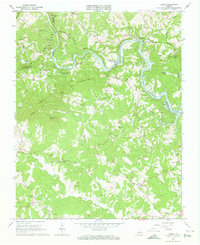 1963 Hardy1963 Print · USGSThe Roanoke River valley and the emerging Smith Mountain Lake dominate this early 1960s survey of the Franklin and Bedford county borders. Local historians can trace family land near Hardy, Red Valley, and numerous landmarks like Gravel Hill Ch and Oyler Chapel Cem.3 unique versions available
 - 1963 Map of Stewartsville, 1964 Print
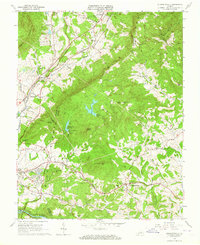 1963 Stewartsville1964 Print · USGSBedford and Botetourt counties meet along the crest of the mountains in the early sixties, as the scenic parkway overlooks a developing valley. Family historians can trace numerous rural churchyards and schools like Mays Memorial Cem and Colonial Sch.4 unique versions available
Showing maps 1-25 of 57
Top cities of Bedford County
Frequently asked questions
- What are the different types of historical maps available for Bedford County?
- What is the oldest map of Bedford County?
- Where can I purchase historical maps of Bedford County for my home or office?
- Where can I download high-res historical maps of Bedford County?
- Are there historical topographic maps available for Bedford County?
- Is there historical aerial imagery available for Bedford County?
- Where are historical maps of Bedford County sourced from?