Old Maps of Carroll County, Virginia for Genealogy
Trace your family roots with 131 historic maps of Carroll County. These high-res maps reveal old neighborhoods, homesites, landmarks, and streets — helping you uncover where your ancestors lived and how the area evolved over time.
- Explore historic neighborhoods: Identify where your relatives may have lived in the 1800s or 1900s.
- Compare maps over time: Trace the changes in streets, buildings, and landmarks for multi-generational research.
- Perfect for genealogy & ancestry research: Used by family historians and researchers to map out lineage and migration.
These maps are an incredible resource for exploring your personal connection to Carroll County's past.
Carroll County, VA maps
(131)- 1889 Map of Hillsville
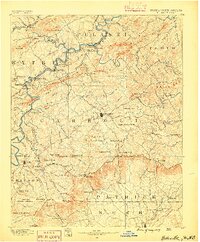 1889 Hillsville1889 Print · USGSThe Blue Ridge Highlands and the upper New River valley are captured in the late 1880s, showcasing a landscape of iron furnaces and mountain gaps. Trace early industrial sites like Boom Furnace and Lead Mines, or locate ancestral homesteads near Hillsville and Old Town.
 - 1889 Map of Wytheville
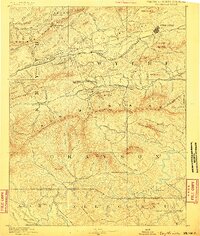 1889 Wytheville1889 Print · USGSSouthwestern Virginia and northwestern North Carolina are mapped here during the late nineteenth-century rise of the mountain iron industry. Genealogists and historians can locate early post offices and industrial sites such as Bridle Creek P.O., Eagle Furnace, and Rural Retreat.2 unique versions available
 - 1892 Map of Hillsville
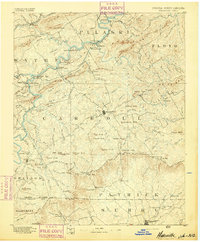 1892 Hillsville1892 Print · USGSSouthwest Virginia in the late nineteenth century is captured here as a landscape of iron furnaces and river crossings. Genealogists and historians can trace old family mills and ferries like Pedegos Mill, Howards Ferry, and the early settlement at Old Town.
 - 1892 Map of Wytheville, 1897 Print
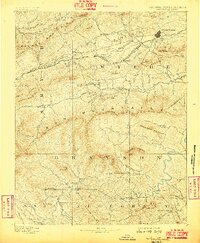 1892 Wytheville1897 Print · USGSThe high ridges and river valleys of Southwest Virginia and Northwest North Carolina are captured here in the late nineteenth century. Genealogists can trace family footprints across the Iron Mountains to old industrial sites like White Rock Furnace and remote post offices such as Hampton P.O.6 unique versions available
 - 1896 Map of Hillsville
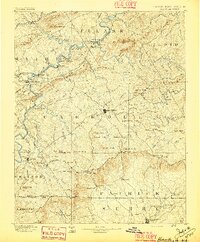 1896 Hillsville1896 Print · USGSThe Blue Ridge Highlands and New River corridor appear here in the 1890s, when iron furnaces and river ferries dictated the pace of local life. Researchers can trace ancestral locations near Hillsville, the Lead Mines, and historic river crossings like Jackson Ferry.7 unique versions available
 - 1928 Map of Stuart
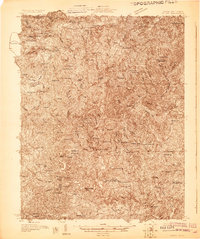 1928 Stuart1928 Print · USGSThe Blue Ridge foothills of the late twenties are captured here as a network of mountain settlements and river-powered industry. Genealogists can trace family roots through numerous country landmarks like Greaseys Chapel, Stonewall Jackson School, and Carters Mill.2 unique versions available
 - 1930 Map of Speedwell
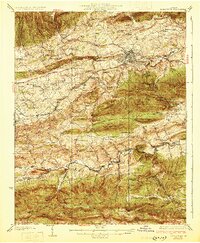 1930 Speedwell1930 Print · USGSWythe County is captured here in the late twenties, showing the intersection of vital transit corridors and mountain wilderness. Researchers can trace the early Appalachian Trail or locate family roots at St Paul Ch and Slate Spring Sch.
 - 1930 Map of Max Meadows
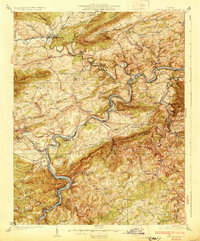 1930 Max Meadows1930 Print · USGSThe industrial and riverine corridor of Wythe and Carroll counties comes alive in the late 1920s, showcasing a network of mining towns and rail lines. Trace family roots and local history through landmarks like Fort Chiswell, the Boom Furnace, and the ferry crossing at Carter Ferry.3 unique versions available
 - 1931 Map of Stuart
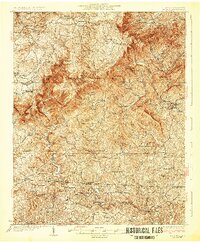 1931 Stuart1931 Print · USGSThe Blue Ridge plateau meets the Piedmont in the late 1920s, showing a landscape of mountain farming and river-driven milling. Genealogists can trace family roots through numerous local landmarks like Meadows of Dan, Stonewall Jackson Sch, and Three Forks Mill.3 unique versions available
 - 1931 Map of Galax
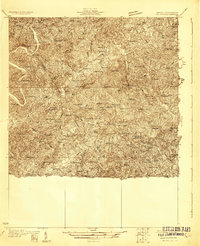 1931 Galax1931 Print · USGSThe Blue Ridge foothills of Virginia and North Carolina come into focus during the early 1930s as the rail-and-river economy develops. Genealogists and researchers can trace family landmarks like Bishop Cem, McKnights Mill, and the early river crossings at Blair Ferry.
 - 1933 Map of Galax
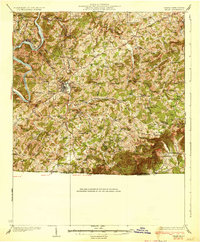 1933 Galax1933 Print · USGSCarroll County and the surrounding Blue Ridge highlands are captured in the early 1930s, showing a landscape defined by river ferries and rail spurs. Genealogists can trace early homesteads and community hubs like Pipers Gap PO, Lambsburg, and the Dixon Ferry crossing on the New River.3 unique versions available
 - 1939 Map of Speedwell
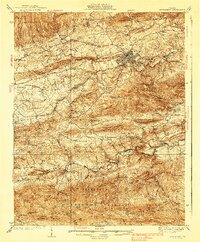 1939 Speedwell1939 Print · USGSThe mountain valleys of Wythe County are captured here in the late 1930s, showing a landscape of scattered rural schools and early industrial sites. Genealogists can locate family landmarks like Rowe Crossroads or trace the early path of the APPALACHIAN TRAILS past Little Wythe Furnace.3 unique versions available
 - 1953 Map of Winston-Salem, 1974 Print
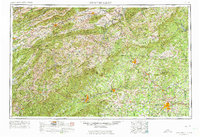 1953 Winston-Salem1974 Print · USGSThe North Carolina Piedmont and Virginia highlands meet in the mid-1950s, a landscape defined by the tobacco and textile hubs of the Blue Ridge foothills. Researchers can trace the rail-and-river geography connecting Winston-Salem to mountain towns like Mount Airy and Galax.2 unique versions available
 - 1955 Map of Winston-Salem
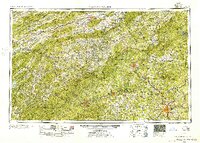 1955 Winston-Salem1955 Print · USGSThe Central Blue Ridge and Piedmont transition are captured here in the mid-fifties, from the industrial hub of Winston-Salem to the high peaks of Southwest Virginia. Genealogists can trace family landmarks like Richmond Hill Ch, Siloam Ch, and the old rail stops along the Southern Railway.
 - 1956 Map of Macks Mountain, 1969 Print
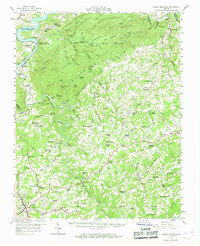 1956 Macks Mountain1969 Print · USGSCarroll and Floyd counties are shown here in the mid-fifties, just as the regional landscape was being reshaped by the waters of Claytor Lake. Genealogists can trace family roots through numerous mountain landmarks like Mabry Crossroads, Indian Valley, and the Dugspur School.
 - 1957 Map of Mount Airy, 1959 Print
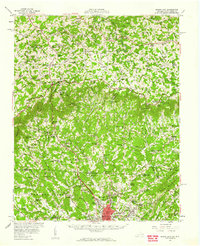 1957 Mount Airy1959 Print · USGSThe foothills and ridges of the Blue Ridge border in the late fifties show a landscape of mountain hamlets and growing textile-era towns. Genealogists can trace family landmarks like Webb Ch, Bobbitt Knob, and rural schools from Sunnyside Sch to Elk Spur Sch.2 unique versions available
 - 1957 Map of Floyd, 1959 Print
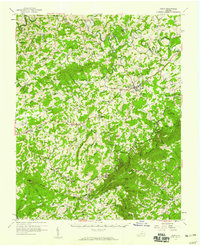 1957 Floyd1959 Print · USGSFloyd and the surrounding Blue Ridge highlands are captured here in the late fifties as the Blue Ridge Parkway integrated with local backroads. Researchers can locate family landmarks like Mabry Mill, Shelors Mill, and numerous country churches including Dillons Chapel.
 - 1962 Map of Winston-Salem
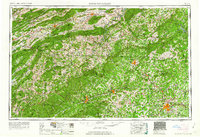 1962 Winston-Salem1962 Print · USGSThe North Carolina Piedmont meets the Virginia highlands in the early sixties, showing the rail corridors and mountain gaps of the southern Appalachians. Researchers can trace the Blue Ridge Parkway or locate family sites near Winston-Salem, Mount Airy, and Hanging Rock Mountain.
 - 1965 Map of Austinville, 1966 Print
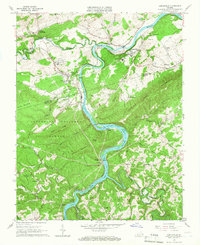 1965 Austinville1966 Print · USGSThe New River valley and its mining corridor are captured here in the mid-sixties as industry and rural life converged. Genealogists and historians can trace family roots at Bakers Chapel, locate the Van Mater Shaft mines, or follow the old Norfolk and Western line.3 unique versions available
 - 1965 Map of Galax, 1967 Print
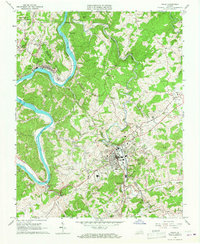 1965 Galax1967 Print · USGSCarroll and Grayson counties come alive in this mid-sixties survey of the New River valley and the growing city of Galax. Researchers can trace family sites from Wolf Glade to Hilltown, including historic landmarks like Hebron Cem and Gladeville Sch.4 unique versions available
 - 1965 Map of Sylvatus, 1967 Print
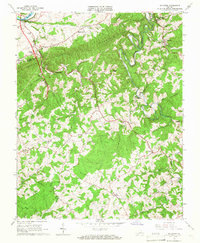 1965 Sylvatus1967 Print · USGSCarroll and Wythe counties are captured in the mid-sixties, showing the mountainous terrain just as interstate transit began to change the rural landscape. Genealogists and local historians can locate Jackson Ferry, the Old Shot Tower, and numerous small landmarks like Beasley Hill Cem.3 unique versions available
 - 1965 Map of Fosters Falls, 1967 Print
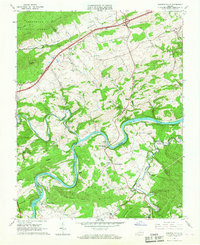 1965 Fosters Falls1967 Print · USGSThe New River valley at the mid-century mark reveals a landscape defined by the Norfolk and Western railroad and the iron-industry legacy of Fosters Falls. Genealogists and industrial historians can trace rural life through landmarks like Boom Furnace, Oglesby Cem, and High Rocks Mill.3 unique versions available
 - 1965 Map of Lambsburg, 1968 Print
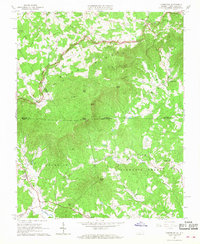 1965 Lambsburg1968 Print · USGSThe Blue Ridge mountain border between Virginia and North Carolina is captured here in the mid-1960s, showing a landscape of high ridges and deep gaps. Genealogists can trace family footprints around Lambsburg and Lowgap, or locate rural landmarks like Blue Ridge Mill and Chestnut Grove Ch.3 unique versions available
 - 1965 Map of Woodlawn, 1968 Print
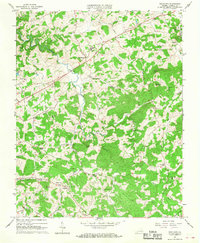 1965 Woodlawn1968 Print · USGSCarroll County's rolling hills and mountain gaps are captured here in the mid-sixties, showing a landscape of tight-knit rural communities. Genealogists can trace family roots through numerous local landmarks like Gardner Mills, Oakland Sch, and Mt Zion Ch.3 unique versions available
 - 1965 Map of Cumberland Knob, 1968 Print
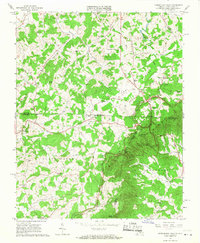 1965 Cumberland Knob1968 Print · USGSThe Virginia and North Carolina borderlands come alive in the mid-sixties, centered on the Cumberland Knob Recreation Area. Researchers can trace old family sites and mountain settlements like Edmonds, Delhart, and Ennice alongside McKnights Mill and Savannah Cem.2 unique versions available
Showing maps 1-25 of 131
Top cities of Carroll County
Frequently asked questions
- What are the different types of historical maps available for Carroll County?
- What is the oldest map of Carroll County?
- Where can I purchase historical maps of Carroll County for my home or office?
- Where can I download high-res historical maps of Carroll County?
- Are there historical topographic maps available for Carroll County?
- Is there historical aerial imagery available for Carroll County?
- Where are historical maps of Carroll County sourced from?