1900s (20th Century) Maps of Dickenson County, Virginia
Explore 47 historic maps of Dickenson County from the 1900s (20th Century). These maps offer a rare glimpse into what life looked like during the 1900s — showing old roads, neighborhoods, homes, and landmarks that have changed or disappeared over time.
Whether you're researching your family's past, planning a metal detecting trip, or studying how Dickenson County's landscape evolved across the 1900s, these high-resolution maps are a powerful tool for exploring the history of this region.
- Focus on a specific era: All maps on this page are from the 1900s, giving you a focused view of this time period.
- See what’s changed: Compare century-old streets, trails, and buildings to today's modern landscape using overlays and satellite layers.
- Research with precision: Use these maps for genealogy, historical research, land use analysis, or educational projects.
- View, download, or print: Maps are fully viewable online in high resolution, and can be downloaded or printed for your own records.
Start exploring Dickenson County's history through authentic maps from the 1900s. This is your window into the past.
Dickenson County, VA maps
(47)- 1902 Map of Bristol
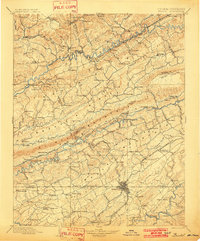 1902 Bristol1902 Print · USGSThe interstate border region around Bristol appears here at the start of the twentieth century, defined by its deep mountain ridges and river valleys. Researchers can trace the early industrial footprint of the area through numerous landmarks like Bickley Mill, Kings Mill, and the Norfolk and Western RR.6 unique versions available
 - 1912 Map of Pound
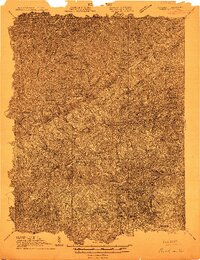 1912 Pound1912 Print · USGSThe borderlands of Wise County and Kentucky are captured in the early twentieth century before the coal industry fully reshaped the mountain hollows. Researchers can trace ancestral locations of schools and gaps, such as Upper Millstone School, Pound Gap, and the settlement of Jenkins.2 unique versions available
 - 1913 Map of Clintwood, 1962 Print
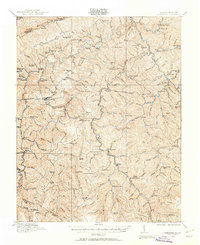 1913 Clintwood1962 Print · USGSVirginia's rugged coal country is captured here during the early twentieth century, showing a landscape of isolated ridge-top schools and river-valley settlements. Genealogists can trace family footprints across dozens of local sites like Hatchet Church, Smith Corners, and the Nichols Gap School.
 - 1914 Map of Pound
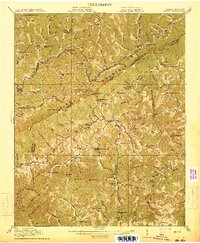 1914 Pound1914 Print · USGSThe Central Appalachian coal country comes alive in this survey of the Kentucky and Virginia borderlands during a period of rapid industrial growth. Genealogists can trace family roots through dozens of rural schools like Phipps School and Donald School, or follow the early path of the Lexington and Eastern RR.4 unique versions available
 - 1914 Map of Bucu
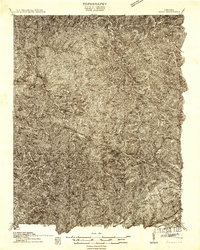 1914 Bucu1914 Print · USGSCovers Dickenson County, including Vansant, Council, and other nearby areas
 - 1914 Map of Hurley
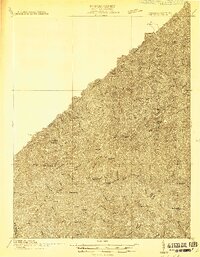 1914 Hurley1914 Print · USGSThe Buchanan County borderlands come to life in this early twentieth-century survey, showcasing a landscape of high ridges and deep hollows. Genealogists can trace family roots through a dense network of mountain schools like Bull Creek School and remote outposts such as Kelsa PO or Artia.
 - 1915 Map of Clintwood
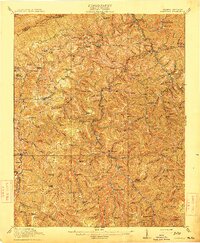 1915 Clintwood1915 Print · USGSThe northern Virginia coalfields are captured here in the mid-1910s, revealing a landscape of winding river valleys and ridge-top gaps. Genealogists can trace dozens of early schools and family settlements such as Clintwood, Haysi, and Rainy Flat School.3 unique versions available
 - 1915 Map of Regina
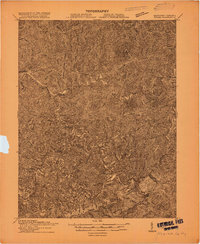 1915 Regina1915 Print · USGSPike County at the dawn of the coal boom is defined by a dense river-and-rail network along the Levisa Fork. Genealogists and historians can trace old post offices and rail stops like Shelbiana P.O., Mouthcard, and Elkhorn City.2 unique versions available
 - 1915 Map of Hurley
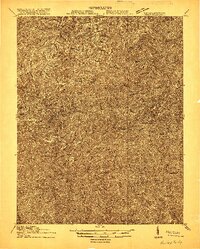 1915 Hurley1915 Print · USGSBuchanan County's deep hollows and early settlements are documented in this 1910s survey along the Kentucky-Virginia border. Genealogists and local historians can locate early centers of community life including Pawpaw P O, Looneyville School, and Hurley.2 unique versions available
 - 1916 Map of Bucu
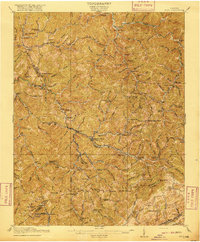 1916 Bucu1916 Print · USGSSouthwestern Virginia in the mid-1910s was a landscape of deep hollows and timber-driven commerce where three counties meet. Genealogists can trace family roots through an exceptional density of rural landmarks, from Bucu and Davenport to the Lumber RR and Hurricane School.3 unique versions available
 - 1916 Map of Regina
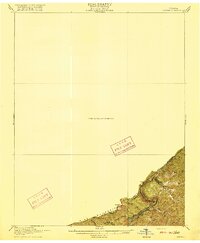 1916 Regina1916 Print · USGSThe Virginia and Kentucky borderlands are captured here in the years before the Great War, focusing on the dramatic river gorge country. Genealogists and hikers can trace the Carolina Clinchfield and Ohio rail route near The Breaks and The Towers.2 unique versions available
 - 1917 Map of Hurley
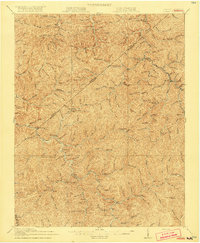 1917 Hurley1917 Print · USGSBuchanan County's mountain hollows and coal-country settlements are meticulously mapped in the years before the Great War. Genealogists can trace a dense network of early rural education sites like Rowe Mountain School and Home Creek School, alongside river points like Grundy and Levisa Fork.5 unique versions available
 - 1917 Map of Regina
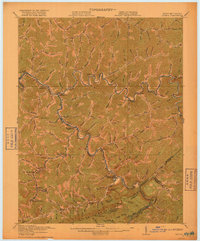 1917 Regina1917 Print · USGSThe Pike County coalfields and the winding Kentucky-Virginia border are captured here just before the close of the Great War. Genealogists can locate family homes and old post offices at Sutton PO, Regina PO, and Carmen PO along the steep hollows.3 unique versions available
 - 1918 Map of Carterton
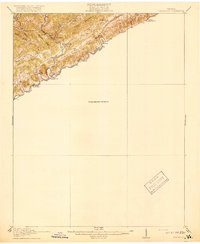 1918 Carterton1918 Print · USGSRussell County, Virginia, is defined by its steep coal-country ridges and the winding river corridor during the early twentieth century. Genealogists and researchers can trace the paths of the Norfolk and Western railway through Cleveland and locate vanished rural hubs like Musick School or Coulwood PO.3 unique versions available
 - 1920 Map of Coeburn
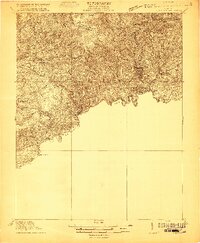 1920 Coeburn1920 Print · USGSSouthwest Virginia during the height of its rail and timber era reveals a complex network of company towns and mountain settlements. Genealogists can trace family footprints near Dante, St Paul, and Castlewood, or locate rural institutions like the Greenwood School and Carter School.5 unique versions available
 - 1934 Map of Carbo
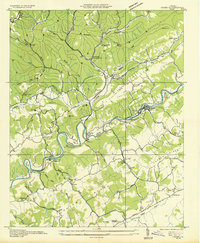 1934 Carbo1934 Print · USGSRussell County's coal and rail corridors are captured here in the mid-1930s as industrial development meets rural Appalachian life. Researchers can locate family landmarks like Jesses Mill, trace the depression-era Camp Dixie C C C, and find old stations at Carbo and Carterton.
 - 1935 Map of Indian Gap
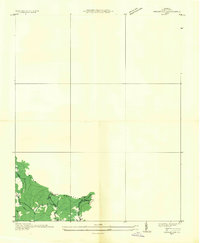 1935 Indian Gap1935 Print · USGSWise County is shown during a period of coal-driven growth in the mid-1930s. Researchers can trace the industrial landscape of Clinchfield Coal No 14 and the local community around Glamorgan, Vickers, and the Gilliam Sch.
 - 1935 Map of Wilder
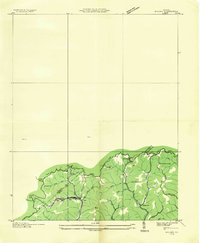 1935 Wilder1935 Print · USGSThe coal and timber country of Southwest Virginia is captured here in the mid-1930s as the rail lines reached into the deep hollows. Genealogists can locate family-named sites and rural institutions like Hammond Sch, Rasnake Sch, and the community of Wilder along the Clinchfield tracks.
 - 1935 Map of Toms Creek
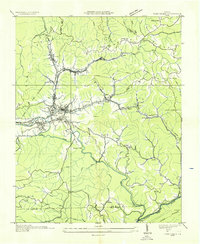 1935 Toms Creek1935 Print · USGSWise County's coal and rail economy is on full display in the mid-1930s, centered on the bustling junctions of the Guest River valley. Genealogists and historians can locate family sites like Kilgore Cem, coal operations at Clinchfield No. 21, and the strategic Beverly Tunnel.
 - 1935 Map of St Paul
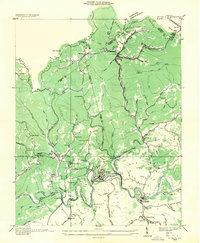 1935 St Paul1935 Print · USGSSouthwest Virginia coal country thrives in the mid-1930s as the rail networks of the Clinchfield and Norfolk and Western intersect. Genealogists can trace family landmarks like Bickley Mills, Bull Hill Sch, and the community of St Paul along the Clinch River.
 - 1954 Map of Harman, 1955 Print
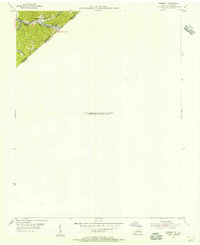 1954 Harman1955 Print · USGSThe borderlands of Virginia and Kentucky appear in the mid-1950s as a focused corridor of river and rail activity. Genealogists and local historians can trace the Norfolk and Western line past Toghertville and the Hackney Creek Cem.
 - 1954 Map of Jenkins East, 1955 Print
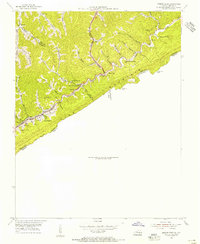 1954 Jenkins East1955 Print · USGSThe Kentucky and Virginia coalfields hummed with industry in the 1950s as the rail lines reached deep into the mountain hollows. Researchers can trace the layout of mining towns like Burdine and East Jenkins or locate rural landmarks like Marshall Branch Ch.
 - 1954 Map of Elkhorn City, 1955 Print
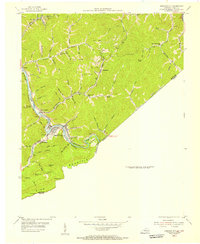 1954 Elkhorn City1955 Print · USGSElkhorn City and the rugged Kentucky borderlands are captured here in the mid-fifties, during a peak era of rail and coal activity. Researchers can trace the junction of the Chesapeake and Ohio RR and Clinchfield RR, and locate local landmarks like the Fish Hatchery and Sulphur Springs Ch.
 - 1954 Map of Clintwood, 1955 Print
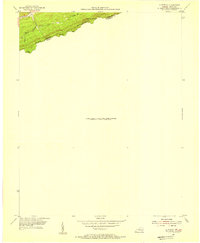 1954 Clintwood1955 Print · USGSThe interstate line atop Pine Mountain was a critical boundary during the mid-fifties, separating Kentucky and Virginia. Researchers can trace the rugged network of mountain passes and waterways like Blowing Rock Gap, Lower Gap, and Elkhorn Creek.2 unique versions available
 - 1954 Map of Hellier, 1956 Print
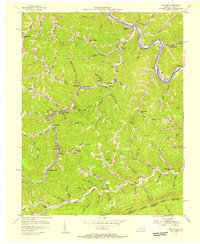 1954 Hellier1956 Print · USGSPike County coal country is captured here in the mid-fifties, showing the deep integration of the Chesapeake and Ohio railroad with local life. Genealogists and historians can trace family plots like Wilson Cem and old hollow schoolhouses such as Upper Greasy Sch.3 unique versions available
Showing maps 1-25 of 47
Top cities of Dickenson County
Frequently asked questions
- What are the different types of historical maps available for Dickenson County?
- What is the oldest map of Dickenson County?
- Where can I purchase historical maps of Dickenson County for my home or office?
- Where can I download high-res historical maps of Dickenson County?
- Are there historical topographic maps available for Dickenson County?
- Is there historical aerial imagery available for Dickenson County?
- Where are historical maps of Dickenson County sourced from?