1960s Maps of Louisa County, Virginia
Explore 18 historic maps of Louisa County from the 1960s. These maps offer a rare glimpse into what life looked like during the 1960s — showing old roads, neighborhoods, homes, and landmarks that have changed or disappeared over time.
Whether you're researching your family's past, planning a metal detecting trip, or studying how Louisa County's landscape evolved across the 1960s, these high-resolution maps are a powerful tool for exploring the history of this region.
- Focus on a specific era: All maps on this page are from the 1960s, giving you a focused view of this time period.
- See what’s changed: Compare century-old streets, trails, and buildings to today's modern landscape using overlays and satellite layers.
- Research with precision: Use these maps for genealogy, historical research, land use analysis, or educational projects.
- View, download, or print: Maps are fully viewable online in high resolution, and can be downloaded or printed for your own records.
Start exploring Louisa County's history through authentic maps from the 1960s. This is your window into the past.
Louisa County, VA maps
(18)- 1960 Map of Columbia, 1962 Print
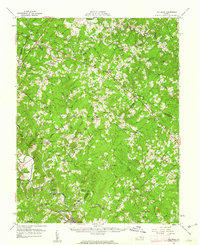 1960 Columbia1962 Print · USGSThe Virginia Piedmont at the start of the sixties reveals a landscape of river-fronting industry and tight-knit crossroads communities. Genealogists and historians can trace family-named landmarks like Yanceys Store, Bells Crossroads, and several rural churches including Beulah Church.2 unique versions available
 - 1961 Map of Washington
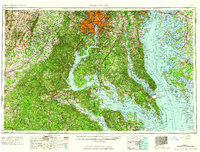 1961 Washington1961 Print · USGSThe mid-Atlantic region in the late fifties is presented in remarkable detail, from the Blue Ridge foothills to the Chesapeake Eastern Shore. Researchers can trace historic river landings and military sites like Mount Vernon, Fort Belvoir, and Point Lookout.2 unique versions available
 - 1961 Map of Gordonsville, 1962 Print
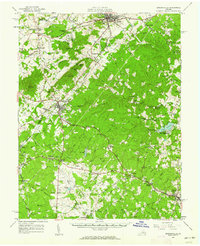 1961 Gordonsville1962 Print · USGSCentral Virginia in the early sixties remains a landscape of deep historical roots and rail-based commerce. Genealogists and researchers can trace family names through landmarks like Boswells Tavern, the James Madison Grave, and rural sites like Liberty Mills.2 unique versions available
 - 1963 Map of Roanoke
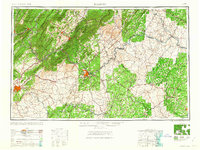 1963 Roanoke1963 Print · USGSCentral Virginia and the Blue Ridge front appear here in the early sixties, caught between their deep railroad roots and new postwar developments. Genealogists and historians can trace the rail lines of the Norfolk and Western through towns like Bedford and Altavista, or locate family landmarks near Smith Mountain Lake.
 - 1964 Map of Richmond
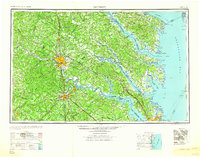 1964 Richmond1964 Print · USGSCoastal and central Virginia are mapped during the mid-twentieth century, showing the critical intersection of rail, river, and military life. Genealogists can trace family roots through rural county seats like Amelia or find vanished coastal neighborhoods near Phoebus and Hilton Village.
 - 1964 Map of Keswick, 1965 Print
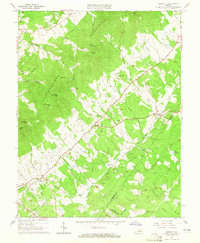 1964 Keswick1965 Print · USGSAlbemarle County's rural landscape is captured here in the mid-1960s, defined by the rise of the Southwestern Mountains and the busy Chesapeake and Ohio railroad. Researchers can trace family sites and old roads near Walkers Parish Ch, Cismont, and the Shackelford Cem.5 unique versions available
 - 1966 Map of Partlow, 1967 Print
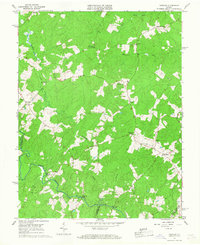 1966 Partlow1967 Print · USGSSpotsylvania County is mapped here in the mid-sixties, showing a landscape defined by the North Anna River and traditional crossroads. Genealogists can trace early families through sites like Wallers Ch, Livingston Sch, and Penneys Crossroad.
 - 1967 Map of Boyd Tavern, 1968 Print
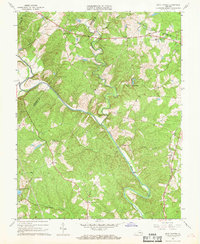 1967 Boyd Tavern1968 Print · USGSFluvanna County's rural landscape is captured here in the late sixties as the Rivanna River snakes through a region of old mills and crossroads. Genealogists can trace family footprints near historic sites like Boyd Tavern, Union Mills, and Haden Chapel.4 unique versions available
 - 1968 Map of Perkinsville, 1970 Print
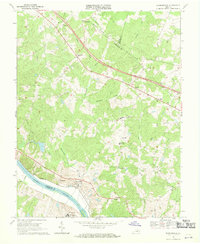 1968 Perkinsville1970 Print · USGSGoochland County in the late sixties reveals a landscape of Piedmont ridges and river-bottom industry along the James River. Genealogists and local historians can trace family locations near Gammons Store, Randolph Sch, and the State Farm Penal Institution.3 unique versions available
 - 1968 Map of Buckner, 1970 Print
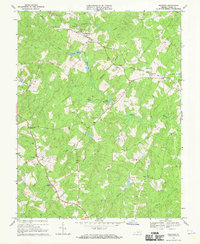 1968 Buckner1970 Print · USGSLouisa County in the late sixties reveals a landscape of railroad-dependent hamlets and deep-rooted rural congregations along the Little River. Genealogists and historians can trace family locations through numerous sites like Fredericks Hall, Rising Sun Ch, and Gardners Crossroads.3 unique versions available
 - 1968 Map of Pendleton, 1970 Print
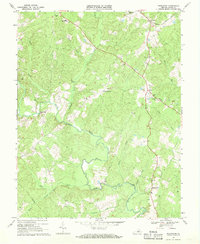 1968 Pendleton1970 Print · USGSLouisa County’s rural crossroads and river valleys are captured here in the late sixties as the region maintained its traditional landscape. Genealogists and historians can locate family landmarks like Richardson High Sch, Goodwins Store, and several historic congregations such as Ebenezer Ch.2 unique versions available
 - 1968 Map of Contrary Creek, 1970 Print
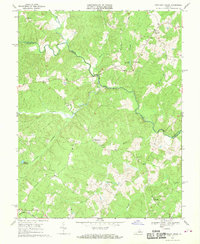 1968 Contrary Creek1970 Print · USGSThe North Anna River valley at the border of Louisa and Spotsylvania Counties appears here in the late sixties as a landscape of rural crossroads and millponds. Genealogists can locate family landmarks like Bethel Ch, Whitlock Millpond, and several unnamed cemeteries near Glenora.
 - 1968 Map of South Anna, 1970 Print
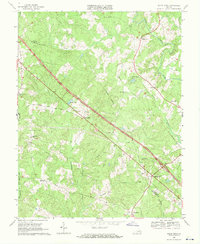 1968 South Anna1970 Print · USGSThe Louisa and Goochland county line comes into focus in the late sixties, showing a landscape of traditional crossroads and river bends. Trace local roots through Shelfar Sch, the historic Three Chopt Road, and rural congregations like New Life Ch.2 unique versions available
 - 1968 Map of Dabneys, 1970 Print
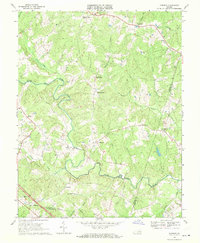 1968 Dabneys1970 Print · USGSLouisa and Hanover counties are documented here in the late sixties as the rural landscape preserved its network of traditional crossroads and country churches. Genealogists and local historians can locate several historic houses of worship like Hopeful Ch and Oakland Ch, alongside small settlements like Dabneys and Shelfar.3 unique versions available
 - 1968 Map of Lahore, 1971 Print
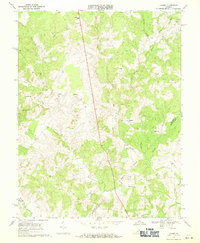 1968 Lahore1971 Print · USGSCentral Virginia's rural landscape is captured here in the late sixties at the meeting point of Orange, Spotsylvania, and Louisa counties. Genealogists can trace the locations of family landmarks and community centers like Lightfoot Sch, Bethel Ch, and the settlement of Lahore.3 unique versions available
 - 1969 Map of Beaverdam, 1971 Print
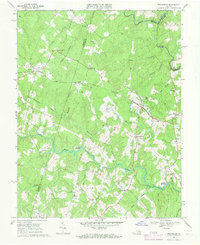 1969 Beaverdam1971 Print · USGSHanover and Louisa counties were still deeply rural during the late sixties, centered on the railroad and river systems. Genealogists can locate many family burial grounds and historic community hubs like Beaverdam Sch, St Thomas Ch, and Old Bandana.3 unique versions available
 - 1969 Map of Mineral, 1971 Print
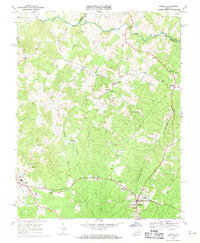 1969 Mineral1971 Print · USGSThe Piedmont landscape of Louisa County comes into focus in the late sixties, showcasing the rail-connected hubs of Mineral and Louisa. Researchers can trace the path of the Chesapeake and Ohio or locate rural landmarks like Dickinson Store and Enon Ch.5 unique versions available
 - 1969 Map of Montpelier, 1971 Print
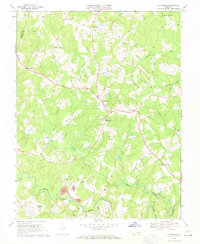 1969 Montpelier1971 Print · USGSHanover County at the end of the 1960s was a landscape of quiet crossroads and riverfront industry. Researchers can trace rural community life through landmarks like Bethany Sch, the Mines near Gouldin, and the remote St Peters Ch.3 unique versions available
End of results
Showing maps 1-18 of 18
Top cities of Louisa County
Frequently asked questions
- What are the different types of historical maps available for Louisa County?
- What is the oldest map of Louisa County?
- Where can I purchase historical maps of Louisa County for my home or office?
- Where can I download high-res historical maps of Louisa County?
- Are there historical topographic maps available for Louisa County?
- Is there historical aerial imagery available for Louisa County?
- Where are historical maps of Louisa County sourced from?