Old Maps of Nelson County, Virginia for Academic Research
Study the evolution of Nelson County with 151 high-resolution historic maps. Whether you're teaching, researching, or modeling changes in land use, these maps provide essential visual documentation of urban, environmental, and geographic change.
- Analyze long-term change: Track patterns in development, transportation, and natural features.
- Ideal for environmental or urban studies: Support academic projects with primary historical map data.
- Use in the classroom or lab: Educators and researchers rely on these maps to bring historical context to life.
These maps are a powerful tool for teaching, research, and visualizing how Nelson County has changed over the decades.
Nelson County, VA maps
(151)- 1892 Map of Buckingham
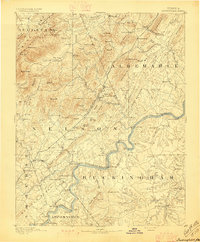 1892 Buckingham1892 Print · USGSCentral Virginia in the late nineteenth century was defined by its river-and-rail economy along the James River. Genealogists and historians can trace the foundations of local life through the Kleinburg School, the Soap Stone Quarry, and the Virginia Midland Railroad.7 unique versions available
 - 1892 Map of Harrisonburg, 1901 Print
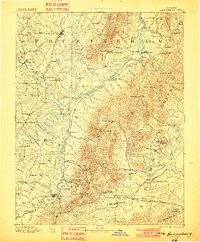 1892 Harrisonburg1901 Print · USGSThe Shenandoah Valley during the 1890s reveals a landscape of thriving springs, mills, and emerging industry across Rockingham and Albemarle counties. Genealogists can trace family locations through sites like Meyerhoffer's Store, the Crimora Mine, and the University of Virginia Observatory.6 unique versions available
 - 1894 Map of Lexington, 1900 Print
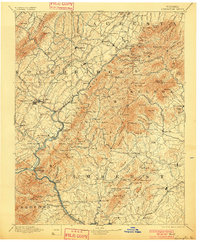 1894 Lexington1900 Print · USGSAmherst and the surrounding Blue Ridge foothills are captured in the late nineteenth century during a period of rural expansion and early rail development. Genealogists can locate family homesteads near Clifford P.O. or trace landmarks like Cornerstone Ch. and Massies Mill.7 unique versions available
 - 1929 Map of Covesville
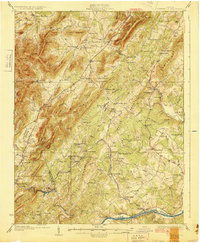 1929 Covesville1929 Print · USGSAlbemarle County’s soapstone industry and mountain communities are frozen in time just before the Depression. Genealogists and historians can trace family locations near Alberene, old schools like Red Hill Sch, and landmarks including Forest Lodge and Johnson Mill.3 unique versions available
 - 1934 Map of Waynesboro
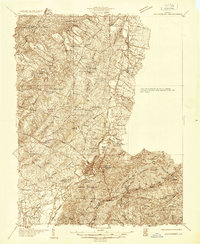 1934 Waynesboro1934 Print · USGSAugusta County settlements and Blue Ridge rail lines are captured here in the mid-1930s as the regional economy modernized. Local historians can trace old schools and churches from Fort Defiance to Lipscomb, including Old Stone Ch and the Blue Ridge Tunnel.2 unique versions available
 - 1935 Map of Amherst
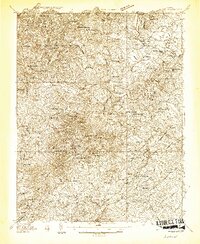 1935 Amherst1935 Print · USGSAmherst County in the mid-thirties reveals a landscape of mountain hollows and rail-connected settlements along the edge of the George Washington National Forest. Genealogists and historians can locate rural landmarks like the Indian Mission, Sweet Briar College, and the old Southern Mineral Plant.
 - 1935 Map of Covesville, 1961 Print
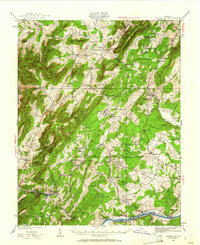 1935 Covesville1961 Print · USGSMid-century Albemarle County was defined by its soapstone industry and a dense network of country schools and chapels. Genealogists and historians can trace the foundations of local life through landmarks like Albermarle Soapstone Company, Cedar Vale Sch, and the riverside hub of Scottsville.
 - 1936 Map of Vesuvius
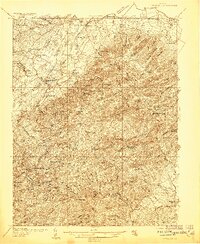 1936 Vesuvius1936 Print · USGSThe Blue Ridge mountain front meets the Shenandoah Valley in the 1930s, showing a land of rail junctions and high-country mines. Researchers can trace the Appalachian Trail past peaks like The Priest and find local history at Steeles Tavern or Old Providence Cem.
 - 1939 Map of Amherst
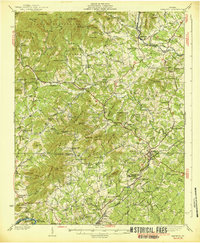 1939 Amherst1939 Print · USGSAmherst County in the mid-1930s is a landscape of mountain ridges and tight-knit rural communities. Genealogists and historians can trace the exact locations of many local landmarks, from Sweet Briar and Amherst to the Indian Mission and Dodds Store.
 - 1939 Map of Waynesboro
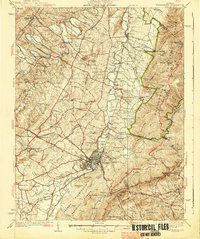 1939 Waynesboro1939 Print · USGSThe Shenandoah Valley meets the Blue Ridge in the late 1930s, showing a critical crossroads of rail and mountain passage. Genealogists can trace family names and institutions from the Augusta Military Academy at Fort Defiance to the Blue Ridge Tunnel near Waynesboro.3 unique versions available
 - 1941 Map of Vesuvius
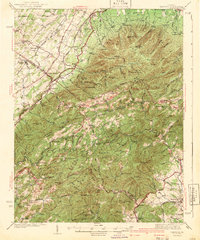 1941 Vesuvius1941 Print · USGSThe Blue Ridge highlands at the start of the 1940s reveal a landscape of mountain mines and early parkway development. Genealogists and hikers can trace the Appalachian Trail past the Irish Creek Mission and forgotten sites like Mill Creek Sch.2 unique versions available
 - 1943 Map of Lovingston, 1961 Print
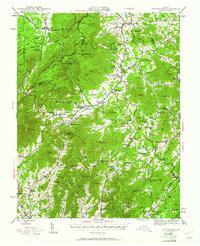 1943 Lovingston1961 Print · USGSThe Nelson County foothills and Blue Ridge summits are captured in the early 1940s, during a transitional period for Virginia's upland communities. Genealogists and historians can trace family locations near Lovingston or find rural landmarks like Locust Grove Ch, Woods Mill, and the Stage Bridge.2 unique versions available
 - 1945 Map of Covesville
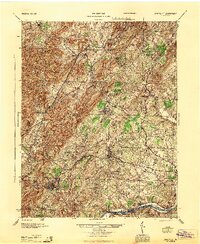 1945 Covesville1945 Print · USGSAlbemarle County's river valleys and mountain foothills are shown here in the mid-1940s, a period defined by the convergence of rail and river commerce. Genealogists and historians can trace family locations near Alberene, Esmont, and the Mt Zion Ch, or locate old industrial sites like Johnson Mill.
 - 1946 Map of Lovingston
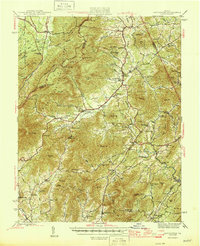 1946 Lovingston1946 Print · USGSNelson County and the eastern slopes of the Blue Ridge are captured here in the mid-1940s, just as the regional road network was maturing. Genealogists can locate family landmarks and community hubs like Lovingston, Massies Mill, and the Dutch Creek Sch.2 unique versions available
 - 1947 Map of Roanoke, 1948 Print
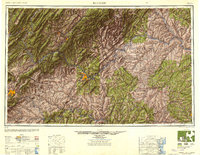 1947 Roanoke1948 Print · USGSCentral Virginia in the late 1940s reveals a region defined by its great mountain ridges and the powerful river-and-rail economy connecting Roanoke to Lynchburg. Researchers can trace the path of the Virginian RR and locate historic county seats like Charlotte Court House.2 unique versions available
 - 1949 Map of Charlottesville
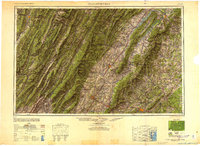 1949 Charlottesville1949 Print · USGSThe Shenandoah Valley and Blue Ridge appear in the late 1940s as a thriving corridor of rail and river commerce. Researchers can trace the mid-century footprints of Harrisonburg, Staunton, and Culpeper alongside the historic routes of the Southern Railway.2 unique versions available
 - 1950 Map of Amherst, 1960 Print
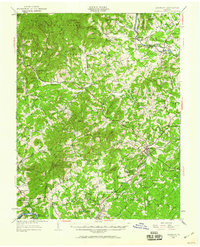 1950 Amherst1960 Print · USGSAmherst and the surrounding Blue Ridge foothills are documented here at mid-century, just as rural communities and mountain gaps remained largely unchanged. Genealogists can trace family locations through Dodds Store, Mt Moriah Ch, and the Sweet Briar College campus.
 - 1950 Map of Vesuvius, 1960 Print
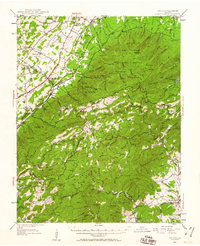 1950 Vesuvius1960 Print · USGSThe Blue Ridge high country of Augusta and Nelson counties comes alive in the mid-twentieth century, showing a landscape of remote mountain missions and state institutions. Genealogists and hikers can trace the Appalachian Trail past Irish Creek Mission, Montebello, and the State Prison Camp No 10.2 unique versions available
 - 1951 Map of Vesuvius
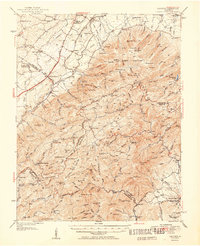 1951 Vesuvius1951 Print · USGSThe Blue Ridge foothills of Augusta and Rockbridge Counties are shown here in the early fifties, capturing a landscape of mountain missions and remote mines. Trace family history through Old Providence Ch, the Irish Creek Mission, and Massies Mill.2 unique versions available
 - 1952 Map of Amherst
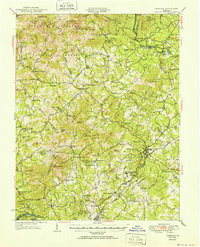 1952 Amherst1952 Print · USGSAmherst County and the Blue Ridge heights are captured here in the early fifties before modern development reshaped the rural landscape. Genealogists can trace family lines through dozens of local landmarks like Dodds Store, Indian Mission, and Pleasant Grove Ch.
 - 1956 Map of Charlottesville, 1966 Print
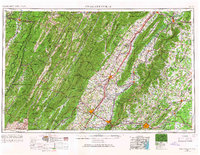 1956 Charlottesville1966 Print · USGSThe Shenandoah Valley and Blue Ridge are captured in detail during the mid-1960s as the modern interstate system began to emerge. Genealogists and historians can trace rail-connected hubs like Waynesboro or follow the river paths of the Rapidan River and Rivanna River.4 unique versions available
 - 1959 Map of Roanoke
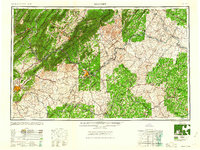 1959 Roanoke1959 Print · USGSCentral Virginia and the Blue Ridge appear in great detail during the late fifties, showcasing the transition from mountain industry to Piedmont farmland. Trace the path of the Norfolk and Western railroad or find old river towns like Appomattox and Amelia Court House.
 - 1961 Map of Shipman, 1963 Print
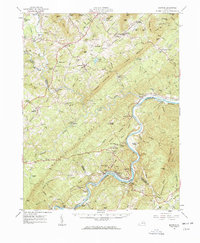 1961 Shipman1963 Print · USGSNelson County's rugged ridges and the James River corridor are captured here in the early 1960s, showing a landscape defined by rail lines and rural community life. Researchers can trace historic church sites like White Rock Ch, the rail hub at Gladstone, and the grounds of the County Training Sch.2 unique versions available
 - 1961 Map of Buckingham, 1963 Print
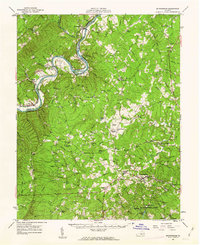 1961 Buckingham1963 Print · USGSBuckingham County and the James River corridor are captured here in the early sixties as rural life centered on the river and rail. Genealogists can trace family roots through numerous country landmarks like Liberty Hall Cem, Midway Mills, and St Joy Sch.
 - 1963 Map of Roanoke
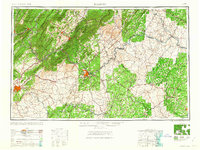 1963 Roanoke1963 Print · USGSCentral Virginia and the Blue Ridge front appear here in the early sixties, caught between their deep railroad roots and new postwar developments. Genealogists and historians can trace the rail lines of the Norfolk and Western through towns like Bedford and Altavista, or locate family landmarks near Smith Mountain Lake.
Showing maps 1-25 of 151
Top cities of Nelson County
- Nellysford historical maps
- Arrington historical maps
- Lovingston historical maps
- Shipman historical maps
- Wintergreen historical maps
- Afton historical maps
Frequently asked questions
- What are the different types of historical maps available for Nelson County?
- What is the oldest map of Nelson County?
- Where can I purchase historical maps of Nelson County for my home or office?
- Where can I download high-res historical maps of Nelson County?
- Are there historical topographic maps available for Nelson County?
- Is there historical aerial imagery available for Nelson County?
- Where are historical maps of Nelson County sourced from?