Old Maps of Five Forks, Virginia for Academic Research
Study the evolution of Five Forks with 13 high-resolution historic maps. Whether you're teaching, researching, or modeling changes in land use, these maps provide essential visual documentation of urban, environmental, and geographic change.
- Analyze long-term change: Track patterns in development, transportation, and natural features.
- Ideal for environmental or urban studies: Support academic projects with primary historical map data.
- Use in the classroom or lab: Educators and researchers rely on these maps to bring historical context to life.
These maps are a powerful tool for teaching, research, and visualizing how Five Forks has changed over the decades.
Five Forks, VA maps
(13)- 1893 Map of Luray, 1898 Print
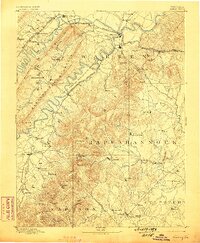 1893 Luray1898 Print · USGSThe Shenandoah Valley in the 1890s was a land of steep mountain ridges and vital new railways. Genealogists and historians can trace old homesteads and depots along the Shenandoah Valley Railroad or find remote hamlets like Seven Fountains and Browntown.
 - 1905 Map of Luray, 1910 Print
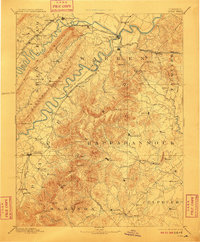 1905 Luray1910 Print · USGSThe Blue Ridge and Shenandoah Valley are frozen in time just after the turn of the century, showing the critical rail networks and mountain gaps of the period. Genealogists can trace family names and settlements like Luray, Front Royal, and Strasburg along the Shenandoah Valley Railroad.4 unique versions available
 - 1949 Map of Charlottesville
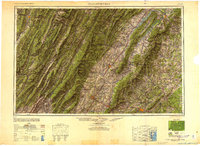 1949 Charlottesville1949 Print · USGSThe Shenandoah Valley and Blue Ridge appear in the late 1940s as a thriving corridor of rail and river commerce. Researchers can trace the mid-century footprints of Harrisonburg, Staunton, and Culpeper alongside the historic routes of the Southern Railway.2 unique versions available
 - 1956 Map of Charlottesville, 1966 Print
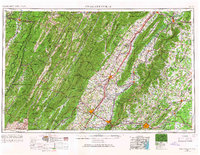 1956 Charlottesville1966 Print · USGSThe Shenandoah Valley and Blue Ridge are captured in detail during the mid-1960s as the modern interstate system began to emerge. Genealogists and historians can trace rail-connected hubs like Waynesboro or follow the river paths of the Rapidan River and Rivanna River.4 unique versions available
 - 1961 Map of Sperryville, 1962 Print
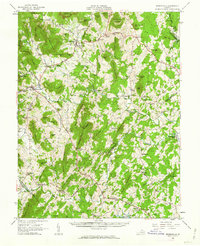 1961 Sperryville1962 Print · USGSVirginia's Piedmont and the Blue Ridge foothills come alive in this early 1960s survey of Rappahannock and Culpeper counties. Genealogists and historians can trace numerous milling communities like Monumental Mills and Peola Mills alongside local landmarks such as Hope Hill Chapel.2 unique versions available
 - 1971 Map of Washington, 1986 Print
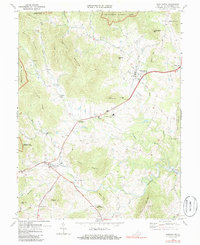 1971 Washington1986 Print · USGSThe foothills of Rappahannock County come alive in this early 1970s survey as the mountains of the Blue Ridge meet valley settlements. Researchers can trace rural life through landmarks like Fletcher Mill, Reynolds Ch, and the crossroads at Rediviva.
 - 1986 Map of Front Royal
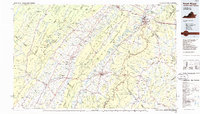 1986 Front Royal1986 Print · USGSThe northern Shenandoah Valley and the Blue Ridge crest are captured here in the mid-eighties as modern highways began to bypass historic valley towns. Researchers can trace ancestral connections near Peola Mills, navigate the gaps like Manassas Gap, or study the river bends around Luray.3 unique versions available
 - 1994 Map of Washington, 1997 Print
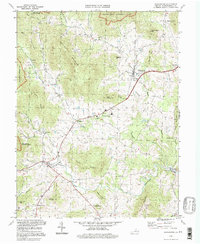 1994 Washington1997 Print · USGSRappahannock County remains a patchwork of historic Piedmont villages and mountain gaps in the 1990s. Genealogists and historians can trace the foundations of Washington, Sperryville, and Fletcher Mill alongside local landmarks like Old School Ch.
 - 2011 Map of Washington, 2011 Print
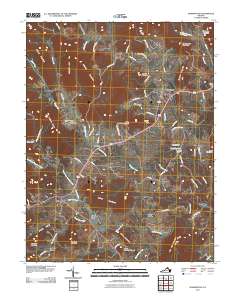 2011 Washington2011 Print · USGSSperryville and the surrounding Blue Ridge foothills are captured in this early twenty-first-century survey of Rappahannock County. Local researchers can locate family-named landmarks and rural outposts like Fletcher Mill, Ashbys Corner, and Rock Mills.
 - 2013 Map of Washington, 2013 Print
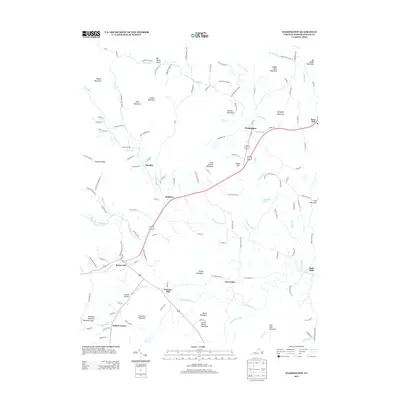 2013 Washington2013 Print · USGSRappahannock County’s river-carved valleys and mountain gaps are mapped here in the early twenty-first century. Genealogists and researchers can trace the historic connections between Sperryville and Washington while locating legacy sites like Fletcher Mill and Ashbys Corner.
 - 2016 Map of Washington, 2016 Print
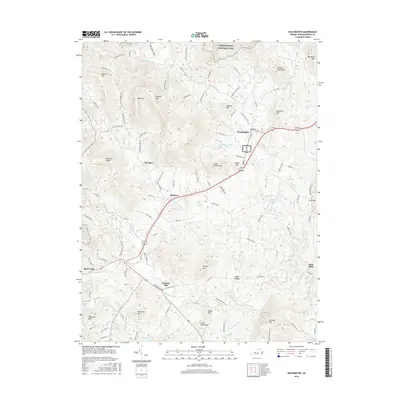 2016 Washington2016 Print · USGSRappahannock County’s foothills are captured in this recent survey, showcasing the historic corridor between Washington and Sperryville. Local researchers can trace old valley roads and family landmarks like Fletcher Mill, Rock Mills, and the peaks of Big Devils Stairs.
 - 2019 Map of Washington, 2019 Print
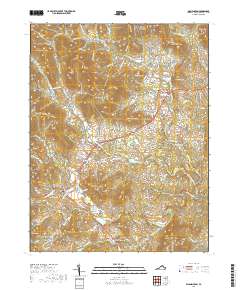 2019 Washington2019 Print · USGSRappahannock County’s seat and its surrounding mountain hamlets are captured here as they appeared in the early twenty-first century. Genealogists and local historians can trace family-named sites from Sperryville to Fletcher Mill and locate the historic Rappahannock County Courthouse.
 - 2022 Map of Washington, 2022 Print
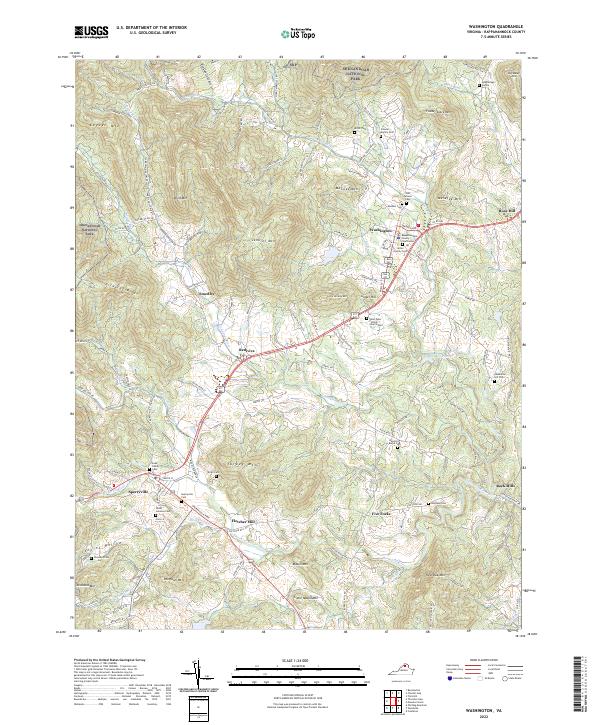 2022 Washington2022 Print · USGSRappahannock County's historic corridor between Washington and Sperryville is shown here as it appears today. Researchers can locate numerous ancestral sites like Fletcher Mill and family landmarks such as the Hawkins Burke Cem or Stewart Family Cem.
End of results
Showing maps 1-13 of 13
Top cities near Five Forks
- Culpeper historical maps
- Brightwood historical maps
- Chester Gap historical maps
- Flint Hill historical maps
- Sperryville historical maps
- Washington historical maps
Frequently asked questions
- What are the different types of historical maps available for Five Forks?
- What is the oldest map of Five Forks?
- Where can I purchase historical maps of Five Forks for my home or office?
- Where can I download high-res historical maps of Five Forks?
- Are there historical topographic maps available for Five Forks?
- Is there historical aerial imagery available for Five Forks?
- Where are historical maps of Five Forks sourced from?