1950s Maps of Scott County, Virginia
Explore 17 historic maps of Scott County from the 1950s. These maps offer a rare glimpse into what life looked like during the 1950s — showing old roads, neighborhoods, homes, and landmarks that have changed or disappeared over time.
Whether you're researching your family's past, planning a metal detecting trip, or studying how Scott County's landscape evolved across the 1950s, these high-resolution maps are a powerful tool for exploring the history of this region.
- Focus on a specific era: All maps on this page are from the 1950s, giving you a focused view of this time period.
- See what’s changed: Compare century-old streets, trails, and buildings to today's modern landscape using overlays and satellite layers.
- Research with precision: Use these maps for genealogy, historical research, land use analysis, or educational projects.
- View, download, or print: Maps are fully viewable online in high resolution, and can be downloaded or printed for your own records.
Start exploring Scott County's history through authentic maps from the 1950s. This is your window into the past.
Scott County, VA maps
(17)- 1950 Map of Looneys Gap
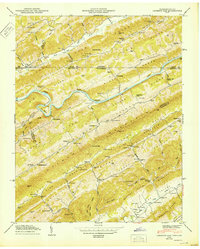 1950 Looneys Gap1950 Print · USGSThe Tennessee-Virginia borderlands in the 1940s are characterized by the steep ridges of Clinch Mountain and the deep bends of the Clinch River. Researchers can trace old mountain life through family sites like Sizemore Cem and rural schools like Wake Forest School.
 - 1950 Map of Clinchport
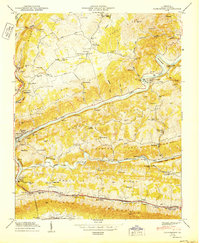 1950 Clinchport1950 Print · USGSScott County's dramatic river gaps and rail tunnels are captured in detail during the mid-twentieth century. Researchers can locate family homesteads near Rhoton Mill, trace the Daniel Boone Trail, or find ancestral sites like Alleys Chapel.2 unique versions available
 - 1950 Map of Duffield
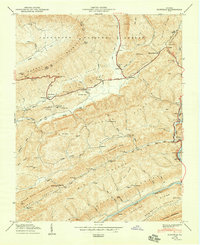 1950 Duffield1950 Print · USGSAcross the ridges of Scott and Lee Counties in 1950, this area shows a landscape of mountain gaps and rail-fed river towns. Genealogists and historians can locate numerous family cemeteries and remote landmarks like Hortons Summit (PO), Hill Chapel, and the Bald Knob Tunnel.2 unique versions available
 - 1955 Map of Johnson City
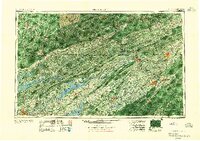 1955 Johnson City1955 Print · USGSEast Tennessee and the bordering highlands of Virginia and Kentucky appear here during the post-war industrial boom. You can trace the complex network of mountain ridges and new TVA lakes, from Johnson City to the coalfields near Middlesboro and Lynch.
 - 1957 Map of Fort Blackmore, 1959 Print
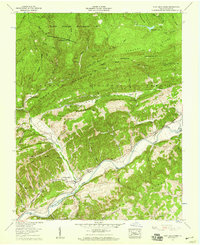 1957 Fort Blackmore1959 Print · USGSThe Clinch River winds through the ridge-and-valley country of Scott County in the late 1950s. Family researchers can locate dozens of ancestral burial sites and landmarks like Fort Blackmore, Cassells Chapel, and Hagan Hall.2 unique versions available
 - 1957 Map of East Stone Gap, 1959 Print
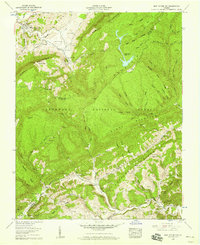 1957 East Stone Gap1959 Print · USGSWise and Scott Counties are shown here during the late fifties, as traditional mountain communities began adapting to modern infrastructure. Genealogists can trace family lines through dozens of remote sites like Durham Chapel, Stanleytown, and the Barker Cem.4 unique versions available
 - 1957 Map of Wise, 1959 Print
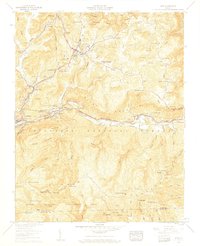 1957 Wise1959 Print · USGSWise and the coal-mining communities of the Guest River valley are captured in the late 1950s as the region's industrial and academic infrastructure expanded. Genealogists can trace family lines across dozens of rural sites, including Glamorgan Chapel, Coebern Airport, and numerous family plots like Osborn Cem.6 unique versions available
 - 1957 Map of Norton, 1959 Print
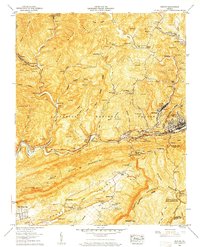 1957 Norton1959 Print · USGSWise County in the late fifties was a landscape defined by coal and iron, where ridges like Rogers Ridge were heavily shaped by extensive strip mines. Researchers can trace the heritage of small communities and family plots at Kelly View, Gardner School, and Stidham Cem.8 unique versions available
 - 1957 Map of Big Stone Gap, 1959 Print
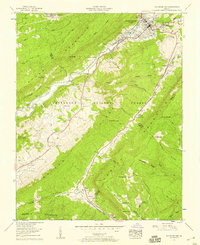 1957 Big Stone Gap1959 Print · USGSBig Stone Gap and the surrounding mountain ridges are shown here in the late fifties, during a period of transition for these Appalachian rail towns. Genealogists can locate dozens of family burial sites such as Jones Cem and landmarks like Turkey Cove Seminary or Irondale.6 unique versions available
 - 1957 Map of Toms Creek, 1960 Print
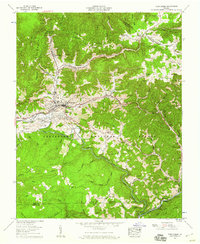 1957 Toms Creek1960 Print · USGSIn the coalfields of Wise County during the mid-fifties, the rail lines of the Norfolk and Western were the lifeblood of the region. Genealogists can trace deep family roots through dozens of sites like Stallard Cem, McClellan Chapel, and the settlement at Coeburn.5 unique versions available
 - 1957 Map of Dungannon, 1960 Print
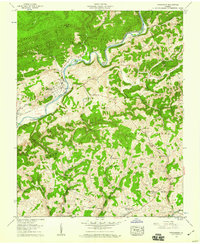 1957 Dungannon1960 Print · USGSThe Clinch River valley and its iron-rail arteries come alive in this mid-century survey of Scott County. Genealogists can trace family footprints across dozens of cemeteries and country churches, from Culbertson Chapel to the Bush Mill site.3 unique versions available
 - 1957 Map of Johnson City, 1966 Print
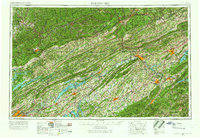 1957 Johnson City1966 Print · USGSUpper East Tennessee and Southwest Virginia are shown here during the mid-sixties transition of the Appalachians. Researchers can trace the industrial rail hubs of Kingsport, the sprawling waters of Cherokee Lake, and the historic Cumberland Gap.
 - 1958 Map of Moll Creek, 1960 Print
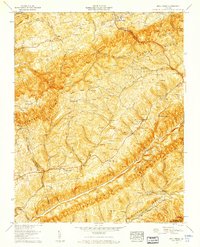 1958 Moll Creek1960 Print · USGSSouthwest Virginia during the late fifties reveals a landscape of ridge-and-valley settlements connected by winding country roads and family ties. Researchers can trace ancestral locations across dozens of family-named burial grounds like Quillen Cem and rural landmarks such as Lawsons Store or Banners Corner.5 unique versions available
 - 1959 Map of Church Hill, 1960 Print
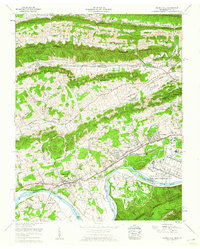 1959 Church Hill1960 Print · USGSHawkins County in the late fifties shows a landscape of river-bend industry and deep-rooted valley settlements. Genealogists can trace family plots like Patterson Cem and Hord Cem, or locate landmarks like Old Union Church and Bradshaw Mill.5 unique versions available
 - 1959 Map of Kingsport, 1960 Print
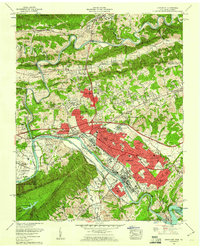 1959 Kingsport1960 Print · USGSKingsport and its surrounding river valleys reached a peak of industrial development and suburban growth during the late fifties. Researchers can trace family roots through numerous local sites like Oak Hill Cem, Lynn View High School, and the historic Fort Robinson.6 unique versions available
 - 1959 Map of Indian Springs, 1961 Print
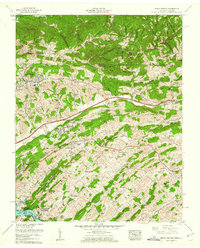 1959 Indian Springs1961 Print · USGSSullivan County at the close of the 1950s shows a landscape of ridge-top farms and growing valley suburbs along the Virginia Tennessee border. Genealogists can locate family landmarks like Pettyjohn Mill, Huddle Mill, and numerous cemeteries including Hickman Cem and Baker Cem.5 unique versions available
 - 1959 Map of Blountville, 1962 Print
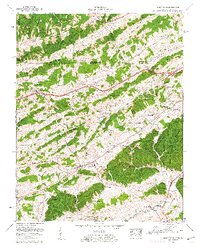 1959 Blountville1962 Print · USGSSullivan County at the edge of the Virginia border is shown here as a landscape of tight-knit valley settlements and family ridges. Genealogists can trace family names through dozens of sites like Booher Cem and Latture Ridge, or locate old landmarks like Thomas Bridge and the Walnut Hill Sch.5 unique versions available
End of results
Showing maps 1-17 of 17
Top cities of Scott County
- Gate City historical maps
- Weber City historical maps
- Nickelsville historical maps
- Hiltons historical maps
- Dungannon historical maps
- Duffield historical maps
See more
Frequently asked questions
- What are the different types of historical maps available for Scott County?
- What is the oldest map of Scott County?
- Where can I purchase historical maps of Scott County for my home or office?
- Where can I download high-res historical maps of Scott County?
- Are there historical topographic maps available for Scott County?
- Is there historical aerial imagery available for Scott County?
- Where are historical maps of Scott County sourced from?