1940s Maps of Scott County, Virginia
Explore 6 historic maps of Scott County from the 1940s. These maps offer a rare glimpse into what life looked like during the 1940s — showing old roads, neighborhoods, homes, and landmarks that have changed or disappeared over time.
Whether you're researching your family's past, planning a metal detecting trip, or studying how Scott County's landscape evolved across the 1940s, these high-resolution maps are a powerful tool for exploring the history of this region.
- Focus on a specific era: All maps on this page are from the 1940s, giving you a focused view of this time period.
- See what’s changed: Compare century-old streets, trails, and buildings to today's modern landscape using overlays and satellite layers.
- Research with precision: Use these maps for genealogy, historical research, land use analysis, or educational projects.
- View, download, or print: Maps are fully viewable online in high resolution, and can be downloaded or printed for your own records.
Start exploring Scott County's history through authentic maps from the 1940s. This is your window into the past.
Scott County, VA maps
(6)- 1940 Map of Indian Springs
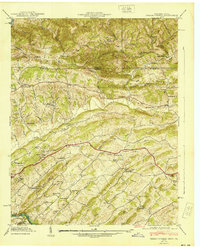 1940 Indian Springs1940 Print · USGSThe Tennessee and Virginia borderlands come alive in this pre-war survey of Sullivan County. Genealogists and local historians can trace the family networks of Bridwell Town, locate Gunnings Academy, and find long-standing mills like Huddle Mill.
 - 1946 Map of Stickleyville, 1970 Print
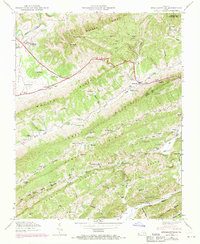 1946 Stickleyville1970 Print · USGSLee and Scott counties are captured here in the mid-twentieth century as small mountain communities remained centered around gap roads and river forks. Researchers can trace family sites like Odd Fellows Cem or locate the historic Daniel Boone Trail near Stickleyville.2 unique versions available
 - 1947 Map of Duffield, 1963 Print
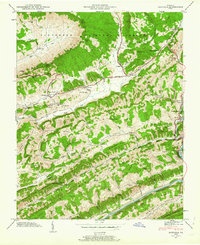 1947 Duffield1963 Print · USGSSouthwestern Virginia in the late 1940s reveals a landscape of ridge-and-valley settlements and vital rail corridors. Genealogists and historians can trace dozens of family-named cemeteries and rural landmarks like Hortons Summit, the Daniel Boone Trail, and the Natural Tunnel.4 unique versions available
 - 1947 Map of Clinchport, 1970 Print
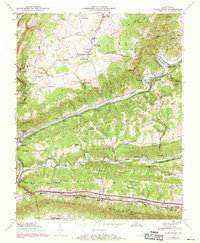 1947 Clinchport1970 Print · USGSThe Clinch River valley in the late 1940s was a landscape defined by massive rail engineering and deep-rooted Appalachian communities. Genealogists and historians can trace family sites from Alleys Chapel to Natural Tunnel, alongside industrial markers like Rhoton Mill and the Danlboone Yard.3 unique versions available
 - 1947 Map of Looneys Gap, 1970 Print
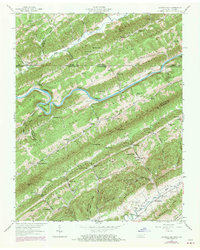 1947 Looneys Gap1970 Print · USGSThe Clinch River valley in the late 1940s and late 1960s reveals a landscape of isolated ridge-and-valley settlements straddling the Virginia and Tennessee border. Researchers can trace ancestral locations at the County Farm, the Wake Forest School, and family plots like Sizemore Cem.
 - 1948 Map of Stickleyville, 1949 Print
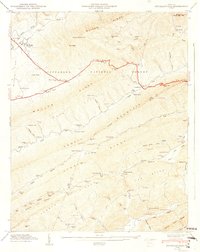 1948 Stickleyville1949 Print · USGSIn the late 1940s, the rural ridges of Lee and Scott Counties remained a land of family-named hollows and mountain gaps. Genealogists and historians can trace the foundations of Stickleyville, find local landmarks like The Sinks, and locate several family cemeteries and country schools like Larmer School.3 unique versions available
End of results
Showing maps 1-6 of 6
Top cities of Scott County
- Gate City historical maps
- Weber City historical maps
- Nickelsville historical maps
- Hiltons historical maps
- Dungannon historical maps
- Duffield historical maps
See more
Frequently asked questions
- What are the different types of historical maps available for Scott County?
- What is the oldest map of Scott County?
- Where can I purchase historical maps of Scott County for my home or office?
- Where can I download high-res historical maps of Scott County?
- Are there historical topographic maps available for Scott County?
- Is there historical aerial imagery available for Scott County?
- Where are historical maps of Scott County sourced from?