1900s (20th Century) Maps of Ephrata, Washington
Explore 7 historic maps of Ephrata from the 1900s (20th Century). These maps offer a rare glimpse into what life looked like during the 1900s — showing old roads, neighborhoods, homes, and landmarks that have changed or disappeared over time.
Whether you're researching your family's past, planning a metal detecting trip, or studying how Ephrata's landscape evolved across the 1900s, these high-resolution maps are a powerful tool for exploring the history of this region.
- Focus on a specific era: All maps on this page are from the 1900s, giving you a focused view of this time period.
- See what’s changed: Compare century-old streets, trails, and buildings to today's modern landscape using overlays and satellite layers.
- Research with precision: Use these maps for genealogy, historical research, land use analysis, or educational projects.
- View, download, or print: Maps are fully viewable online in high resolution, and can be downloaded or printed for your own records.
Start exploring Ephrata's history through authentic maps from the 1900s. This is your window into the past.
Ephrata, WA maps
(7)- 1953 Map of Ritzville, 1966 Print
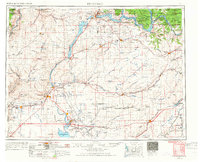 1953 Ritzville1966 Print · USGSEastern Washington was undergoing a massive agricultural and industrial transformation in the mid-fifties as irrigation from the Grand Coulee Dam reached the plateau. Researchers can trace the mid-century rail network of the Great Northern and locate vital local sites like Larson Air Force Base and Odessa.3 unique versions available
 - 1956 Map of Ephrata
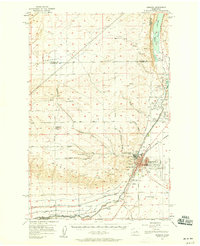 1956 Ephrata1956 Print · USGSThe high desert of Grant County comes into focus in the mid-fifties as irrigation canals began transforming the sagebrush landscape. Researchers can trace old rural landmarks like the Wheatland School (Aband), the Drumheller Ranch, and the Olson Spur rail siding.2 unique versions available
 - 1956 Map of Ephrata, 1957 Print
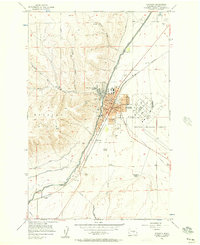 1956 Ephrata1957 Print · USGSMid-century Ephrata flourished as a key junction for the Great Northern railroad and modern irrigation projects. Genealogists and historians can trace the town's growth through institutions like Columbia Ridge Sch, the local Hosp, and the sprawling Ephrata Municipal Airport.3 unique versions available
 - 1956 Map of Grant Orchards, 1957 Print
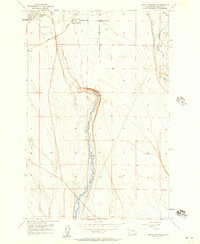 1956 Grant Orchards1957 Print · USGSGrant County in the mid-fifties shows an era of expanding infrastructure and water management. You can trace the Great Northern rail line and locate specific landmarks like the Fish Hatchery, Lakeview Park, and Grant Orchards.3 unique versions available
 - 1959 Map of Ritzville
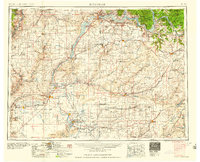 1959 Ritzville1959 Print · USGSEastern Washington in the late fifties reveals a landscape transformed by massive irrigation projects and postwar growth. Genealogists and historians can trace rail-line communities from Ritzville to Davenport and locate landmarks like Larson Air Force Base and Telford Station.
 - 1965 Map of Ritzville
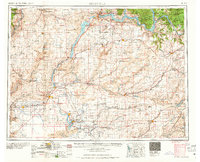 1965 Ritzville1965 Print · USGSCentral Washington during the mid-sixties shows a landscape shaped by massive irrigation projects and the Cold War. Genealogists and historians can trace rail-town life and military presence through Ephrata Air Base, the Telford Station, and local schools.
 - 1982 Map of Moses Lake, 1983 Print
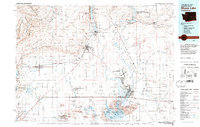 1982 Moses Lake1983 Print · USGSThe Columbia Basin during the early eighties shows a landscape transformed by large-scale irrigation and military aviation. Researchers can trace the development of Larson Air Force Base or locate vanished rail stops along the Burlington Northern near Ephrata and Quincy.2 unique versions available
End of results
Showing maps 1-7 of 7
Top cities near Ephrata
Frequently asked questions
- What are the different types of historical maps available for Ephrata?
- What is the oldest map of Ephrata?
- Where can I purchase historical maps of Ephrata for my home or office?
- Where can I download high-res historical maps of Ephrata?
- Are there historical topographic maps available for Ephrata?
- Is there historical aerial imagery available for Ephrata?
- Where are historical maps of Ephrata sourced from?