1900s (20th Century) Maps of Raymond, Washington
Explore 11 historic maps of Raymond from the 1900s (20th Century). These maps offer a rare glimpse into what life looked like during the 1900s — showing old roads, neighborhoods, homes, and landmarks that have changed or disappeared over time.
Whether you're researching your family's past, planning a metal detecting trip, or studying how Raymond's landscape evolved across the 1900s, these high-resolution maps are a powerful tool for exploring the history of this region.
- Focus on a specific era: All maps on this page are from the 1900s, giving you a focused view of this time period.
- See what’s changed: Compare century-old streets, trails, and buildings to today's modern landscape using overlays and satellite layers.
- Research with precision: Use these maps for genealogy, historical research, land use analysis, or educational projects.
- View, download, or print: Maps are fully viewable online in high resolution, and can be downloaded or printed for your own records.
Start exploring Raymond's history through authentic maps from the 1900s. This is your window into the past.
Raymond, WA maps
(11)- 1938 Map of South Bend, 1963 Print
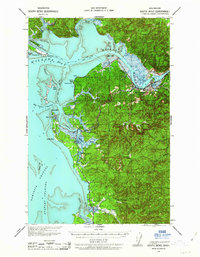 1938 South Bend1963 Print · USGSWillapa Bay and the river delta are captured here in the late 1930s, showing a landscape of maritime trade and family homesteads. Genealogists can trace property and industry via Pickernell Ranch, the Dwyer Store, and the Northern Pacific rail line.
 - 1940 Map of South Bend
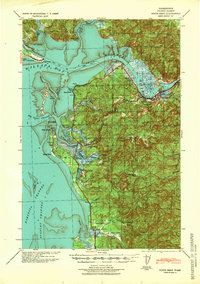 1940 South Bend1940 Print · USGSPacific County's maritime and ranching history is preserved here during the late thirties, centered on the river port of South Bend. Genealogists and historians can locate old family landmarks like Minks Ranch, Dwyer Store, and the coastal retreat at Rhodesia Beach.
 - 1953 Map of Hoquiam
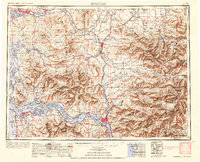 1953 Hoquiam1953 Print · USGSSouthwest Washington in the early fifties shows a landscape shaped by timber, rail, and river commerce from the coast to the Cascades. Genealogists and historians can trace the development of timber towns like Ryderwood and the industrial hubs of Hoquiam and Kelso.2 unique versions available
 - 1955 Map of Raymond, 1957 Print
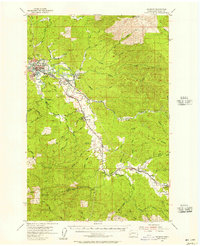 1955 Raymond1957 Print · USGSPacific County during the mid-fifties reveals a landscape defined by timber, rail, and the winding Willapa River. Genealogists and historians can trace riverside settlements from Raymond to Lebam, finding long-standing landmarks like Fern Hill Cem and the State Fish Hatchery.3 unique versions available
 - 1957 Map of Hoquiam
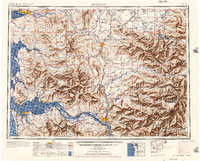 1957 Hoquiam1957 Print · USGSCoastal timber ports and inland rail hubs define Southwest Washington during the late fifties. Genealogists can trace early twentieth-century settlements like Bordeaux, Tono, and Cosmopolis alongside the expanding tracks of the Northern Pacific.
 - 1957 Map of South Bend, 1960 Print
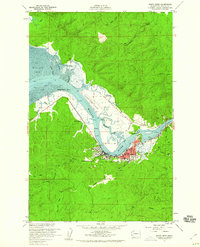 1957 South Bend1960 Print · USGSPacific County's coastal lumber and maritime heart is captured here in the late fifties as the river meets the bay. Genealogists and researchers can trace the industrial waterfront of South Bend, the Northern Pacific rail lines, and local landmarks like Welsh Ranch.4 unique versions available
 - 1957 Map of South Bend, 1967 Print
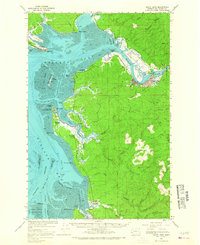 1957 South Bend1967 Print · USGSCoastal life in Pacific County centered on the timber and oyster trades during the late fifties. Genealogists can trace family names at Rhodesia Beach or Nemah, and follow the Northern Pacific line as it reaches South Bend.
 - 1958 Map of Hoquiam, 1969 Print
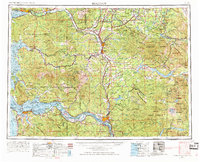 1958 Hoquiam1969 Print · USGSSouthwest Washington and the Columbia River estuary appear here in the mid-century, before major landscape shifts. Researchers can trace the rail lines of the Northern Pacific, locate the Fort Henness Site, or explore the Naselle Air Force Station.2 unique versions available
 - 1962 Map of Hoquiam
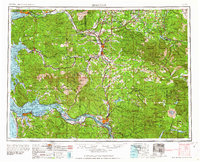 1962 Hoquiam1962 Print · USGSSouthwest Washington in the late fifties is defined by the bustling timber ports of Hoquiam and the rail-linked commerce of the interior valleys. Genealogists and historians can trace the early footprints of settlements like Raymond and Pe Ell, or locate family sites at Grand Mound Cem and Odd Fellows Cem.
 - 1986 Map of Raymond
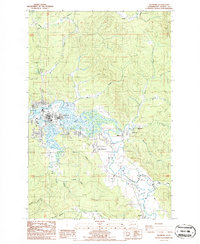 1986 Raymond1986 Print · USGSThe Willapa River basin in the mid-1980s reveals a transition from the industrial and residential hubs of Raymond to the surrounding timber and river lands. Researchers can trace the layout of riverside settlements like Willapa and Menlo, or locate landmarks such as the Historical Marker and local Cem sites.2 unique versions available
 - 1992 Map of Chehalis River, 1993 Print
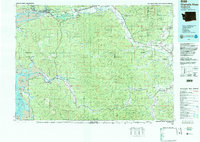 1992 Chehalis River1993 Print · USGSThe Chehalis River valley and the timberlands of the Black Hills are captured here in the early nineties. Researchers can trace rail-and-river history through Montesano and Raymond, or locate the unique Mima Mounds and Bordeaux.2 unique versions available
End of results
Showing maps 1-11 of 11
Top cities near Raymond
Top neighborhoods of Raymond
Frequently asked questions
- What are the different types of historical maps available for Raymond?
- What is the oldest map of Raymond?
- Where can I purchase historical maps of Raymond for my home or office?
- Where can I download high-res historical maps of Raymond?
- Are there historical topographic maps available for Raymond?
- Is there historical aerial imagery available for Raymond?
- Where are historical maps of Raymond sourced from?