1900s (20th Century) Maps of Plumb, Washington
Explore 13 historic maps of Plumb from the 1900s (20th Century). These maps offer a rare glimpse into what life looked like during the 1900s — showing old roads, neighborhoods, homes, and landmarks that have changed or disappeared over time.
Whether you're researching your family's past, planning a metal detecting trip, or studying how Plumb's landscape evolved across the 1900s, these high-resolution maps are a powerful tool for exploring the history of this region.
- Focus on a specific era: All maps on this page are from the 1900s, giving you a focused view of this time period.
- See what’s changed: Compare century-old streets, trails, and buildings to today's modern landscape using overlays and satellite layers.
- Research with precision: Use these maps for genealogy, historical research, land use analysis, or educational projects.
- View, download, or print: Maps are fully viewable online in high resolution, and can be downloaded or printed for your own records.
Start exploring Plumb's history through authentic maps from the 1900s. This is your window into the past.
Plumb, WA maps
(13)- 1916 Map of Chehalis
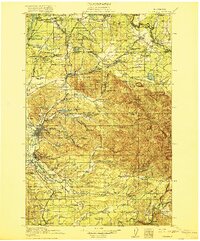 1916 Chehalis1916 Print · USGSDuring a period of rapid development along the Chehalis and Skookumchuck Rivers, these valleys supported a thriving network of timber camps and rail towns. Genealogists can trace family landmarks like Logan Hill School, the Centralia Seminary, and the Salmon Creek Mill.4 unique versions available
 - 1940 Map of Tenino
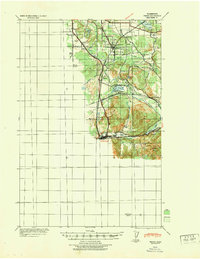 1940 Tenino1940 Print · USGSThurston County’s rail and timber landscape is documented here at the start of the 1940s, showing a critical intersection of three major railroads. Genealogists and local historians can trace the rural school districts of Spurgeon Creek Sch and the industrial footprint of the Panama Lumber & Shingle Co.
 - 1944 Map of Tenino
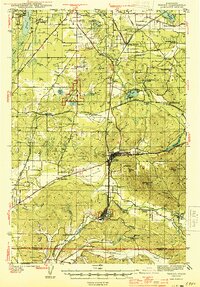 1944 Tenino1944 Print · USGSThurston County and the Lewis County border are captured in the mid-1940s, highlighting a landscape shaped by coal mining and heavy rail. Genealogists and historians can trace the positions of old schools like Cattail Sch, local landmarks such as the Oregon Trail Monument, and mining sites including Tono Mine No 1.
 - 1949 Map of Tenino, 1958 Print
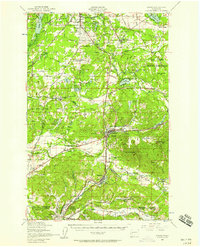 1949 Tenino1958 Print · USGSThe Tenino region of Washington is captured here in the late 1940s as a bustling corridor of rail lines and expansive prairies. Researchers can trace historic coal mining at Monarch Mines, locate the Oregon Trail Monument, or find rural landmarks like Violet Prairie Church.2 unique versions available
 - 1953 Map of Hoquiam
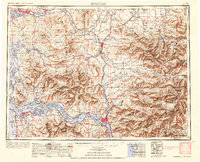 1953 Hoquiam1953 Print · USGSSouthwest Washington in the early fifties shows a landscape shaped by timber, rail, and river commerce from the coast to the Cascades. Genealogists and historians can trace the development of timber towns like Ryderwood and the industrial hubs of Hoquiam and Kelso.2 unique versions available
 - 1957 Map of Hoquiam
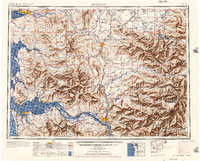 1957 Hoquiam1957 Print · USGSCoastal timber ports and inland rail hubs define Southwest Washington during the late fifties. Genealogists can trace early twentieth-century settlements like Bordeaux, Tono, and Cosmopolis alongside the expanding tracks of the Northern Pacific.
 - 1958 Map of Hoquiam, 1969 Print
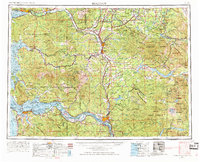 1958 Hoquiam1969 Print · USGSSouthwest Washington and the Columbia River estuary appear here in the mid-century, before major landscape shifts. Researchers can trace the rail lines of the Northern Pacific, locate the Fort Henness Site, or explore the Naselle Air Force Station.2 unique versions available
 - 1959 Map of East Olympia, 1966 Print
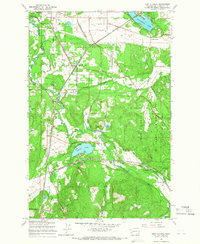 1959 East Olympia1966 Print · USGSThurston County’s rail-and-prairie landscape is captured in the late fifties, showing a vital crossroads of major Pacific Northwest rail lines. Genealogists and historians can trace the tracks and local hubs like East Olympia, Offutt Lake, and Kellys Korner.3 unique versions available
 - 1959 Map of Tenino, 1967 Print
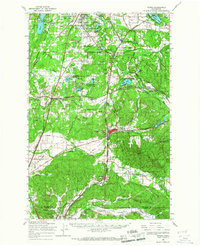 1959 Tenino1967 Print · USGSSouthern Thurston County's river-and-rail corridor is captured here during the late fifties, showing the industrial connection between the coal mines and the valley towns. Genealogists and historians can trace family-named sites like Kellys Korner or locate old community hubs such as Grange Hall and the settlement of Tono.
 - 1962 Map of Hoquiam
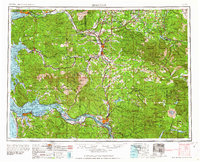 1962 Hoquiam1962 Print · USGSSouthwest Washington in the late fifties is defined by the bustling timber ports of Hoquiam and the rail-linked commerce of the interior valleys. Genealogists and historians can trace the early footprints of settlements like Raymond and Pe Ell, or locate family sites at Grand Mound Cem and Odd Fellows Cem.
 - 1964 Map of Tenino, 1965 Print
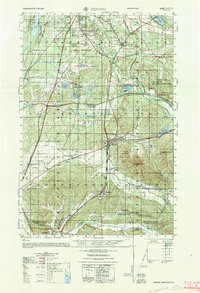 1964 Tenino1965 Print · USGSThurston and Lewis Counties are captured in the mid-1960s as timber, coal mining, and rail transport defined the local economy. Researchers can find old grange halls, several coal operations like the Black Diamond Coal Mine, and the historic Oregon Trail Monument near Tenino.
 - 1980 Map of Centralia
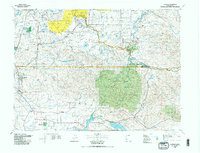 1980 Centralia1980 Print · USGSThe rail and river corridors of southwestern Washington are captured here in the late twentieth century, showing the region's transition from resource extraction to managed forest land. Researchers can trace the industrial footprint of the Stoker Mine, the rails of the Union Pacific, and the early development of Centralia and Chehalis.
 - 1990 Map of East Olympia, 1995 Print
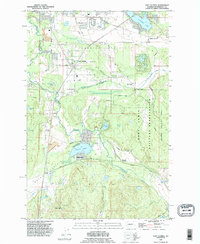 1990 East Olympia1995 Print · USGSThurston County’s prairie and timber lands are captured here in the 1990s as suburban growth reached toward the Deschutes River. Genealogists and historians can trace rail history near Western Junction or explore old settlements like Plumb and Fir Tree.
End of results
Showing maps 1-13 of 13
Top cities near Plumb
- Olympia historical maps
- Lacey historical maps
- Tumwater historical maps
- Centralia historical maps
- Yelm historical maps
- DuPont historical maps
See more
Frequently asked questions
- What are the different types of historical maps available for Plumb?
- What is the oldest map of Plumb?
- Where can I purchase historical maps of Plumb for my home or office?
- Where can I download high-res historical maps of Plumb?
- Are there historical topographic maps available for Plumb?
- Is there historical aerial imagery available for Plumb?
- Where are historical maps of Plumb sourced from?